
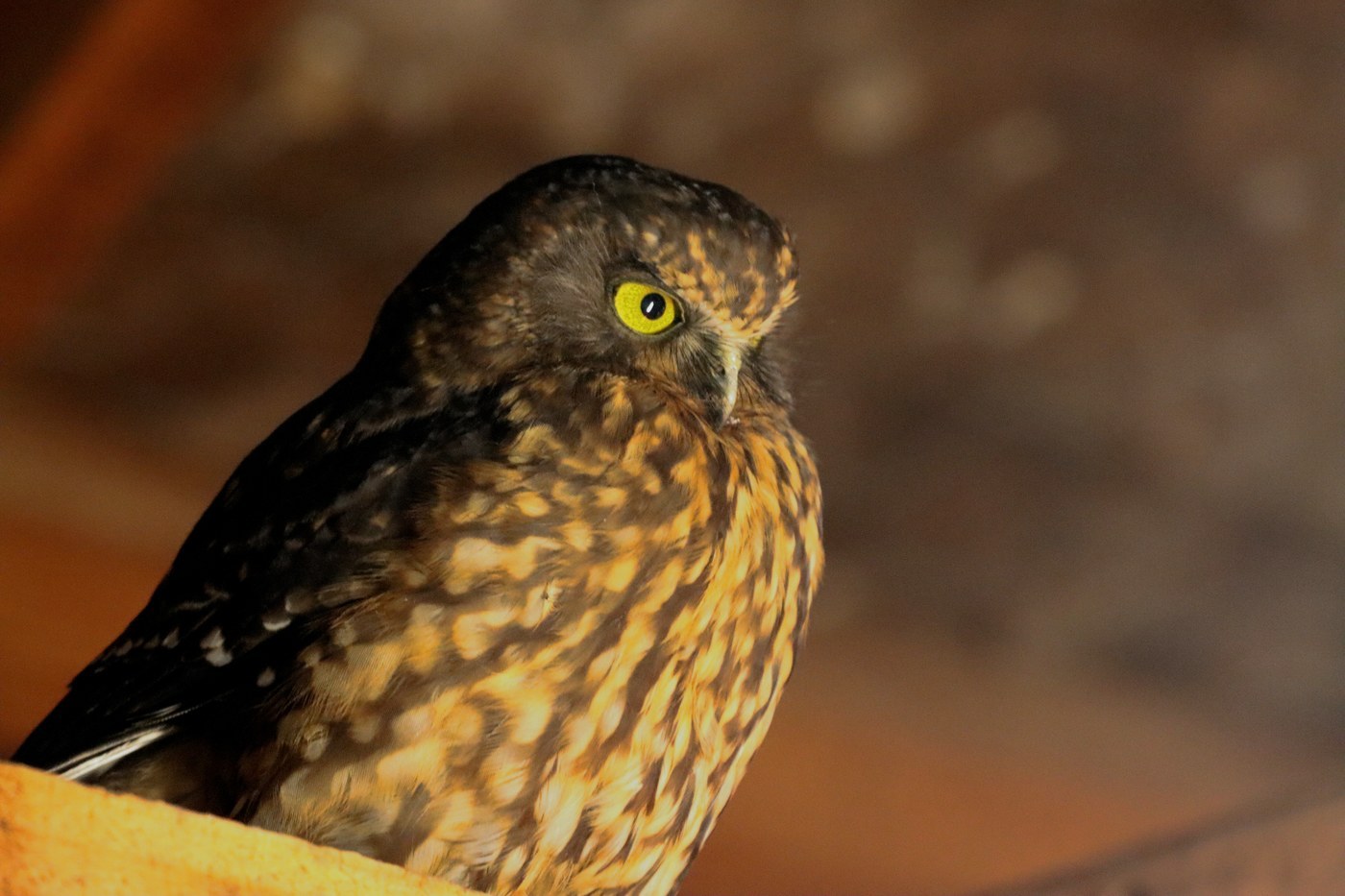
Morepork
Ninox novaeseelandiae
New Zealand's only surviving native owl, a small, compact brown owl named for its distinctive, far-carrying "more-pork" call heard after dark.
- Size
- 27-29 cm (11 in) long
- Habitat
- native and exotic forest, farmland with trees, and urban parks across New Zealand
- Type
- owl
Spotted a bird like this?
Identify any bird from a photo, free.
Overview
The Morepork, known in Maori as ruru, is a small, compact owl mottled in shades of brown and buff, with large, forward-facing yellow-green eyes set in a rounded facial disc. It is New Zealand's only surviving native owl species and one of the country's most familiar nocturnal sounds, its call giving rise to both its European settler name and its Maori name.
Moreporks are agile, silent fliers thanks to specialized soft-edged feathers, allowing them to swoop on prey undetected. Though rarely seen in daylight, when they are found roosting they often sit quietly in dense foliage, well camouflaged against tree bark and shadow, only becoming active as dusk falls.
How to identify it
Key field marks
- Small, compact owl shape with a rounded head lacking ear tufts
- Mottled brown and buff plumage overall
- Large yellow-green eyes
- Rounded facial disc
- Distinctive repeated "more-pork" or "ruru" call after dark
Similar species
- No other native owl occurs in New Zealand, so within its range the Morepork is essentially unmistakable; introduced Little Owls (established in parts of the South Island) are smaller, greyer, and lack the deep "more-pork" call, instead giving a different, higher-pitched note.
Habitat & range
Range
Found throughout the North, South, and Stewart Islands of New Zealand, plus some outlying islands, closely related to the Australian Boobook.
Habitat
Occupies native and exotic forest, scrub, farmland with shelterbelts and mature trees, and well-vegetated urban parks and gardens.
Migration
Sedentary, with pairs holding a stable territory year-round, though young birds disperse to find territories of their own.
Behavior & voice
Behavior
Strictly nocturnal, roosting quietly by day in dense foliage or tree cavities and becoming active at dusk to hunt from a perch, dropping onto prey below.
Voice
The familiar, far-carrying two-note "more-pork" call (also rendered as "ruru") is given repeatedly through the night, along with a range of other calls including sharp yelps and screeches.
Feeding
Hunts mainly insects such as moths and beetles caught on the wing or on the ground, and also takes small mammals like mice and occasionally small birds.
Nesting
Nests in a tree cavity, on a stump, or among dense epiphytes; the female incubates two to three eggs while the male provides food, and both parents feed the chicks after hatching.
Frequently asked questions
Why is it called a Morepork?
European settlers named it for its distinctive call, which sounds like "more-pork" repeated through the night.
Is the Morepork the same as the ruru?
Yes, ruru is the Maori name for the same bird, New Zealand's only surviving native owl species.
What does a Morepork eat?
Mostly insects such as moths and beetles, along with small mammals like mice and occasionally small birds.
Are Moreporks active during the day?
Rarely; they are strictly nocturnal, roosting hidden in dense foliage by day and hunting after dark.
Morepork guides
In-depth guides for identifying, finding, and understanding Morepork.
Other birds you may enjoy
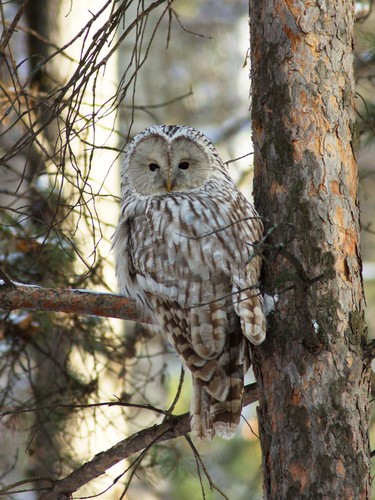
Ural Owl
50-62 cm long, wingspan about 1.0-1.3 m
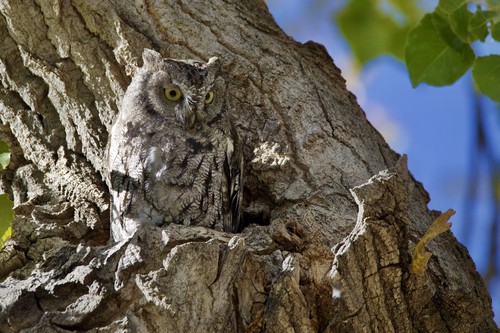
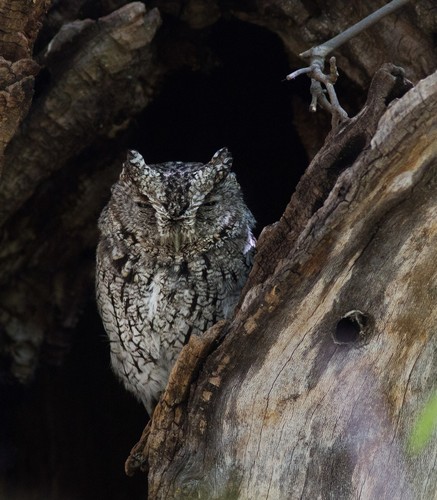
Western Screech-Owl
19-25 cm (7.5-10 in) long, about 55 cm (21.5 in) wingspan
Whiskered Screech-Owl
17-19 cm (6.7-7.5 in) long, 43 cm wingspan
Tawny Owl
37-43 cm (15-17 in) long, 81-96 cm wingspan
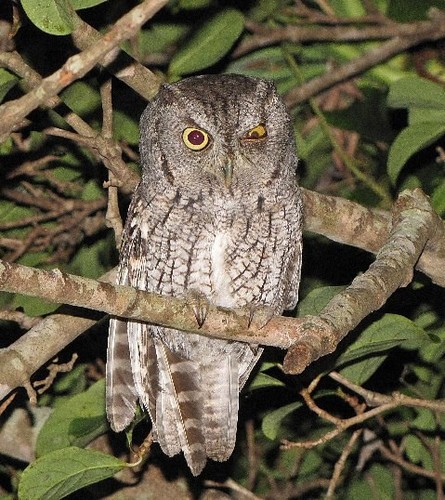
Screech Owl
16-25 cm long, wingspan about 46-61 cm
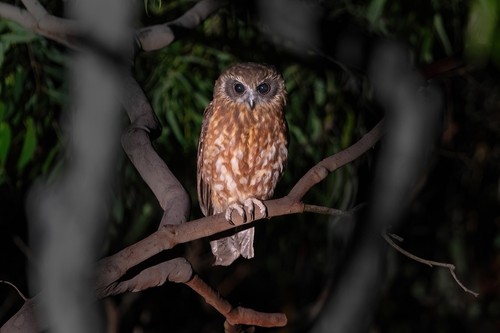
Southern Boobook
27-36 cm (11-14 in) long
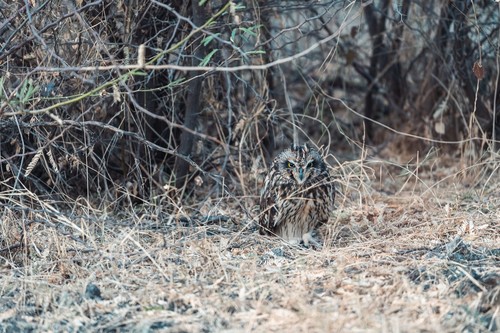
Short-eared Owl
34-42 cm (13-17 in) long, 85-110 cm wingspan
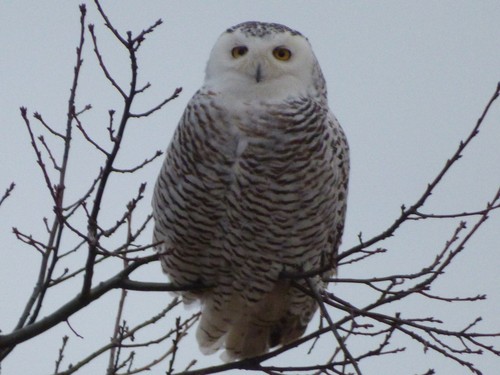
Snowy Owl
52-71 cm (20-28 in) long, 125-150 cm (49-59 in) wingspan
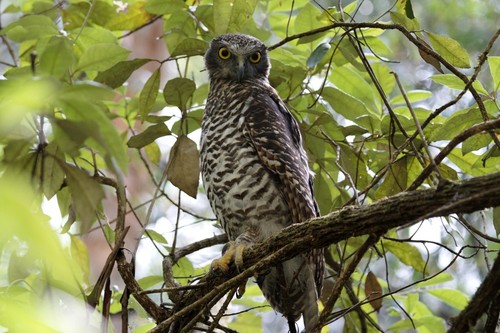
Powerful Owl
60-65 cm (24-26 in) long, 112-135 cm (44-53 in) wingspan
Northern Saw-whet Owl
18-21 cm (7-8.5 in) long, 42-56 cm (17-22 in) wingspan
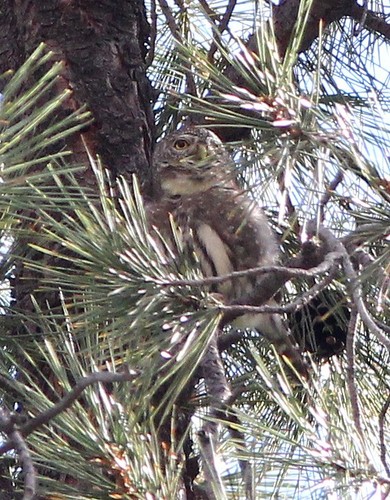
Northern Pygmy-Owl
16-18 cm (6.3-7.1 in) long, 35-39 cm wingspan
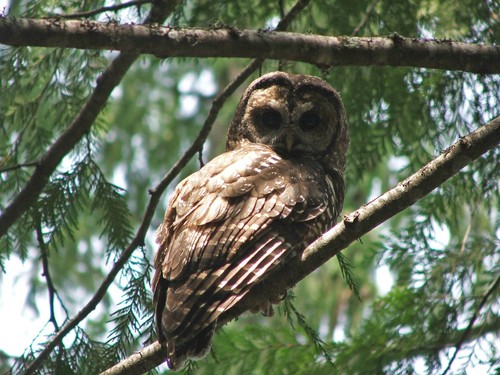
Spotted Owl
43-48 cm (17-19 in) long, 100-114 cm wingspan