
Morepork Identification Guide
New Zealand's small native owl, named for its distinctive two-note call, identified by mottled brown plumage, large yellow-green eyes, and a round, tuftless head.
Read the full Morepork encyclopedia entry →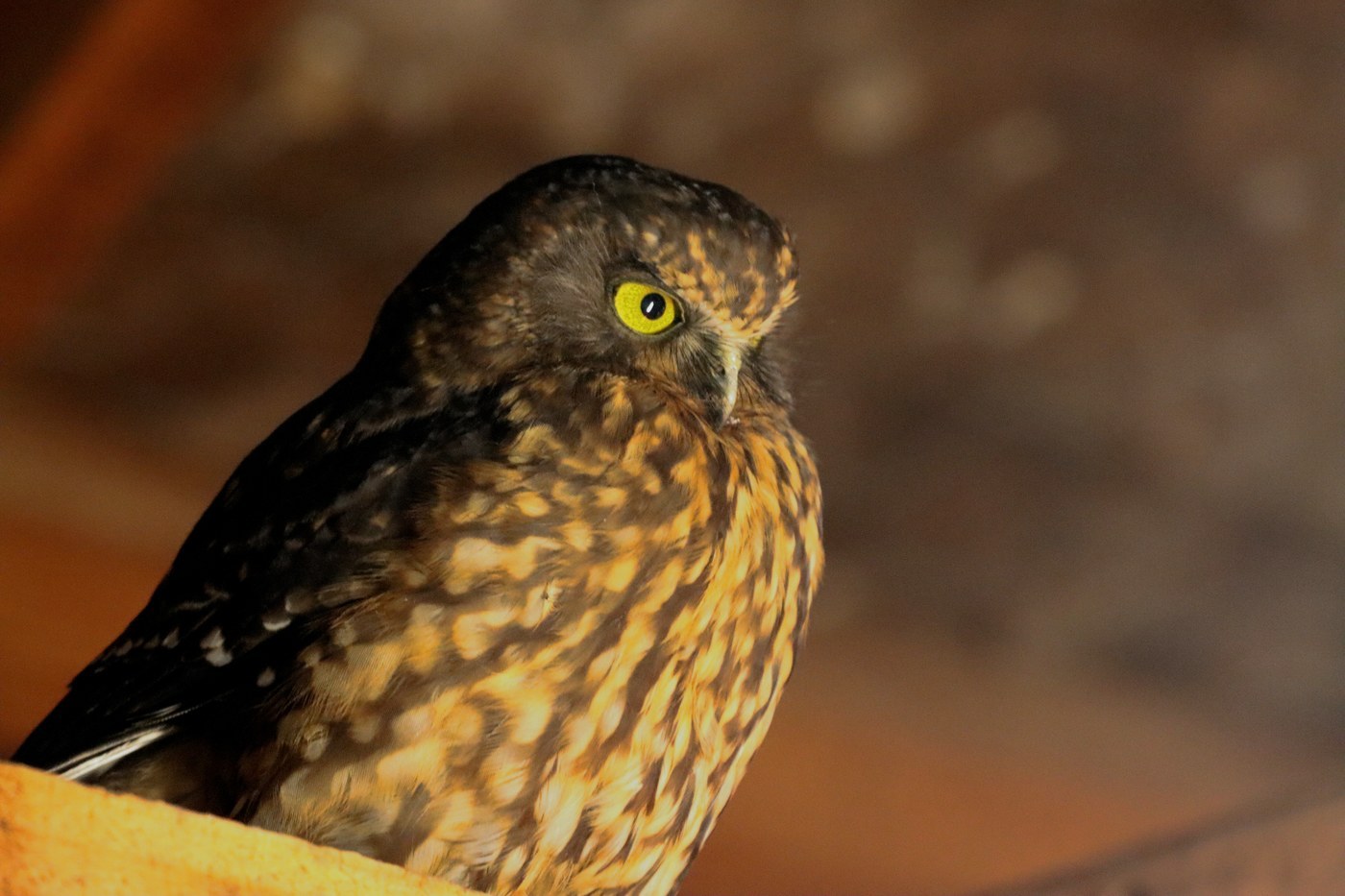
Key Field Marks
- Small owl, about 29 cm (11.5 in), with a compact, rounded head lacking ear tufts.
- Dark brown overall, densely mottled and spotted with buff and white markings across the upperparts and streaked/mottled underparts.
- Large, striking yellow-green eyes set in a relatively plain facial disc.
- Compact body and short tail give it a stocky silhouette when perched.
Separating It From Similar Species
Little Owl (introduced, South Island only)
- Smaller, grayer-brown, with a flatter-topped head shape and different, more yelping calls; also more likely to be active in daylight or at dusk perched in the open, unlike the strictly nocturnal Morepork.
Barn Owl (rare vagrant)
- Pale, heart-shaped white face and overall pale plumage make it easy to distinguish from the dark, mottled Morepork.
Behavior & Voice
- Strictly nocturnal, roosting quietly in dense foliage during the day and becoming active at dusk.
- Hunts by sallying from a perch to catch large insects, small birds, and small mammals such as mice.
- Named onomatopoeically for its call — a distinctive, far-carrying two- or three-note "more-pork" (also rendered "ruru"), along with higher-pitched yelping or laughing calls, especially during the breeding season.
Habitat, Range & Season
- Found throughout New Zealand in native forest, exotic plantations, farmland with mature trees, and even urban parks and gardens with sufficient tree cover.
- Resident year-round; calling activity increases noticeably in spring and summer (roughly September to February) during the breeding season, making this the best time to detect them by ear at dusk.
Frequently asked questions
Why is this owl called the Morepork?
Its most common call sounds like the words 'more pork,' a two- or three-note call that gave the species its English name; it is also known by the Māori name ruru, also onomatopoeic.
How do I tell a Morepork from the introduced Little Owl in New Zealand?
Morepork is darker, more heavily mottled, has a rounder head without a flattened crown, and is strictly nocturnal, while Little Owl is grayer, flatter-headed, and often active at dusk or even by day, and occurs only in parts of the South Island.
When is the best time to hear a Morepork?
At dusk and after dark, especially during the spring and summer breeding season from about September to February, when calling activity peaks.
What does the Morepork eat?
It hunts large flying insects, small birds, and small mammals such as mice, typically by sallying out from a perch.