
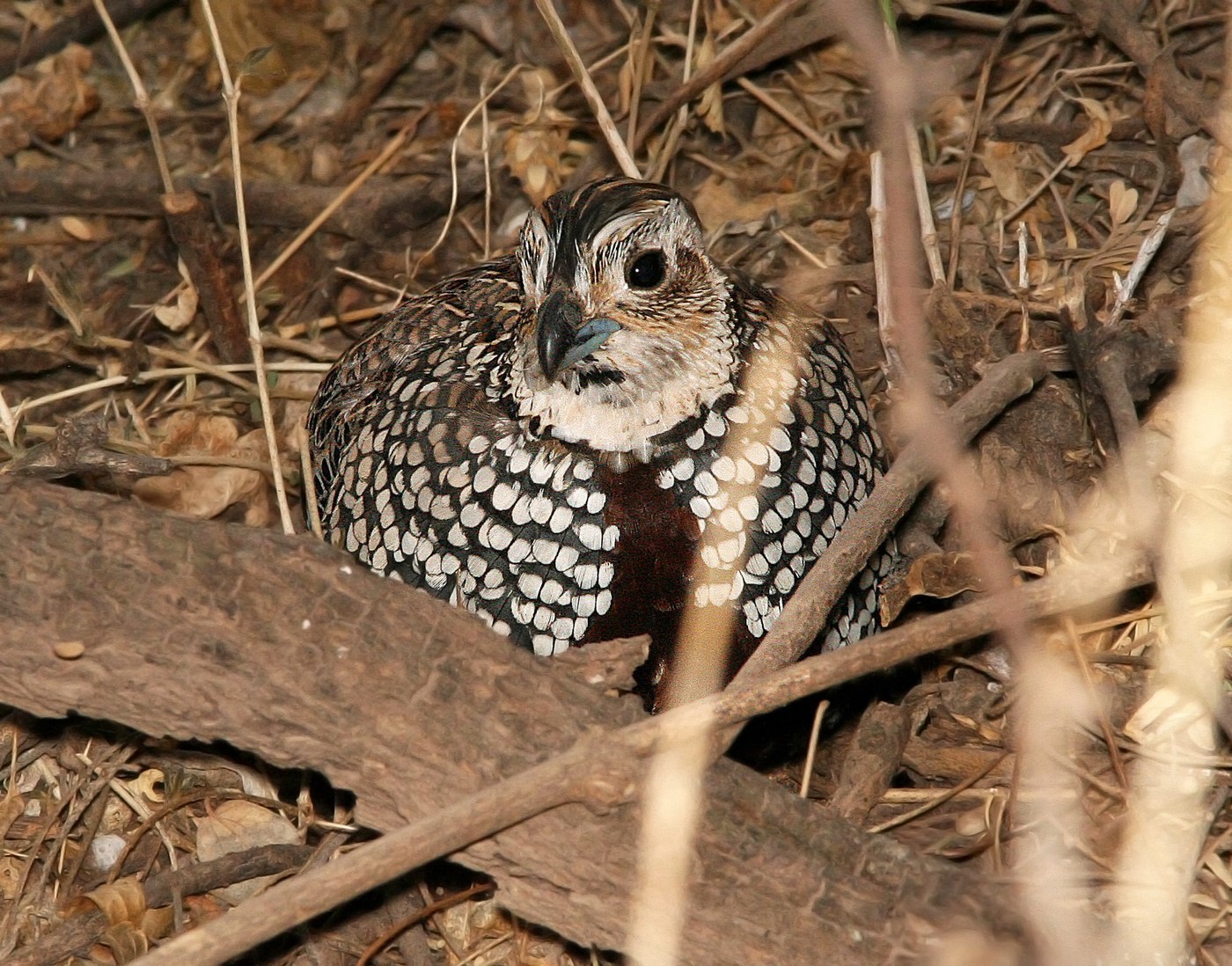
Montezuma Quail
Cyrtonyx montezumae
A round, secretive southwestern quail with a bold black-and-white harlequin facial pattern that renders it nearly invisible in grass.
- Size
- 20-22 cm (8-8.7 in) long; small, round-bodied quail
- Habitat
- oak-grassland and oak-pine woodland with dense bunchgrass understory
- Type
- gamebird
Spotted a bird like this?
Identify any bird from a photo, free.
Overview
The Montezuma Quail is a small, dumpy, round-bodied quail of oak-grassland canyons in the American Southwest. Males have an extraordinary harlequin facial pattern of black, white, and buff, paired with a soft slate-blue body spangled with white spots; females are more subtly patterned in soft buffs and browns with fine barring.
Also called Mearns's Quail, this species is one of the least often seen North American gamebirds, not because it is rare where it occurs, but because it relies on camouflage and freezing in place rather than flushing, often letting people walk within a few feet before exploding into flight.
How to identify it
Key field marks
- Male: bold black-and-white "harlequin" facial pattern, slate-blue underparts with crisp white spots, and a puffy, crested look
- Female: cinnamon-buff overall with fine dark barring and a plain face
- Short tail and a distinctly round, chunky silhouette compared to other quail
Similar species
No other North American quail shares the male's dramatic facial pattern; females can be confused with female Scaled Quail or Northern Bobwhite but are told by their rounder shape, shorter tail, and preference for dense grass over open ground.
Habitat & range
Habitat and Range
Montezuma Quail favor oak and oak-pine woodlands with a well-developed grass understory on rolling hills and canyon slopes, usually between about 4,000 and 10,000 feet elevation.
Range
In the United States they occur locally in southeastern Arizona, southwestern New Mexico, and the Trans-Pecos region of west Texas, with the core of the species' range extending south through the Sierra Madre of Mexico.
Migration
The species is non-migratory, remaining on the same home range year-round, though it may shift locally in response to drought or grazing pressure that removes grass cover.
Behavior & voice
Behavior
Extremely reliant on camouflage, Montezuma Quail crouch motionless in grass when approached and flush explosively and unpredictably at close range, a behavior that has earned them the nickname "fool quail."
Voice
The call is a soft, descending, whinny-like tremolo, quite unlike the sharp whistles of other quail, often given at dawn and dusk.
Feeding
They dig with their long claws for underground bulbs and tubers, especially the corms of wood-sorrel (Oxalis), along with seeds and insects.
Nesting and breeding
Nests are domed, grass-lined structures built over a shallow scrape and well hidden in dense grass. Clutches average 8-14 white eggs, and breeding is closely tied to summer monsoon rains that green up the grass understory.
Frequently asked questions
Why is the Montezuma Quail hard to find?
It relies almost entirely on camouflage, crouching motionlessly in dense grass and flushing only at the last moment, so it is easily overlooked even where common.
What does a Montezuma Quail look like?
Males have a bold black-and-white harlequin facial pattern with slate-blue, white-spotted underparts; females are plain cinnamon-buff with fine barring.
Where can you see Montezuma Quail in the US?
They occur locally in the oak-grassland canyons of southeastern Arizona, southwestern New Mexico, and the Trans-Pecos region of west Texas.
What do Montezuma Quail eat?
They dig up bulbs and tubers, especially wood-sorrel corms, using their long claws, and also eat seeds and insects.
Montezuma Quail guides
In-depth guides for identifying, finding, and understanding Montezuma Quail.
Other birds you may enjoy
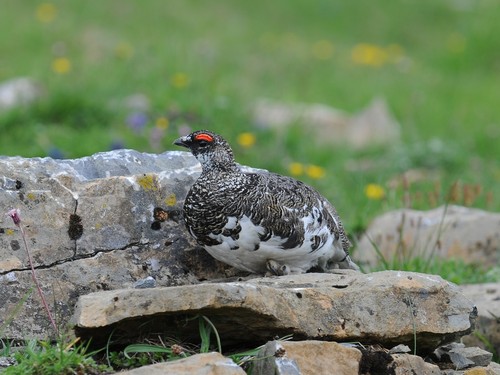
Rock Ptarmigan
34-36 cm (13-14 in) long
Congo Peafowl
Males about 64-70 cm long; females slightly smaller; no elaborate train
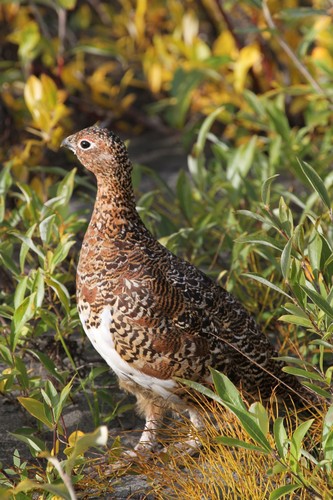
Willow Ptarmigan
37-42 cm (15-16.5 in) long
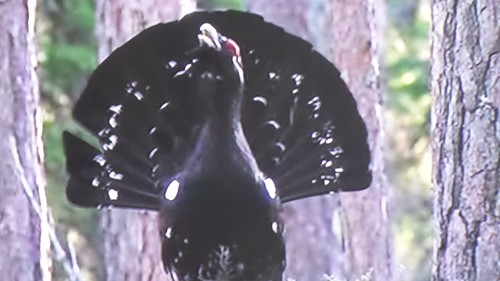
Western Capercaillie
male 74-90 cm (29-35 in), female 54-64 cm; male wingspan up to 125-130 cm
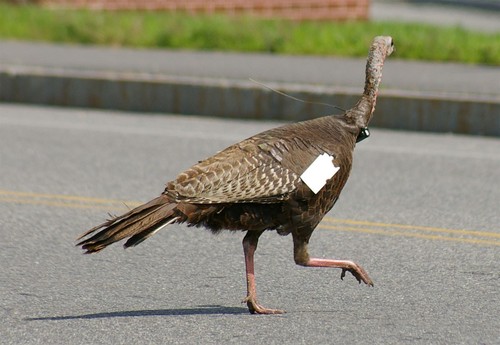
Wild Turkey
males 100-125 cm (39-49 in) long; females smaller, around 76-95 cm (30-37 in)
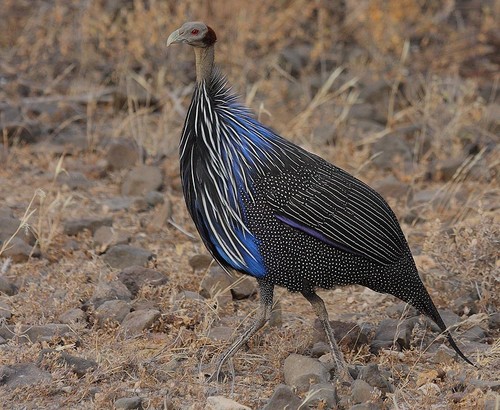
Vulturine Guineafowl
Length 61-71 cm, the largest guineafowl species, with a notably long neck and tail
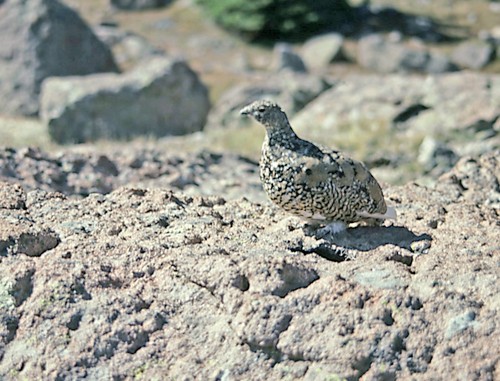
White-tailed Ptarmigan
30-33 cm (12-13 in) long; the smallest ptarmigan species
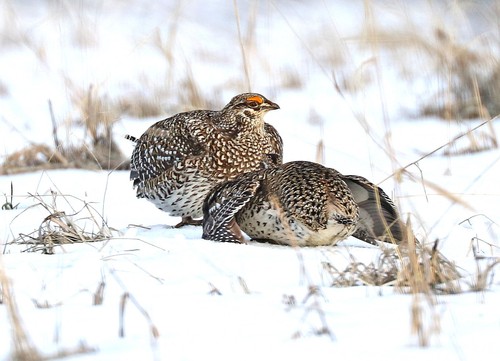
Sharp-tailed Grouse
38-48 cm (15-19 in) long
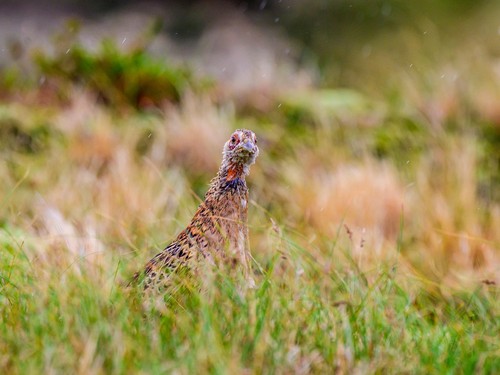
Ring-necked Pheasant
males 76-90 cm (30-35 in) long including a long tail; females smaller, 55-65 cm (22-26 in)
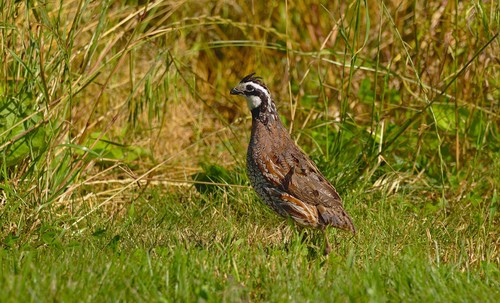
Northern Bobwhite
24-28 cm (9.5-11 in) long, 33-38 cm wingspan
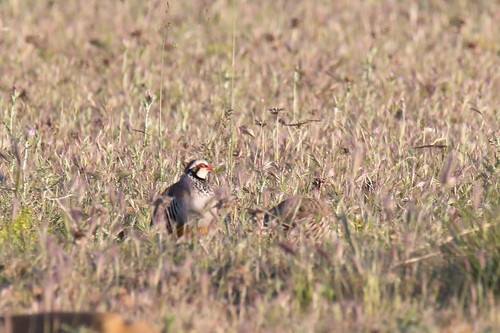
Red-legged Partridge
32-34 cm (13 in) long, 47-50 cm wingspan
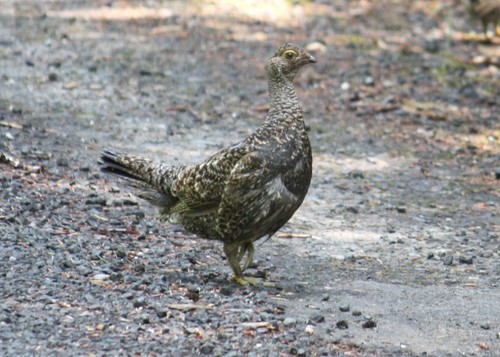
Sooty Grouse
43-48 cm (17-19 in) long; males larger than females