
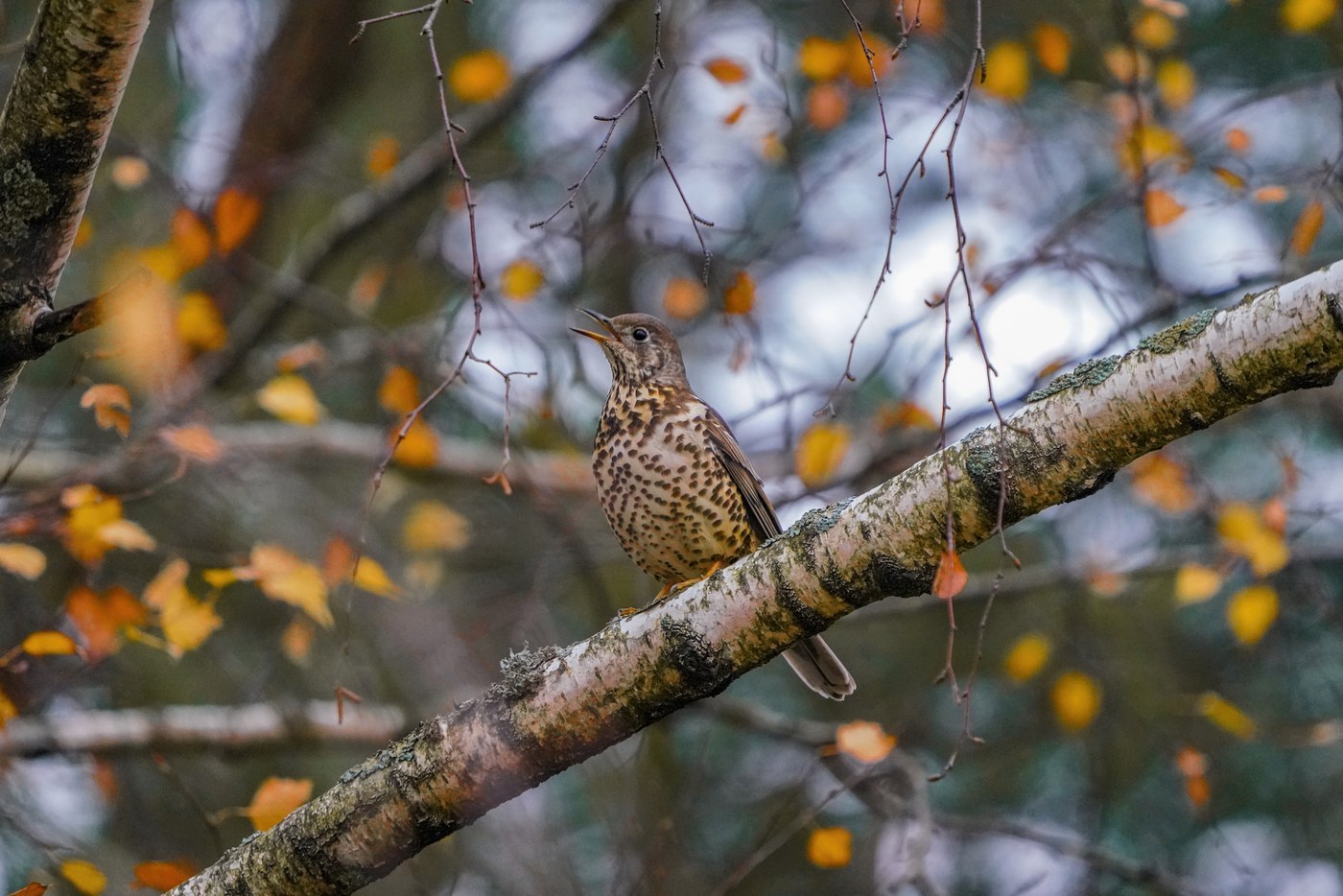
Mistle Thrush
Turdus viscivorus
Europe's largest common thrush, a bold, greyish, heavily spotted bird nicknamed the 'stormcock' for singing loudly even in wild, wintry weather.
- Size
- 26-28 cm (10.2-11 in) long, 42-47.5 cm wingspan
- Habitat
- open woodland, parkland, orchards, and farmland with mature trees
- Type
- songbird
Spotted a bird like this?
Identify any bird from a photo, free.
Overview
The Mistle Thrush is a large, powerful thrush, notably bigger and greyer than the closely related Song Thrush, and famous for its old country nickname "stormcock" — a reference to its habit of singing loudly from treetops even during blustery, stormy weather.
Appearance
It shows cold grey-brown upperparts and a whitish breast boldly marked with large, rounded blackish spots, quite different from the finer, warmer-toned spotting of the Song Thrush. In flight it reveals whitish underwings and white corners to the tail, and has a distinctive bounding, undulating flight action.
How to identify it
Key Field Marks
- Large size, noticeably bigger than Song Thrush
- Cold grey-brown upperparts, bold rounded black spots on a whitish breast
- Pale, whitish underwing (Song Thrush shows orange-buff)
- White tail corners visible in flight
- Bold, upright stance, often perched high and prominent
Similar Species
Song Thrush is smaller, warmer brown, with finer, denser, more teardrop-shaped spotting and orange-buff (not whitish) underwings. Fieldfare has a grey head and rump with a chestnut back, quite different from the uniformly grey-brown Mistle Thrush, and lacks the bold rounded spotting pattern.
Habitat & range
Habitat
Mistle Thrushes favor open habitats with scattered mature trees — parkland, orchards, large gardens, farmland hedgerows, and woodland edges — rather than dense closed forest, often nesting and foraging in fairly exposed, open situations.
Range and Migration
The species breeds across most of Europe, North Africa, and into western and central Asia. Many populations are resident, though northern and some continental birds move south in winter; in autumn, Mistle Thrushes may also form loose flocks to exploit abundant berry crops.
Behavior & voice
Behavior
Mistle Thrushes are bold and assertive, often vigorously defending berry-laden trees — particularly holly and mistletoe — against other birds in winter, chasing off intruders including much larger species. They forage on open ground with a hopping, upright gait, pausing to look and listen much like the Song Thrush but with a heavier, more deliberate manner.
Voice
The song is loud, far-carrying, and rather wild and fluty, delivered in short phrases from a high, exposed perch, and famously continues even in poor, windy weather — the source of its "stormcock" nickname. The call is a distinctive dry, rattling chatter, quite different from any other European thrush.
Nesting and Breeding
The nest, built early in the year often before trees have leafed out, is a bulky cup of grass, moss, and mud placed in a tree fork, sometimes quite exposed. The female lays 3-5 eggs, incubating them for about 12-15 days, and pairs defend the nest aggressively, sometimes even against birds of prey.
Frequently asked questions
Why is the Mistle Thrush called the 'stormcock'?
It earned this old country name for its habit of singing loudly from an exposed high perch even during rough, windy, stormy weather, when most other birds fall silent.
How is the Mistle Thrush different from a Song Thrush?
It is notably larger and colder grey-brown in tone, with bolder, more rounded spots and paler, whitish (rather than orange-buff) underwings, plus a bounding flight action.
Why does the Mistle Thrush defend berry bushes so aggressively?
In winter it relies heavily on berries such as holly and mistletoe, and will fiercely guard a productive bush or tree as a food resource against other birds.
What does the name 'viscivorus' refer to?
Its scientific species name means 'mistletoe-eating,' reflecting its strong association with mistletoe berries, which it also helps disperse by wiping sticky seeds off its bill onto tree branches.
Mistle Thrush guides
In-depth guides for identifying, finding, and understanding Mistle Thrush.
Other birds you may enjoy
Black Redstart
13-14.5 cm (5.1-5.7 in) long, 23-26 cm wingspan
Black-throated Sparrow
12-14 cm (4.7-5.5 in) long, about 19-20 cm (7.5-8 in) wingspan
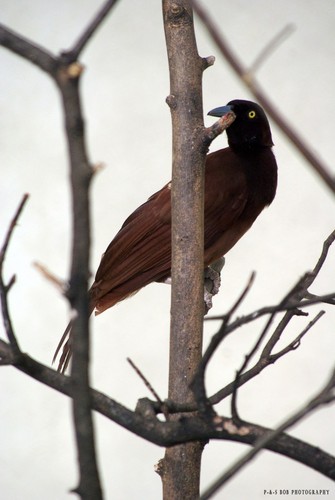
Greater Bird-of-paradise
Body about 43 cm; males with additional flank plumes up to 50 cm and long tail wires
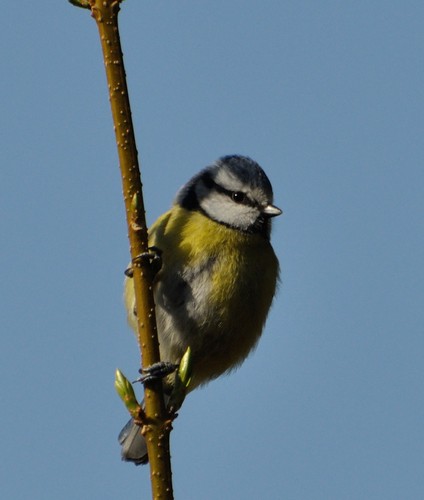
Blue Tit
11-12 cm (4.3-4.7 in) long, 17-20 cm wingspan
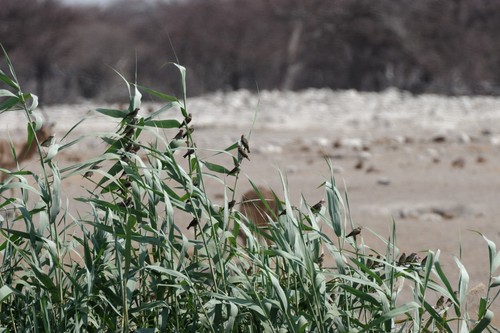
Red-billed Quelea
11.5–13 cm long, wingspan about 20–22 cm
White-plumed Antbird
13-14 cm (5-5.5 in) long
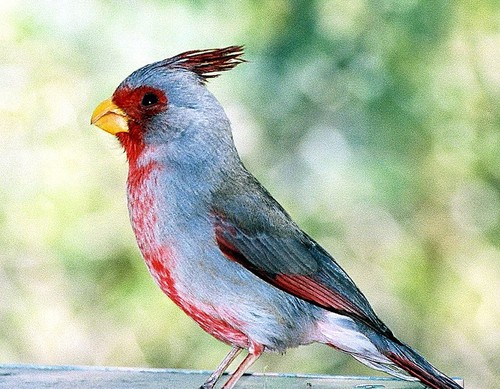
Pyrrhuloxia
19-22 cm (7.5-8.7 in) long, 30 cm wingspan
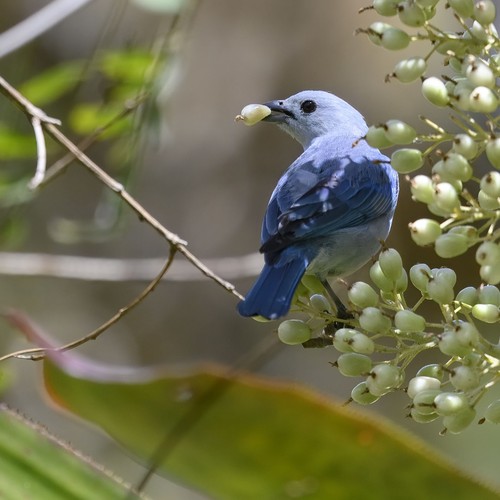
Blue-gray Tanager
16-18 cm (6-7 in) long
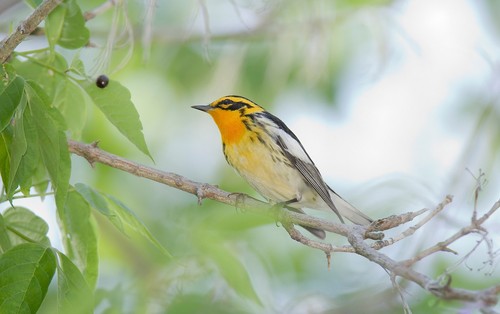
Blackburnian Warbler
11-13 cm (4.3-5.1 in) long, 20-22 cm wingspan
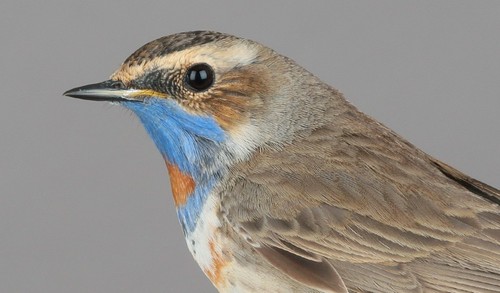
Bluethroat
13-14 cm (5.1-5.5 in) long, 20-22 cm wingspan
Eurasian Nuthatch
12-14.5 cm (4.7-5.7 in) long, 22.5-27 cm wingspan
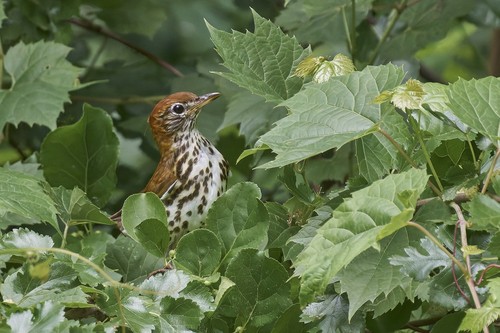
Wood Thrush
19-21 cm (7.5-8.3 in) long, about 33 cm (13 in) wingspan