
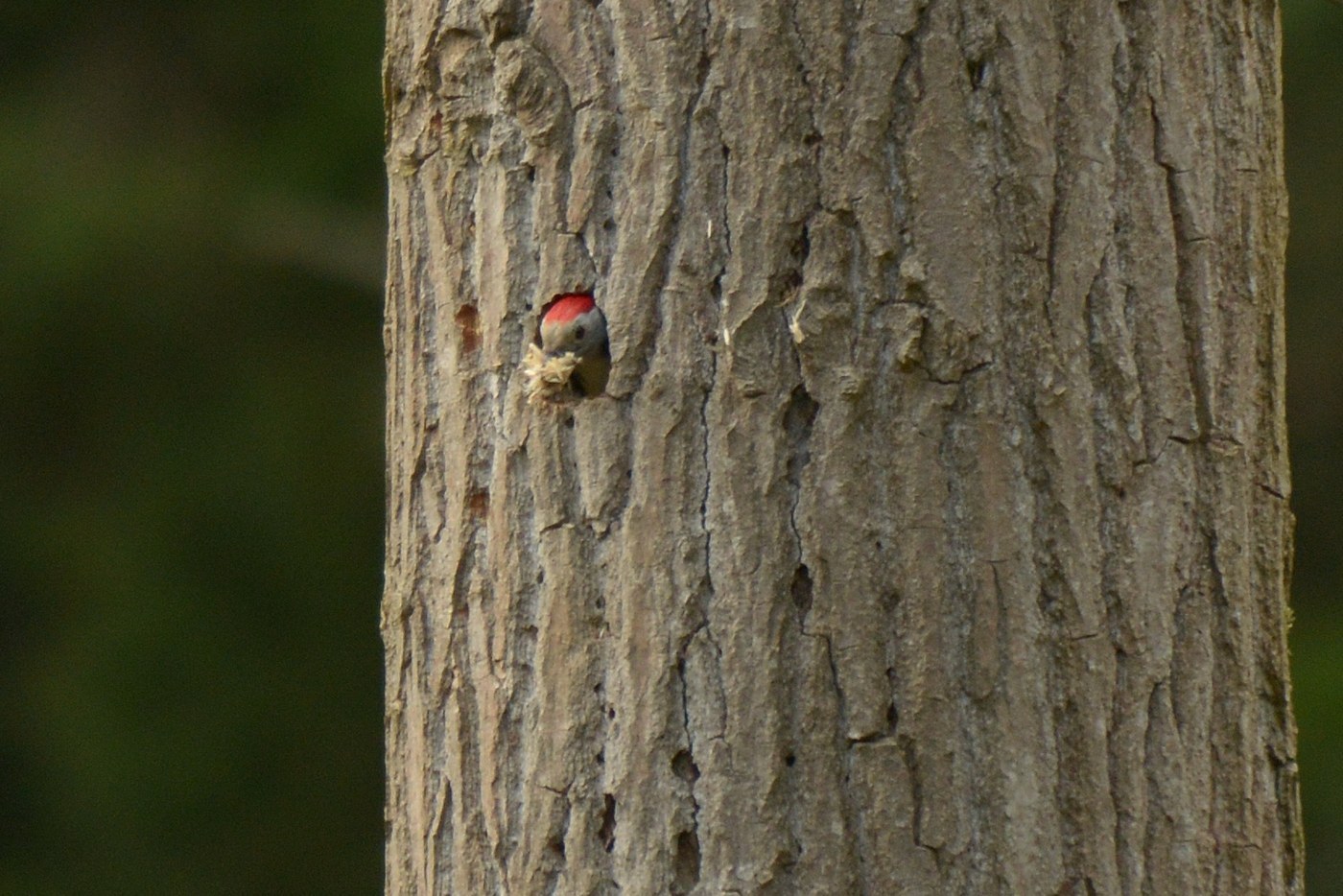
Middle Spotted Woodpecker
Dendrocoptes medius
A mid-sized pied woodpecker of old oak woodland, with a red crown in both sexes and softer, streakier underparts than its relatives.
- Size
- 20-22 cm (8-8.5 in) long, 33-34 cm wingspan
- Habitat
- mature deciduous woodland, especially old oak forest
- Type
- woodpecker
Spotted a bird like this?
Identify any bird from a photo, free.
Overview
The Middle Spotted Woodpecker is intermediate in size between the Great and Lesser Spotted Woodpeckers, sharing a broadly black-and-white pattern but with a distinctly paler, more washed-out appearance. Both males and females show a red crown, unlike the Great Spotted Woodpecker where only males have red on the head.
It is strongly associated with old, structurally complex deciduous woodland, particularly oak forest with rough bark and decaying wood, and is considerably more sedentary and habitat-specific than its commoner relatives.
How to identify it
Key field marks
- Red crown present in both sexes
- Paler, streaked pinkish-buff underparts compared to Great Spotted Woodpecker
- Less well-defined black moustache stripe, not reaching the bill
- White cheeks and forehead
- Softer, more subdued calls than Great Spotted Woodpecker; drums only weakly
Similar species
- Great Spotted Woodpecker has a red crown only in males (or juveniles), a bolder black moustache reaching the bill, and cleaner white underparts.
- Lesser Spotted Woodpecker is much smaller with a barred back and no red vent or belly wash.
Red crown in both sexes and streaky, pale underparts are the best clues to this species.
Habitat & range
Habitat
Closely tied to mature, structurally diverse deciduous forest, especially old oak woodland with rough, fissured bark and standing dead wood.
Range
Occurs across much of central and eastern Europe, extending locally into parts of southern and western Europe; absent from Britain, Ireland, and Scandinavia.
Migration
Resident and highly sedentary, rarely dispersing far from natal woodland.
Behavior & voice
Behavior
Forages more delicately than larger woodpeckers, gleaning insects from bark crevices and small branches rather than heavy excavation, and drums only weakly and infrequently compared to relatives.
Voice
Gives a nasal, chattering "kek-kek-kek" call, softer and less explosive than the Great Spotted Woodpecker's sharp "chik".
Feeding
Feeds on insects and larvae gleaned from bark, along with some tree sap and seeds, especially outside the breeding season.
Nesting and breeding
Excavates nest holes in soft, decaying wood, often in old oaks. Females lay 4-8 eggs, incubated by both parents for around 10-12 days.
Frequently asked questions
How do you tell Middle Spotted from Great Spotted Woodpecker?
Middle Spotted Woodpeckers have a red crown in both sexes, a less defined moustache stripe, and paler, streakier underparts.
What habitat does the Middle Spotted Woodpecker prefer?
Mature deciduous woodland, especially old oak forest with rough bark and decaying wood.
Is the Middle Spotted Woodpecker found in Britain?
No, it does not occur in Britain or Ireland; its range is centered on central and eastern Europe.
Does the Middle Spotted Woodpecker drum like other woodpeckers?
It drums only weakly and infrequently compared to relatives such as the Great Spotted Woodpecker.
Middle Spotted Woodpecker guides
In-depth guides for identifying, finding, and understanding Middle Spotted Woodpecker.
Other birds you may enjoy
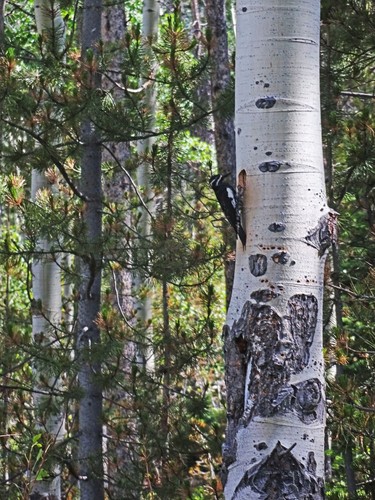
Williamson's Sapsucker
21-25 cm (8-10 in) long, 40-42 cm wingspan
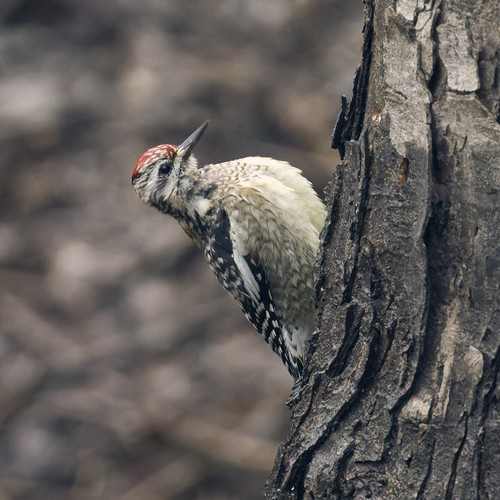
Yellow-bellied Sapsucker
18-21 cm (7-8.3 in) long, 34-40 cm wingspan
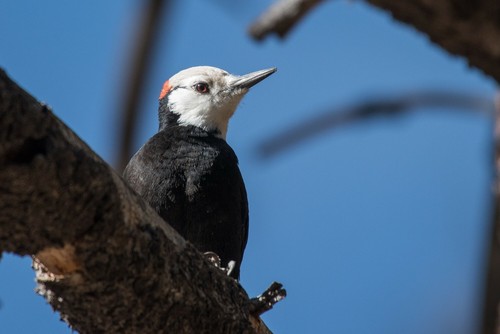
White-headed Woodpecker
20-23 cm (8-9 in) long, 38-41 cm wingspan
Red-headed Woodpecker
19-23 cm (7.5-9 in) long, 42-46 cm wingspan
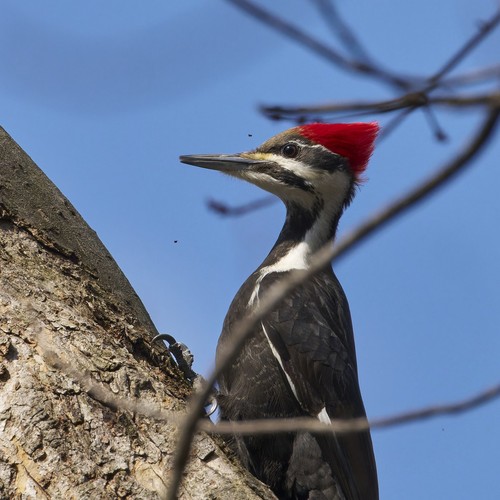
Pileated Woodpecker
40-49 cm (16-19 in) long, 66-75 cm wingspan
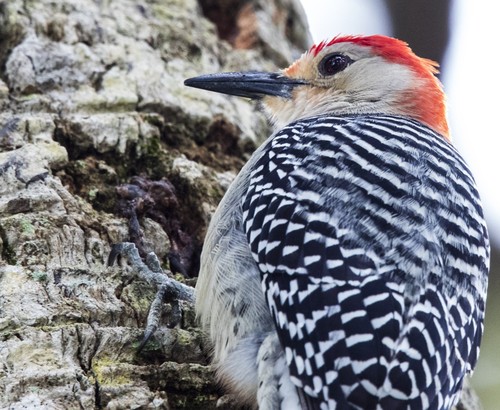
Red-bellied Woodpecker
22-27 cm (9-10.5 in) long, 38-46 cm wingspan
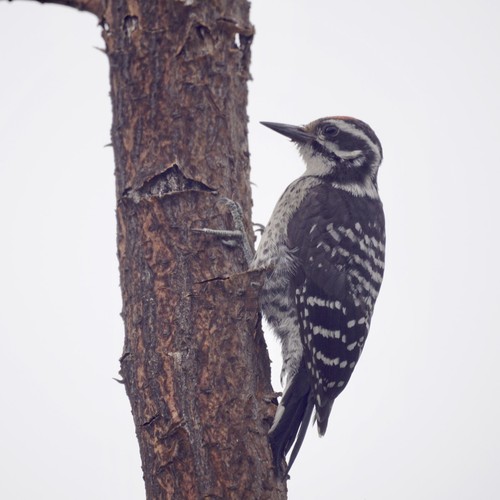
Nuttall's Woodpecker
18-20 cm (7-8 in) long, 34-38 cm wingspan
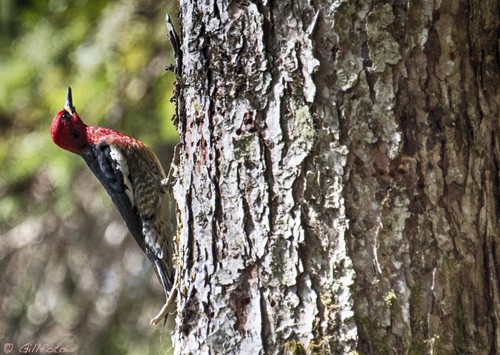
Red-breasted Sapsucker
20-23 cm (8-9 in) long, 34-40 cm wingspan
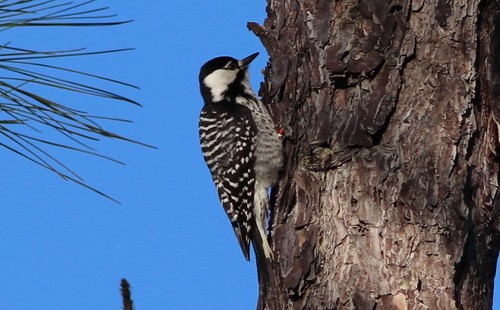
Red-cockaded Woodpecker
20-23 cm (8-9 in) long, 35-38 cm wingspan
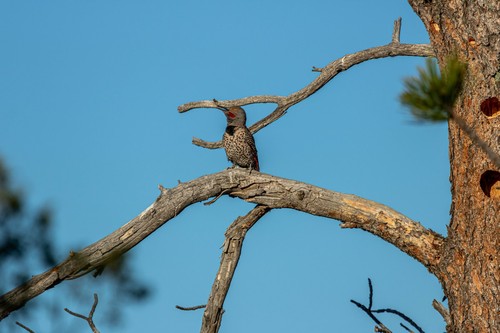
Northern Flicker
28-36 cm (11-14 in) long, 42-51 cm wingspan
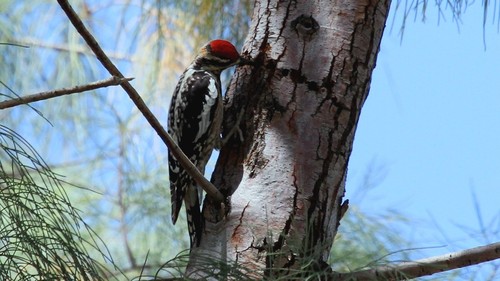
Red-naped Sapsucker
19-21 cm (7.5-8.3 in) long, 34-40 cm wingspan
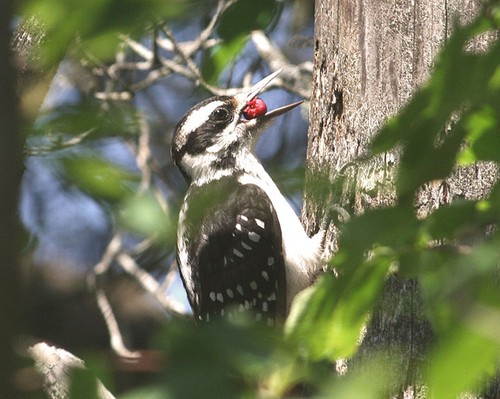
Hairy Woodpecker
23-26 cm (9-10 in) long, 33-41 cm wingspan