
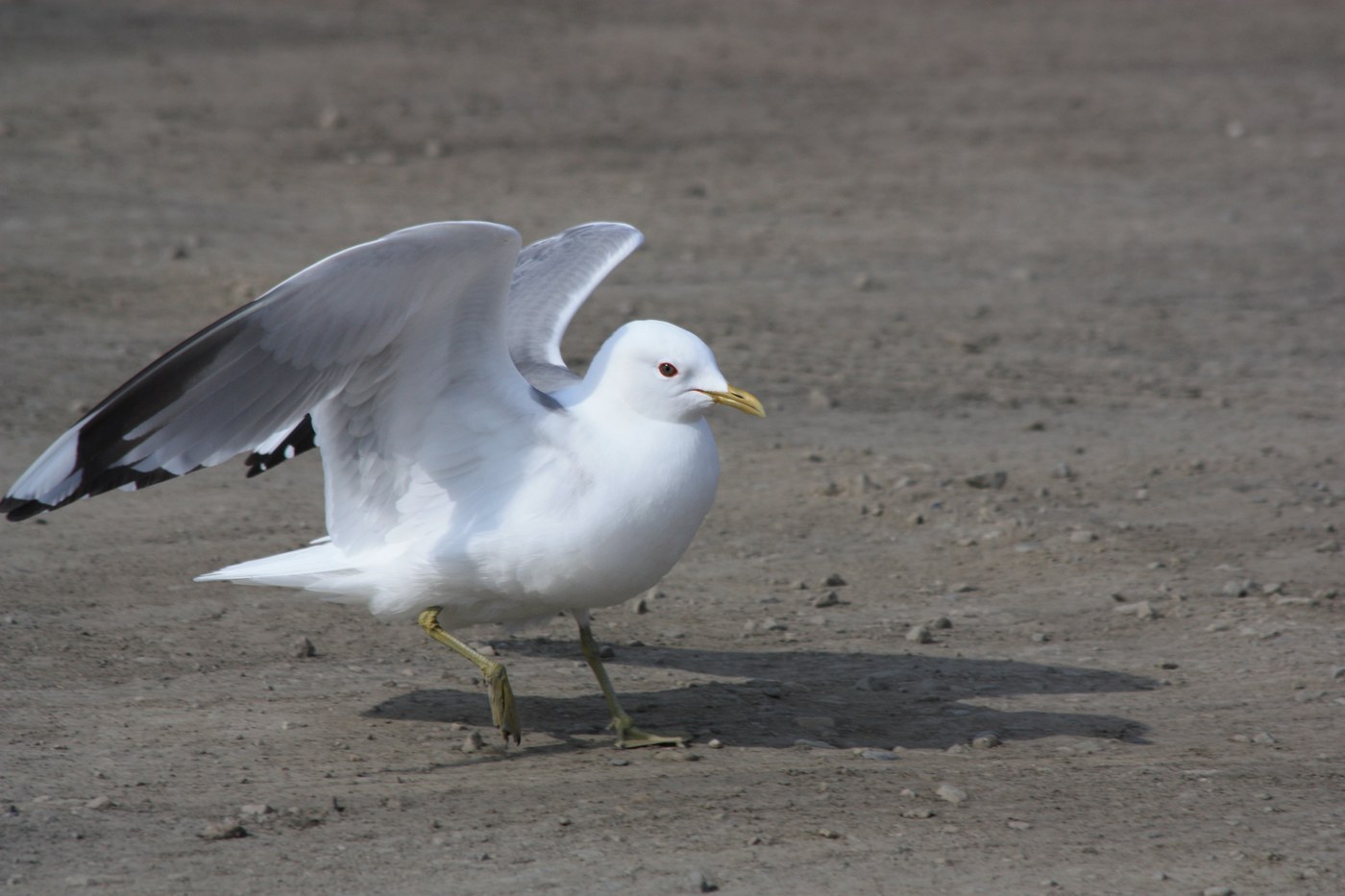
Mew Gull
Larus brachyrhynchus
A small, gentle-faced gull of the Pacific Northwest, recently split from the Eurasian Common Gull and now officially known as the Short-billed Gull.
- Size
- 40-43 cm (16-17 in) long, 100-110 cm wingspan
- Habitat
- boreal forest lakes and rivers for breeding; Pacific coast beaches and bays in winter
- Type
- seabird
Spotted a bird like this?
Identify any bird from a photo, free.
Overview
The Mew Gull, now formally recognized in North America as the Short-billed Gull, is a small, dainty gull of western Canada and Alaska. It has a rounded head, a small bill, and dark eyes that together give it a soft, gentle expression quite different from the more piercing gaze of larger gulls.
Adults show a clean pale gray mantle, white head and underparts, unmarked yellow-green bill, and yellow-green legs. Wingtips are black with white spots. In winter, the head becomes lightly streaked with gray-brown. Juveniles are mottled brown, gradually attaining adult plumage over two to three years.
Until a 2021 taxonomic revision, this species was considered part of the same species as the Eurasian Common Gull; the two are now treated as separate species that replace one another geographically.
How to identify it
Key field marks
- Small size, rounded head, and gentle, dark-eyed expression
- Small, thin, unmarked yellow-green bill
- Yellow-green legs
- Pale gray mantle with black-and-white wingtips
- Streaky gray-brown head in non-breeding plumage
Similar species
- Common Gull: the Eurasian counterpart, very similar in appearance but geographically separate; some individual variation in bill and head streaking has been used to distinguish vagrants.
- Ring-billed Gull: larger, with a pale eye and a black ring around the bill.
- California Gull: noticeably larger with a heavier bill showing a red and black spot.
Habitat & range
Habitat
Breeds around boreal lakes, rivers, and wet meadows across Alaska and northwestern Canada. Outside the breeding season it moves to the Pacific coast, favoring beaches, harbors, estuaries, and agricultural fields.
Range and migration
Breeds from Alaska across northwestern Canada; winters primarily along the Pacific coast of North America from British Columbia south to Baja California, occasionally straying farther inland or along other coasts.
Behavior & voice
Behavior
Mew Gulls are often seen in loose flocks on beaches and fields, walking and probing for food with a light, quick gait, and mixing readily with other small and medium gulls.
Voice
Calls include a high-pitched, mewing "kee-ow" note, which gives the species its common name.
Feeding
An opportunistic feeder taking small fish, marine and terrestrial invertebrates, berries, and insects, often foraging on beaches, tidal flats, and open fields.
Nesting and breeding
Nests are built on the ground near water or occasionally in low shrubs, usually as solitary pairs or small loose groups rather than dense colonies. Clutches typically contain two to three eggs.
Frequently asked questions
Is the Mew Gull the same as the Common Gull?
They were once considered the same species, but a 2021 taxonomic split now treats the North American population as the Short-billed Gull (Mew Gull) and the Eurasian population as the Common Gull.
Where do Mew Gulls live?
They breed around lakes and rivers in Alaska and northwestern Canada and winter mainly along the Pacific coast of North America.
How do you identify a Mew Gull?
Look for a small gull with a rounded head, dark eyes, thin yellow-green bill, and yellow-green legs, giving it a gentle expression.
What does a Mew Gull sound like?
It gives a high-pitched, mewing call, which is the source of its common name.
Mew Gull guides
In-depth guides for identifying, finding, and understanding Mew Gull.
Other birds you may enjoy
Peruvian Pelican
137-152 cm (54-60 in) long, up to 228 cm wingspan
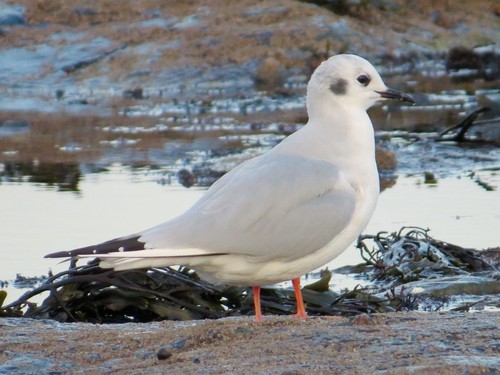
Bonaparte's Gull
28-33 cm (11-13 in) long, 76-84 cm wingspan
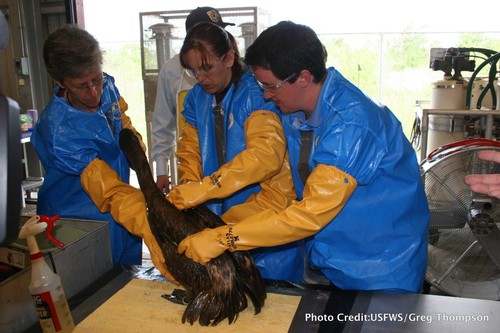
Brown Pelican
106-137 cm (42-54 in) long, 200-230 cm wingspan
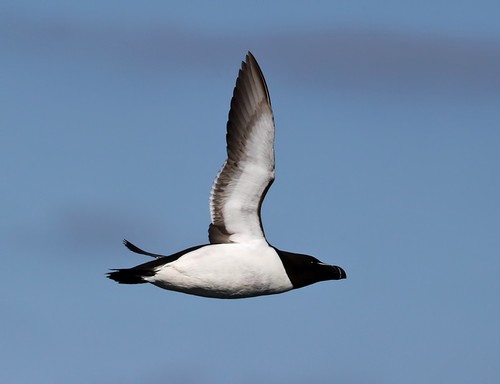
Razorbill
37-39 cm (15-15.5 in) long, 63-68 cm wingspan
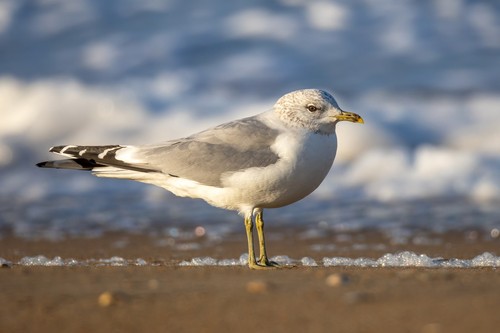
Common Gull
40-46 cm (16-18 in) long, 110-130 cm wingspan
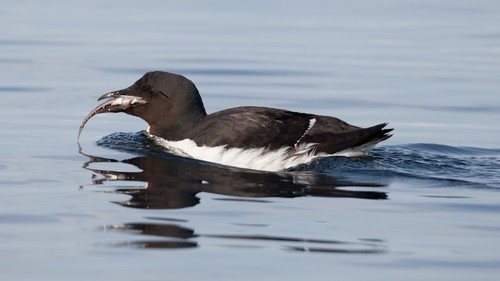
Thick-billed Murre
40-48 cm (16-19 in) long, 65-75 cm wingspan
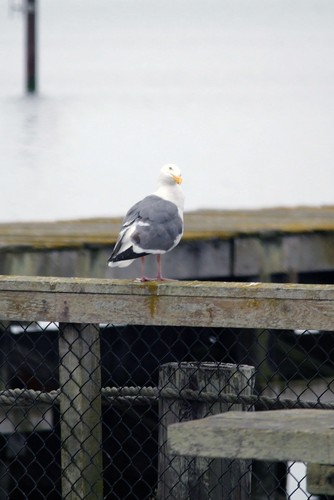
Western Gull
55-68 cm (22-27 in) long, 130-144 cm wingspan
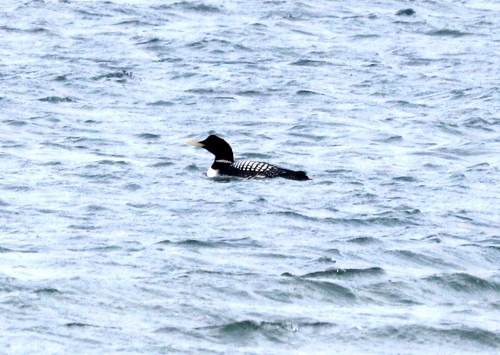
Yellow-billed Loon
76-97 cm (30-38 in) long, 135-152 cm wingspan
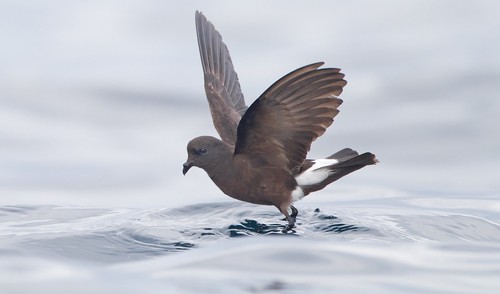
Wilson's Storm-Petrel
15-19 cm (6-7.5 in) long, wingspan 38-42 cm (15-16.5 in)
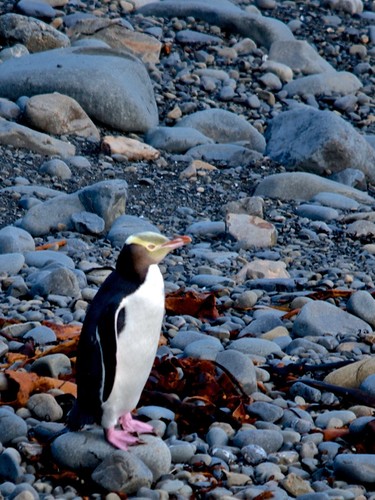
Yellow-eyed Penguin
62-79 cm (24-31 in) tall, 3-8.5 kg (6.6-18.7 lb)
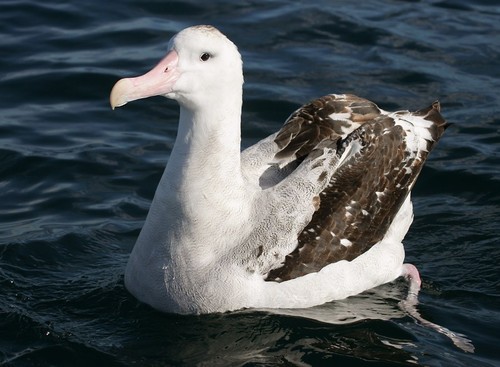
Wandering Albatross
107-135 cm (42-53 in) long, wingspan up to 3.5 m (11.5 ft)
Tufted Puffin
35-41 cm (14-16 in) long, about 63-70 cm wingspan