
Mew Gull Identification Guide
A small, gentle-faced, yellow-legged gull with a rounded head and dark eye, the North American representative of the Common Gull complex found along Pacific coasts, rivers, and open fields.
Read the full Mew Gull encyclopedia entry →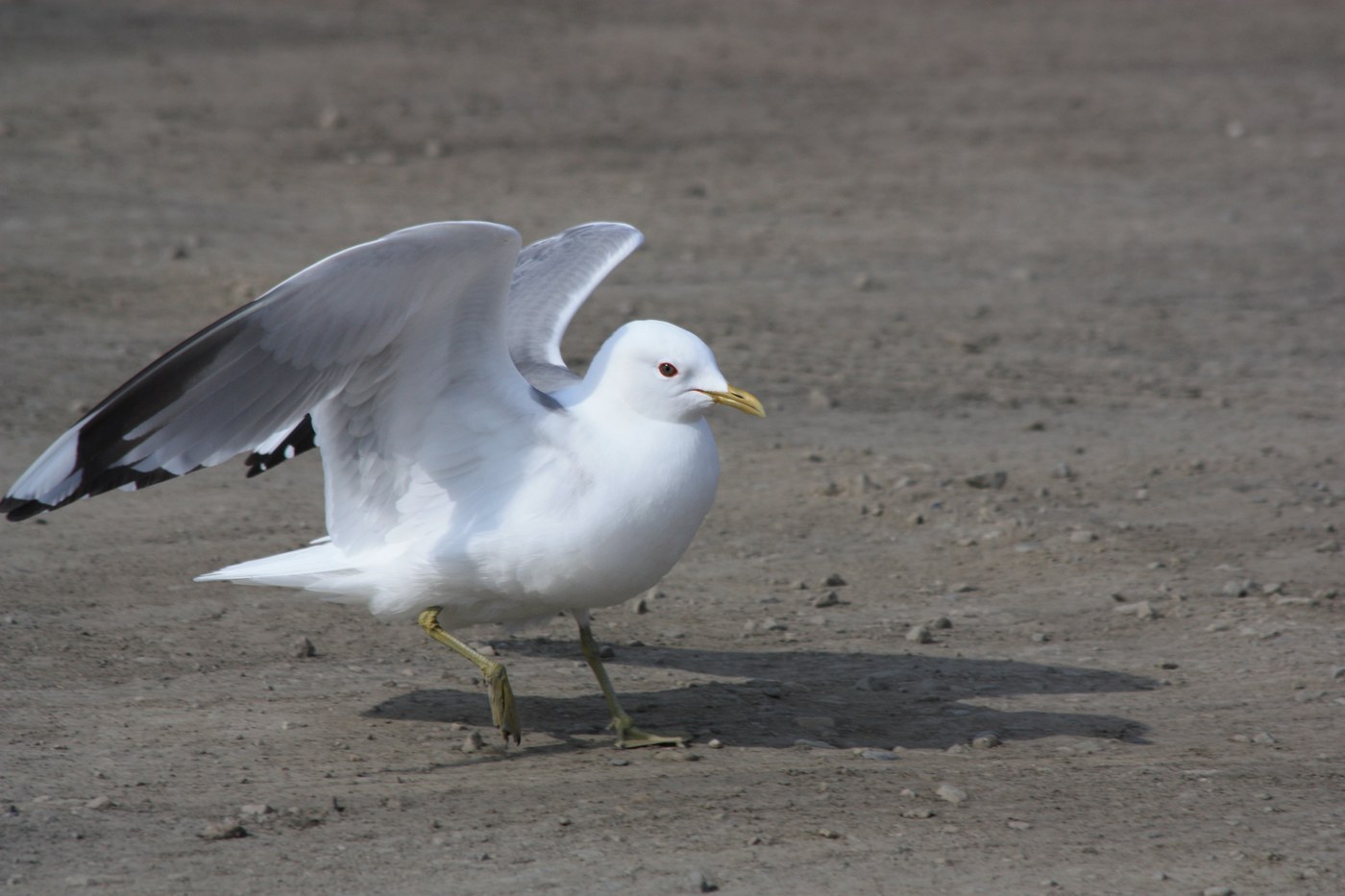
Key Field Marks
- Size & shape: A small gull, noticeably smaller and more delicate than Ring-billed or Herring Gull, about 40–46 cm (16–18 in) long, with a rounded head, gentle expression, short thin bill, and relatively long, slim wings.
- Adult plumage: Pale grey mantle and upperwing, white head and underparts (with fine brown streaking on the head in non-breeding/winter plumage), black wingtips with white spots ("mirrors").
- Bill: Short, thin, unmarked yellow-green bill without the black ring shown by Ring-billed Gull — a key separating feature from that similar species.
- Eye: Dark eye set in a rounded head gives a soft, gentle facial expression, quite different from the more angular, "meaner"-looking expression of Ring-billed or California Gull.
- Legs: Yellow-green to greenish-yellow legs, duller and less bright than the yellow legs of Ring-billed Gull.
- Immatures: Progress through a fairly typical small-gull sequence of brown-mottled juvenile plumage to grey-backed subadult plumages over about two years, showing a dark tail band and variable brown wing markings before reaching full adult plumage.
Similar Species
- Ring-billed Gull (Larus delawarensis): Larger and bulkier, with a black ring around the bill, a paler eye, brighter yellow legs, and a flatter-headed, more angular expression compared to Mew Gull's rounded head and dark eye.
- Common Gull (Larus canus, European form): Now often treated as a separate species/complex from American Mew Gull (sometimes split as "Short-billed Gull" in North America); very similar in appearance, distinguished mainly by subtle wingtip pattern differences and range.
- Kittiwake (non-breeding): Superficially similar small grey-and-white gull, but has black legs (not yellowish) and lacks the white wing-tip mirrors typical of Mew Gull.
Where & When to See It
- Breeding range: Western North America — Alaska and western Canada — nesting near lakes, rivers, and boggy tundra/taiga habitat, often on the ground or occasionally in low trees.
- Non-breeding/winter range: Pacific coast of North America from British Columbia south to California, favoring harbors, estuaries, beaches, agricultural fields, and parking lots/parks close to the coast; frequently forms large mixed flocks with other gulls.
- Season: Present on the Pacific Coast primarily from fall through spring (roughly September–April), retreating north to breed in Alaska/Canada during summer.
Voice
- Higher-pitched and more mewing or squealing than the deeper calls of larger gulls — the source of the name "Mew Gull" — a thin, plaintive "mew" or "kee-ow" note.
Frequently asked questions
How do I distinguish Mew Gull from Ring-billed Gull?
Mew Gull is smaller and daintier with a plain, unmarked bill, a dark eye, and a rounded, gentle-looking head, while Ring-billed Gull is larger with a black ring around its bill, a pale eye, and a flatter, more angular head shape.
Where is the best place to see Mew Gull in winter?
Along the Pacific Coast of North America from British Columbia to California, in harbors, estuaries, beaches, and coastal fields, often mixed with other gull species.
Why is it called Mew Gull?
The name comes from its higher-pitched, mewing or squealing call notes, softer and thinner than the calls of larger gull species.
Is Mew Gull the same species as the European Common Gull?
They are closely related and were long treated as one species; some current taxonomies split them, with the North American form sometimes called Short-billed Gull, distinguished mainly by subtle wing pattern and voice differences.