
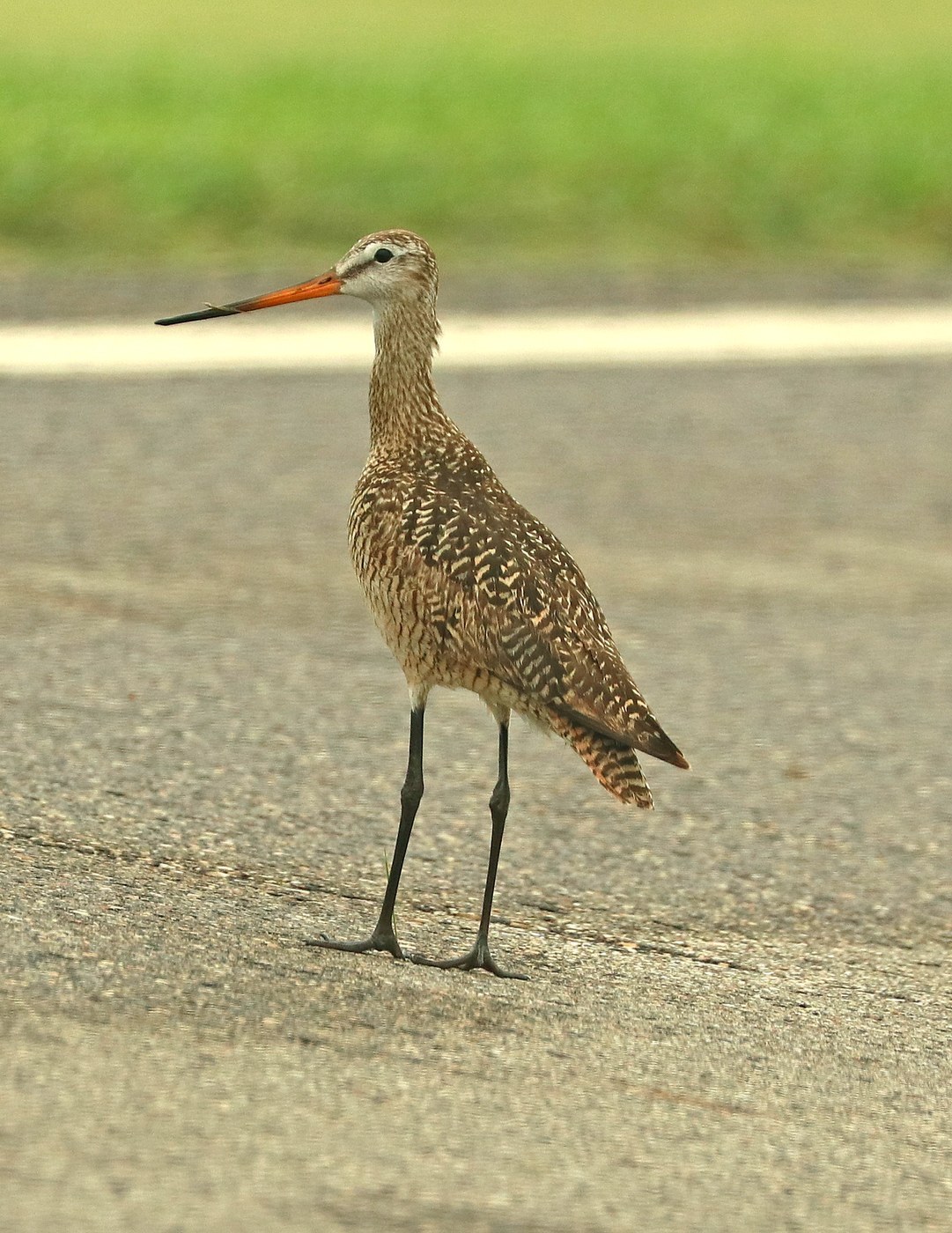
Marbled Godwit
Limosa fedoa
A large, cinnamon-buff shorebird with a long, slightly upturned bicolored bill, breeding on North American prairie wetlands and wintering along coasts.
- Size
- 42-48 cm (16.5-19 in) long, 70-88 cm wingspan
- Habitat
- prairie wetlands and grasslands (breeding); coastal mudflats, beaches, and estuaries (non-breeding)
- Type
- shorebird
Spotted a bird like this?
Identify any bird from a photo, free.
Overview
The Marbled Godwit is a large, warm cinnamon-buff shorebird, mottled and barred with dark brown throughout its plumage—hence the "marbled" name. Its most distinctive feature is a very long, slightly upturned bill that is pink at the base and dark toward the tip, used to probe deeply into mud and sand.
Sexes look similar, though females tend to have noticeably longer bills than males. In flight, the wings show warm cinnamon underwing linings, a useful field mark distinguishing it from other large godwits.
Once heavily hunted and much reduced, populations have recovered substantially, and the species remains a characteristic bird of both interior prairie wetlands and coastal shorelines.
How to identify it
Key field marks
- Large size with warm, mottled cinnamon-buff plumage overall
- Long, slightly upturned bill, pink at the base with a dark tip
- Cinnamon-colored underwing linings in flight
- Long, grayish legs
Similar species
- Bar-tailed Godwit and Black-tailed Godwit are grayer or more boldly patterned and lack the warm cinnamon tone throughout.
- Hudsonian Godwit is smaller and darker with black underwing coverts, not cinnamon.
- Long-billed Curlew has a strongly downcurved bill rather than an upturned one.
Habitat & range
Marbled Godwits breed primarily in wet prairie grasslands and shallow marshes of the north-central United States and south-central Canada, with additional isolated populations in Alaska.
Outside the breeding season they winter along coastal mudflats, beaches, estuaries, and lagoons of both the Pacific and Atlantic coasts of North America, south to Central America.
Behavior & voice
Voice
A loud, harsh, repeated call often rendered as ga-wit or radica, thought to be the origin of the name "godwit"; also gives sharp alarm notes on the breeding grounds.
Feeding
Probes deeply into mud, sand, or wet soil with its long bill to extract worms, mollusks, crustaceans, and insects; on prairie breeding grounds it also eats aquatic invertebrates and plant tubers.
Nesting
Nests on the ground in a shallow scrape within short grass, often near wetlands. Both parents share incubation, and the species is known for aggressively mobbing predators, including flying at intruders near the nest.
Frequently asked questions
How is the Marbled Godwit different from other godwits?
It is the warmest, most cinnamon-toned godwit, with cinnamon underwings, distinguishing it from the grayer Bar-tailed and Black-tailed Godwits and the darker Hudsonian Godwit.
Where does the Marbled Godwit breed?
Mainly in wet prairie grasslands of the north-central United States and south-central Canada, with a smaller population in Alaska.
What does a Marbled Godwit eat?
It probes mud and soil with its long bill for worms, mollusks, crustaceans, insects, and sometimes plant tubers.
Do male and female Marbled Godwits look different?
They look similar in plumage, but females typically have noticeably longer bills than males.
Marbled Godwit guides
In-depth guides for identifying, finding, and understanding Marbled Godwit.
Other birds you may enjoy
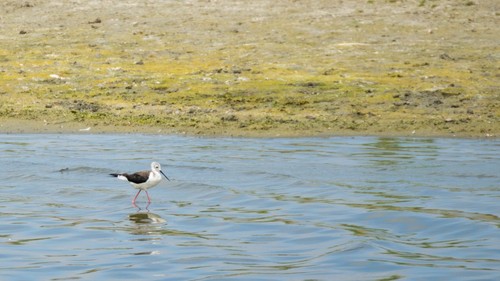
Black-winged Stilt
33-36 cm (13-14 in) long, wingspan 67-83 cm
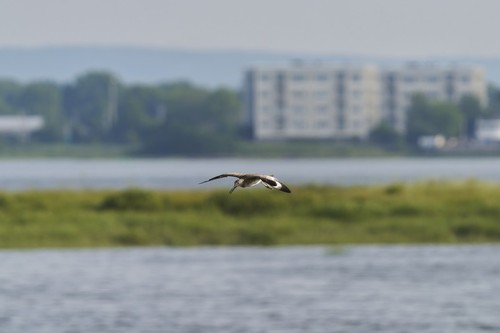
Willet
33-41 cm (13-16 in) long, 65-70 cm wingspan
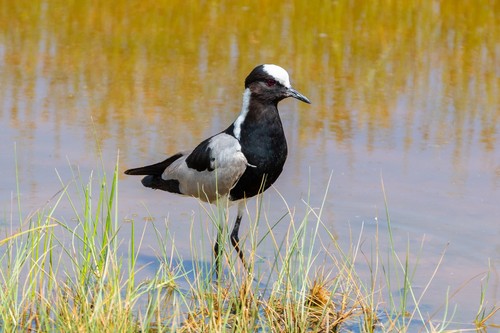
Blacksmith Lapwing
Body length about 30 cm; wingspan 55-65 cm
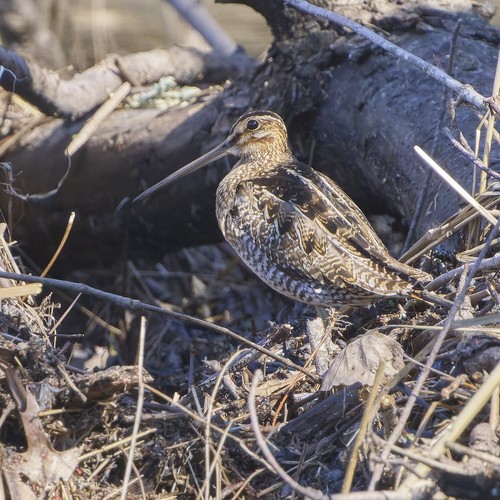
Wilson's Snipe
25-30 cm (10-12 in) long, 39-45 cm wingspan
Western Sandpiper
14-17 cm (5.5-6.7 in) long, 28-37 cm wingspan
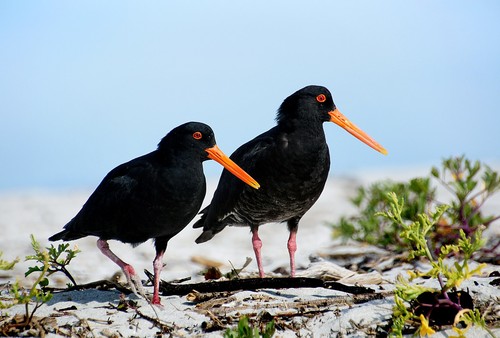
Variable Oystercatcher
46-49 cm (18-19 in) long
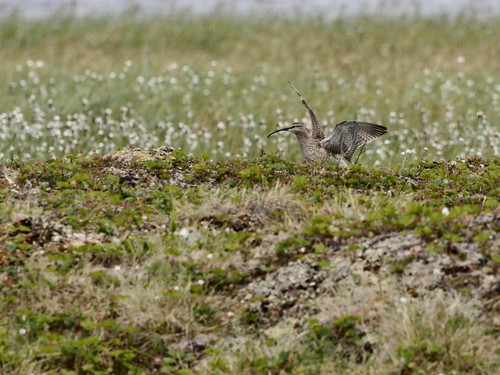
Whimbrel
40-46 cm (16-18 in) long, 76-89 cm wingspan
Wilson's Phalarope
22-24 cm (8.5-9.5 in) long, 37-43 cm wingspan
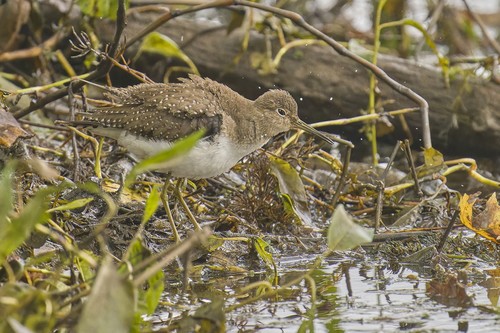
Solitary Sandpiper
19-23 cm (7.5-9 in) long, 50-56 cm wingspan
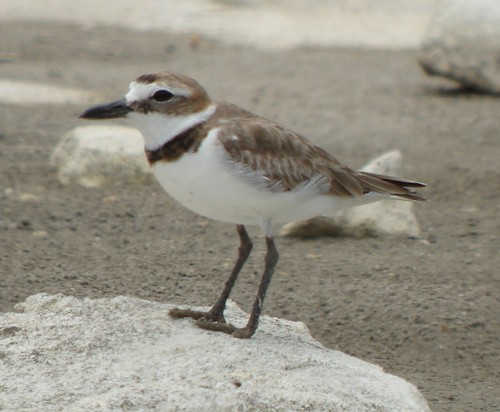
Wilson's Plover
17-19 cm (6.7-7.5 in) long, 45-50 cm wingspan
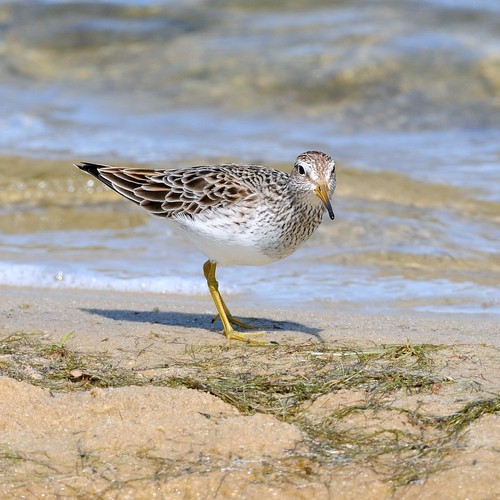
Pectoral Sandpiper
19-23 cm (7.5-9 in) long, 43-49 cm wingspan
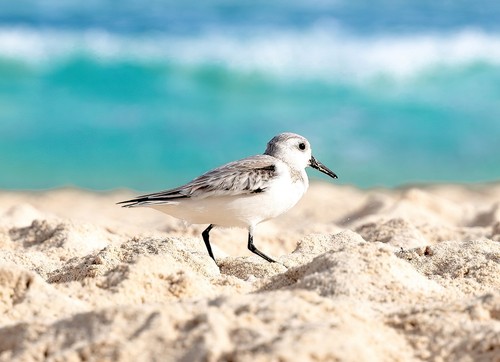
Sanderling
18-20 cm (7-8 in) long, 40-43 cm wingspan