
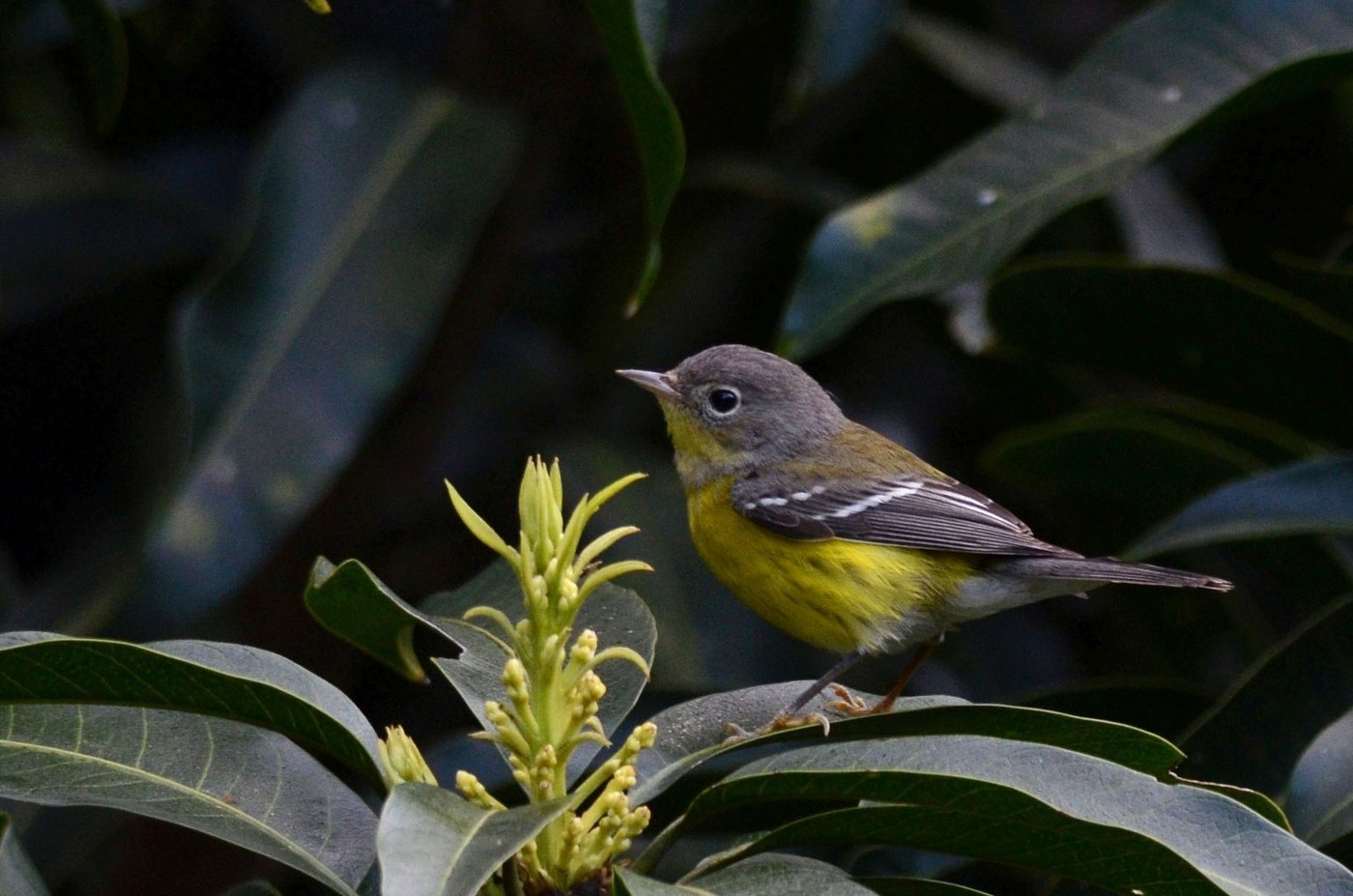
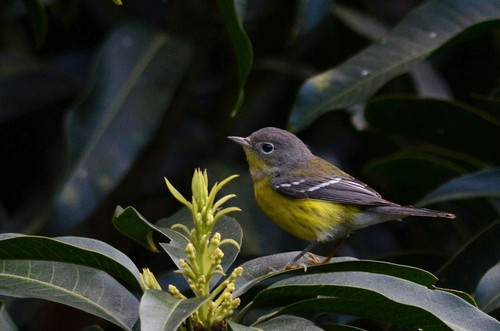
Magnolia Warbler
Setophaga magnolia
A boldly patterned warbler with a black-streaked yellow breast and a distinctive black-and-white tail band, best identified from below in flight.
- Size
- 11-13 cm (4.3-5.1 in) long, 16-19 cm wingspan
- Habitat
- dense young coniferous forest and spruce thickets for breeding; a variety of woodlands in migration
- Type
- songbird
Spotted a bird like this?
Identify any bird from a photo, free.
Overview
The Magnolia Warbler is a vividly patterned warbler, among the most striking in the spring warbler flocks that pass through eastern North America. Breeding males show a black face mask, a gray crown, a bold white eyebrow and eye-arc, and bright yellow underparts heavily streaked with black, forming a distinctive necklace-like band across the upper breast.
One of the most useful field marks is visible from below: the tail shows a broad white band across the middle with black at the base and tip, quite different from the corner-spotted tail pattern of most other warblers. Females and fall birds are duller versions of the male pattern but retain the diagnostic tail band, making this a reliably identifiable species in nearly any plumage.
How to identify it
Key Field Marks
- Bright yellow underparts with bold black streaking forming a necklace across the breast
- Gray crown and black face mask in breeding males
- Bold white wing patch
- Distinctive tail pattern: broad white band across the middle, black at base and tip (unique among warblers, best seen from below)
- Yellow rump
Similar Species
Yellow-rumped Warbler also shows a yellow rump but has a more subdued gray-brown body pattern and a different tail pattern with white corners rather than a central white band. Canada Warbler has a similar streaked necklace on a yellow breast but lacks the Magnolia's distinctive tail band and shows a complete white eye-ring rather than an eyebrow and eye-arc.
Habitat & range
Habitat
Magnolia Warblers breed in dense young coniferous forest, especially spruce and fir thickets, favoring areas with thick low to mid-level cover. During migration, they use a wide variety of woodland habitats.
Range
This species breeds across the boreal forest of Canada, the northeastern United States, and the Appalachians. It winters in Mexico, Central America, and the Caribbean.
Migration
Magnolia Warblers are medium- to long-distance Neotropical migrants, common and conspicuous during spring and fall migration throughout the eastern United States.
Behavior & voice
Behavior
Magnolia Warblers forage actively in dense foliage at low to mid-levels, frequently flicking and fanning the tail, which flashes its distinctive white band pattern.
Voice
The song is a short, sweet, whistled series, often rendered as 'weeta-weeta-weeteo.' The call is a nasal, husky 'chek.'
Feeding
It gleans insects and spiders from foliage, often at eye level or lower during migration, and occasionally makes short flights to catch flying insects.
Nesting & Breeding
The female builds a loose cup nest of twigs and grass, typically placed low in a young conifer, often with the nest bottom thin enough that eggs are visible from below. She lays 3-5 eggs.
Frequently asked questions
How do you identify a Magnolia Warbler?
Look for bright yellow underparts with bold black streaking forming a necklace, a gray crown with a black face mask in males, and a distinctive tail with a broad white band across the middle, best seen from below.
What is the best field mark for a Magnolia Warbler?
Its tail pattern is diagnostic: a wide white band across the middle of the tail with black at the base and tip, unlike the white-cornered tails of most other warblers.
Where do Magnolia Warblers breed?
They breed in dense young coniferous forest, especially spruce and fir thickets, across the boreal forest of Canada and parts of the northeastern United States.
What does a Magnolia Warbler eat?
It eats insects and spiders gleaned from foliage, typically foraging at low to middle heights.
Why is it called the Magnolia Warbler?
The name comes from an early specimen collected in a magnolia tree in the southern United States during migration, though the species has no special ecological tie to magnolias and breeds in northern conifer forest.
Magnolia Warbler guides
In-depth guides for identifying, finding, and understanding Magnolia Warbler.
Other birds you may enjoy
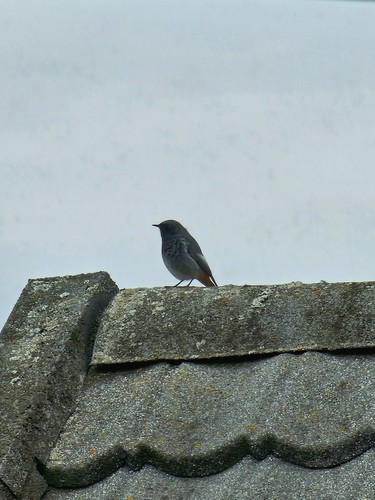
Black Redstart
13-14.5 cm (5.1-5.7 in) long, 23-26 cm wingspan
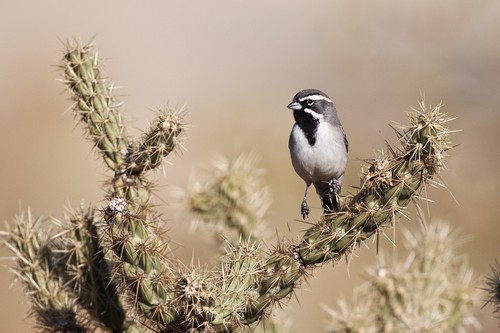
Black-throated Sparrow
12-14 cm (4.7-5.5 in) long, about 19-20 cm (7.5-8 in) wingspan
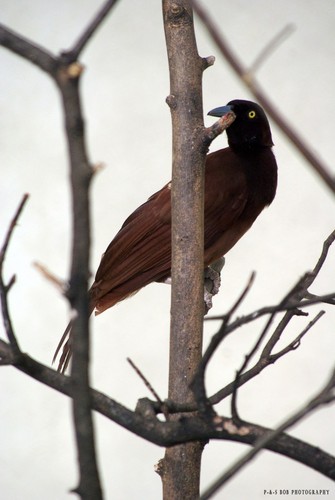
Greater Bird-of-paradise
Body about 43 cm; males with additional flank plumes up to 50 cm and long tail wires
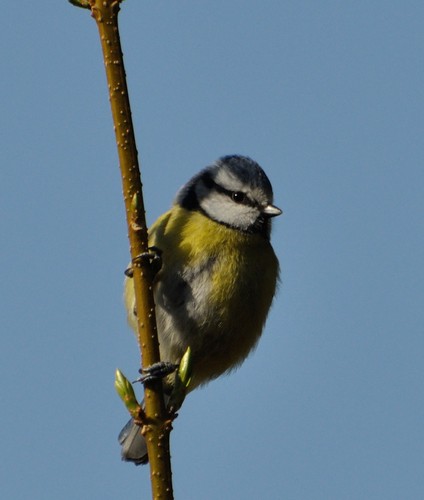
Blue Tit
11-12 cm (4.3-4.7 in) long, 17-20 cm wingspan
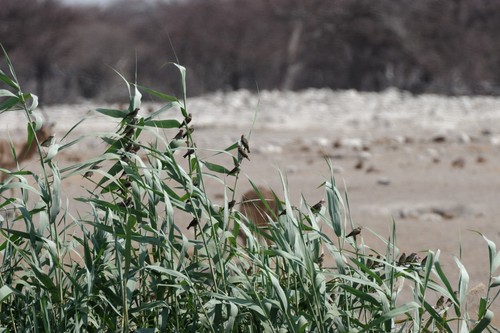
Red-billed Quelea
11.5–13 cm long, wingspan about 20–22 cm
White-plumed Antbird
13-14 cm (5-5.5 in) long
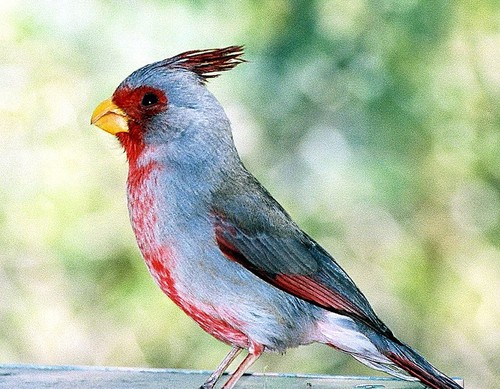
Pyrrhuloxia
19-22 cm (7.5-8.7 in) long, 30 cm wingspan
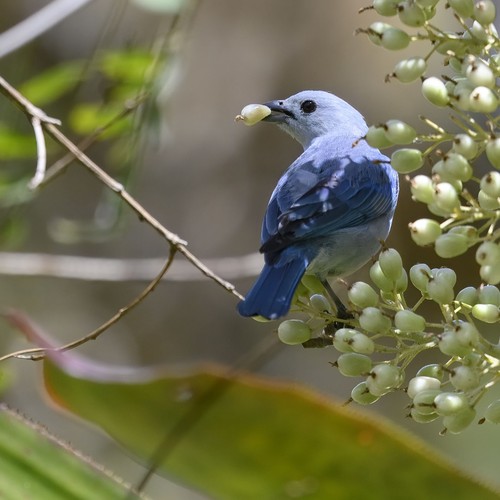
Blue-gray Tanager
16-18 cm (6-7 in) long
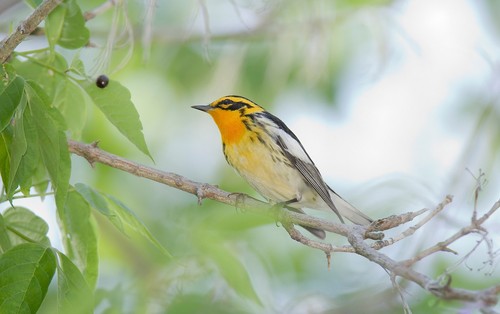
Blackburnian Warbler
11-13 cm (4.3-5.1 in) long, 20-22 cm wingspan
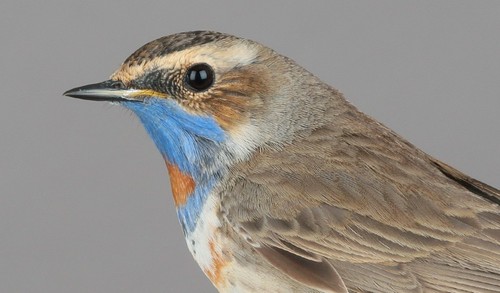
Bluethroat
13-14 cm (5.1-5.5 in) long, 20-22 cm wingspan
Eurasian Nuthatch
12-14.5 cm (4.7-5.7 in) long, 22.5-27 cm wingspan
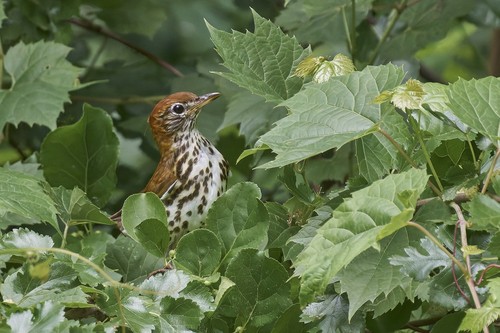
Wood Thrush
19-21 cm (7.5-8.3 in) long, about 33 cm (13 in) wingspan