
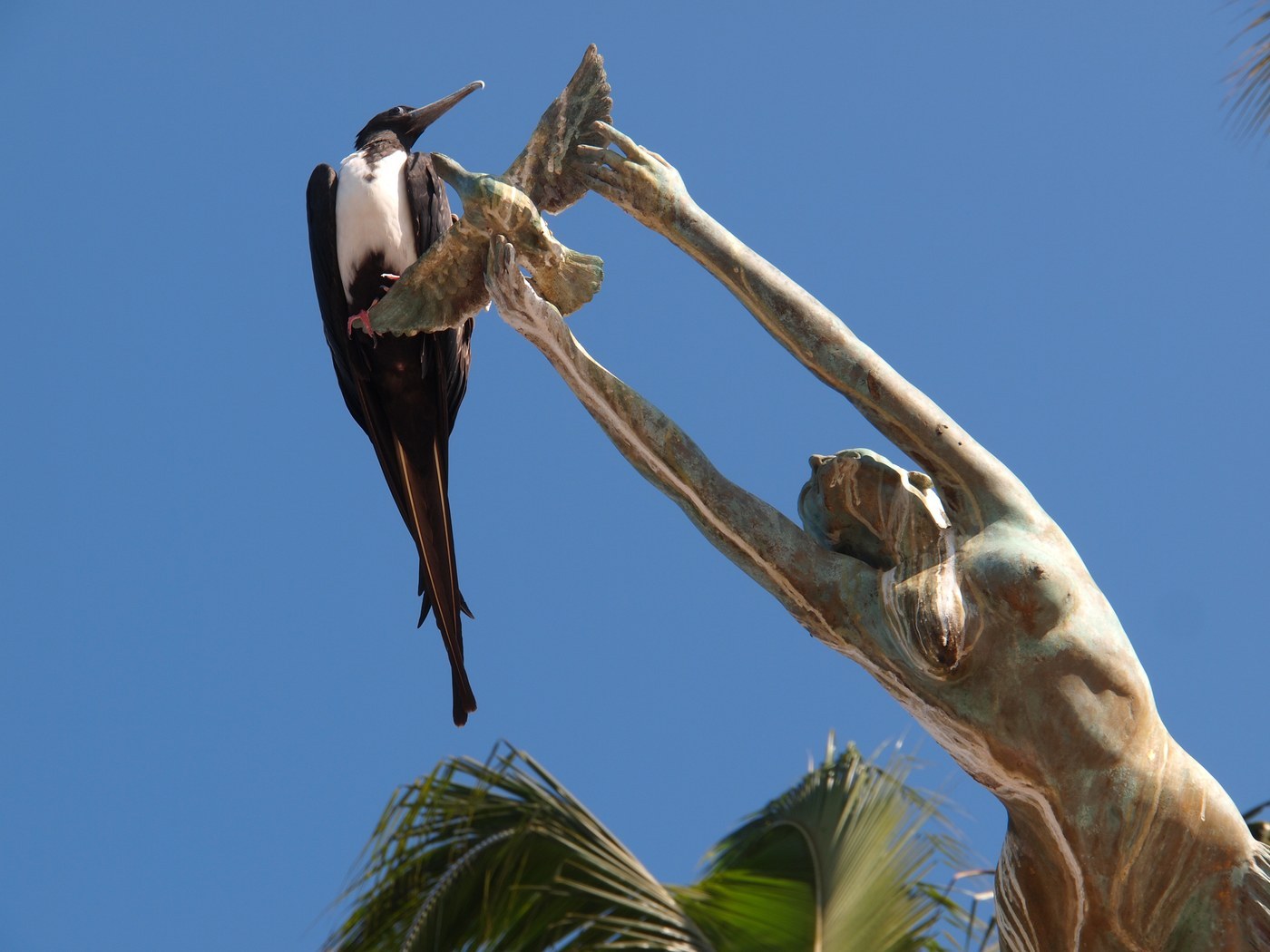
Magnificent Frigatebird
Fregata magnificens
A huge black seabird with an enormous wingspan and deeply forked tail, best known for the male's inflatable scarlet throat pouch.
- Size
- 89-114 cm (35-45 in) long, 217-244 cm wingspan
- Habitat
- tropical and subtropical coasts, islands, and open waters of the Americas
- Type
- seabird
Spotted a bird like this?
Identify any bird from a photo, free.
Overview
The Magnificent Frigatebird is an aerial master of the tropical Americas, with an extraordinarily long, angular wingspan relative to its light body weight, allowing it to soar for hours with barely a wingbeat. Plumage is glossy black overall, with males showing an iridescent green-purple sheen and an extraordinary bright red throat pouch that can be inflated into a huge balloon-like display during courtship. Females are larger than males and show a white breast patch, while juveniles have white heads and underparts.
With its long, hooked bill, deeply forked tail, and silhouette often compared to a pterodactyl, the Magnificent Frigatebird is one of the most dramatic and easily recognized seabirds of the New World tropics.
How to identify it
Key field marks
- Long, narrow, angular wings and deeply forked tail
- All-black plumage in adult males, with iridescent sheen
- Bright red inflatable throat pouch in breeding males
- Females show a white breast patch; juveniles have white heads
Similar species
- Great Frigatebird and Lesser Frigatebird are very similar in shape but occur mainly in the Indo-Pacific; female Great Frigatebirds have a pale throat and reddish eye-ring, and Lesser Frigatebirds show white patches on the flanks ("spurs").
- No other New World seabird combines the deeply forked tail with such long, angular wings, making silhouette alone often diagnostic in the Americas.
Habitat & range
Magnificent Frigatebirds breed colonially on remote islands and mangrove cays along tropical and subtropical coasts from the southeastern United States and the Gulf of Mexico south through the Caribbean and Central America to Peru and Brazil. They rarely land on water, instead roosting and nesting in trees, shrubs, or mangroves on predator-free islands.
The species ranges widely over coastal and offshore waters while foraging, and non-breeding birds and juveniles can wander far from colonies, occasionally appearing well outside the normal breeding range after storms.
Behavior & voice
Behavior
Frigatebirds are famous kleptoparasites, harassing other seabirds such as boobies and terns in flight until they drop or regurgitate their catch, which the frigatebird then snatches in midair; they also snatch flying fish and squid directly from the surface without landing on water, as their plumage is not waterproof.
Voice
Males produce a distinctive drumming, rattling sound with their bill against the inflated throat pouch during courtship displays, along with wavering whistles and clattering bill sounds.
Feeding
Flying fish, squid, and stolen food make up the diet, along with occasional seabird eggs and chicks taken opportunistically from unguarded nests.
Nesting and breeding
Males gather in groups and inflate their red gular pouches while calling to attract females; pairs build a stick nest in low trees or shrubs, and the single chick has one of the longest dependency periods of any bird, sometimes remaining reliant on parents for over a year.
Frequently asked questions
Why do male Magnificent Frigatebirds have red throats?
Males inflate a bright red gular pouch like a balloon during courtship displays to attract females, drumming it with their bill and calling.
Can frigatebirds land on water?
No, their plumage lacks waterproofing, so they avoid landing on the sea and instead snatch food from the surface in flight or steal it from other birds.
What does 'kleptoparasitism' mean for frigatebirds?
It refers to their habit of chasing and harassing other seabirds in flight until they drop their catch, which the frigatebird then catches in midair.
How big is a Magnificent Frigatebird's wingspan?
Up to about 244 cm (over 8 feet), one of the largest wingspan-to-body-weight ratios of any bird, enabling sustained soaring flight.
Where do Magnificent Frigatebirds live?
They breed on tropical islands and mangrove coasts throughout the Americas, from the Gulf of Mexico and Caribbean south to Peru and Brazil.
Magnificent Frigatebird guides
In-depth guides for identifying, finding, and understanding Magnificent Frigatebird.
Other birds you may enjoy
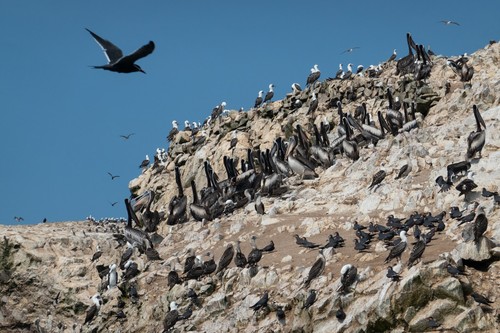
Peruvian Pelican
137-152 cm (54-60 in) long, up to 228 cm wingspan
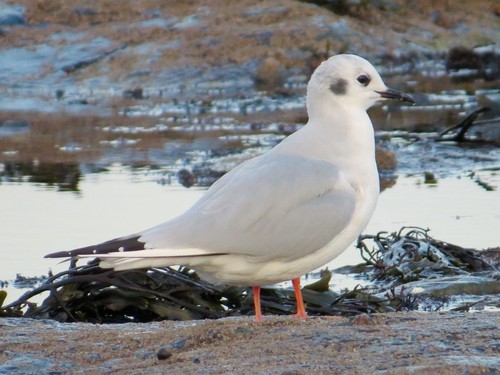
Bonaparte's Gull
28-33 cm (11-13 in) long, 76-84 cm wingspan

Brown Pelican
106-137 cm (42-54 in) long, 200-230 cm wingspan
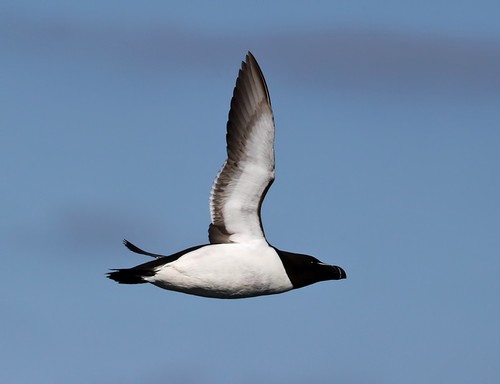
Razorbill
37-39 cm (15-15.5 in) long, 63-68 cm wingspan
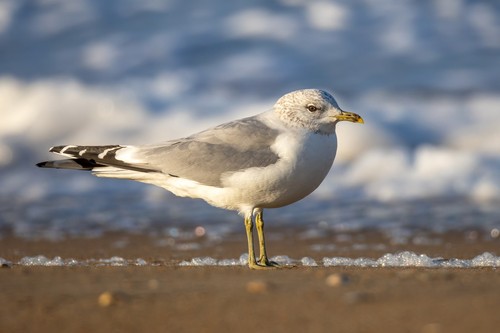
Common Gull
40-46 cm (16-18 in) long, 110-130 cm wingspan
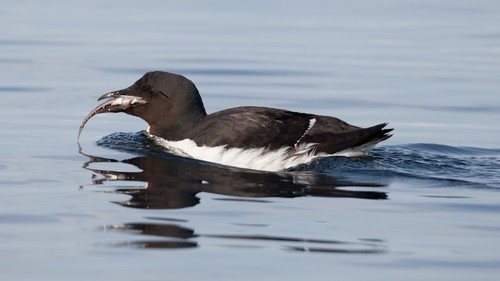
Thick-billed Murre
40-48 cm (16-19 in) long, 65-75 cm wingspan
Western Gull
55-68 cm (22-27 in) long, 130-144 cm wingspan
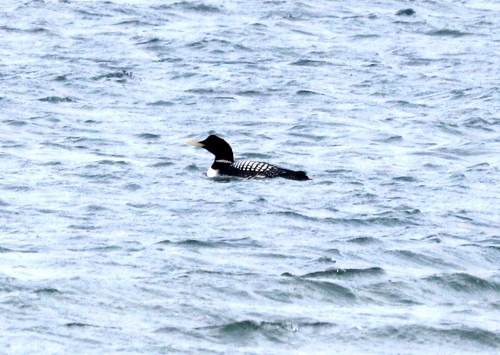
Yellow-billed Loon
76-97 cm (30-38 in) long, 135-152 cm wingspan
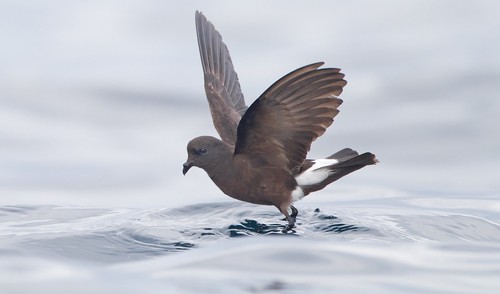
Wilson's Storm-Petrel
15-19 cm (6-7.5 in) long, wingspan 38-42 cm (15-16.5 in)

Yellow-eyed Penguin
62-79 cm (24-31 in) tall, 3-8.5 kg (6.6-18.7 lb)
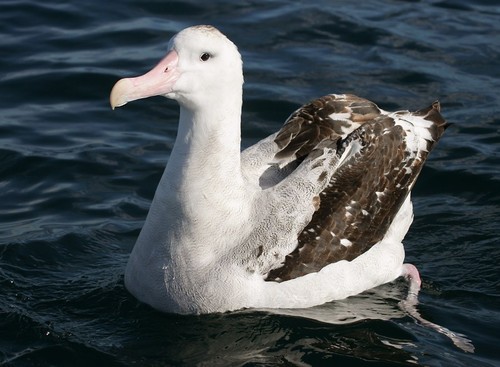
Wandering Albatross
107-135 cm (42-53 in) long, wingspan up to 3.5 m (11.5 ft)

Tufted Puffin
35-41 cm (14-16 in) long, about 63-70 cm wingspan