
Lucy's Warbler
Leiothlypis luciae
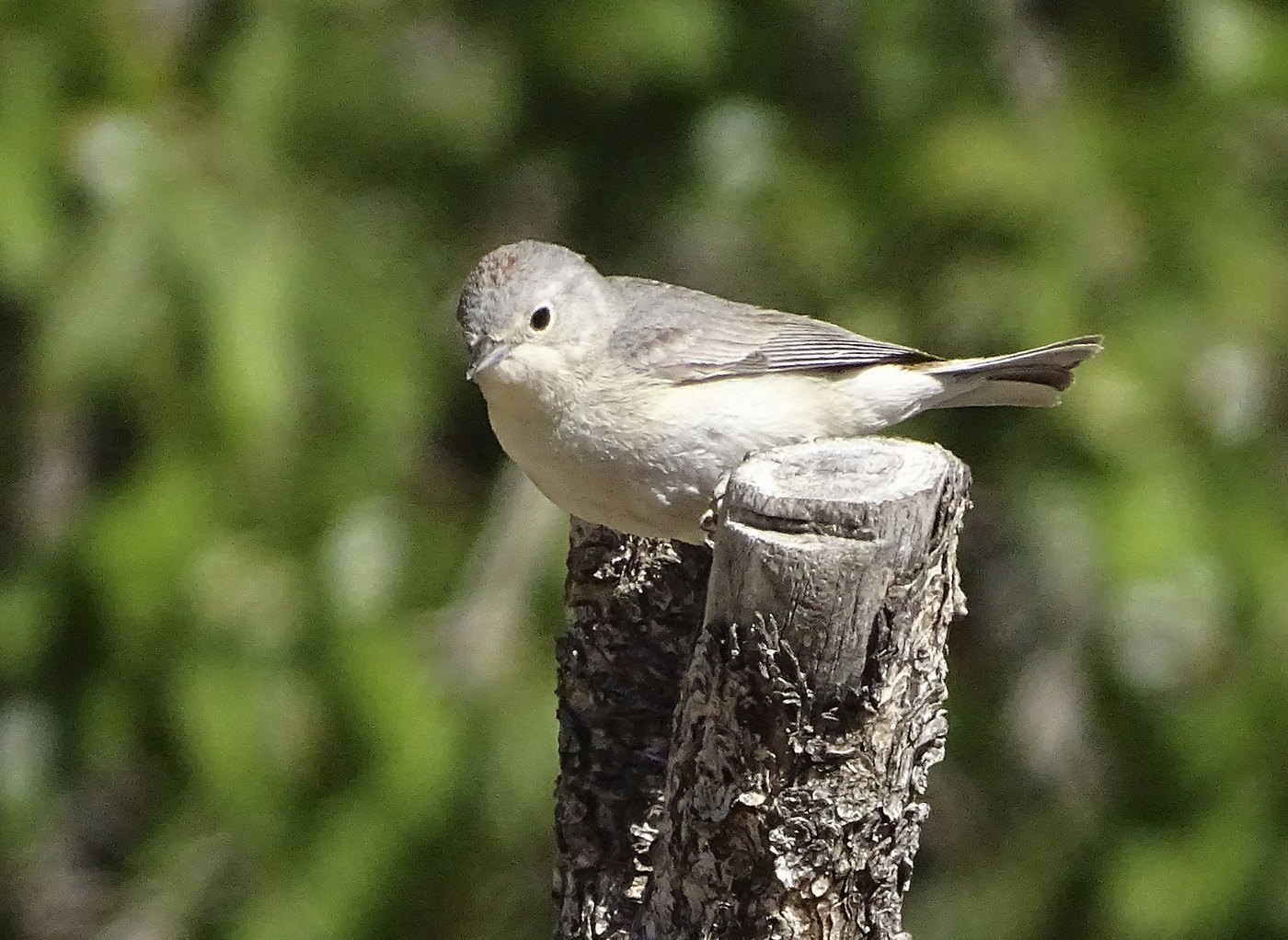
One of North America's smallest warblers, a pale gray desert species with a chestnut rump and crown patch, unusual among warblers for nesting in tree cavities.
- Size
- 10-11 cm (4-4.3 in) long, 17-18 cm wingspan
- Habitat
- desert riparian woodland, especially mesquite bosques
- Type
- songbird
Spotted a bird like this?
Identify any bird from a photo, free.
Overview
Lucy's Warbler is among the smallest of all North American warblers, a delicate, pale gray bird adapted to hot, arid desert riparian habitat. Its plumage is plain pale gray above and whitish below, brightened only by a rich chestnut patch on the rump, which is often the most visible field mark, and a smaller chestnut crown patch that is frequently concealed.
Unusually for a warbler, Lucy's Warbler nests in cavities, one of only two North American warblers to do so (the other being Prothonotary Warbler), using natural tree hollows and old woodpecker holes in desert trees such as mesquite and cottonwood.
How to identify it
Key field marks
- Very small size, among the smallest North American warblers
- Plain pale gray upperparts, whitish underparts
- Chestnut patch on the rump, often the most visible field mark, especially in flight
- Smaller, often-concealed chestnut crown patch
- White eyering
Similar species
Virginia's Warbler is larger, shows yellow on the breast and undertail coverts, and lacks the chestnut rump patch. No other regularly occurring warbler in its desert range combines such small size, plain gray plumage, and a chestnut rump.
Habitat & range
Lucy's Warblers breed in desert riparian woodland of the southwestern United States and northern Mexico, with a strong association with mesquite bosques as well as willow and cottonwood groves along desert washes and rivers.
They winter along the Pacific coast of western Mexico, in similarly warm, dry habitats.
Behavior & voice
Behavior and voice
Lucy's Warblers forage actively in the foliage of mesquite and other desert trees and shrubs, gleaning insects and spiders, and often stay well hidden within the dense canopy of their riparian habitat.
The song is a rapid, descending warble, often rendered as "chiff-chiff-chiff-chiff, che-che-che-che."
Nesting
Unusually for a warbler, Lucy's Warbler nests in cavities, using natural hollows, old woodpecker holes, or crevices in mesquite, cottonwood, or willow trees, and will also use nest boxes. Clutches typically contain 3-5 eggs.
Frequently asked questions
What makes Lucy's Warbler unusual among warblers?
It is one of only two North American warblers that nest in cavities (the other being Prothonotary Warbler), using natural tree hollows or old woodpecker holes rather than building an open cup nest.
How can you identify a Lucy's Warbler?
Look for its very small size, plain pale gray plumage, and a chestnut patch on the rump, which is often the most visible field mark, especially in flight.
What habitat does Lucy's Warbler need?
Desert riparian woodland, especially mesquite bosques, as well as willow and cottonwood groves along desert washes and rivers in the southwestern United States and northern Mexico.
Who was Lucy's Warbler named after?
It was named by ornithologist James Graham Cooper in honor of Lucy Hunter Baird, daughter of naturalist Spencer Baird.
Where does Lucy's Warbler spend the winter?
Along the Pacific coast of western Mexico, in warm, dry habitat similar to its breeding range.
Lucy's Warbler guides
In-depth guides for identifying, finding, and understanding Lucy's Warbler.
Other birds you may enjoy

Black Redstart
13-14.5 cm (5.1-5.7 in) long, 23-26 cm wingspan

Black-throated Sparrow
12-14 cm (4.7-5.5 in) long, about 19-20 cm (7.5-8 in) wingspan

Greater Bird-of-paradise
Body about 43 cm; males with additional flank plumes up to 50 cm and long tail wires

Blue Tit
11-12 cm (4.3-4.7 in) long, 17-20 cm wingspan

Red-billed Quelea
11.5–13 cm long, wingspan about 20–22 cm
White-plumed Antbird
13-14 cm (5-5.5 in) long

Pyrrhuloxia
19-22 cm (7.5-8.7 in) long, 30 cm wingspan

Blue-gray Tanager
16-18 cm (6-7 in) long

Blackburnian Warbler
11-13 cm (4.3-5.1 in) long, 20-22 cm wingspan

Bluethroat
13-14 cm (5.1-5.5 in) long, 20-22 cm wingspan

Eurasian Nuthatch
12-14.5 cm (4.7-5.7 in) long, 22.5-27 cm wingspan

Wood Thrush
19-21 cm (7.5-8.3 in) long, about 33 cm (13 in) wingspan