
Lucy's Warbler Identification Guide
The smallest North American warbler, a plain gray desert-scrub bird revealed by its rufous rump patch and cavity-nesting habits.
Read the full Lucy's Warbler encyclopedia entry →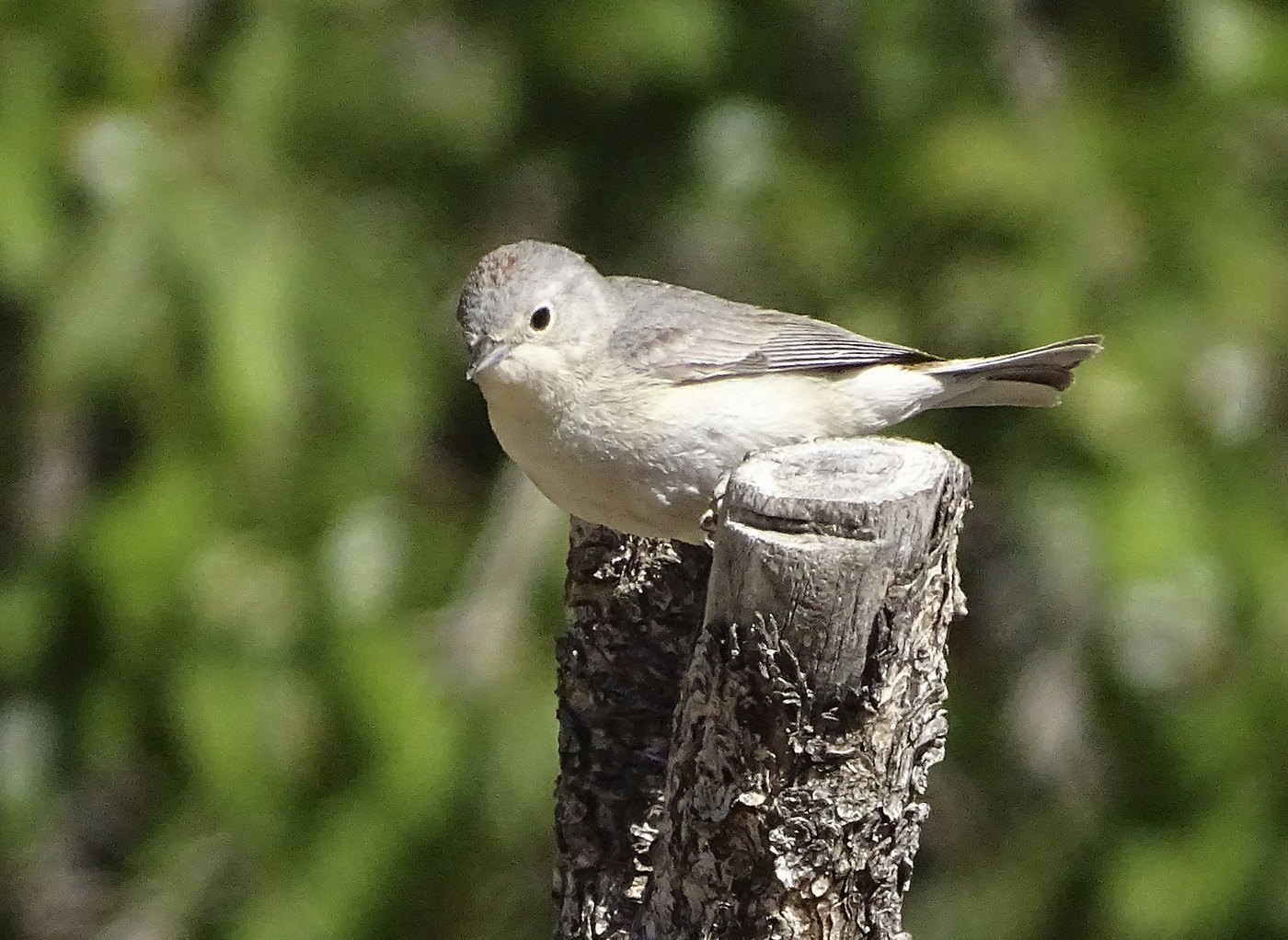
Key Field Marks
- Size & shape: The smallest warbler in North America — small, compact, plain-looking, with a fine, thin bill and a fairly short tail.
- Plumage: Overall pale gray above and whitish below, lacking the bold streaking, wing bars, or yellow tones shown by most warblers, giving it an almost nondescript appearance at first glance.
- Rump: A rufous-chestnut rump patch, often the most visible field mark, especially noticeable in flight or when the bird flicks its tail and wings while foraging.
- Crown: Adult males show a rufous-chestnut crown patch, though it is often subtle or partly concealed and not always easy to see in the field.
- Eyering: Thin white eyering on an otherwise plain gray face.
- Behavior: Active and warbler-typical, gleaning insects from foliage; notably, it nests in cavities (tree holes, crevices, sometimes old woodpecker holes) rather than open cup nests, unusual among wood-warblers.
Separating from Virginia's Warbler
- Underparts color: Virginia's Warbler shows a yellow patch on the breast and yellow undertail coverts; Lucy's Warbler lacks yellow almost entirely, appearing essentially gray-and-white apart from the rufous rump and crown patches.
- Habitat: Lucy's favors low desert washes and mesquite bosques; Virginia's favors higher-elevation brushy slopes and pinyon-juniper or chaparral habitat, though migrants can occur together.
- Overall impression: Lucy's looks plainer and paler; Virginia's shows more contrast from the yellow patches.
Where & When to See It
Breeds in desert riparian habitats of the southwestern United States — mesquite bosques, desert washes, and streamside thickets in the Sonoran Desert region of Arizona, southeastern California, southern Nevada, and New Mexico. It is a summer resident, arriving early in spring, and winters in western Mexico.
Voice
Song is a fast, bubbly series of whistled notes, often ending with a lower flourish. The call note is a sharp, dry chip.
Frequently asked questions
What is the most distinctive feature of Lucy's Warbler?
Its rufous-chestnut rump patch is the most visible field mark on an otherwise plain gray-and-white bird — it is also the smallest warbler species in North America.
How do you separate Lucy's Warbler from Virginia's Warbler?
Lucy's Warbler lacks the yellow breast patch and yellow undertail coverts that Virginia's Warbler shows, and it favors lower desert wash and mesquite habitat rather than higher brushy slopes.
Where does Lucy's Warbler nest?
Unusually for a warbler, it nests in cavities such as tree holes, bark crevices, or old woodpecker holes, typically in mesquite bosques and desert riparian growth.
Where and when can you find Lucy's Warbler in the U.S.?
It breeds in desert washes and mesquite habitat of the Sonoran Desert region (Arizona, southeastern California, southern Nevada, New Mexico) from spring through summer, then winters in western Mexico.