
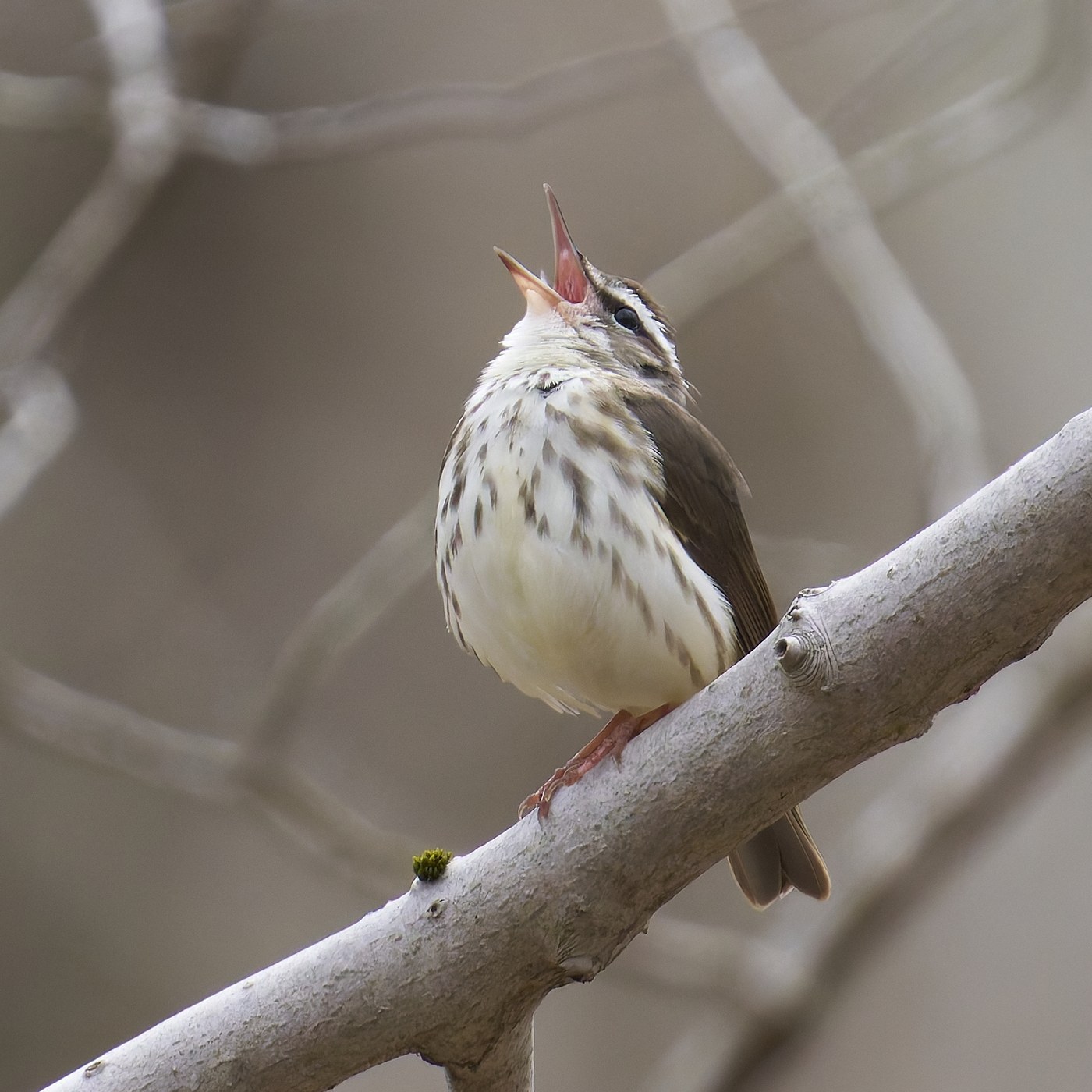
Louisiana Waterthrush
Parkesia motacilla
A large, thrush-like ground warbler tied closely to clear, fast-moving forest streams, constantly bobbing its tail as it walks along the water's edge.
- Size
- 14-17 cm (5.5-6.7 in) long, 23-25 cm wingspan
- Habitat
- forested ravines along fast-flowing, rocky streams
- Type
- songbird
Spotted a bird like this?
Identify any bird from a photo, free.
Overview
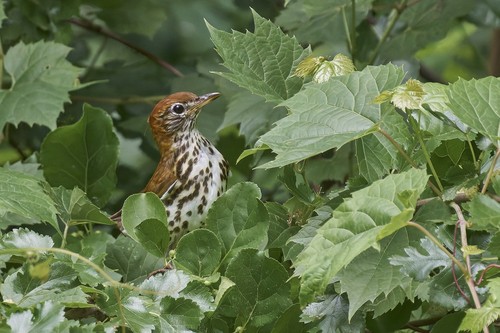
The Louisiana Waterthrush is a large, robust warbler built more like a small thrush than a typical warbler, with brown upperparts, boldly streaked underparts, and a habit of walking rather than hopping as it forages along streambanks. A broad white eyebrow stripe that widens noticeably behind the eye is one of its most useful field marks, along with buffy or pinkish-washed flanks.
One of the earliest-arriving spring migrants among the warblers, it is tightly associated with clean, fast-flowing, rocky woodland streams throughout its breeding range, making its presence a good indicator of high water quality.
How to identify it
Key field marks
- Brown upperparts, whitish underparts with bold dark streaking
- Broad white eyebrow stripe that widens behind the eye
- Buffy or pinkish wash on the flanks
- Relatively large bill
- Constant tail-bobbing/teetering while walking
Similar species
Northern Waterthrush is very similar but has a narrower, more evenly width eyebrow stripe throughout its length, a finely streaked or spotted throat (Louisiana's throat is largely unmarked), whiter underparts lacking the buffy flank wash, and a smaller bill. Habitat is also a clue: Louisiana favors fast-moving streams, while Northern favors still or slow-moving water.
Habitat & range
Louisiana Waterthrushes breed along fast-flowing, rocky, forested streams across the eastern United States, particularly in wooded ravines and hillside drainages where clear, well-oxygenated water supports abundant aquatic insect life. They are considered a sensitive indicator species for stream water quality due to their strong dependence on healthy headwater habitats.
They winter along similar streams and wetland edges in Mexico, Central America, and the Caribbean, and are among the earliest warblers to arrive on their breeding grounds in spring.
Behavior & voice
Behavior and voice
Louisiana Waterthrushes walk along streambanks and wade into shallow water, constantly bobbing and teetering the tail and rear body as they forage for aquatic insects, larvae, and other invertebrates, occasionally taking small fish or amphibians.
The song is a loud, ringing series of clear slurred whistles followed by a jumbled, rapid warble, often rendered as "sew-sew-sew, chew-chew-chew-chew-chew."
Nesting
The nest is built into a stream bank, among exposed tree roots, or in a crevice near the water, constructed of leaves, moss, and rootlets. Clutches typically hold 4-6 eggs.
Frequently asked questions
How do you tell a Louisiana Waterthrush from a Northern Waterthrush?
Louisiana Waterthrush has a broad eyebrow stripe that widens behind the eye, a largely unstreaked white throat, buffy flanks, and a larger bill; it also prefers fast-flowing streams. Northern Waterthrush has a narrower, evenly wide eyebrow, a finely streaked throat, whiter underparts, and favors still or slow water.
Why does a waterthrush bob its tail?
Both waterthrush species constantly teeter and bob their tail and rear body while walking, a behavior thought to help with balance or possibly to flush prey, though its exact function isn't fully settled.
Is the Louisiana Waterthrush actually a thrush?
No, despite its thrush-like size, shape, and ground-walking habits, it is a member of the New World warbler family and only resembles a thrush superficially.
Why is the Louisiana Waterthrush considered an indicator species?
Its strong dependence on clean, fast-flowing, well-oxygenated headwater streams makes its presence and breeding success a useful signal of good water quality in forested watersheds.
What does a Louisiana Waterthrush eat?
Mostly aquatic and terrestrial insects and other invertebrates found along streambanks, occasionally small fish or amphibians.
Louisiana Waterthrush guides
In-depth guides for identifying, finding, and understanding Louisiana Waterthrush.
Other birds you may enjoy
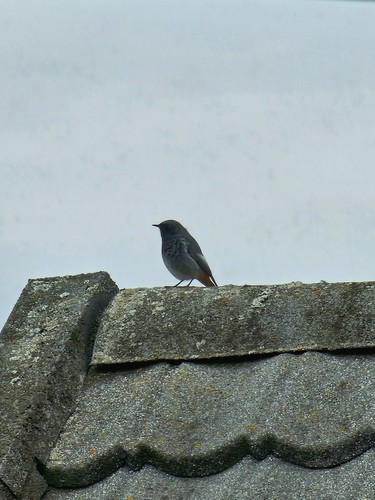
Black Redstart
13-14.5 cm (5.1-5.7 in) long, 23-26 cm wingspan
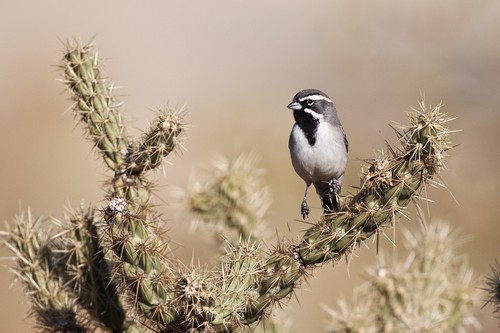
Black-throated Sparrow
12-14 cm (4.7-5.5 in) long, about 19-20 cm (7.5-8 in) wingspan
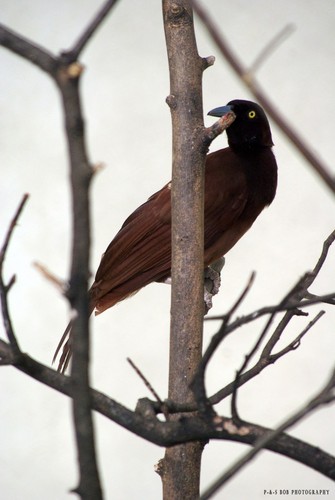
Greater Bird-of-paradise
Body about 43 cm; males with additional flank plumes up to 50 cm and long tail wires
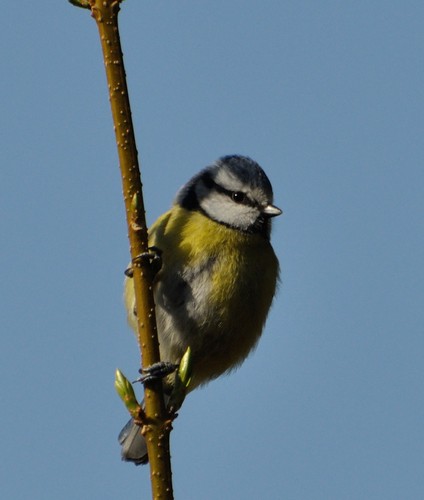
Blue Tit
11-12 cm (4.3-4.7 in) long, 17-20 cm wingspan
Red-billed Quelea
11.5–13 cm long, wingspan about 20–22 cm
White-plumed Antbird
13-14 cm (5-5.5 in) long
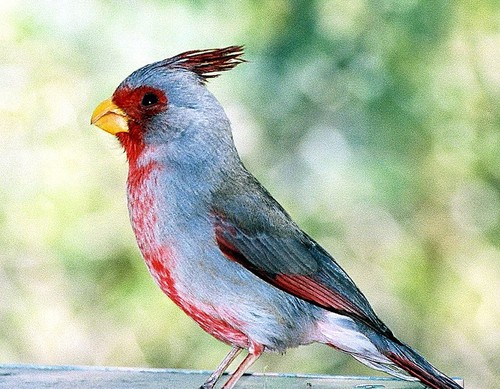
Pyrrhuloxia
19-22 cm (7.5-8.7 in) long, 30 cm wingspan
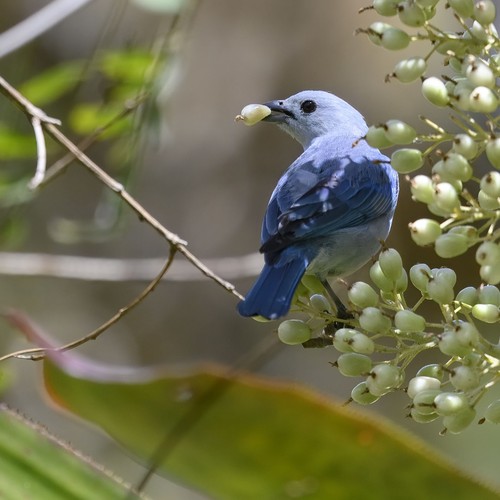
Blue-gray Tanager
16-18 cm (6-7 in) long
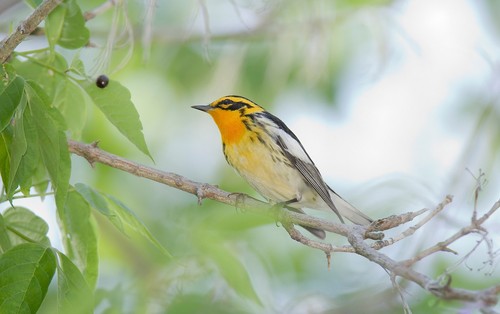
Blackburnian Warbler
11-13 cm (4.3-5.1 in) long, 20-22 cm wingspan
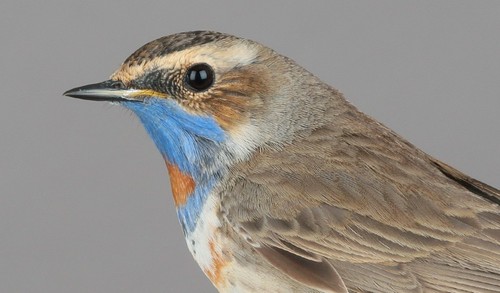
Bluethroat
13-14 cm (5.1-5.5 in) long, 20-22 cm wingspan
Eurasian Nuthatch
12-14.5 cm (4.7-5.7 in) long, 22.5-27 cm wingspan
Wood Thrush
19-21 cm (7.5-8.3 in) long, about 33 cm (13 in) wingspan