
Louisiana Waterthrush Identification Guide
A large, streamside warbler with a bold flaring white eyebrow and constant tail-bobbing, best separated from Northern Waterthrush by voice and habitat.
Read the full Louisiana Waterthrush encyclopedia entry →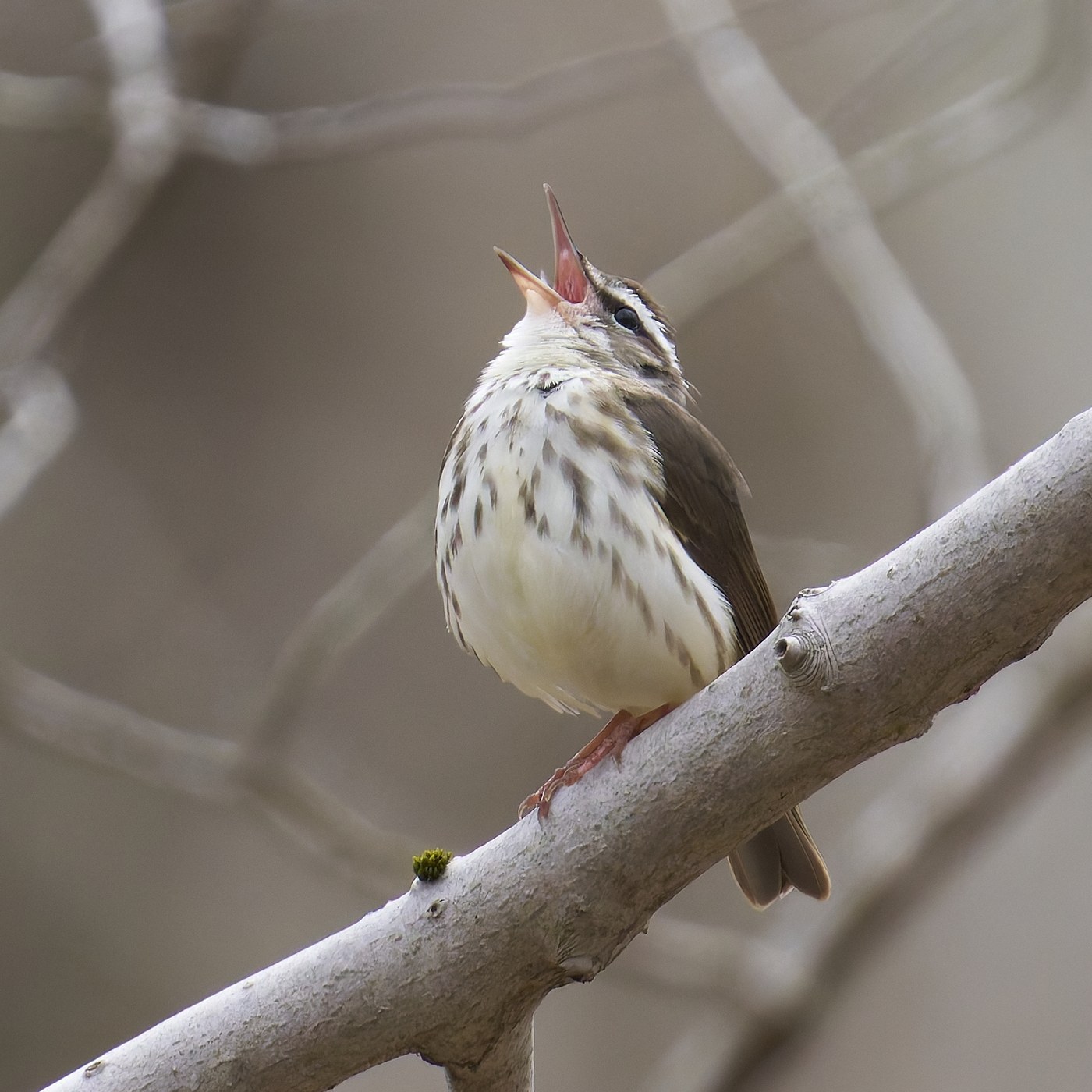
Key Field Marks
- Size & shape: A large, thrush-like warbler that walks (rather than hops) along stream edges, constantly bobbing and teetering its tail and rear body — a signature behavior shared with the closely related Northern Waterthrush.
- Plumage: Brown upperparts, heavily streaked underparts, and a bold white eyebrow stripe that is broad and flares noticeably wider behind the eye.
- Throat: Clean, unstreaked white throat.
- Flanks/undertail: Warm buffy to pinkish-buff wash, notably unlike the yellow tones some Northern Waterthrushes show.
- Legs: Bright pink, and the bill is proportionately larger and longer than Northern Waterthrush's.
Separating from Northern Waterthrush
This is one of the most frequently confused warbler pairs, but several features together are reliable:
- Eyebrow stripe: Louisiana's is broader, whiter, and flares distinctly wider behind the eye, tapering to a point in front; Northern's is narrower, more uniform in width, and often tinged buffy or yellowish.
- Throat: Louisiana has an unstreaked white throat; Northern typically shows fine streaking on the throat (though this can be subtle).
- Underparts wash: Louisiana shows buffy-pink flanks and undertail coverts; Northern often shows a yellowish tinge to the underparts, especially early in fall.
- Bill size: Louisiana's bill is noticeably longer and heavier.
- Habitat: Louisiana strongly prefers fast-moving, clear, rocky forest streams and ravines; Northern favors stiller water — wooded swamps, bogs, and pond edges — though there is some overlap on migration.
- Voice: Songs and call notes differ clearly (see below) and are often the most decisive clue.
Where & When to See It
Breeds along forested, fast-flowing streams and ravines in the eastern United States, arriving notably early in spring (among the first wood-warblers to return, often in March in the southern part of its range). It winters in the Caribbean and Central America, again favoring clear streams and forested wetlands.
Voice
Song is a loud, ringing series of clear, slurred, descending whistled notes that breaks into a jumbled, chattering warble at the end — louder and more emphatic than Northern Waterthrush's song. The call note is a sharp, metallic chink.
Frequently asked questions
What is the best way to distinguish Louisiana from Northern Waterthrush?
Look for a broad, flaring white eyebrow stripe, an unstreaked white throat, buffy-pink (not yellow) underparts, and a longer bill on Louisiana Waterthrush; habitat (fast rocky streams versus still swamps) and voice are also strong clues.
Why do waterthrushes bob their tails?
Both Louisiana and Northern Waterthrush constantly teeter their tail and rear body while walking along water's edge, a behavior thought to help flush insect prey; it does not by itself separate the two species since both do it.
When does Louisiana Waterthrush arrive in spring?
It is one of the earliest-returning wood-warblers to the eastern U.S., often arriving in March in the southern part of its breeding range.
What kind of stream habitat does Louisiana Waterthrush prefer?
Clear, fast-moving, rocky forest streams and ravines, in contrast to Northern Waterthrush's preference for stiller wooded swamps, bogs, and pond margins.