
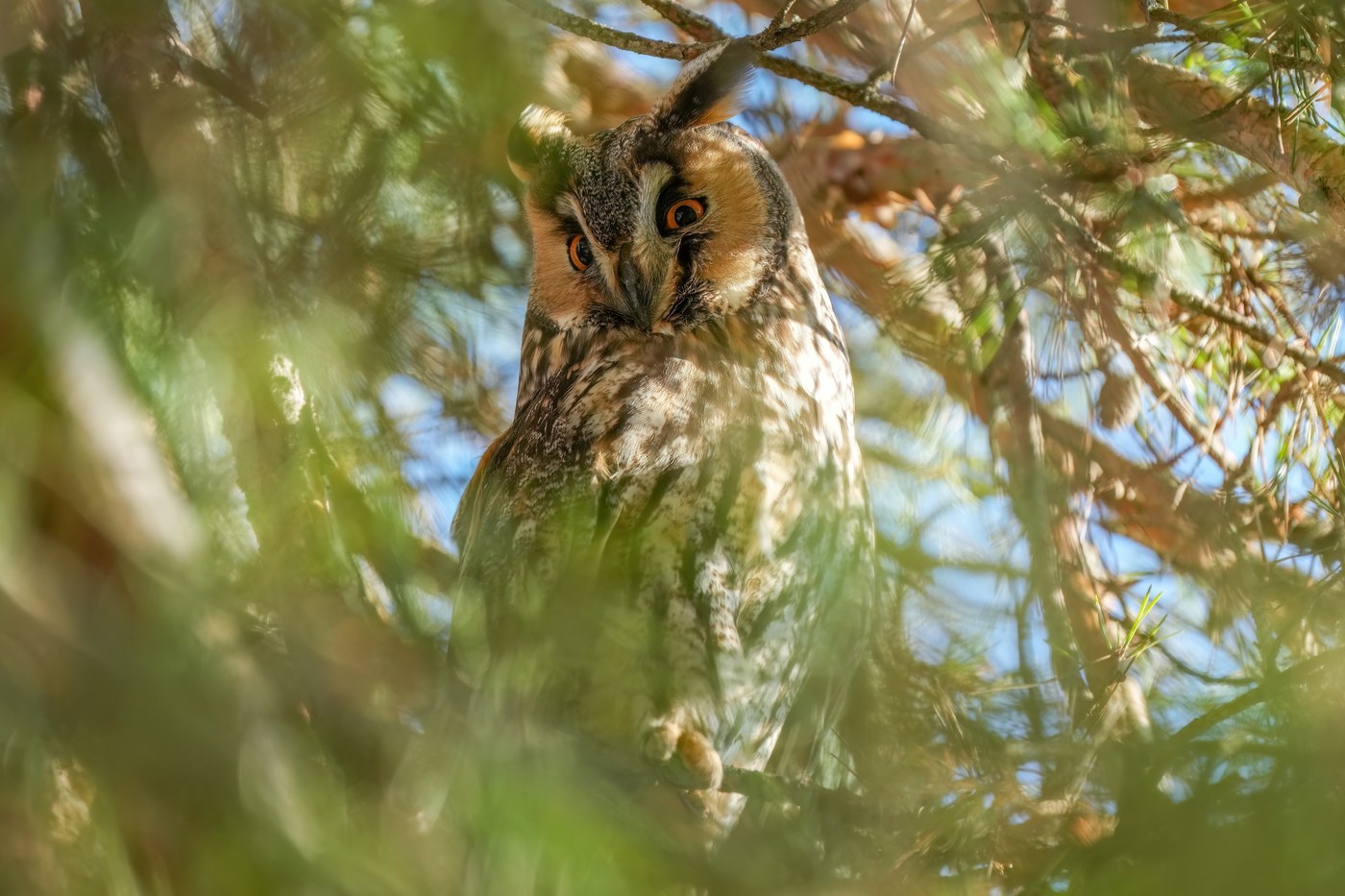
Long-eared Owl
Asio otus
A slender, secretive woodland owl with long, close-set ear tufts and a strikingly thin, upright roosting posture.
- Size
- 31-40 cm (12-16 in) long, 86-102 cm wingspan
- Habitat
- dense conifer or mixed woodland edges near open fields and grasslands
- Type
- owl
Spotted a bird like this?
Identify any bird from a photo, free.
Overview
The Long-eared Owl is a medium-sized, remarkably slim owl best known for its tall, closely spaced ear tufts, which give it a startled, cat-like expression. It is a master of camouflage, roosting motionless against tree trunks where its streaked, mottled plumage blends seamlessly with bark and foliage.
Adults have rich tawny-orange facial discs bordered in black, intricately patterned brown, buff, and gray upperparts, and heavily streaked underparts. When alarmed, the owl compresses its body and raises its ear tufts, becoming almost impossible to spot at rest.
Highly secretive and largely nocturnal, this species is far more often heard than seen, and communal winter roosts of a dozen or more birds are a well-known phenomenon among birders.
How to identify it
Key Field Marks
- Long, vertical ear tufts set close together near the center of the crown
- Orange facial disc bordered by a dark rim
- Slim body with vertically streaked underparts
- Orange patches at the base of the primaries visible in flight
Similar Species
- Great Horned Owl is much bulkier with widely spaced ear tufts and a white throat patch; Long-eared Owl is noticeably slimmer with closer-set tufts.
- Short-eared Owl has very short, often invisible ear tufts, pale yellow eyes, and hunts in open flight over fields by day, unlike the strictly nocturnal, woodland-roosting Long-eared Owl.
- Roosting Long-eared Owls appear extremely thin and elongated compared to other owls of similar size.
Habitat & range
This owl favors dense stands of conifers or thick shrubby woodland for daytime roosting and nesting, typically adjacent to open grassland, meadow, or agricultural fields used for hunting. It occurs across much of North America, Europe, and Asia in the Northern Hemisphere.
Northern populations are migratory and often gather at traditional winter roost sites in thickets, sometimes with many individuals using the same trees for weeks at a time, while southern populations may be resident.
Behavior & voice
Behavior
Strictly nocturnal, Long-eared Owls roost by day pressed close to tree trunks, elongating their bodies and raising ear tufts to resemble a broken branch. Outside the breeding season they are notably social for owls, forming communal winter roosts.
Voice
The male's advertising call is a low, breathy, evenly spaced "hoo... hoo... hoo," repeated at intervals and audible mainly at night. Both sexes also give a range of barking, whining, and cat-like mewing calls near the nest.
Feeding
They hunt almost exclusively over open ground at night, coursing low with buoyant, silent flight and relying heavily on hearing to locate voles and other small mammals hidden in vegetation.
Nesting & Breeding
Long-eared Owls do not build their own nests, instead taking over old stick nests built by crows, hawks, or magpies in dense trees. Clutches usually contain 4-6 eggs, and the female alone incubates while the male provisions her with food.
Frequently asked questions
What do Long-eared Owl ear tufts do?
The tufts are simply feathers, unrelated to hearing; they help with camouflage and communication, making the owl look like a broken branch when raised at rest.
Where do Long-eared Owls nest?
They do not build their own nests; they reuse old stick nests built by crows, hawks, magpies, or squirrels in dense trees.
How do you tell a Long-eared Owl from a Great Horned Owl?
The Long-eared Owl is much slimmer with close-set ear tufts and an orange facial disc, while the Great Horned Owl is bulkier with widely spaced tufts and a white throat patch.
Are Long-eared Owls social birds?
Outside the breeding season they often roost communally in dense thickets, sometimes with a dozen or more individuals sharing the same trees through winter.
Long-eared Owl guides
In-depth guides for identifying, finding, and understanding Long-eared Owl.
Other birds you may enjoy
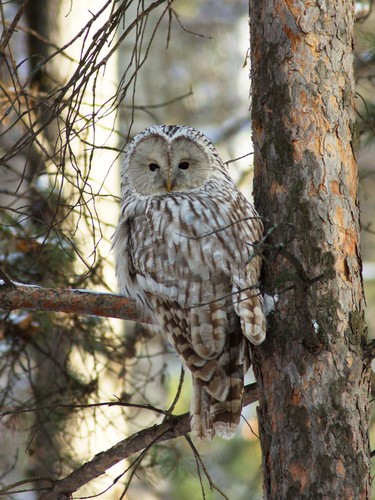
Ural Owl
50-62 cm long, wingspan about 1.0-1.3 m
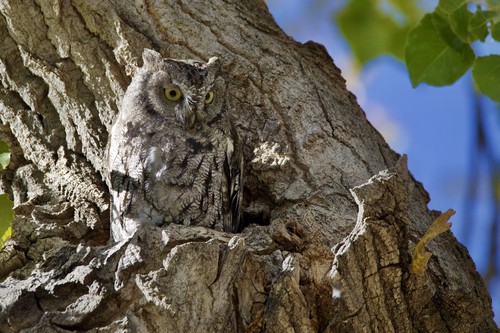
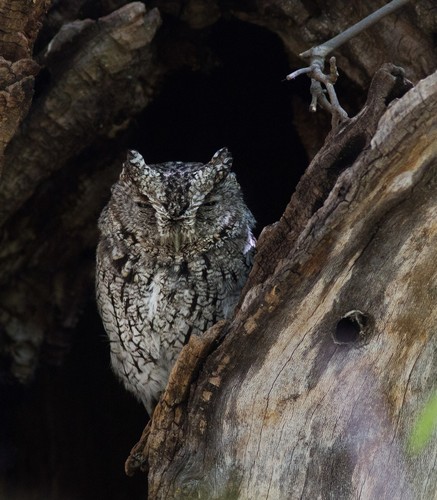
Western Screech-Owl
19-25 cm (7.5-10 in) long, about 55 cm (21.5 in) wingspan
Whiskered Screech-Owl
17-19 cm (6.7-7.5 in) long, 43 cm wingspan
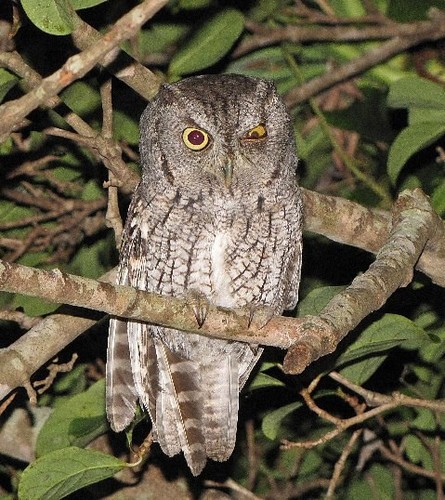
Tawny Owl
37-43 cm (15-17 in) long, 81-96 cm wingspan
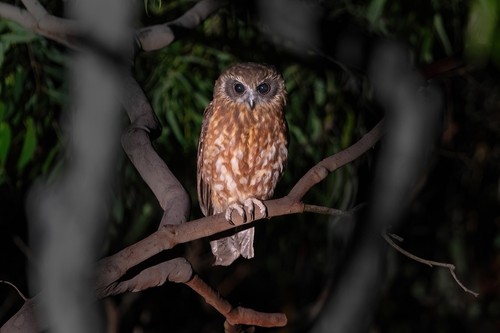
Screech Owl
16-25 cm long, wingspan about 46-61 cm
Southern Boobook
27-36 cm (11-14 in) long
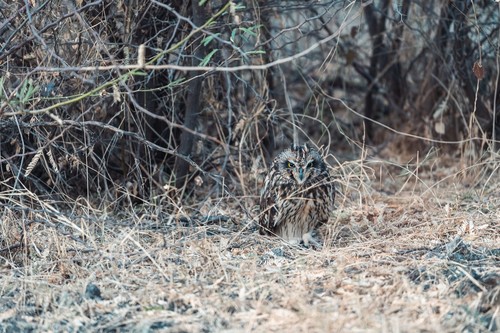
Short-eared Owl
34-42 cm (13-17 in) long, 85-110 cm wingspan
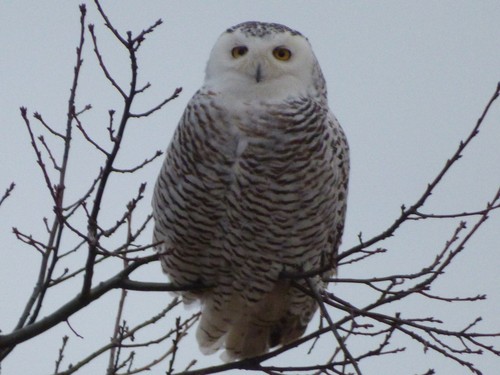
Snowy Owl
52-71 cm (20-28 in) long, 125-150 cm (49-59 in) wingspan
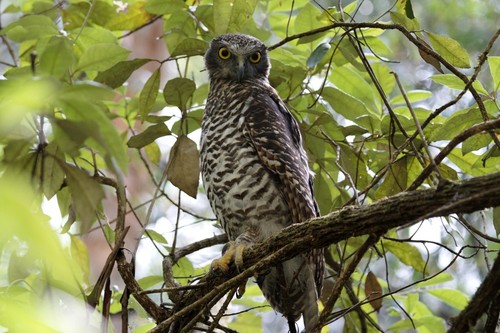
Powerful Owl
60-65 cm (24-26 in) long, 112-135 cm (44-53 in) wingspan
Northern Saw-whet Owl
18-21 cm (7-8.5 in) long, 42-56 cm (17-22 in) wingspan
Northern Pygmy-Owl
16-18 cm (6.3-7.1 in) long, 35-39 cm wingspan
Spotted Owl
43-48 cm (17-19 in) long, 100-114 cm wingspan