
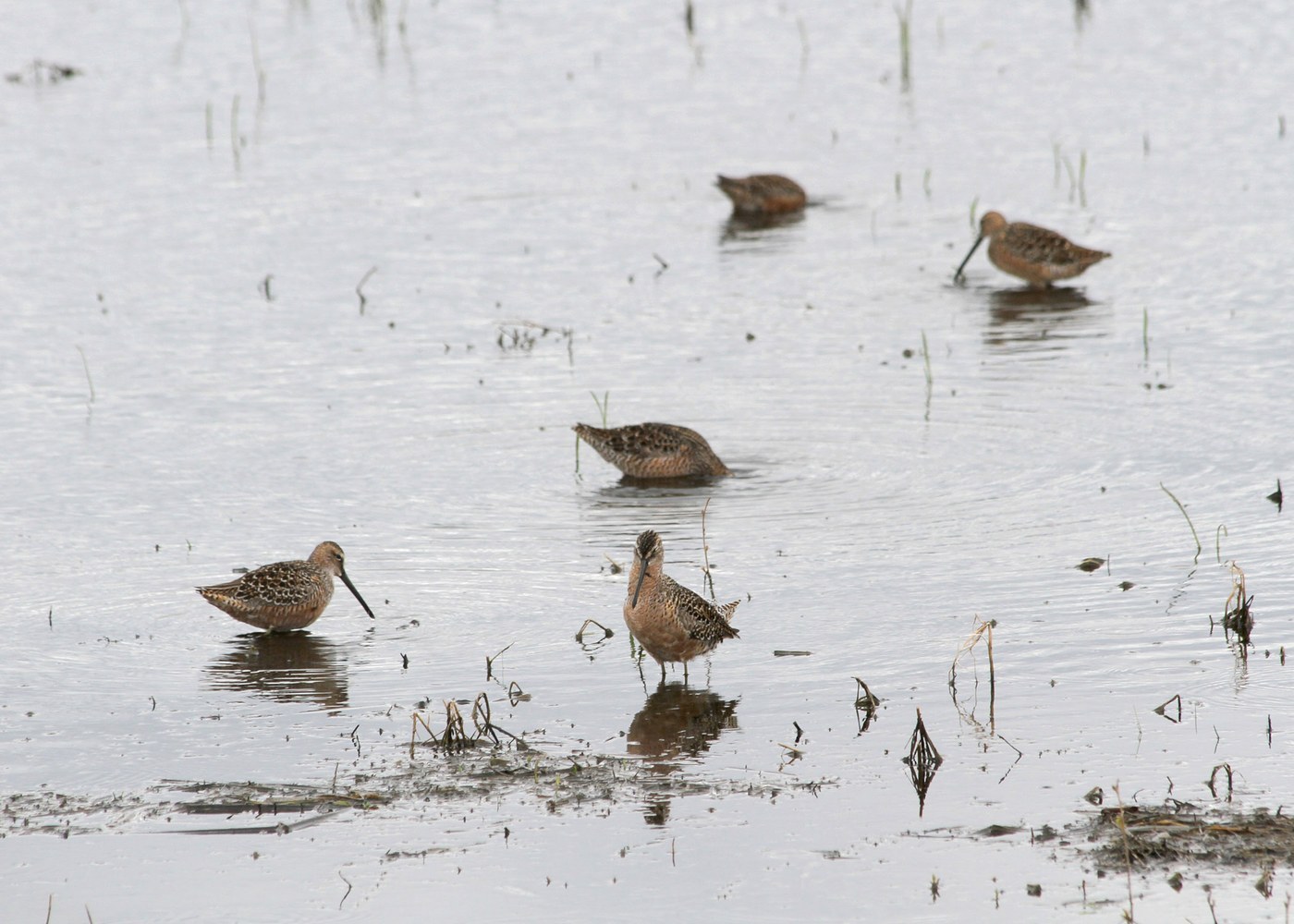
Long-billed Dowitcher
Limnodromus scolopaceus
A close relative of the Short-billed Dowitcher, best told apart by its sharp single-note call and preference for freshwater wetlands over coastal habitats.
- Size
- 27-30 cm (10.5-12 in) long, 45-49 cm wingspan
- Habitat
- freshwater marshes, flooded fields, and pond edges
- Type
- shorebird
Spotted a bird like this?
Identify any bird from a photo, free.
Overview
The Long-billed Dowitcher is a medium to large sandpiper virtually indistinguishable in the field from the Short-billed Dowitcher by structure alone, sharing the same long, straight bill and rapid, sewing-machine-like feeding action.
Breeding plumage shows deep rufous coloring extending across the underparts to the belly, typically with more extensive barring on the flanks than Short-billed Dowitcher. Nonbreeding birds are plain gray above and below, essentially identical to nonbreeding Short-billed Dowitchers.
Despite the name, bill length overlaps substantially between the two dowitcher species, and voice remains the most reliable distinguishing feature in the field.
How to identify it
Key field marks
- Long, straight bill used in a rapid up-and-down probing motion
- Deep rufous underparts extending to the belly with barring on the flanks in breeding plumage
- Plain gray upperparts and underparts in nonbreeding plumage
- Sharp, high-pitched single-note "keek" call — the most reliable field mark
Similar species
- Short-billed Dowitcher: essentially identical in shape and structure; distinguished mainly by its mellow, multi-note "tu-tu-tu" call versus the sharp single "keek" of Long-billed, and by a preference for coastal rather than freshwater habitats.
- Wilson's Snipe: more strongly striped plumage pattern, shorter legs, favors dense vegetation over open mud.
Habitat & range
Habitat
Long-billed Dowitchers favor freshwater wetlands such as flooded fields, marshes, and pond edges more than the coastal/brackish sites preferred by Short-billed Dowitchers, though the two species can occur together during migration.
Range and migration
They breed on Arctic tundra in Alaska and easternmost Siberia. They winter primarily in the southern United States, Mexico, and Central America, migrating through the interior of North America more commonly than the Short-billed Dowitcher.
Behavior & voice
Behavior
Long-billed Dowitchers often feed in tight flocks, probing repeatedly and rapidly in soft mud and shallow water with the same rhythmic, vertical bill motion characteristic of both dowitcher species.
Voice
The call is a sharp, high-pitched, single "keek," sometimes repeated, quite different from the softer, rolling "tu-tu-tu" of the Short-billed Dowitcher and the best way to confirm identification.
Feeding
They feed by rapidly probing soft mud and shallow freshwater for insect larvae, small mollusks, and other aquatic invertebrates.
Nesting and breeding
Pairs nest on the ground on Arctic tundra, typically laying four eggs in a shallow, sparsely lined scrape; incubation is shared between the parents, though the female often departs before the young fledge.
Frequently asked questions
How do you distinguish a Long-billed from a Short-billed Dowitcher?
Voice is most reliable: Long-billed gives a sharp, single 'keek' call while Short-billed gives a mellow, multi-note 'tu-tu-tu'; Long-billed also favors freshwater habitats more than the coastal/brackish sites Short-billed prefers.
Is the Long-billed Dowitcher's bill actually longer?
On average slightly longer, but there is substantial overlap with Short-billed Dowitcher, so bill length alone is not a reliable field mark.
Where does the Long-billed Dowitcher breed?
On Arctic tundra in Alaska and the easternmost part of Siberia.
What does a Long-billed Dowitcher eat?
Insect larvae, small mollusks, and other aquatic invertebrates, probed rapidly from soft mud and shallow water.
What habitat does the Long-billed Dowitcher prefer?
Freshwater wetlands such as flooded fields, marshes, and pond edges, more so than the coastal habitats favored by the Short-billed Dowitcher.
Long-billed Dowitcher guides
In-depth guides for identifying, finding, and understanding Long-billed Dowitcher.
Other birds you may enjoy
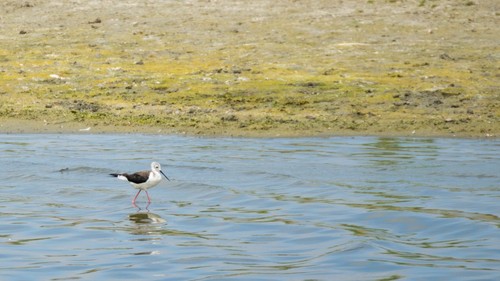
Black-winged Stilt
33-36 cm (13-14 in) long, wingspan 67-83 cm
Willet
33-41 cm (13-16 in) long, 65-70 cm wingspan
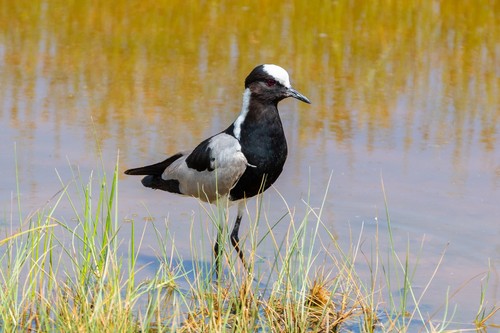
Blacksmith Lapwing
Body length about 30 cm; wingspan 55-65 cm
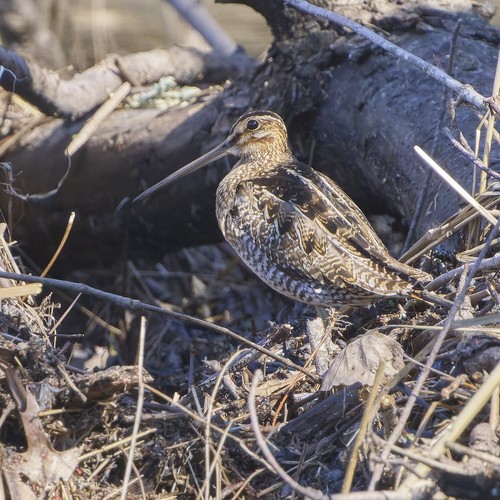
Wilson's Snipe
25-30 cm (10-12 in) long, 39-45 cm wingspan

Western Sandpiper
14-17 cm (5.5-6.7 in) long, 28-37 cm wingspan
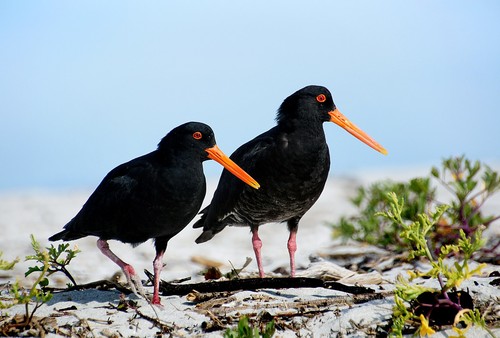
Variable Oystercatcher
46-49 cm (18-19 in) long
Whimbrel
40-46 cm (16-18 in) long, 76-89 cm wingspan
Wilson's Phalarope
22-24 cm (8.5-9.5 in) long, 37-43 cm wingspan
Solitary Sandpiper
19-23 cm (7.5-9 in) long, 50-56 cm wingspan
Wilson's Plover
17-19 cm (6.7-7.5 in) long, 45-50 cm wingspan
Pectoral Sandpiper
19-23 cm (7.5-9 in) long, 43-49 cm wingspan
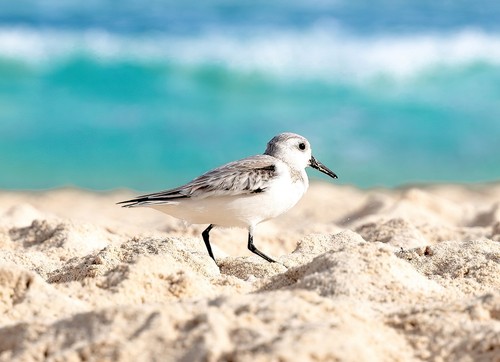
Sanderling
18-20 cm (7-8 in) long, 40-43 cm wingspan