
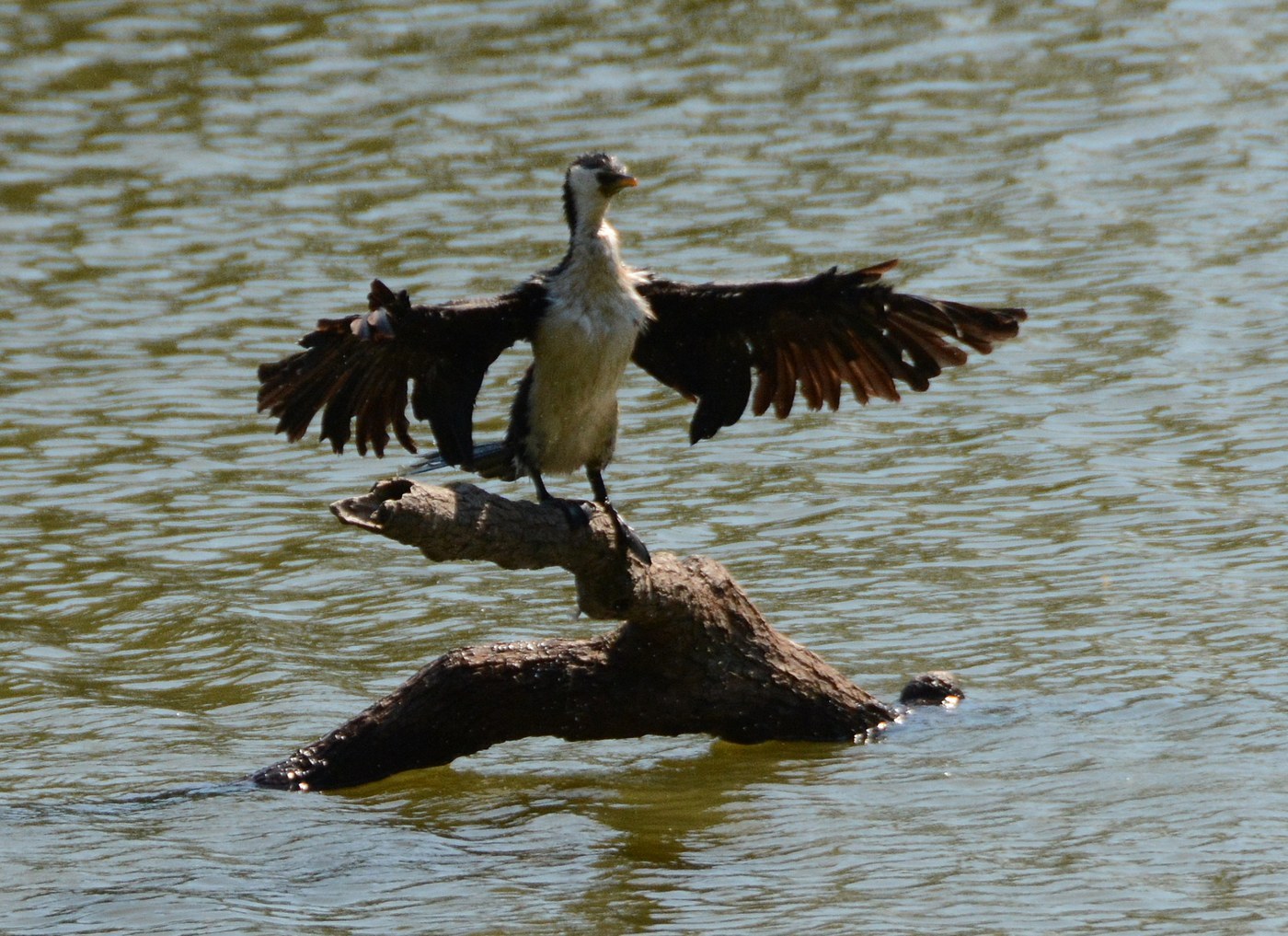
Little Pied Cormorant
Microcarbo melanoleucos
A small black-and-white Australasian cormorant with a short stubby yellow bill, common on both fresh and salt water.
- Size
- 56-61 cm (22-24 in) long, 85-90 cm wingspan
- Habitat
- lakes, rivers, estuaries, harbors, and coastal waters
- Type
- seabird
Spotted a bird like this?
Identify any bird from a photo, free.
Overview
The Little Pied Cormorant is the smallest cormorant found across Australia, New Zealand, and nearby islands. It has clean white underparts and glossy black upperparts, with a notably short, thick, yellow bill that gives it a somewhat stubby-faced appearance compared to other cormorants. Immature birds show more grey-brown mottling on the face and flanks.
It is a familiar sight perched with wings half-spread to dry after diving, a habit shared by all cormorant species because their feathers are only partially waterproof.
How to identify it
Key field marks
- Small size (roughly half the bulk of a Little Black Cormorant)
- Short, thick, bright yellow bill
- Clean white face, throat, and underparts contrasting with black cap and upperparts
- Yellow facial skin in front of the eye
Similar species
- Little Black Cormorant is entirely black and noticeably larger with a longer, thinner bill.
- Pied Cormorant (Australian Pied Cormorant) is much larger with a longer bill and orange facial skin.
- Juveniles can show brownish mottled underparts, which can cause confusion with young Pied Cormorants, but size and bill shape remain diagnostic.
Habitat & range
Habitat
Highly adaptable, found on virtually any body of water including small ponds, rivers, lakes, estuaries, harbors, and sheltered coastal bays.
Range
Widespread across Australia, New Zealand, New Guinea, and Indonesia.
Migration
Largely sedentary, though birds may move locally in response to water levels and food availability.
Behavior & voice
Behavior
Dives from the surface to chase down fish underwater, often foraging alone or in loose groups, and regularly perches on posts, rocks, or dead branches with wings spread to dry.
Voice
Mostly silent away from colonies; utters low guttural croaks and grunts at breeding sites.
Feeding
Pursues small fish, crustaceans, and aquatic insects by underwater pursuit diving in shallow water.
Nesting
Breeds colonially, often with other waterbirds, building a stick platform nest in trees, bushes, or reeds overhanging water; typically lays 3-4 pale blue-green eggs.
Frequently asked questions
How can I tell a Little Pied Cormorant from a Little Black Cormorant?
The Little Pied Cormorant has white underparts and a short yellow bill, while the Little Black Cormorant is entirely black with a longer, thinner bill.
Where do Little Pied Cormorants live?
They are found throughout Australia, New Zealand, New Guinea, and Indonesia on both freshwater and coastal habitats.
What do Little Pied Cormorants eat?
Small fish, crustaceans, and aquatic insects caught by diving underwater from the surface.
Why do cormorants spread their wings after diving?
Their feathers are not fully waterproof, so they spread their wings to dry them after swimming and diving.
Little Pied Cormorant guides
In-depth guides for identifying, finding, and understanding Little Pied Cormorant.
Other birds you may enjoy
Peruvian Pelican
137-152 cm (54-60 in) long, up to 228 cm wingspan
Bonaparte's Gull
28-33 cm (11-13 in) long, 76-84 cm wingspan
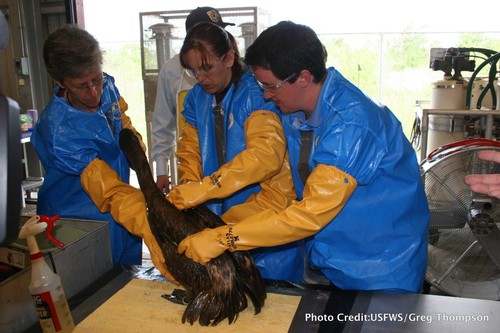
Brown Pelican
106-137 cm (42-54 in) long, 200-230 cm wingspan
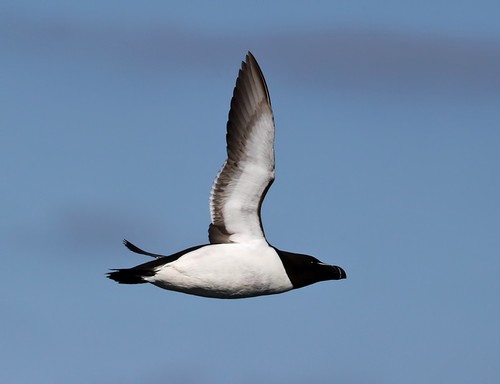
Razorbill
37-39 cm (15-15.5 in) long, 63-68 cm wingspan
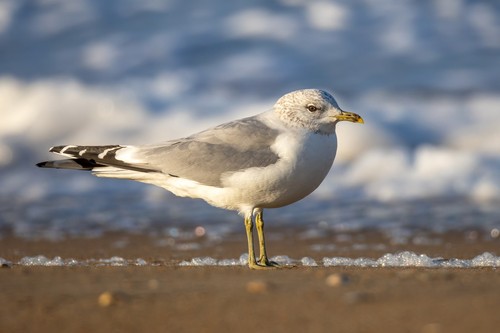
Common Gull
40-46 cm (16-18 in) long, 110-130 cm wingspan
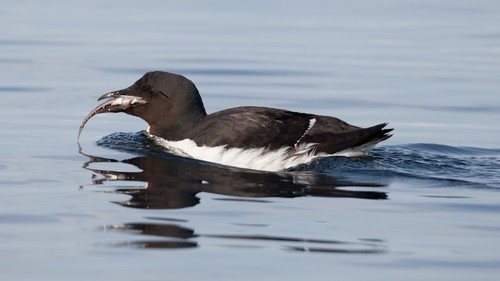
Thick-billed Murre
40-48 cm (16-19 in) long, 65-75 cm wingspan
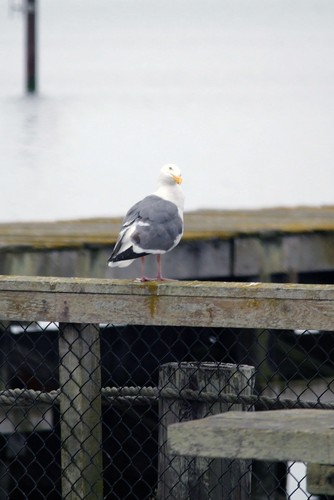
Western Gull
55-68 cm (22-27 in) long, 130-144 cm wingspan
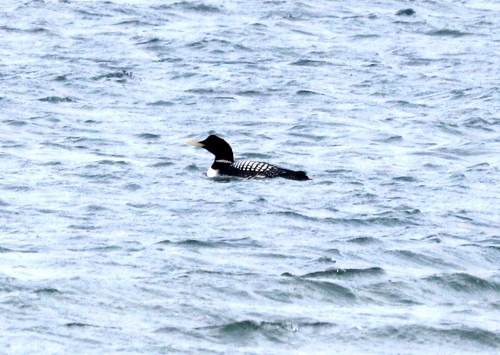
Yellow-billed Loon
76-97 cm (30-38 in) long, 135-152 cm wingspan
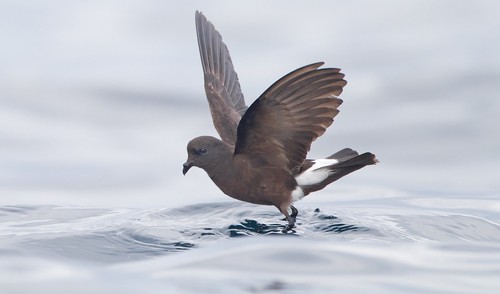
Wilson's Storm-Petrel
15-19 cm (6-7.5 in) long, wingspan 38-42 cm (15-16.5 in)
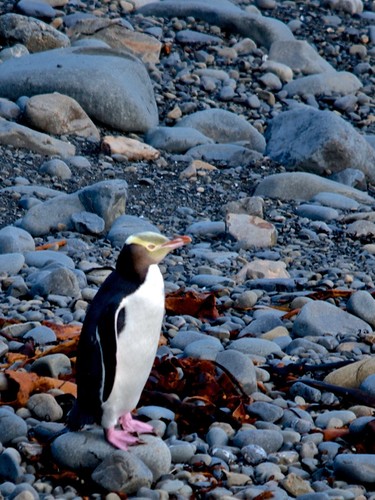
Yellow-eyed Penguin
62-79 cm (24-31 in) tall, 3-8.5 kg (6.6-18.7 lb)
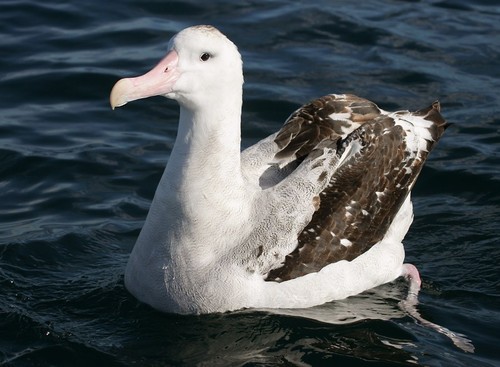
Wandering Albatross
107-135 cm (42-53 in) long, wingspan up to 3.5 m (11.5 ft)
Tufted Puffin
35-41 cm (14-16 in) long, about 63-70 cm wingspan