
Little Pied Cormorant Identification Guide
A small black-and-white cormorant of Australasia, told from larger pied cormorants by its short yellow bill and rounded head.
Read the full Little Pied Cormorant encyclopedia entry →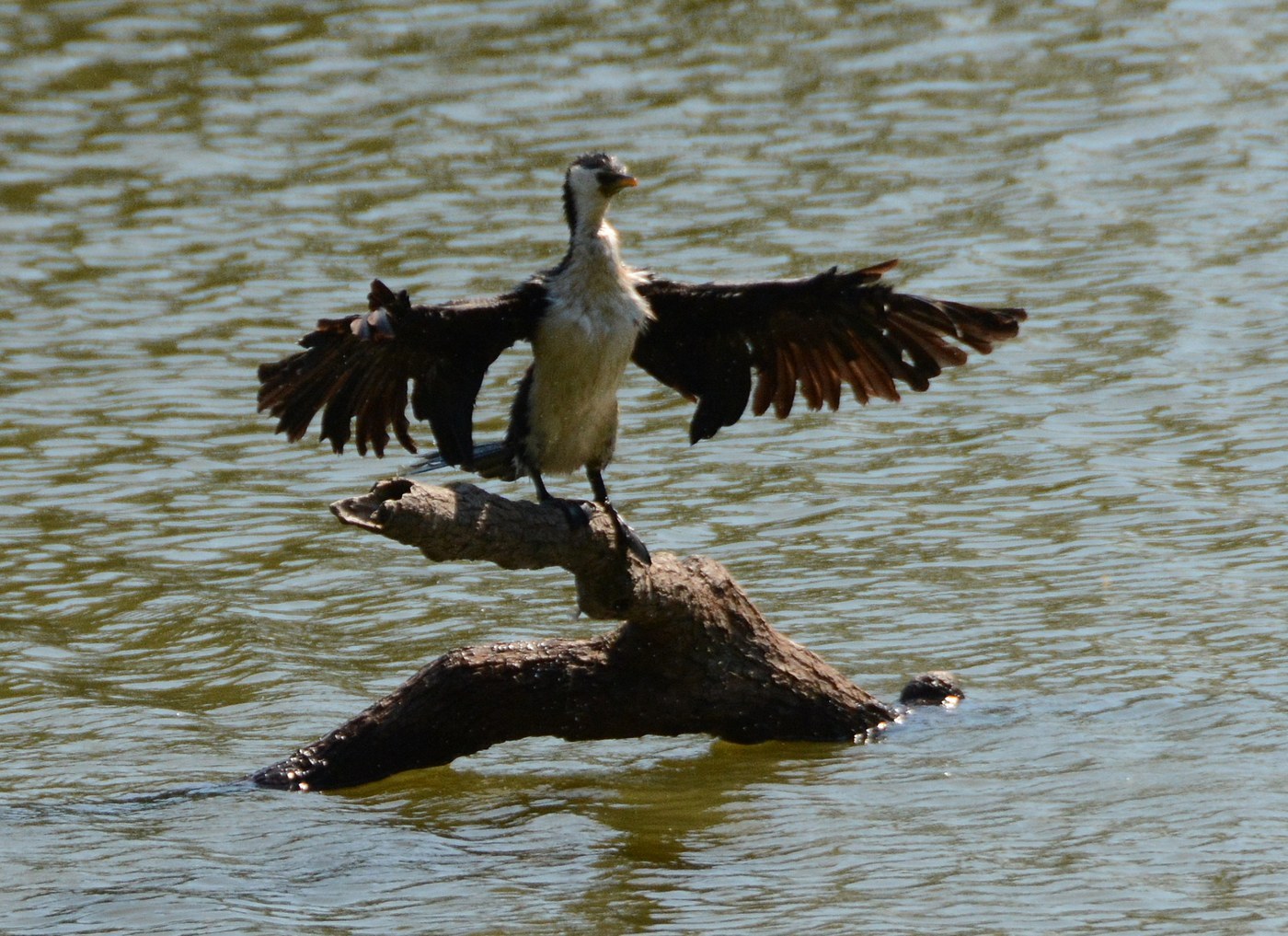
Key Field Marks
- Size & shape: Small, around 55–65 cm, with a compact body, rounded head, and notably short tail compared to other cormorants.
- Plumage: Clean black upperparts and crown with crisp white underparts, throat, and face; some birds show a small dark loral spot.
- Bill: Short and stubby, yellow to dull orange-yellow — proportionately much shorter than in similar pied cormorants.
- Legs: Black.
- Behavior: Frequently perches with wings spread open to dry after diving; dives from the surface to chase small fish, crustaceans, and aquatic insects in shallow water.
Separating It From Similar Species
- Pied Cormorant (Australian Pied Cormorant): Noticeably larger with a longer, heavier bill and a bare yellow-orange facial patch in front of the eye; Little Pied Cormorant lacks this bare facial skin and has a much shorter bill.
- Little Black Cormorant: All-black plumage overall (no white underparts), similar small size and shape otherwise.
- Great Cormorant: Much larger and bulkier with a longer neck and bill, and white cheek/chin patches rather than a fully white underside.
Where & When to See It
- Habitat: Highly adaptable — found on freshwater lakes, rivers, farm dams, estuaries, harbors, and coastal lagoons, often close to human settlement.
- Range: Common and widespread across Australia and New Zealand, extending into New Guinea, Indonesia, and nearby Pacific islands.
- Season: Resident year-round with local movements tracking water availability; breeds colonially, sometimes alongside other waterbirds.
Voice
- Generally quiet away from colonies; low guttural croaks and grunts given at nesting sites.
Frequently asked questions
How do you tell a Little Pied Cormorant from a Pied Cormorant?
The Little Pied Cormorant is smaller with a short yellow bill and no bare facial skin, while the (Australian) Pied Cormorant is larger with a longer bill and an obvious bare yellow-orange patch in front of the eye.
Why do Little Pied Cormorants spread their wings while perched?
Like other cormorants, their feathers are not fully waterproof, so they spread their wings to dry them after diving and swimming.
Is the Little Pied Cormorant ever all black?
No — that would more likely be a Little Black Cormorant, a similarly sized but entirely black species found in the same region.
What habitats does the Little Pied Cormorant prefer?
It is a habitat generalist, using freshwater lakes, rivers, farm dams, estuaries, and coastal waters, often tolerating close proximity to people.