
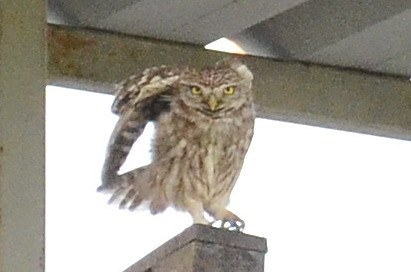
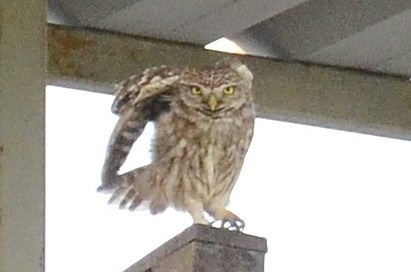
Little Owl
Athene noctua
A small, flat-headed owl of open farmland that is often active by day, bobbing and staring with piercing yellow eyes.
- Size
- 21-23 cm (8-9 in) long, 50-56 cm wingspan
- Habitat
- farmland, orchards, olive groves, and open country with old trees, walls, or barns
- Type
- owl
Spotted a bird like this?
Identify any bird from a photo, free.
Overview
The Little Owl is a compact, dumpy owl with a flattened head, bold white eyebrows, and staring lemon-yellow eyes that give it a fierce, almost comical expression. Plumage is brown, heavily spotted and streaked with white above and below.
Unlike most owls, it is frequently active in daylight, especially at dawn and dusk, perching conspicuously on fence posts, rooftops, or bare branches where it bobs its head and body when alert or disturbed.
How to identify it
Key field marks
- Small size, flat-topped head with no ear tufts
- Bright yellow eyes under bold white "eyebrows"
- Heavily spotted brown-and-white plumage
- Low, undulating flight on rounded wings
- Frequently seen perched upright in daylight, bobbing when alert
Similar species
- Eurasian Pygmy Owl is smaller still, more heavily forest-dwelling, and lacks the bold white spotting pattern.
- Tawny Owl is much larger with dark eyes and strictly nocturnal habits.
Its small size, daytime activity, and bobbing behavior on open perches make the Little Owl fairly distinctive within its range.
Habitat & range
Habitat
Little Owls favor open, lightly wooded farmland: orchards, olive groves, hedgerows, pastures with old trees, and areas with stone walls, barns, or ruins offering nest holes.
Range
Widespread across continental Europe (though absent from Ireland and much of Scandinavia), North Africa, and across temperate Asia to China; introduced and now established in Great Britain.
Migration
Mostly resident and sedentary, with pairs holding a home range year-round.
Behavior & voice
Behavior
More diurnal and crepuscular than most owls, the Little Owl often hunts on the ground, running and hopping after invertebrates, and perches openly on posts, wires, or roofs, characteristically bobbing its head up and down.
Voice
The territorial call is a plaintive, rising "kiew" or "goek", along with sharp yelping and chattering alarm notes.
Feeding
A generalist hunter, taking beetles, earthworms, and other invertebrates as well as small rodents, and occasionally small birds or lizards.
Nesting and breeding
Nests in cavities in trees, old buildings, quarries, or rabbit burrows. Females lay 3-5 white eggs from April, incubated for about a month, with young fledging roughly four weeks after hatching.
Frequently asked questions
Is the Little Owl active during the day?
Yes, it is more diurnal than most owls and is often seen perched in daylight, especially around dawn and dusk.
Where do Little Owls nest?
In cavities such as old trees, barns, stone walls, or rabbit burrows.
Is the Little Owl native to Britain?
No, it was introduced to England in the late 19th century and has since become established and resident.
What does a Little Owl eat?
Mostly insects and earthworms, along with small mammals and occasionally small birds or reptiles.
How do you recognize a Little Owl's behavior?
It often bobs its head and body up and down when alert, and frequently perches openly on posts, wires, or rooftops.
Little Owl guides
In-depth guides for identifying, finding, and understanding Little Owl.
Other birds you may enjoy
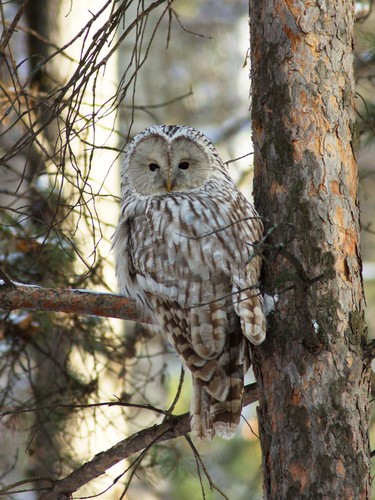
Ural Owl
50-62 cm long, wingspan about 1.0-1.3 m
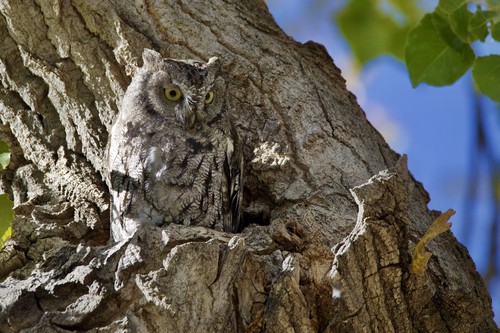
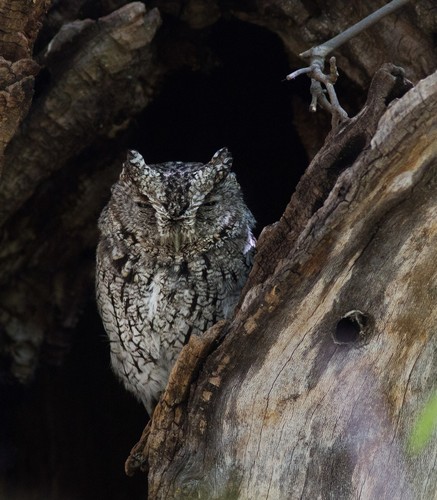
Western Screech-Owl
19-25 cm (7.5-10 in) long, about 55 cm (21.5 in) wingspan
Whiskered Screech-Owl
17-19 cm (6.7-7.5 in) long, 43 cm wingspan
Tawny Owl
37-43 cm (15-17 in) long, 81-96 cm wingspan
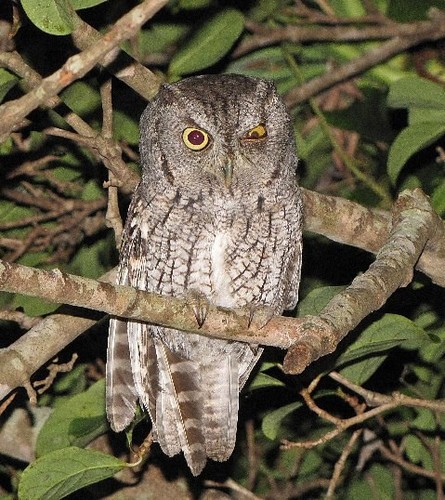
Screech Owl
16-25 cm long, wingspan about 46-61 cm
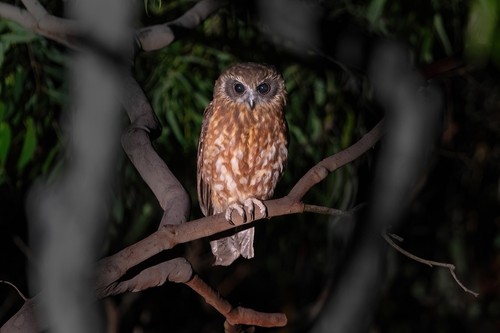
Southern Boobook
27-36 cm (11-14 in) long
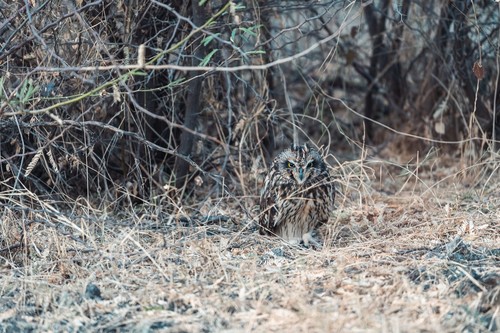
Short-eared Owl
34-42 cm (13-17 in) long, 85-110 cm wingspan
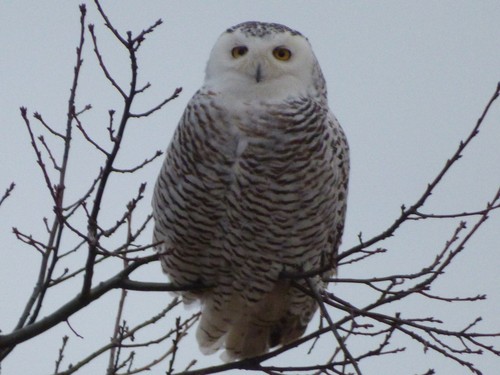
Snowy Owl
52-71 cm (20-28 in) long, 125-150 cm (49-59 in) wingspan
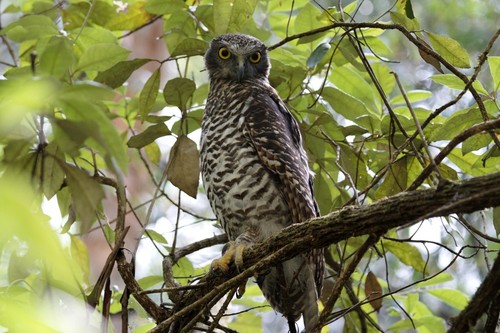
Powerful Owl
60-65 cm (24-26 in) long, 112-135 cm (44-53 in) wingspan
Northern Saw-whet Owl
18-21 cm (7-8.5 in) long, 42-56 cm (17-22 in) wingspan
Northern Pygmy-Owl
16-18 cm (6.3-7.1 in) long, 35-39 cm wingspan
Spotted Owl
43-48 cm (17-19 in) long, 100-114 cm wingspan