
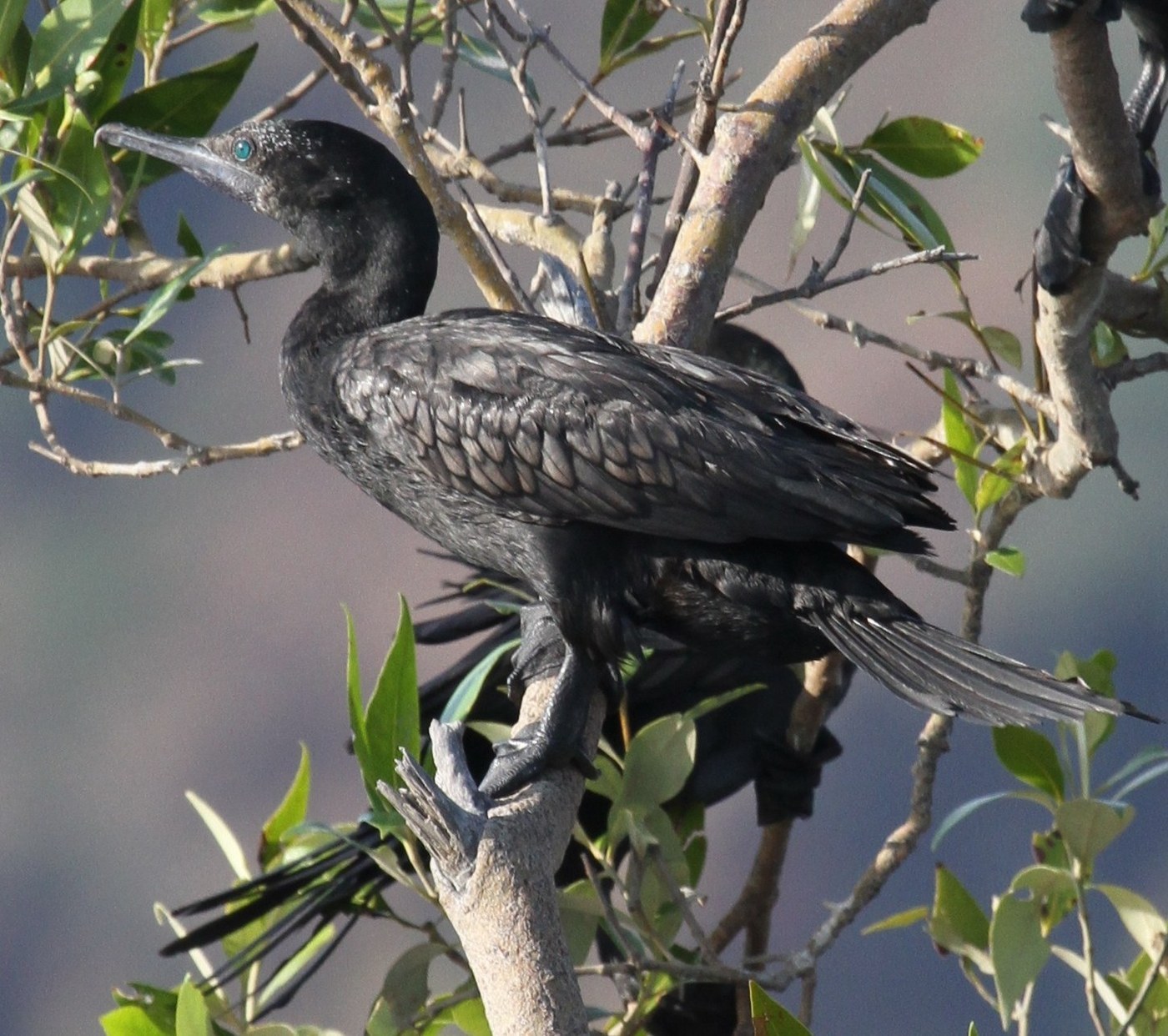
Little Black Cormorant
Phalacrocorax sulcirostris
An entirely glossy black cormorant of Australasia, often seen fishing cooperatively in large flocks.
- Size
- 58-65 cm (23-26 in) long, 90-100 cm wingspan
- Habitat
- lakes, rivers, wetlands, estuaries, and coastal bays
- Type
- seabird
Spotted a bird like this?
Identify any bird from a photo, free.
Overview
The Little Black Cormorant is a slender, all-black waterbird with a slight greenish or bronze sheen to its plumage, a long thin neck, and a slim grey-black bill. It lacks any white on the body, distinguishing it readily from its similarly sized relative, the Little Pied Cormorant.
It is well known for its highly social foraging behavior, often forming large rafts of birds that drive fish into shallow water for easier capture.
How to identify it
Key field marks
- Entirely glossy black plumage with a subtle green-bronze sheen
- Slender grey bill, longer and thinner than the Little Pied Cormorant's
- Small facial patch of bare skin at the base of the bill
Similar species
- Little Pied Cormorant has white underparts and a shorter, stubbier yellow bill.
- Great Cormorant is much larger with a heavier bill and yellow facial skin.
- Juvenile birds are duller, sooty brown-black, but retain the same slim shape.
Habitat & range
Habitat
Found on freshwater lakes, rivers, swamps, reservoirs, and sheltered coastal waters, including estuaries and harbors.
Range
Widespread across Australia, New Zealand, Indonesia, and parts of Southeast Asia and the Pacific.
Migration
Generally sedentary or nomadic, moving in response to water availability rather than following fixed migratory routes.
Behavior & voice
Behavior
Highly gregarious, frequently fishing in coordinated flocks that herd schools of small fish, then diving in unison to feed.
Voice
Mostly quiet, giving low croaking or grunting calls at breeding colonies.
Feeding
Catches fish, crustaceans, and aquatic insects by pursuit-diving underwater, sometimes cooperatively with other cormorants and waterbirds.
Nesting
Nests colonially in trees or reedbeds near water, building a stick platform; typically lays 3-5 pale blue-green eggs.
Frequently asked questions
Is the Little Black Cormorant fully black?
Yes, it is entirely black with a subtle green-bronze gloss, unlike the white-bellied Little Pied Cormorant.
Do Little Black Cormorants fish in groups?
Yes, they are known for forming large cooperative flocks that herd fish into shallow water before diving to feed.
Where are Little Black Cormorants found?
Across Australia, New Zealand, and parts of Southeast Asia and the Pacific, on both fresh and coastal waters.
What is the difference between this species and a Great Cormorant?
The Little Black Cormorant is smaller and slimmer with a thin bill and no yellow facial skin, while the Great Cormorant is bulkier with a heavier bill and yellow throat patch.
Little Black Cormorant guides
In-depth guides for identifying, finding, and understanding Little Black Cormorant.
Other birds you may enjoy
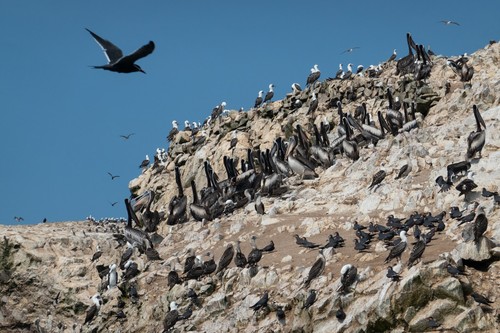
Peruvian Pelican
137-152 cm (54-60 in) long, up to 228 cm wingspan
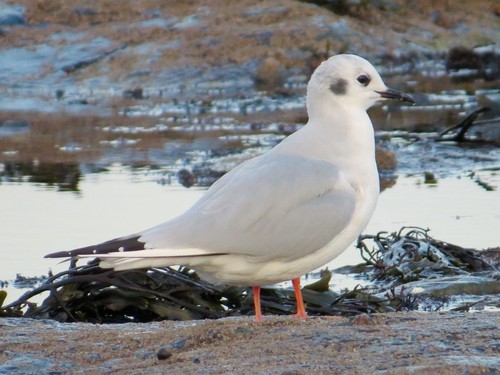
Bonaparte's Gull
28-33 cm (11-13 in) long, 76-84 cm wingspan
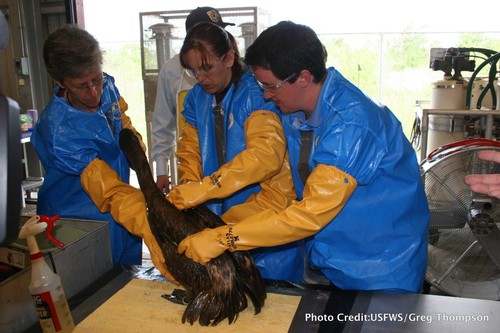
Brown Pelican
106-137 cm (42-54 in) long, 200-230 cm wingspan
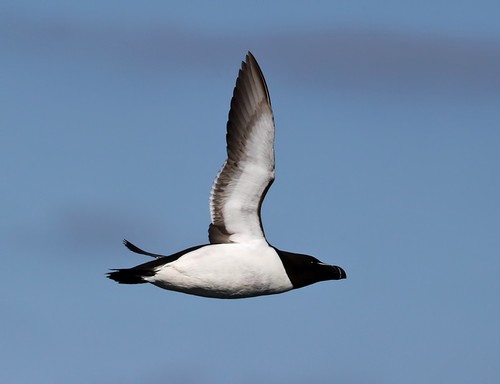
Razorbill
37-39 cm (15-15.5 in) long, 63-68 cm wingspan
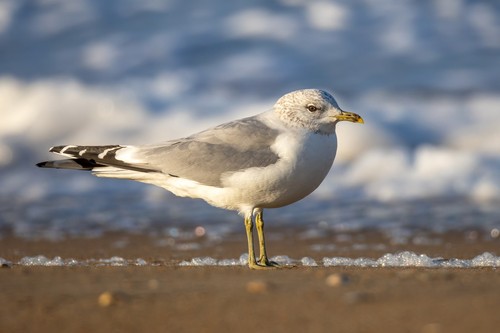
Common Gull
40-46 cm (16-18 in) long, 110-130 cm wingspan
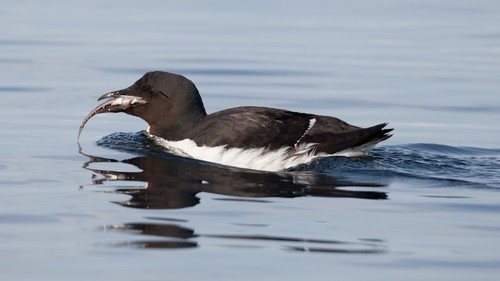
Thick-billed Murre
40-48 cm (16-19 in) long, 65-75 cm wingspan
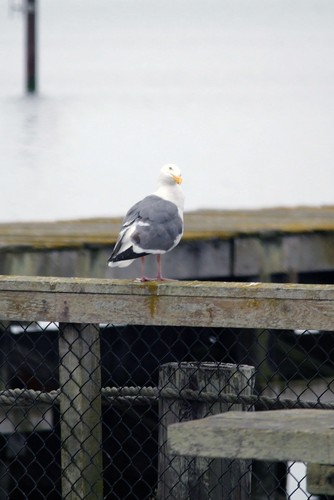
Western Gull
55-68 cm (22-27 in) long, 130-144 cm wingspan
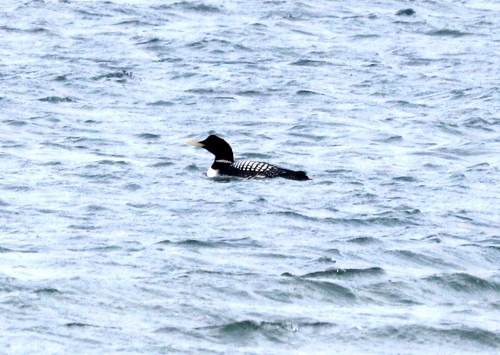
Yellow-billed Loon
76-97 cm (30-38 in) long, 135-152 cm wingspan
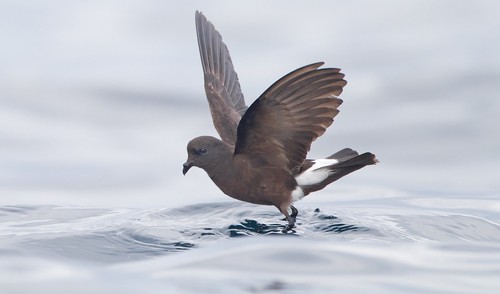
Wilson's Storm-Petrel
15-19 cm (6-7.5 in) long, wingspan 38-42 cm (15-16.5 in)
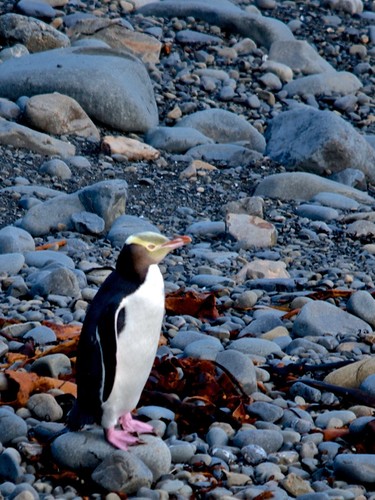
Yellow-eyed Penguin
62-79 cm (24-31 in) tall, 3-8.5 kg (6.6-18.7 lb)
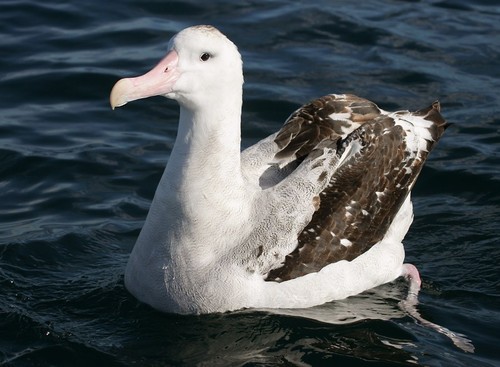
Wandering Albatross
107-135 cm (42-53 in) long, wingspan up to 3.5 m (11.5 ft)
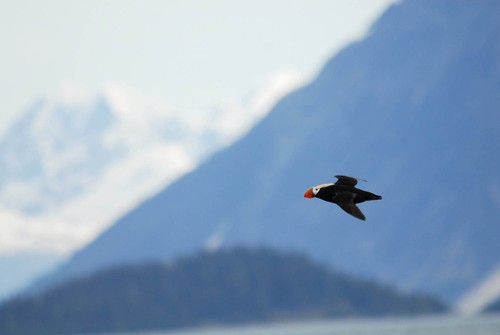
Tufted Puffin
35-41 cm (14-16 in) long, about 63-70 cm wingspan