
Little Black Cormorant Identification Guide
A slim, all-black Australasian cormorant with a long thin bill and long tail, often seen diving in flocks or perched with wings outstretched to dry.
Read the full Little Black Cormorant encyclopedia entry →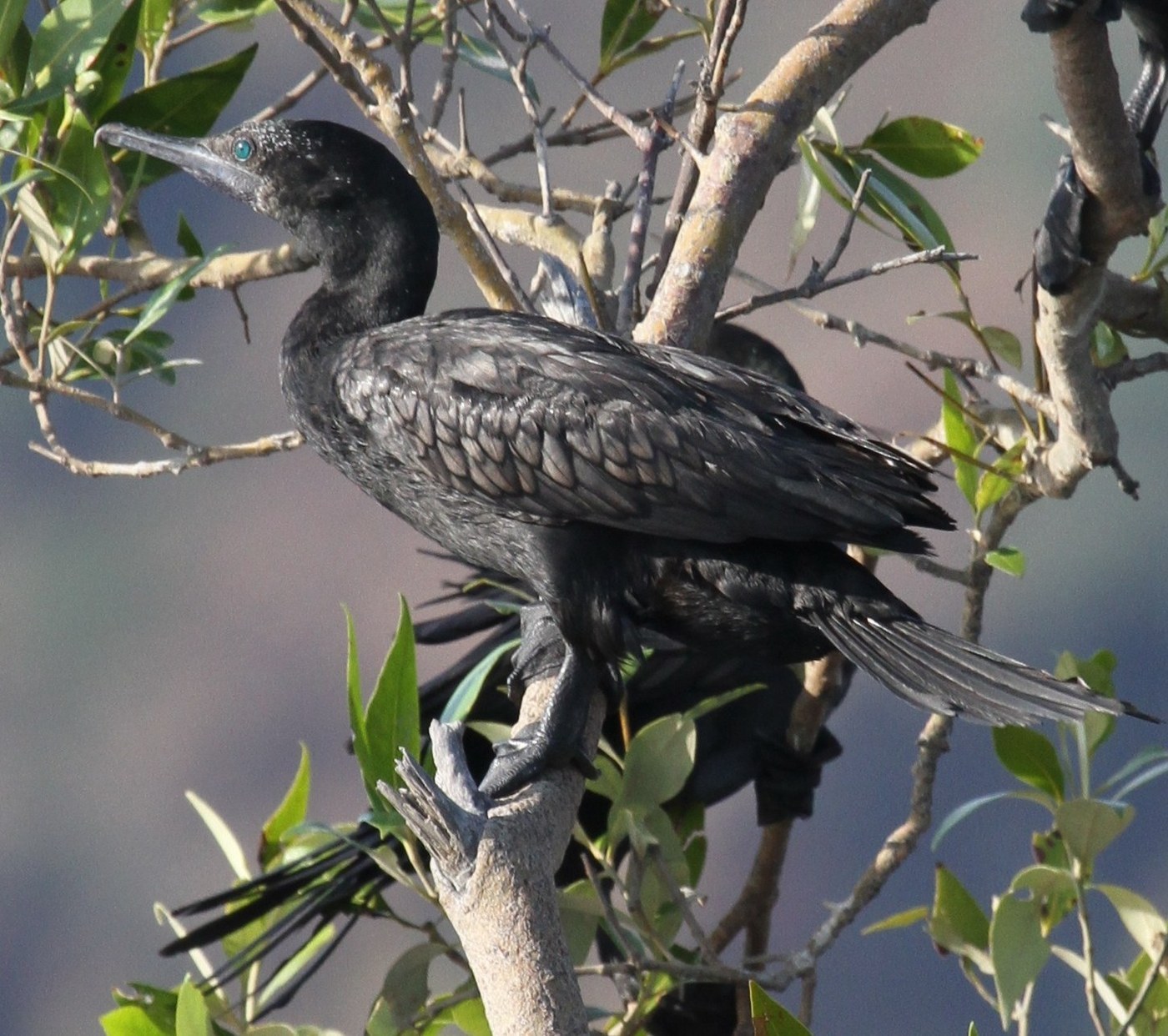
Key Field Marks
- Size and shape: A slender, medium-sized cormorant about 61–68 cm (24–27 in) long, with a notably long, thin neck, long tail, and a slim profile compared to bulkier cormorant species.
- Plumage: Entirely glossy black overall, with a subtle greenish sheen visible in good light; breeding adults may show fine white plumes on the head and neck.
- Bill: Thin, straight-ish, and dark grayish, proportionally slender compared to the thicker bills of larger cormorants.
- Eye: Bright turquoise-green eye visible at close range, contrasting with the black plumage.
Separating from Similar Species
- Great Cormorant: Much larger and bulkier with a heavier bill, white throat patch, and (in breeding plumage) a white thigh patch; Little Black Cormorant is uniformly black with no white markings at any age.
- Little Pied Cormorant: Similar small size but has white underparts and face, unlike the all-black plumage of Little Black Cormorant.
- Great Black Cormorant vs. smaller cormorants generally: Little Black Cormorant's slim build, thin bill, and long tail relative to body size are the key differentiators from bulkier, thick-billed relatives.
Habitat and Range
Widespread across Australia, New Zealand, New Guinea, and parts of Indonesia, favoring freshwater lakes, rivers, reservoirs, estuaries, and sheltered coastal bays. More tolerant of freshwater habitats than some other cormorant species and often found well inland.
Season
Generally resident, though nomadic movements occur in response to water levels and food availability, particularly in Australia's variable inland waterways; not a long-distance migrant.
Behavior
Often forages in cooperative flocks, diving and swimming together to herd fish, sometimes forming large rafts on open water. After fishing bouts, commonly perches on snags, rocks, or wires with wings spread wide to dry, a characteristic cormorant posture. Nests colonially in trees or reedbeds, often alongside other waterbirds.
Voice
Generally silent away from breeding colonies; at nest sites gives low guttural croaks and grunting calls typical of cormorants.
Frequently asked questions
How do I identify a Little Black Cormorant?
Look for an all-black, slender cormorant with a thin bill, long tail, and turquoise eye, often seen in flocks diving together or perched with wings spread to dry.
How is Little Black Cormorant different from Great Cormorant?
Great Cormorant is larger and bulkier with a white throat patch and heavier bill, while Little Black Cormorant is smaller, slimmer, thinner-billed, and entirely black with no white markings.
Where is the Little Black Cormorant found?
Across Australia, New Zealand, New Guinea, and parts of Indonesia, on freshwater lakes and rivers as well as sheltered coastal waters.
Why do cormorants spread their wings out to dry?
Cormorant feathers are less waterproof than those of many waterbirds, so they spread their wings after diving to air-dry them, a posture regularly seen in Little Black Cormorant.
Do Little Black Cormorants nest in colonies?
Yes, they typically nest colonially in trees or reedbeds, often alongside other waterbird species such as herons, ibises, or other cormorants.