
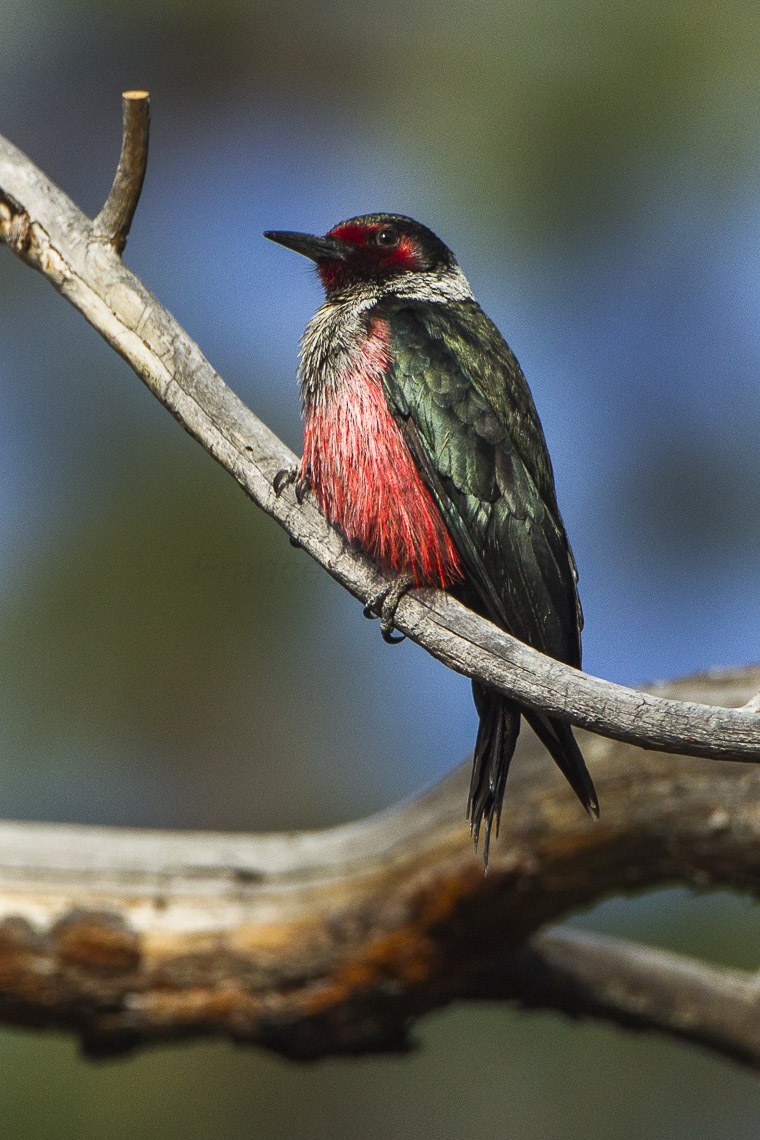
Lewis's Woodpecker
Melanerpes lewis
An unusually crow-like woodpecker with iridescent greenish-black plumage, a pink belly, and a habit of catching insects on the wing.
- Size
- 26-29 cm (10-11.5 in) long, 50-53 cm wingspan
- Habitat
- open pine and oak woodlands, burned forests, and riparian groves in the West
- Type
- woodpecker
Spotted a bird like this?
Identify any bird from a photo, free.
Overview
Lewis's Woodpecker, named for explorer Meriwether Lewis who first documented it in 1805, is one of the most atypical woodpeckers in North America. It has a dark, iridescent greenish-black back and wings, a gray collar and breast, a deep pinkish-red belly, and a dark reddish face, lacking the strong black-and-white patterning typical of most woodpeckers.
Its flight is slow and buoyant, often compared to that of a crow, and it frequently perches upright on exposed snags, sallying out to catch insects in the air rather than excavating them from bark, a foraging style more reminiscent of a flycatcher than a typical woodpecker.
How to identify it
Key Field Marks
- Dark, iridescent greenish-black back, wings, and crown
- Dark red face patch
- Gray collar and upper breast
- Deep pink-red belly
- Slow, crow-like flapping flight, unlike the undulating flight of most woodpeckers
Similar Species
- No other North American woodpecker shares this combination of dark iridescent plumage and pink belly; from a distance in flight it can suggest a crow or American Robin due to its flight style and coloring, but its flycatching behavior and shape reveal its identity.
Habitat & range
Habitat
Lewis's Woodpecker favors open ponderosa pine forest, burned pine stands with standing dead trees, oak woodlands, and riparian cottonwood groves, generally in areas with open canopy for aerial insect foraging.
Range
Breeds in the interior western United States and southern British Columbia, from the eastern slope of the Cascades and Rockies east to the Great Plains foothills, and winters from the southwestern United States into Mexico.
Migration
Many populations are migratory or nomadic, with irregular movements tied to food availability, particularly acorn crops; some populations in milder climates are resident.
Behavior & voice
Behavior
Lewis's Woodpecker forages primarily by flycatching, sallying from an exposed perch to snatch flying insects in mid-air, a behavior distinct from the bark-gleaning and excavating typical of most woodpeckers. It also caches acorns and nuts in bark crevices for winter use.
Voice
Calls include a harsh, chattering churr and various rattling notes; the species drums infrequently compared to other woodpeckers.
Feeding
Summer diet is dominated by flying insects caught on the wing; in fall and winter it relies heavily on stored acorns and other nuts.
Nesting
Pairs nest in cavities in dead trees or snags, often reusing old cavities excavated by other woodpeckers; both parents incubate the 5-9 white eggs.
Frequently asked questions
Why is Lewis's Woodpecker considered unusual?
It catches most of its food by flycatching in the air rather than drilling into bark, has a slow crow-like flight, and lacks the typical black-and-white woodpecker pattern.
Who is Lewis's Woodpecker named after?
It is named after explorer Meriwether Lewis, who documented the species during the Lewis and Clark Expedition in 1805.
Where does Lewis's Woodpecker live?
It breeds in open pine forests, burned woodlands, and riparian areas of the interior western United States, wintering further south into Mexico.
What color is a Lewis's Woodpecker?
It has an iridescent greenish-black back, a dark red face, a gray collar, and a distinctive pink-red belly.
Lewis's Woodpecker guides
In-depth guides for identifying, finding, and understanding Lewis's Woodpecker.
Other birds you may enjoy
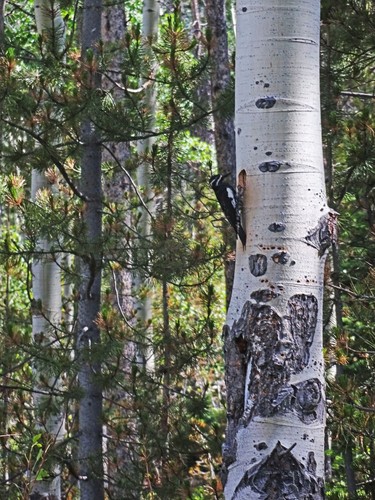
Williamson's Sapsucker
21-25 cm (8-10 in) long, 40-42 cm wingspan
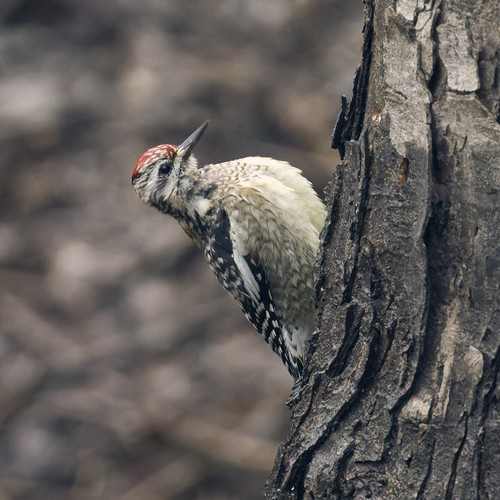
Yellow-bellied Sapsucker
18-21 cm (7-8.3 in) long, 34-40 cm wingspan
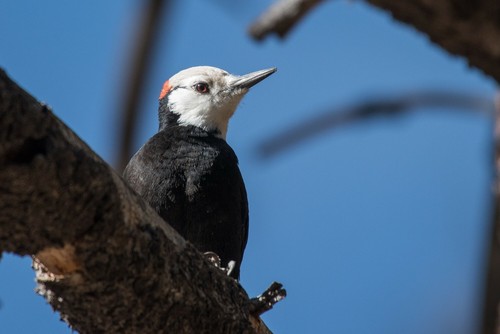
White-headed Woodpecker
20-23 cm (8-9 in) long, 38-41 cm wingspan
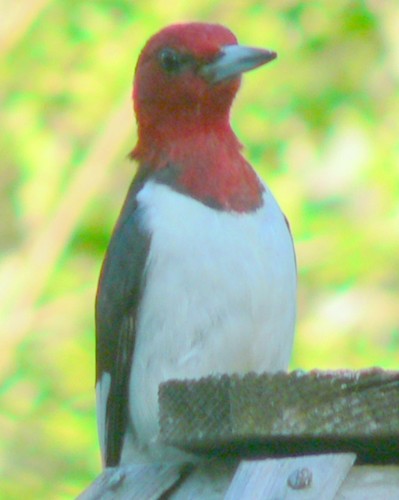
Red-headed Woodpecker
19-23 cm (7.5-9 in) long, 42-46 cm wingspan
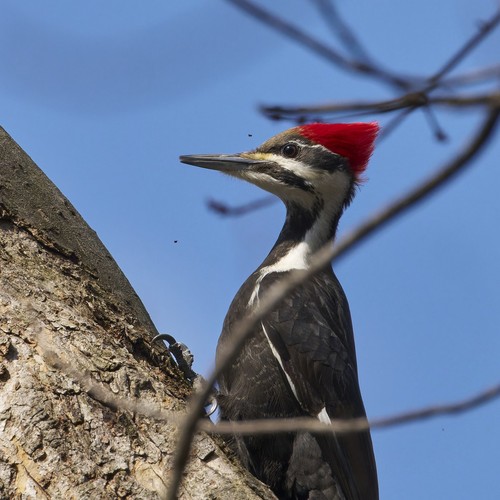
Pileated Woodpecker
40-49 cm (16-19 in) long, 66-75 cm wingspan
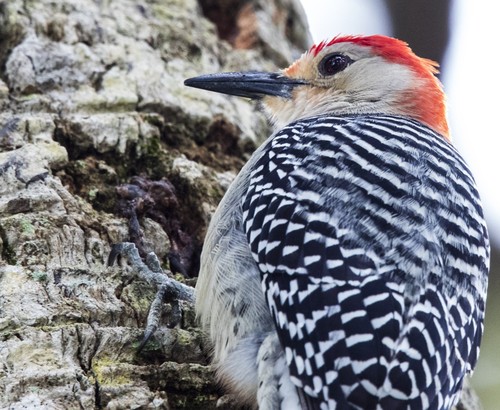
Red-bellied Woodpecker
22-27 cm (9-10.5 in) long, 38-46 cm wingspan
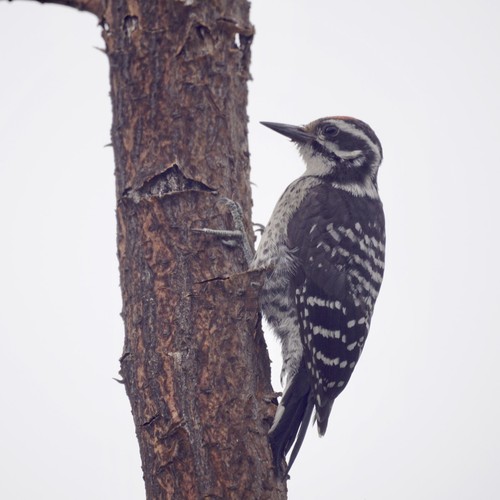
Nuttall's Woodpecker
18-20 cm (7-8 in) long, 34-38 cm wingspan
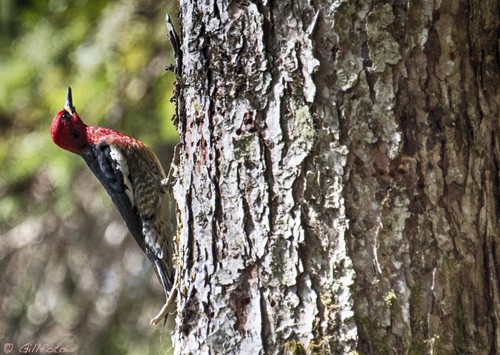
Red-breasted Sapsucker
20-23 cm (8-9 in) long, 34-40 cm wingspan
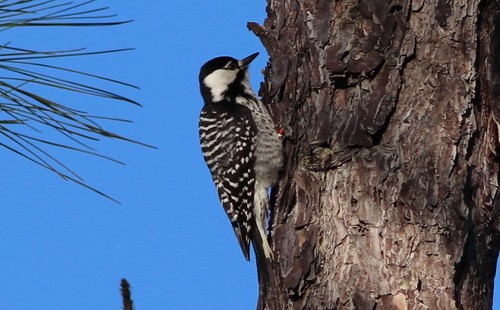
Red-cockaded Woodpecker
20-23 cm (8-9 in) long, 35-38 cm wingspan
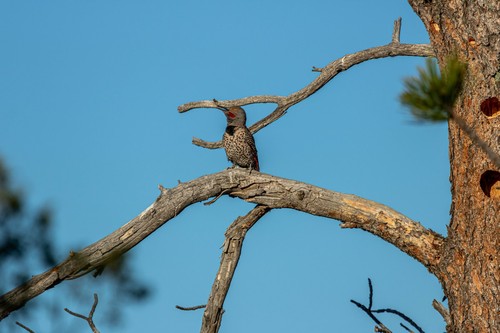
Northern Flicker
28-36 cm (11-14 in) long, 42-51 cm wingspan
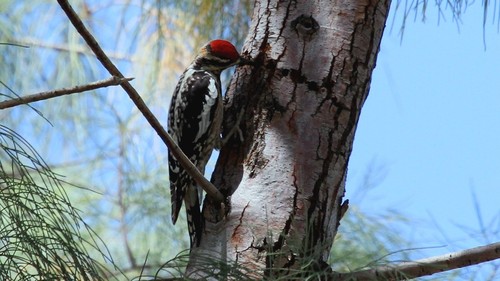
Red-naped Sapsucker
19-21 cm (7.5-8.3 in) long, 34-40 cm wingspan
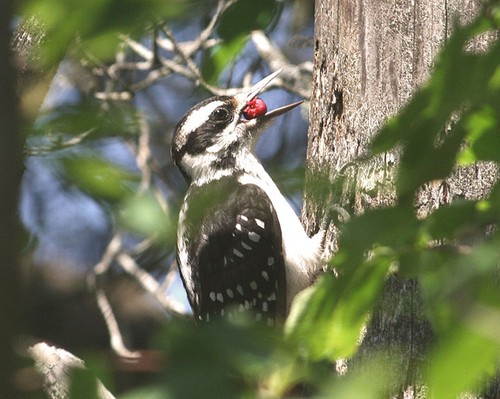
Hairy Woodpecker
23-26 cm (9-10 in) long, 33-41 cm wingspan