
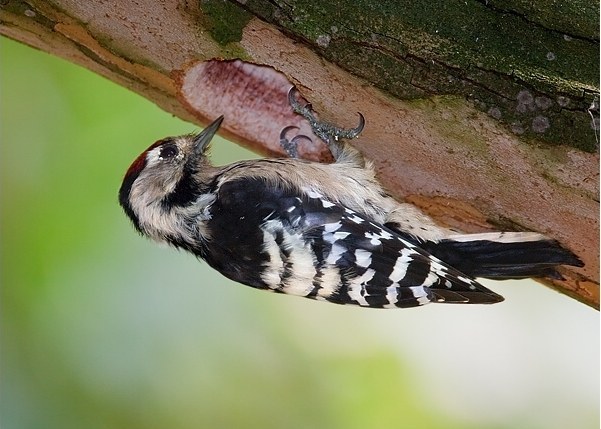
Lesser Spotted Woodpecker
Dryobates minor
A sparrow-sized woodpecker with a barred black-and-white back, elusive and easily overlooked high in the tree canopy.
- Size
- 14-16.5 cm (5.5-6.5 in) long, 24-29 cm wingspan
- Habitat
- mature broadleaf woodland, riverine forest, orchards, and parkland with old trees
- Type
- woodpecker
Spotted a bird like this?
Identify any bird from a photo, free.
Overview
The Lesser Spotted Woodpecker is Europe's smallest woodpecker, close in size to a sparrow, with a black-and-white barred back (rather than solid white patches), whitish underparts, and no red under the tail. Males have a red crown, while females have a whitish or pale crown.
It is a shy, unobtrusive bird that spends most of its time high in the canopy of tall trees, making it far harder to see than its larger relatives despite being widespread across much of Europe.
How to identify it
Key field marks
- Very small size, close to sparrow-sized
- Black-and-white barred back (ladder pattern), not solid white shoulder patches
- No red patch under the tail
- Males show a red crown; females have a plain pale crown
- High-pitched, rapid "pee-pee-pee-pee" call
Similar species
- Great Spotted Woodpecker is much larger with bold solid-white shoulder patches and a red vent.
- Middle Spotted Woodpecker is intermediate in size with a red crown in both sexes and lacks the fine barring on the back.
Small size, barred back, and lack of any red under the tail readily separate this species from its relatives, though its habit of feeding high in the canopy often makes it hard to spot at all.
Habitat & range
Habitat
Favors mature deciduous woodland, riverside alder and willow stands, orchards, and parkland with old or dead trees offering soft, decaying wood for foraging and nesting.
Range
Widespread but patchily distributed across most of Europe and temperate western Asia; absent from Ireland and much of the far north.
Migration
Resident and sedentary throughout its range, rarely moving far from breeding territories.
Behavior & voice
Behavior
Unobtrusive and often solitary, it forages methodically on thin branches and twigs high in the canopy, moving less conspicuously than larger woodpeckers and rarely visiting garden feeders.
Voice
Gives a shrill, nasal "pee-pee-pee-pee" call reminiscent of a small falcon, and produces a long, weak drumming roll, quieter and more even than that of the Great Spotted Woodpecker.
Feeding
Feeds almost entirely on small insects and larvae gleaned from thin branches and decaying wood, supplemented occasionally by seeds.
Nesting and breeding
Excavates a small nest hole in a dead branch or soft, rotten wood, often high up. Females lay 4-6 white eggs, incubated by both sexes for about 10-12 days.
Frequently asked questions
How do you tell a Lesser Spotted Woodpecker from a Great Spotted Woodpecker?
The Lesser Spotted is much smaller, with a barred black-and-white back rather than solid white shoulder patches, and it lacks any red under the tail.
Why is the Lesser Spotted Woodpecker hard to see?
It is tiny, unobtrusive, and forages mostly high in the tree canopy, so it is often detected by call before it is seen.
What does the Lesser Spotted Woodpecker eat?
Mainly small insects and larvae found on thin branches and decaying wood.
Does the Lesser Spotted Woodpecker visit gardens?
Rarely; it favors mature woodland canopy and seldom comes to feeders like the Great Spotted Woodpecker does.
Lesser Spotted Woodpecker guides
In-depth guides for identifying, finding, and understanding Lesser Spotted Woodpecker.
Other birds you may enjoy
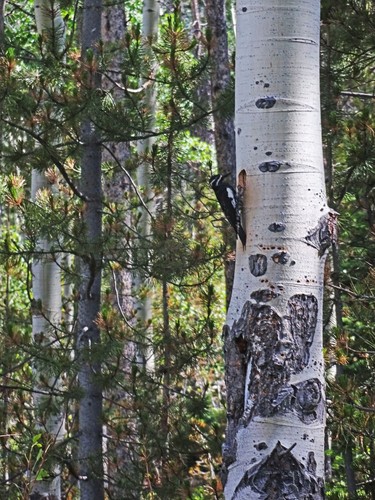
Williamson's Sapsucker
21-25 cm (8-10 in) long, 40-42 cm wingspan
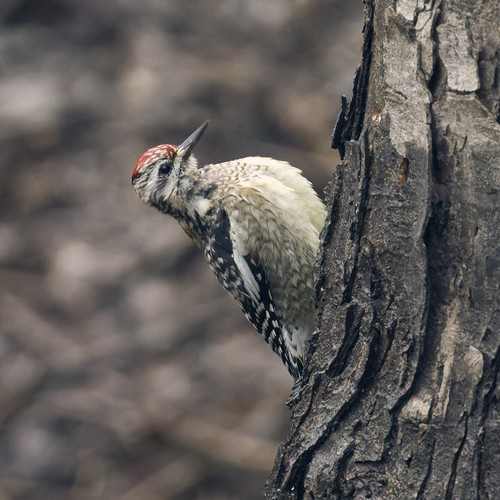
Yellow-bellied Sapsucker
18-21 cm (7-8.3 in) long, 34-40 cm wingspan
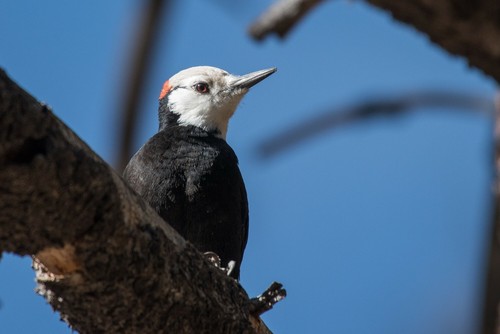
White-headed Woodpecker
20-23 cm (8-9 in) long, 38-41 cm wingspan
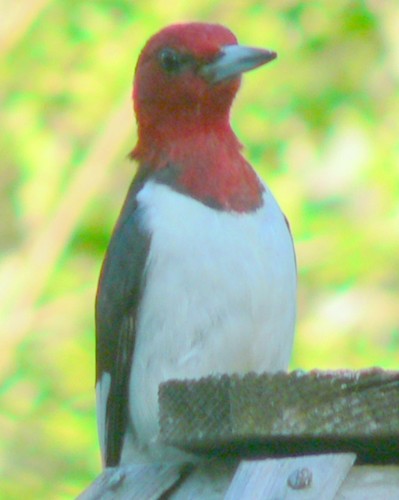
Red-headed Woodpecker
19-23 cm (7.5-9 in) long, 42-46 cm wingspan
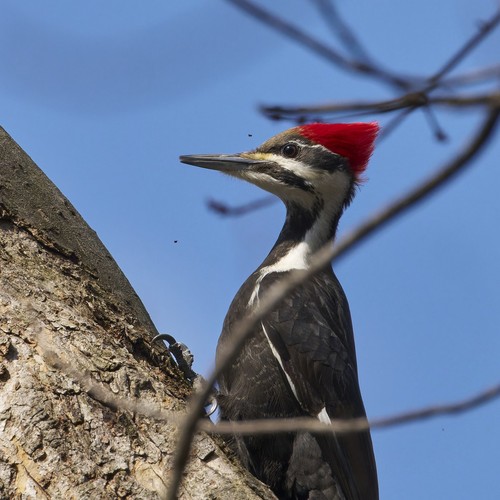
Pileated Woodpecker
40-49 cm (16-19 in) long, 66-75 cm wingspan
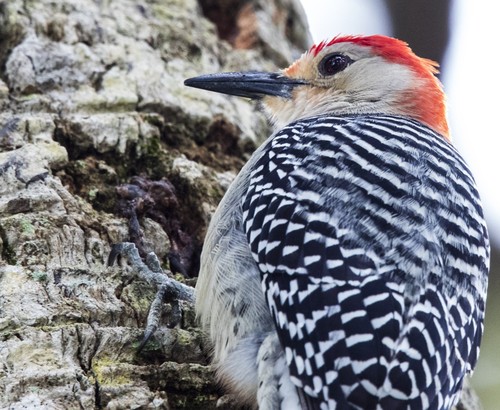
Red-bellied Woodpecker
22-27 cm (9-10.5 in) long, 38-46 cm wingspan
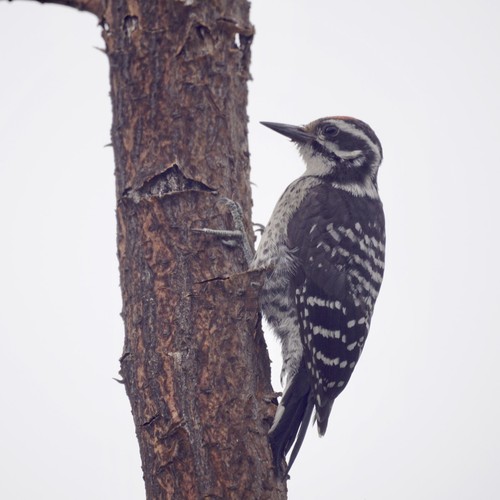
Nuttall's Woodpecker
18-20 cm (7-8 in) long, 34-38 cm wingspan
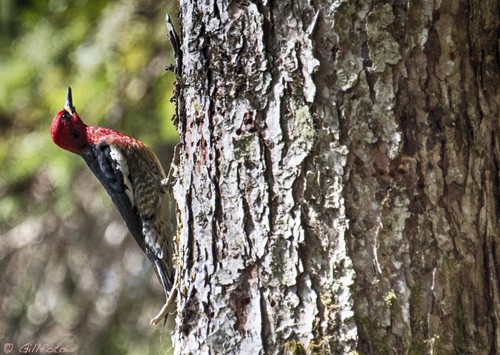
Red-breasted Sapsucker
20-23 cm (8-9 in) long, 34-40 cm wingspan
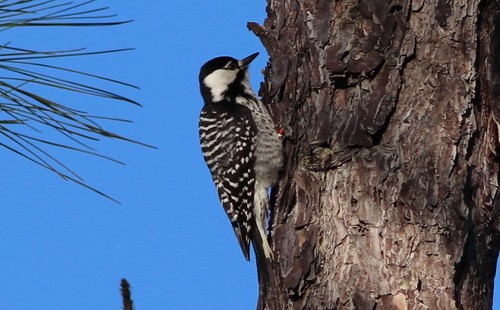
Red-cockaded Woodpecker
20-23 cm (8-9 in) long, 35-38 cm wingspan
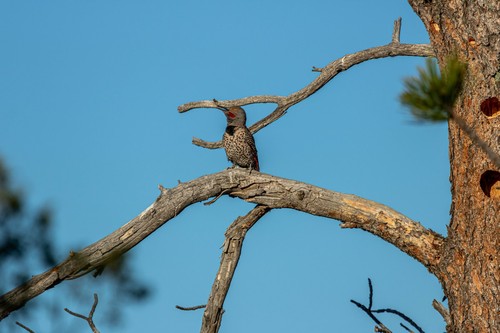
Northern Flicker
28-36 cm (11-14 in) long, 42-51 cm wingspan
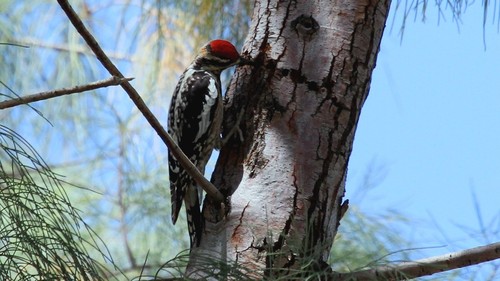
Red-naped Sapsucker
19-21 cm (7.5-8.3 in) long, 34-40 cm wingspan
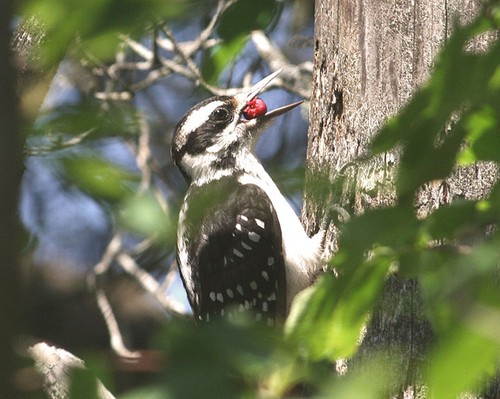
Hairy Woodpecker
23-26 cm (9-10 in) long, 33-41 cm wingspan