
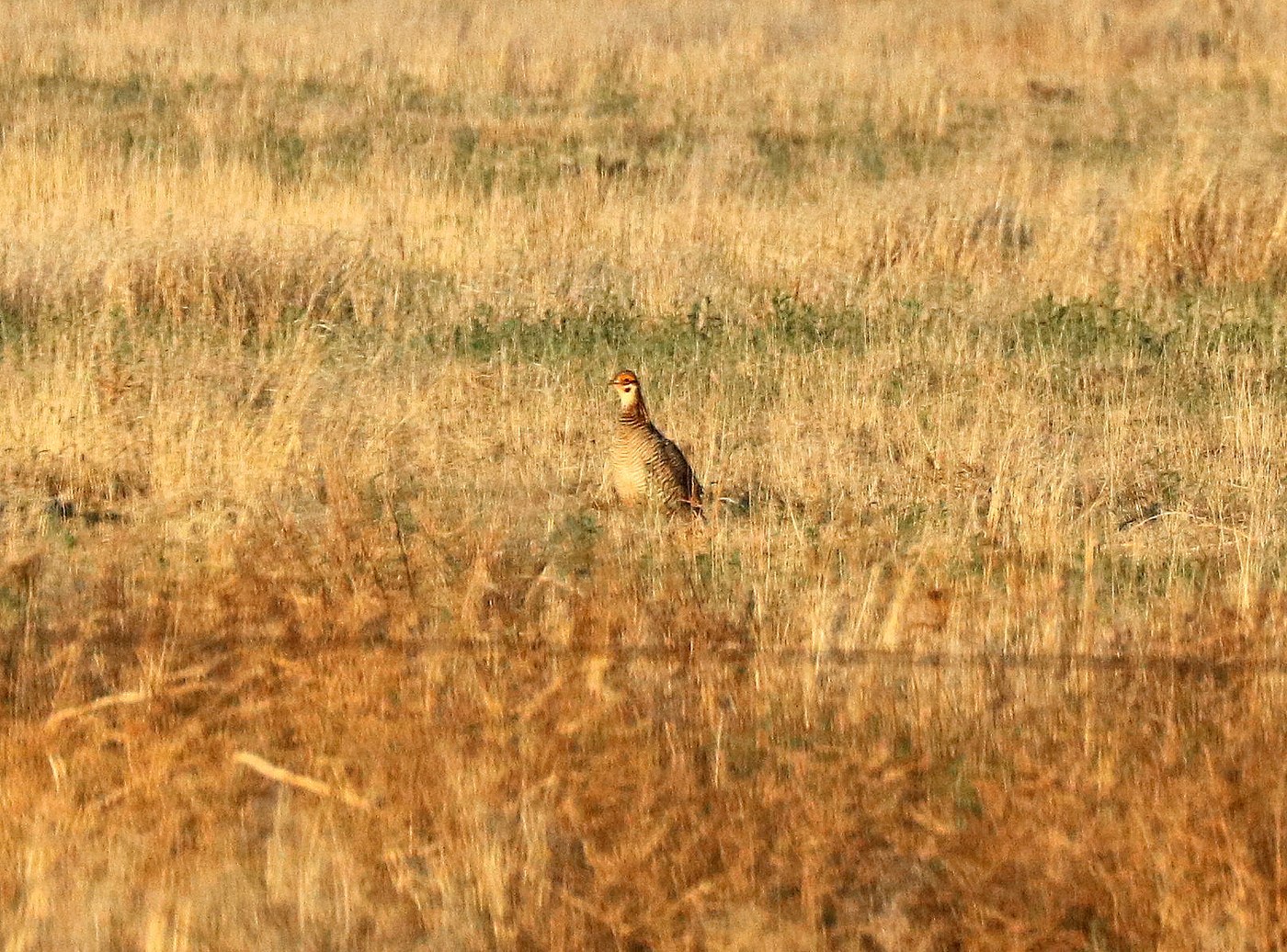
Lesser Prairie-Chicken
Tympanuchus pallidicinctus
A small, pale prairie grouse of sandy southern-plains grassland, closely related to but smaller and paler than the Greater Prairie-Chicken, with reddish-orange display air sacs.
- Size
- 38-41 cm (15-16 in) long; smaller and paler than the Greater Prairie-Chicken
- Habitat
- shortgrass and sand sagebrush prairie of the southern Great Plains
- Type
- gamebird
Spotted a bird like this?
Identify any bird from a photo, free.
Overview
The Lesser Prairie-Chicken is a small, pale grouse restricted to sandy grassland and shrub-steppe of the southern Great Plains. It is smaller and lighter in tone than its close relative the Greater Prairie-Chicken, with fine brown-and-buff barring overall and a short, dark, rounded tail. Males display prominent erect neck pinnae feathers and bare, reddish-orange (rather than orange-yellow) air sacs on the neck, inflated during an elaborate courtship display on communal leks.
How to identify it
Key field marks
- Overall paler, sandier plumage than Greater Prairie-Chicken, with fine barring
- Smaller body size
- Male neck air sacs are reddish-orange to dull red rather than bright orange-yellow
- Restricted to sandy shortgrass and shinnery oak/sand sagebrush prairie
Similar species
Greater Prairie-Chicken is larger and darker with orange-yellow (not reddish) neck sacs; the two species' ranges essentially do not overlap, with Lesser Prairie-Chicken confined to the sandy plains of the southern Great Plains.
Habitat & range
Habitat and Range
Lesser Prairie-Chickens depend on sandy soil grassland habitats such as shinnery oak grassland and sand sagebrush prairie, requiring large, relatively unfragmented expanses for lekking, nesting, and brood-rearing.
Range
The species is restricted to portions of the southern Great Plains, including parts of southeastern Colorado, southwestern Kansas, the Oklahoma and Texas panhandles, and eastern New Mexico -- a much smaller range than its historical extent.
Migration
Lesser Prairie-Chickens are non-migratory, remaining within relatively small home ranges, though populations may shift locally in response to drought and habitat conditions.
Behavior & voice
Behavior
Males display on traditional leks with foot-stamping, wing-flutter displays, and inflation of their reddish-orange neck air sacs, competing for female attention in a manner very similar to the Greater Prairie-Chicken.
Voice
The display call is a deep, resonant, gobbling and booming sound produced from the inflated neck sacs, along with cackles and whines during disputes between rival males.
Feeding
Diet includes seeds, waste grain, and leaves, with insects especially important for chicks during the breeding season.
Nesting and breeding
Females nest on the ground under grass or low shrub cover, often at some distance from the lek, and raise the brood alone; nest success is closely tied to the amount of residual grass cover available.
Frequently asked questions
Why is the Lesser Prairie-Chicken considered vulnerable?
Its range has contracted dramatically due to conversion of native sandy prairie to cropland, oil and gas development, and habitat fragmentation, leading to significant population declines and periodic federal protection status.
Where does the Lesser Prairie-Chicken live?
It is restricted to sandy shortgrass and shinnery oak or sand sagebrush prairie in parts of southeastern Colorado, southwestern Kansas, the Oklahoma and Texas panhandles, and eastern New Mexico.
How can you tell a Lesser Prairie-Chicken from a Greater Prairie-Chicken?
Lesser Prairie-Chicken is smaller and paler with reddish-orange neck air sacs, compared to the larger, darker Greater Prairie-Chicken with orange-yellow neck sacs; their ranges do not overlap.
What does the Lesser Prairie-Chicken's display sound like?
Males produce a deep, resonant booming and gobbling sound by inflating and releasing air from bare reddish-orange neck sacs during their lek display.
Lesser Prairie-Chicken guides
In-depth guides for identifying, finding, and understanding Lesser Prairie-Chicken.
Other birds you may enjoy
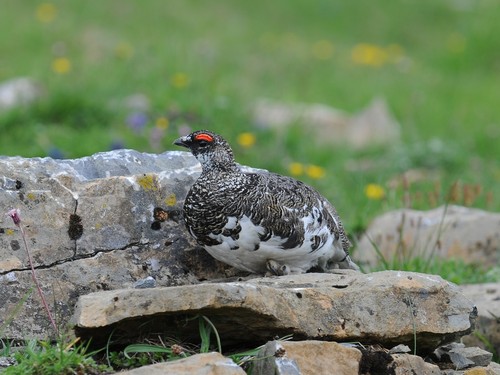
Rock Ptarmigan
34-36 cm (13-14 in) long
Congo Peafowl
Males about 64-70 cm long; females slightly smaller; no elaborate train
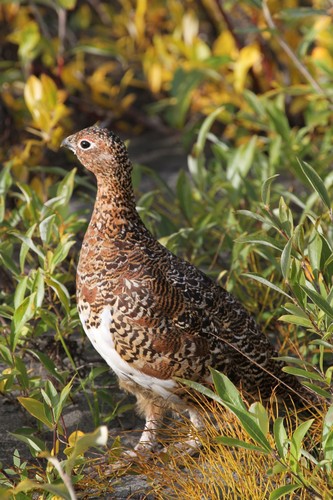
Willow Ptarmigan
37-42 cm (15-16.5 in) long
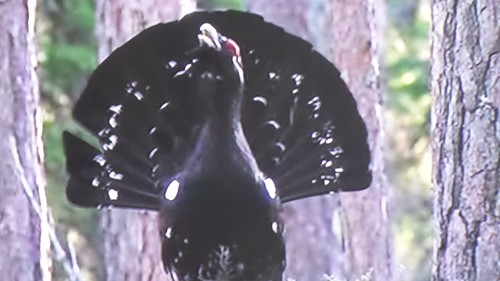
Western Capercaillie
male 74-90 cm (29-35 in), female 54-64 cm; male wingspan up to 125-130 cm
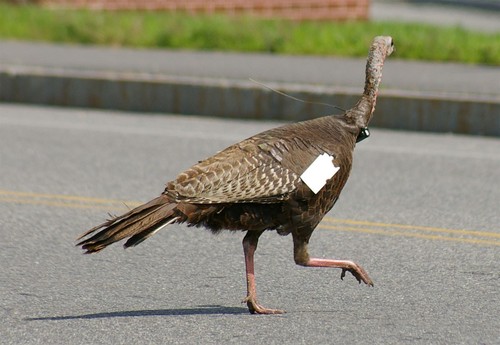
Wild Turkey
males 100-125 cm (39-49 in) long; females smaller, around 76-95 cm (30-37 in)
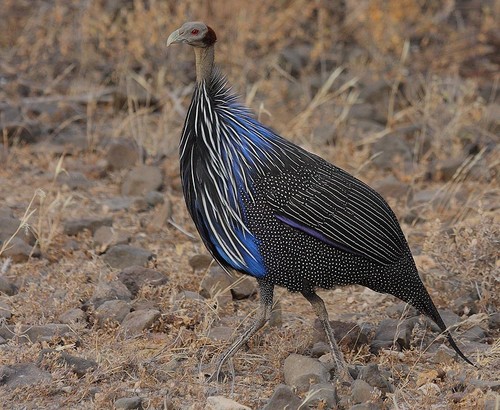
Vulturine Guineafowl
Length 61-71 cm, the largest guineafowl species, with a notably long neck and tail
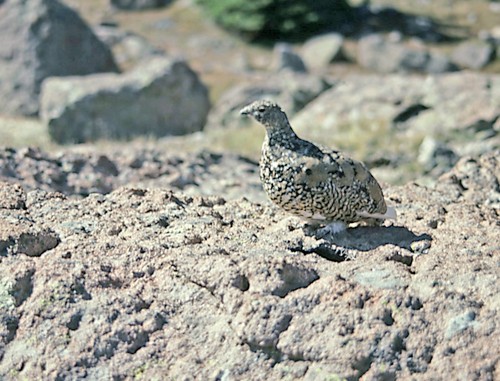
White-tailed Ptarmigan
30-33 cm (12-13 in) long; the smallest ptarmigan species
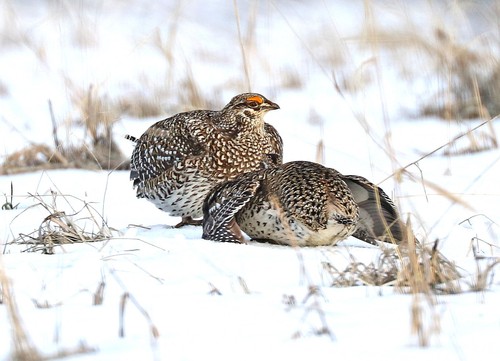
Sharp-tailed Grouse
38-48 cm (15-19 in) long
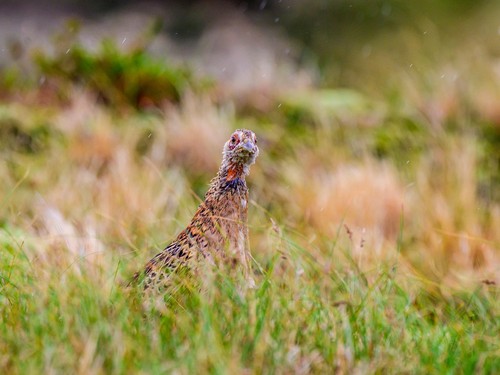
Ring-necked Pheasant
males 76-90 cm (30-35 in) long including a long tail; females smaller, 55-65 cm (22-26 in)
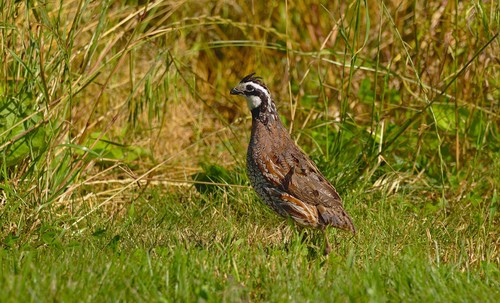
Northern Bobwhite
24-28 cm (9.5-11 in) long, 33-38 cm wingspan
Red-legged Partridge
32-34 cm (13 in) long, 47-50 cm wingspan
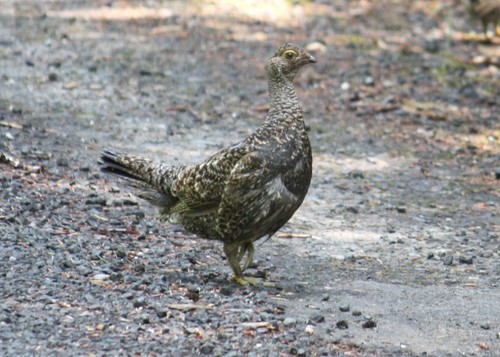
Sooty Grouse
43-48 cm (17-19 in) long; males larger than females