
Lesser Prairie-Chicken Identification Guide
A grouse of the southern Great Plains, best known for the male's spring lek display with orange-red air sacs, pinnae feathers, and booming calls.
Read the full Lesser Prairie-Chicken encyclopedia entry →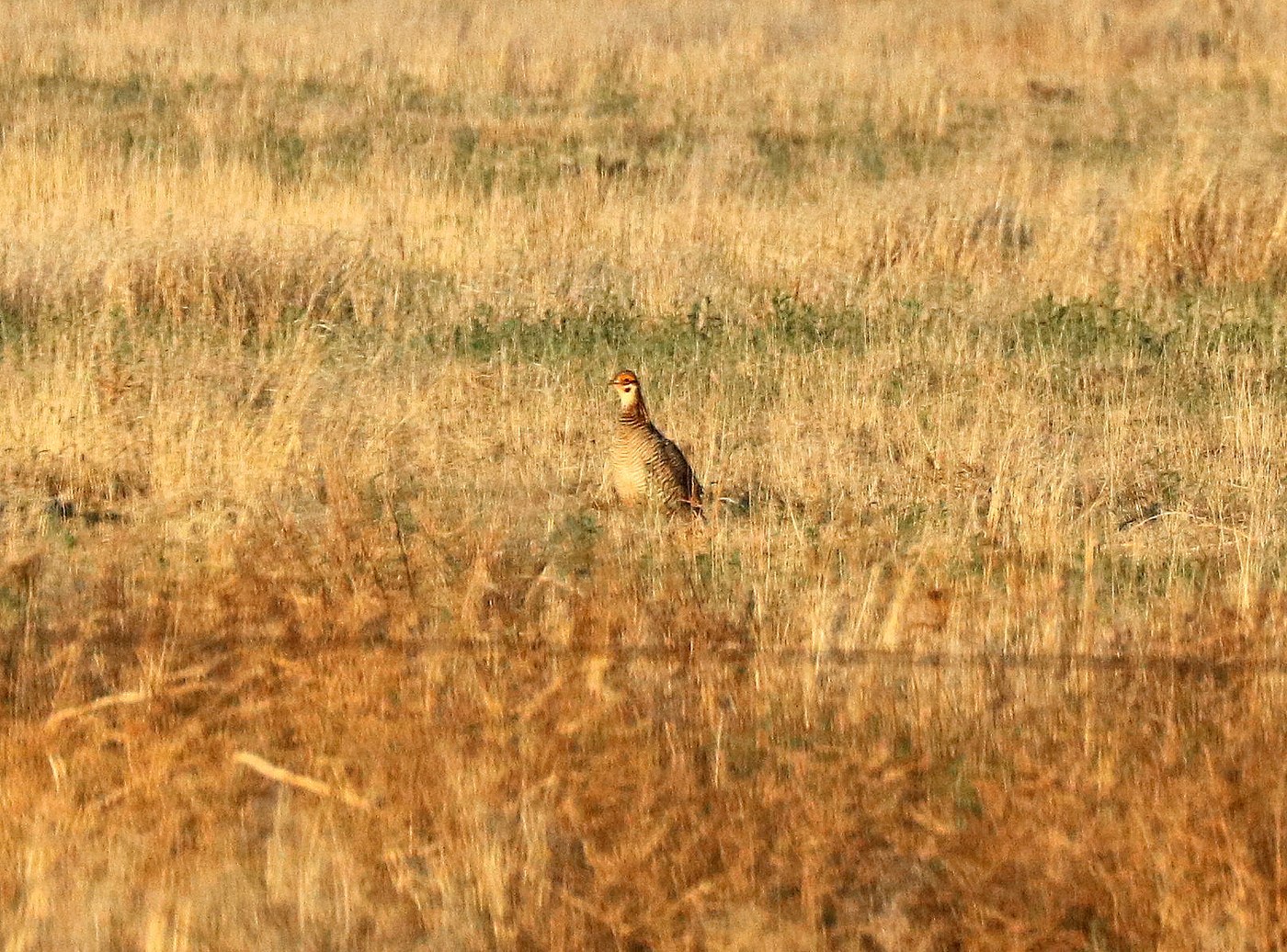
Key Field Marks
- Size & shape: Medium-sized grouse, about 15-16 inches long, plump-bodied with a short rounded tail and short legs -- noticeably smaller and paler than the closely related Greater Prairie-Chicken.
- Plumage: Finely barred brown, buff, and white overall, providing excellent camouflage in shortgrass and shrubland; overall coloration is paler and more cinnamon-toned than Greater Prairie-Chicken.
- Male display features: Elongated neck feathers (pinnae) that are raised during display; bright orange-red (rather than yellow-orange) inflatable esophageal air sacs on the sides of the neck, visible during booming displays on leks.
- Female: Similar barred brown plumage but lacks the long pinnae and air sacs; more subtly patterned overall.
- Tail: Short and rounded, often fanned and held upright by displaying males.
Separating from Similar Species
- Greater Prairie-Chicken: Larger and darker overall, with yellow-orange (not orange-red) air sacs and a mostly non-overlapping range (Greater favors tallgrass prairie farther east/north, Lesser favors shortgrass/sand-sagebrush prairie of the southern Plains).
- Sharp-tailed Grouse: Shows a pointed (not rounded) tail with white outer feathers, and lacks the inflatable neck air sacs; also has a more spotted (less barred) plumage pattern.
- Range is a strong clue: Lesser Prairie-Chicken is restricted to a small five-state region (Kansas, Oklahoma, Texas panhandle, eastern New Mexico, and southeastern Colorado).
Habitat, Range & Season
- Endemic to the southern Great Plains, inhabiting shortgrass and mixed-grass prairie with sand sagebrush or shinnery oak, primarily in Kansas, Oklahoma, Texas, New Mexico, and Colorado.
- Non-migratory resident, but populations have become fragmented and severely reduced due to habitat loss, making it one of the rarest grouse species in North America.
- Best viewed in early spring (March-May) at traditional lek (booming ground) sites at dawn.
Behavior
- Males gather at communal leks at dawn during the breeding season to perform elaborate courtship displays: stamping feet rapidly, raising pinnae, inflating orange air sacs, and giving booming vocalizations to attract females.
- Highly dependent on intact native prairie; sensitive to habitat fragmentation from cropland conversion, energy infrastructure, and woody encroachment.
- Diet includes seeds, leaves, insects, and waste grain, shifting seasonally.
Voice
- Males produce a distinctive low, hollow booming sound during lek displays by inflating and rapidly deflating their orange air sacs, audible over long distances on calm mornings.
- Also give cackling and gobbling notes during display and when flushed.
Frequently asked questions
How do you tell Lesser Prairie-Chicken from Greater Prairie-Chicken?
Lesser Prairie-Chicken is smaller and paler with orange-red (not yellow-orange) neck air sacs in displaying males, and its range is largely separate, restricted to shortgrass/sand-sagebrush prairie of the southern Great Plains.
When and where is the best time to see Lesser Prairie-Chicken displays?
At dawn during March through May at traditional lek sites in Kansas, Oklahoma, the Texas panhandle, eastern New Mexico, or southeastern Colorado.
Why is the Lesser Prairie-Chicken considered at risk?
Extensive loss and fragmentation of native shortgrass and sand-sagebrush prairie habitat, along with energy development and woody plant encroachment, have caused significant population declines.
What is a lek and why is it important for this species?
A lek is a communal display ground where males gather to perform courtship displays to attract females; leks are essential breeding sites and their loss directly threatens the species' persistence.
What does the booming sound of a male Lesser Prairie-Chicken signify?
It's part of the courtship display, produced by inflating orange air sacs, used to attract females and assert dominance over rival males at the lek.