
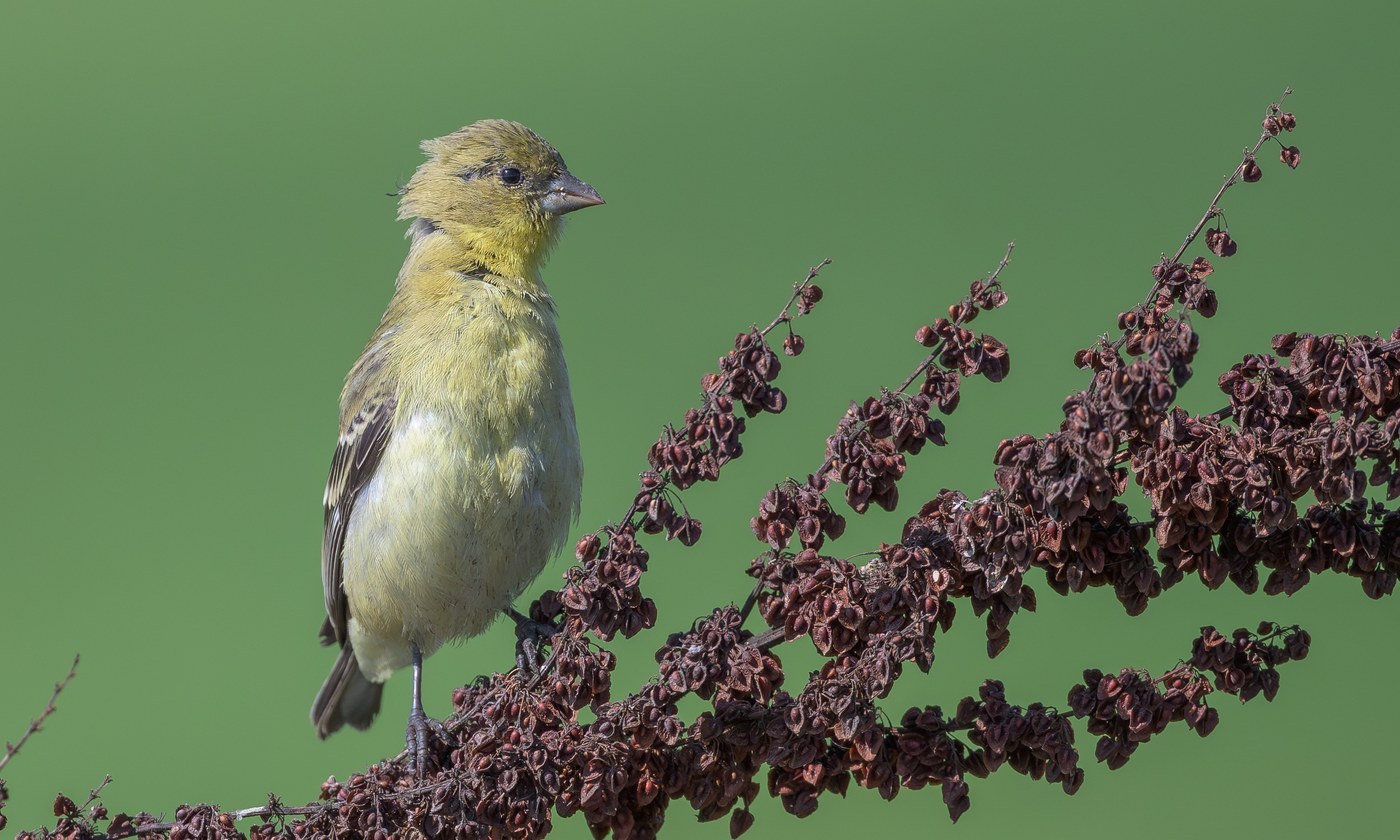
Lesser Goldfinch
Spinus psaltria
The smallest North American goldfinch, a bright yellow-and-black finch of western gardens, scrub, and open woods.
- Size
- 9-11 cm (3.5-4.3 in) long, 17-19 cm wingspan
- Habitat
- open woodlands, scrub, gardens, and riparian areas of the western U.S., Mexico, and northern South America
- Type
- songbird
Spotted a bird like this?
Identify any bird from a photo, free.
Overview
The Lesser Goldfinch is a diminutive, energetic finch found across the southwestern United States, Mexico, and into South America, replacing the American Goldfinch as the common backyard goldfinch through much of its western range. Males show bright yellow underparts contrasting with a black cap and either a greenish (western populations) or solid glossy black back (populations from Texas southward), plus white patches visible in the black wings and tail. Females are duller olive-yellow above and pale yellow below, lacking the black cap.
Despite its small size, the Lesser Goldfinch has a loud, varied voice and is a frequent visitor to feeders, gardens, and weedy fields, often traveling in small, active flocks.
How to identify it
Key Field Marks
- Tiny goldfinch, noticeably smaller than American Goldfinch
- Males: black cap, yellow underparts, back either olive-green or black depending on region, white wing patches
- Females: olive-yellow above, pale yellow below, no black cap
- White patches at base of primaries visible in flight
Similar Species
- American Goldfinch: larger, with males showing an all-black forehead cap only (not full crown to nape as sometimes perceived) and a bright orange bill in breeding season; overall brighter lemon-yellow.
- Lawrence's Goldfinch: grayer body with yellow confined to breast, wings, and rump, and a black face patch on males rather than a full black cap.
- Pine Siskin: heavily streaked brown, lacking the clean yellow-and-black pattern.
Habitat & range
Habitat
Lesser Goldfinches favor open woodlands, chaparral, weedy fields, riparian corridors, and residential gardens, generally avoiding dense forest.
Range
The species ranges from the southwestern and south-central United States (California to Texas) south through Mexico and Central America into Peru, Venezuela, and Colombia.
Migration
Most populations are resident or only make short-distance movements; northern populations in the interior West may withdraw somewhat southward in winter, but many populations remain year-round residents.
Behavior & voice
Behavior
Lesser Goldfinches are active and social, often forming small flocks that move together between feeding areas, calling frequently while perched or in flight.
Voice
The song is a long, varied, and often imitative jumble of notes, phrases, and mimicked sounds of other species; calls include a plaintive, rising "tee-yee" and various chatters.
Feeding
Diet is dominated by small seeds, particularly from composite (sunflower family) plants and weeds, along with buds and occasional insects; readily visits feeders offering nyjer or sunflower chips.
Nesting
Nests are neat, compact cups woven from plant fibers and spider silk, placed in a shrub or tree fork. Females lay 3-5 eggs and incubate alone, while both parents feed the young.
Frequently asked questions
How is the Lesser Goldfinch different from the American Goldfinch?
It is noticeably smaller, and males have a solid black cap and either greenish or black back rather than the American Goldfinch's brighter overall lemon-yellow body and black forehead patch only.
Why do some male Lesser Goldfinches have black backs and others green backs?
This reflects geographic variation: birds in the interior and northern part of the range (including much of California and the Southwest) tend to have green backs, while those from Texas and areas farther south typically have solid black backs.
What does the Lesser Goldfinch eat?
Primarily small seeds, especially from sunflower-family plants and weeds, supplemented with buds and occasional insects.
Where does the Lesser Goldfinch live?
It is found in open woodlands, scrub, and gardens from the southwestern United States through Mexico and Central America into northern South America.
Does the Lesser Goldfinch mimic other birds?
Yes, its long, rambling song often incorporates phrases and calls borrowed from other bird species.
Lesser Goldfinch guides
In-depth guides for identifying, finding, and understanding Lesser Goldfinch.
Other birds you may enjoy
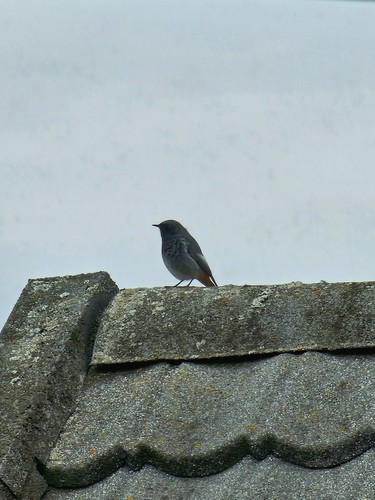
Black Redstart
13-14.5 cm (5.1-5.7 in) long, 23-26 cm wingspan
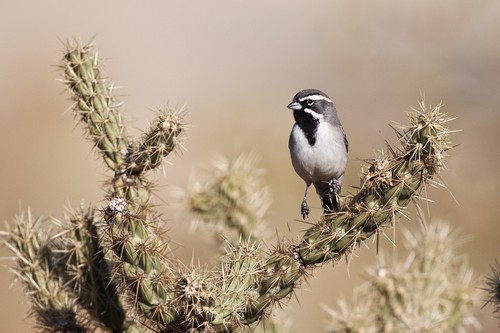
Black-throated Sparrow
12-14 cm (4.7-5.5 in) long, about 19-20 cm (7.5-8 in) wingspan
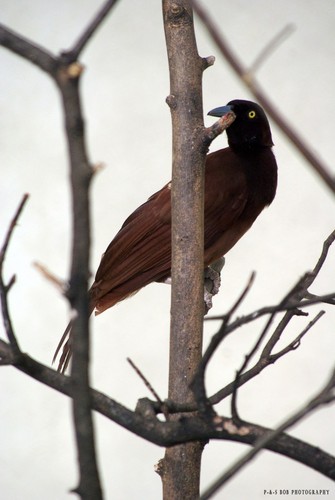
Greater Bird-of-paradise
Body about 43 cm; males with additional flank plumes up to 50 cm and long tail wires
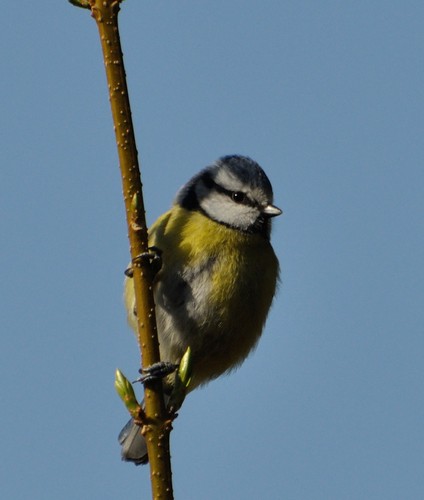
Blue Tit
11-12 cm (4.3-4.7 in) long, 17-20 cm wingspan
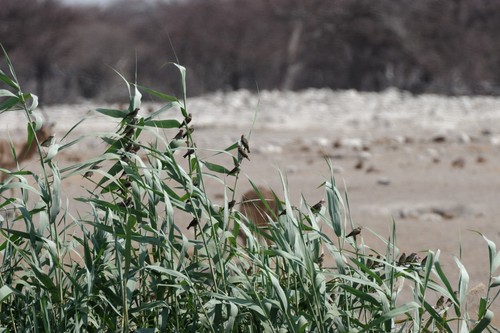
Red-billed Quelea
11.5–13 cm long, wingspan about 20–22 cm
White-plumed Antbird
13-14 cm (5-5.5 in) long
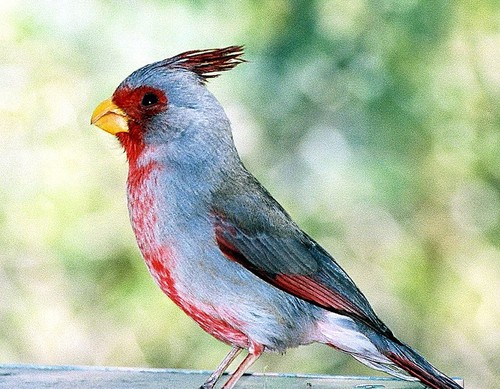
Pyrrhuloxia
19-22 cm (7.5-8.7 in) long, 30 cm wingspan
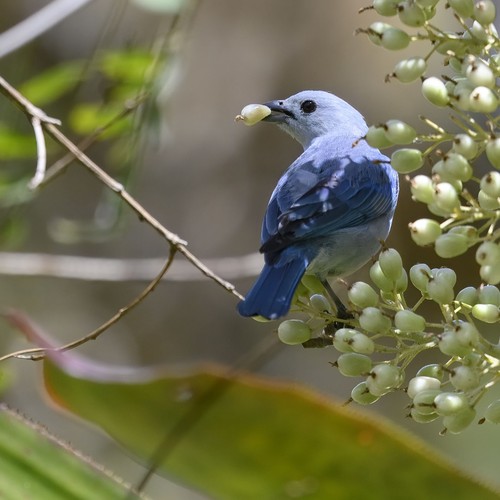
Blue-gray Tanager
16-18 cm (6-7 in) long
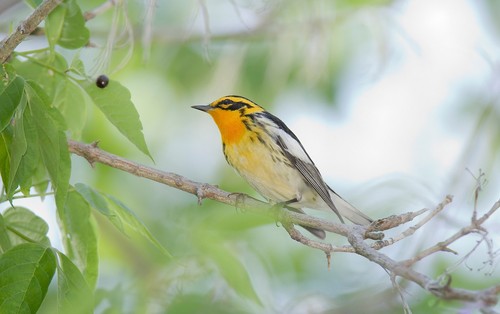
Blackburnian Warbler
11-13 cm (4.3-5.1 in) long, 20-22 cm wingspan
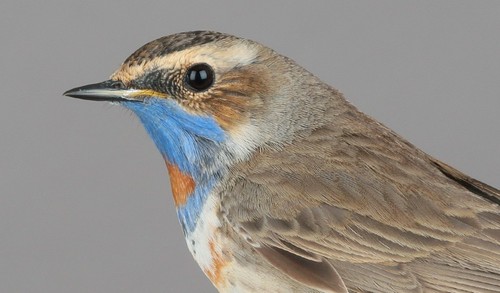
Bluethroat
13-14 cm (5.1-5.5 in) long, 20-22 cm wingspan
Eurasian Nuthatch
12-14.5 cm (4.7-5.7 in) long, 22.5-27 cm wingspan
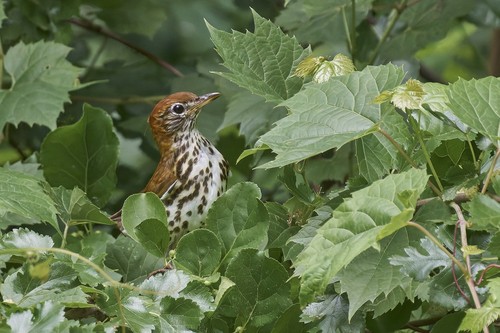
Wood Thrush
19-21 cm (7.5-8.3 in) long, about 33 cm (13 in) wingspan