
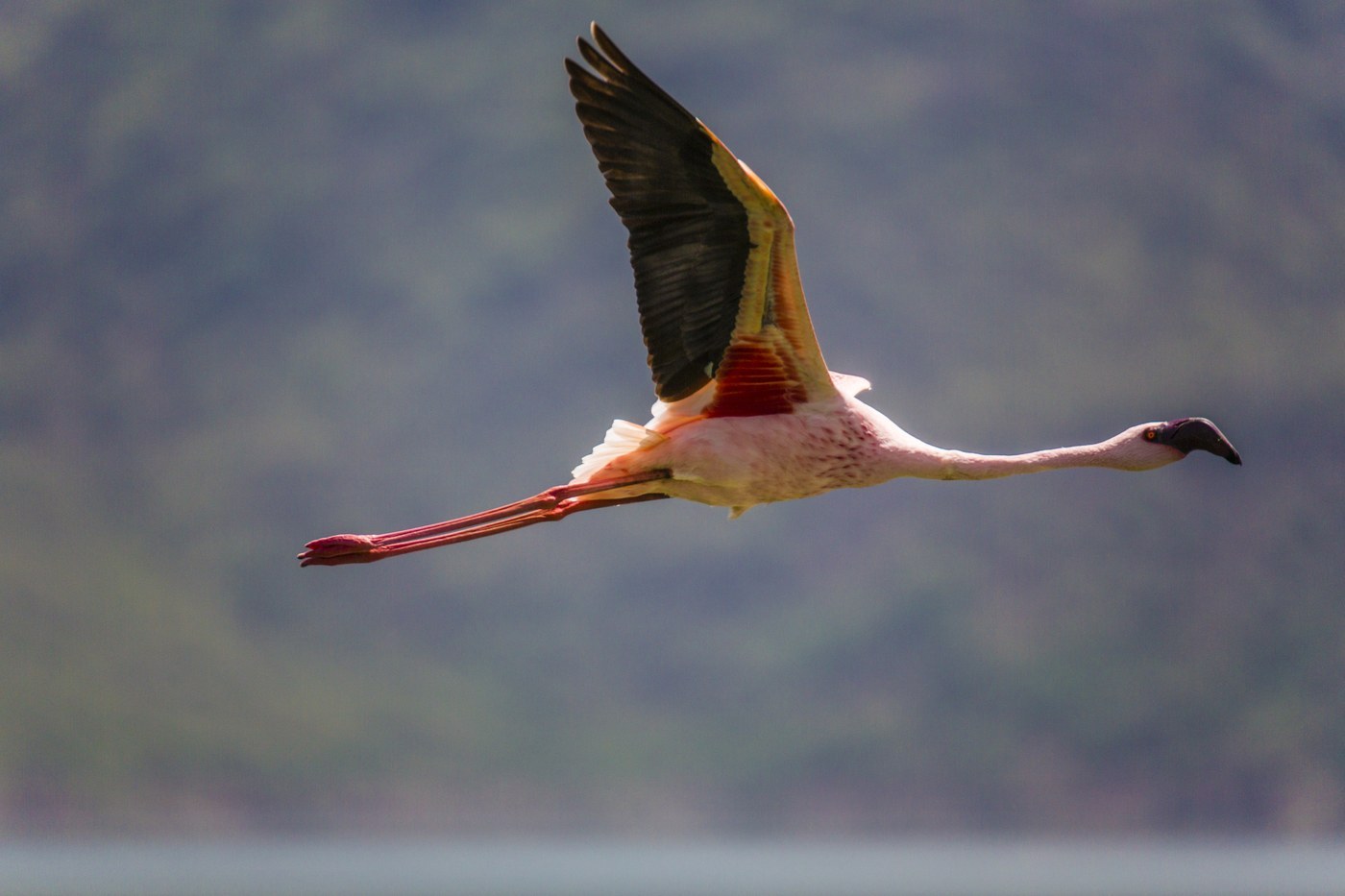
Lesser Flamingo
Phoeniconaias minor
The smallest and most numerous flamingo in the world, famous for the vast pink flocks that gather on East Africa's Rift Valley soda lakes.
- Size
- 80-90 cm (31-35 in) tall, 95-100 cm wingspan
- Habitat
- alkaline and saline lakes, coastal lagoons, and salt pans
- Type
- wading-bird
Spotted a bird like this?
Identify any bird from a photo, free.
Overview
The Lesser Flamingo is the smallest flamingo species and the most abundant, with the majority of the world's population concentrated on a handful of highly alkaline soda lakes in East Africa's Great Rift Valley. It has deep pink plumage, a dark red bill that appears almost black at a distance, and a distinctive dark red eye ring. Its small size and dark bill readily separate it from the larger, paler Greater Flamingo with which it often shares habitat.
When hundreds of thousands gather together, Lesser Flamingos create one of the most spectacular wildlife concentrations on Earth, turning lake shores into shifting carpets of pink.
How to identify it
Key field marks
- Smallest flamingo species, noticeably shorter than the Greater Flamingo
- Dark red to blackish bill, appearing almost entirely dark at a distance
- Deep pink plumage, often more saturated than the paler Greater Flamingo
- Dark reddish eye ring
Similar species
- Greater Flamingo is larger and paler with a pink bill tipped black.
- Mixed flocks of both species are common in East Africa; size and bill color are the best distinguishing features.
Habitat & range
Habitat
Specializes in highly alkaline (soda) lakes, salt pans, and coastal lagoons where cyanobacteria thrive.
Range
Most abundant in the Rift Valley lakes of Kenya and Tanzania, with additional populations in southern Africa, India, and Pakistan.
Migration
Nomadic rather than strictly migratory, moving between lakes in response to changing water chemistry and food abundance.
Behavior & voice
Behavior
Forms enormous flocks, sometimes numbering over a million birds, that wade and swim while filtering the water's surface for food.
Voice
High, murmuring, goose-like honks, especially audible from large flocks.
Feeding
Filters blue-green algae (cyanobacteria) and diatoms from alkaline water using fine bill lamellae, feeding with its head upside down and moving side to side.
Nesting
Breeds in massive colonies on isolated mudflats within soda lakes, building mud mound nests; lays a single white egg.
Frequently asked questions
Why are Lesser Flamingos found in such huge flocks?
Their food, cyanobacteria and diatoms in alkaline soda lakes, can be extremely abundant, allowing enormous concentrations of birds, sometimes over a million, to gather at a single lake.
How do you tell a Lesser Flamingo from a Greater Flamingo?
The Lesser Flamingo is smaller and deeper pink with a dark red to blackish bill, while the Greater Flamingo is larger, paler, and has a pink bill with a black tip.
What do Lesser Flamingos eat?
Mainly blue-green algae (cyanobacteria) and diatoms filtered from alkaline lake water.
Why is the Lesser Flamingo Near Threatened despite large numbers?
Its population is concentrated at very few breeding sites, making it highly vulnerable to habitat disturbance, water chemistry changes, and development around those lakes.
Lesser Flamingo guides
In-depth guides for identifying, finding, and understanding Lesser Flamingo.
Other birds you may enjoy
Demoiselle Crane
85-100 cm (33-39 in) long, 155-180 cm wingspan
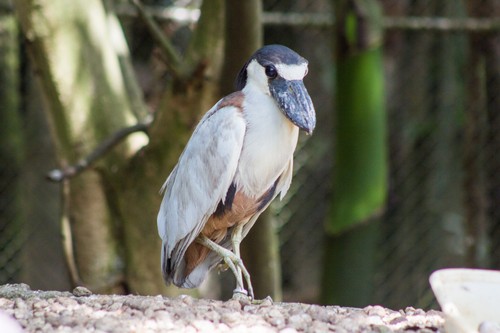
Boat-billed Heron
41-56 cm (16-22 in) long
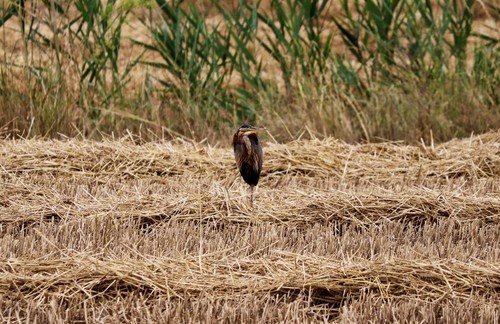
Purple Heron
78-90 cm (31-35 in) long, 120-152 cm wingspan
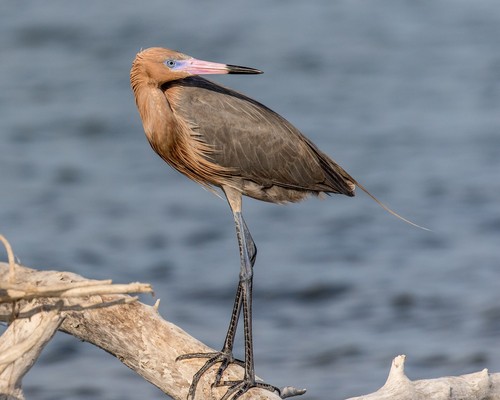
Reddish Egret
68-82 cm (27-32 in) long, 116-125 cm wingspan
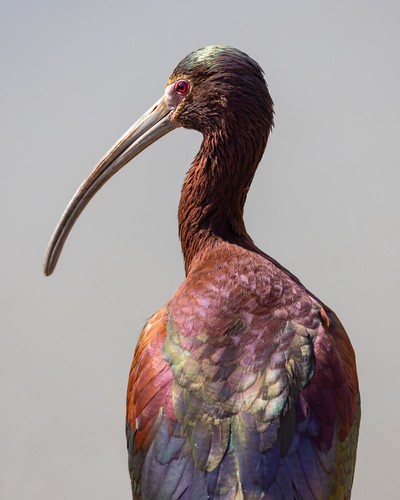
White-faced Ibis
46-56 cm (18-22 in) long, 88-93 cm wingspan
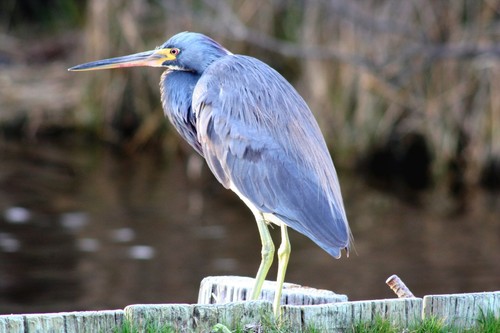
Tricolored Heron
61-76 cm (24-30 in) long, about 96 cm wingspan
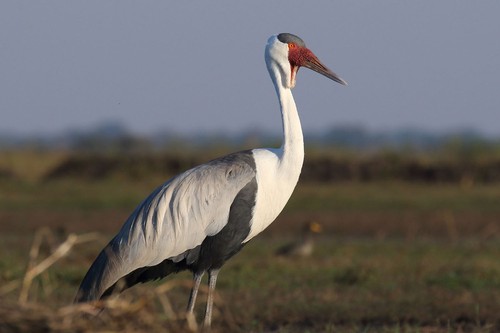
Wattled Crane
120-175 cm (47-69 in) tall, one of the tallest cranes, wingspan up to about 230 cm (7.5 ft)
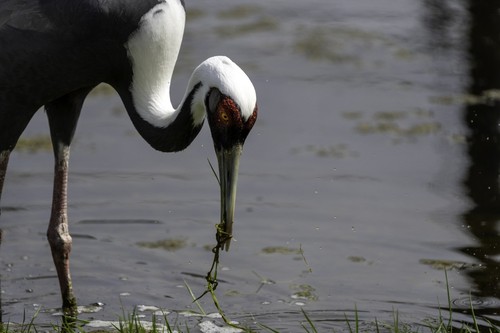
White-naped Crane
112-125 cm (44-49 in) long, 195-210 cm wingspan
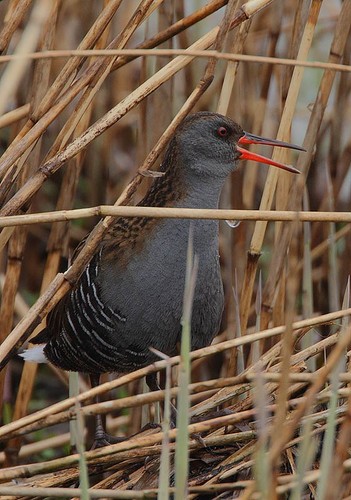
Water Rail
23-28 cm (9-11 in) long, wingspan 38-45 cm
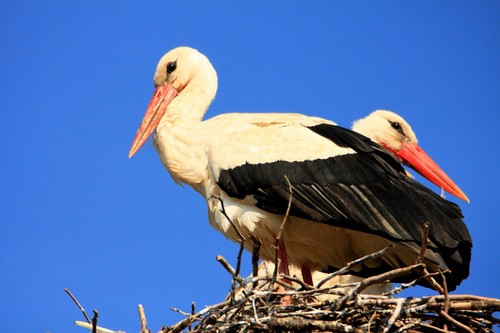
White Stork
100-125 cm (39-49 in) long, 155-215 cm wingspan
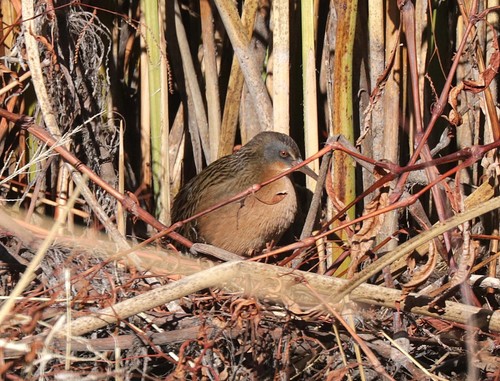
Virginia Rail
20-27 cm (8-11 in) long, wingspan 32-38 cm
Wattled Jacana
17-23 cm (7-9 in) long