
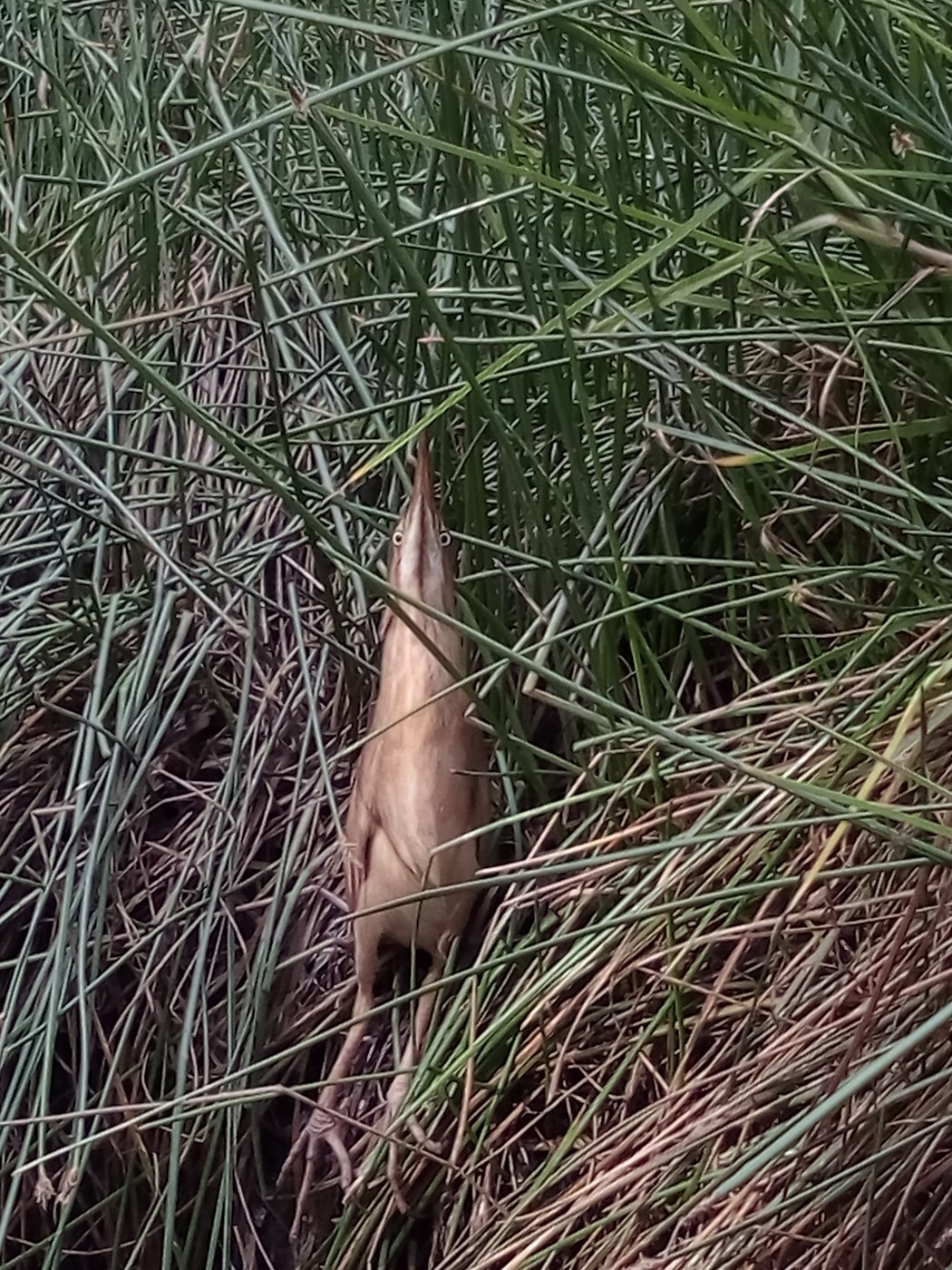
Least Bittern
Ixobrychus exilis
The smallest heron in North America, an elusive marsh dweller that clambers through cattails with the help of long grasping toes.
- Size
- 28-36 cm (11-14 in) long, 41-46 cm wingspan
- Habitat
- dense freshwater marshes with cattails and tall emergent vegetation across the Americas
- Type
- wading-bird
Spotted a bird like this?
Identify any bird from a photo, free.
Overview
The Least Bittern is a tiny, secretive heron, far smaller than any other North American member of the family. Males show a glossy black cap and back contrasting with buffy-orange wing patches and warm chestnut-buff neck sides, while females and juveniles are duller, browner versions of the same pattern. All plumages show pale buffy patches on the upperwing that flash conspicuously in flight.
Its small size and long, slender toes allow it to move nimbly through dense stands of cattails and bulrushes, gripping several stems at once rather than wading in open water like larger herons.
How to identify it
Key field marks
- Very small size, noticeably smaller than any other heron in range
- Buffy-orange patches on the upperwing, conspicuous in flight
- Black cap and back (male) or duller brown (female/juvenile)
- Long toes for gripping reed stems
Similar species
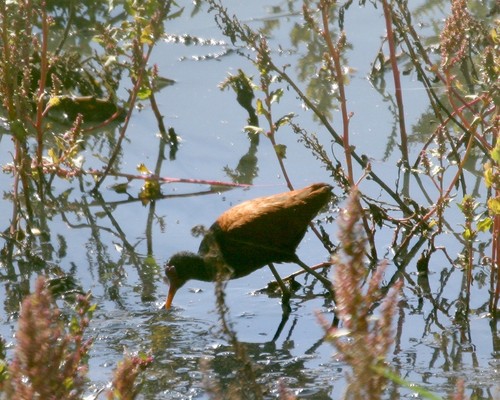
The American Bittern is much larger and streaked brown overall without the bold pale wing patches. Rails, such as Virginia Rail, share the marsh habitat but lack the heron-like dagger bill and pale wing patches.
Habitat & range
Habitat
Least Bitterns require dense stands of cattails, bulrushes, or other tall marsh vegetation interspersed with open water, in freshwater or brackish marshes.
Range and migration
The species breeds across much of the eastern and central United States, southern Canada, and locally elsewhere in the Americas, wintering from the southern US through Central America and into parts of South America; northern breeders are migratory.
Behavior & voice
Behavior
Extremely furtive, Least Bitterns climb through dense reed stems using their long toes, rarely venturing into the open, and often freeze in a bittern-like upright posture when alarmed.
Voice
A soft, low cooing "coo-coo-coo" song from males, along with a variety of clucking and cackling calls.
Feeding
It hunts small fish, insects, and tadpoles from a perch among reed stems, sometimes building a small feeding platform of bent-down vegetation over open water.
Nesting and breeding
Nests are shallow platforms of woven marsh vegetation built just above the waterline and hidden within dense reeds; clutches usually contain 4-5 eggs.
Frequently asked questions
How small is a Least Bittern?
It is the smallest heron in North America, only about 28-36 cm long, roughly the size of a small rail.
How does a Least Bittern move through dense marshes?
It uses long, slender toes to grip several reed stems at once, climbing nimbly through cattails rather than wading.
What does a Least Bittern eat?
Small fish, tadpoles, and aquatic insects hunted from a perch among reed stems.
Where do Least Bitterns live?
In dense freshwater marshes across much of the Americas, breeding widely in the eastern and central US.
Least Bittern guides
In-depth guides for identifying, finding, and understanding Least Bittern.
Other birds you may enjoy
Demoiselle Crane
85-100 cm (33-39 in) long, 155-180 cm wingspan
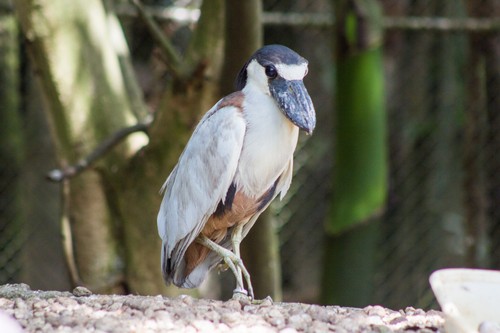
Boat-billed Heron
41-56 cm (16-22 in) long
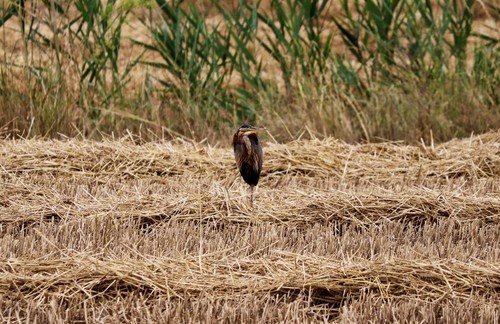
Purple Heron
78-90 cm (31-35 in) long, 120-152 cm wingspan
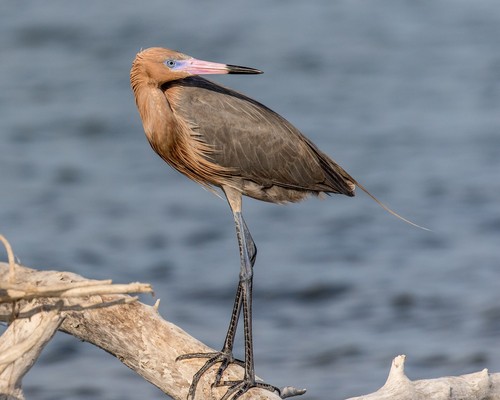
Reddish Egret
68-82 cm (27-32 in) long, 116-125 cm wingspan
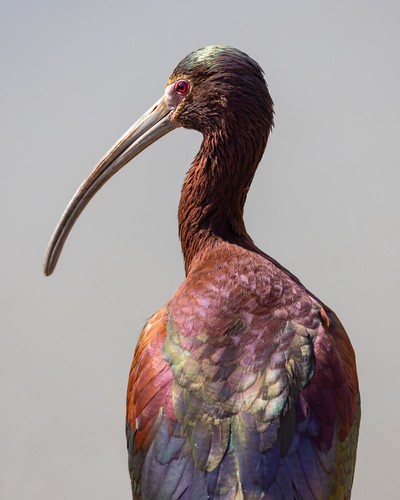
White-faced Ibis
46-56 cm (18-22 in) long, 88-93 cm wingspan
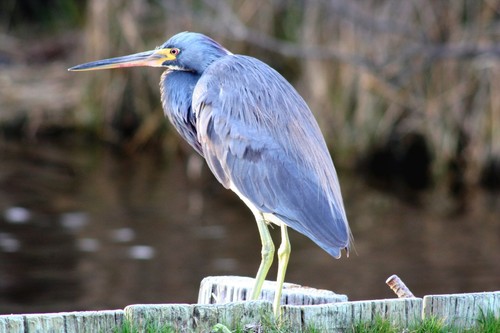
Tricolored Heron
61-76 cm (24-30 in) long, about 96 cm wingspan
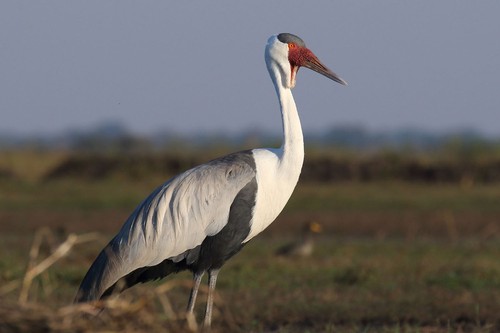
Wattled Crane
120-175 cm (47-69 in) tall, one of the tallest cranes, wingspan up to about 230 cm (7.5 ft)
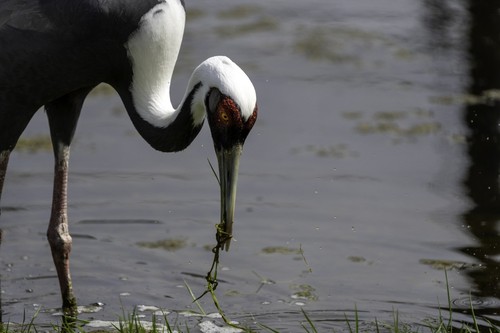
White-naped Crane
112-125 cm (44-49 in) long, 195-210 cm wingspan
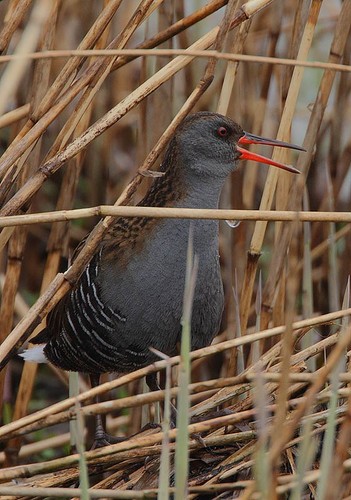
Water Rail
23-28 cm (9-11 in) long, wingspan 38-45 cm
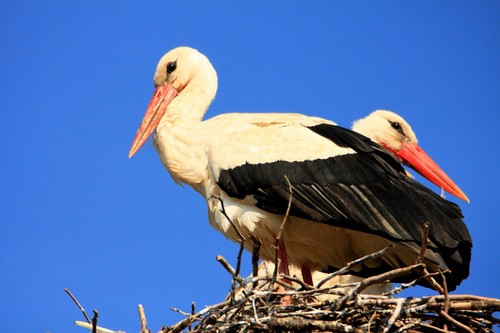
White Stork
100-125 cm (39-49 in) long, 155-215 cm wingspan
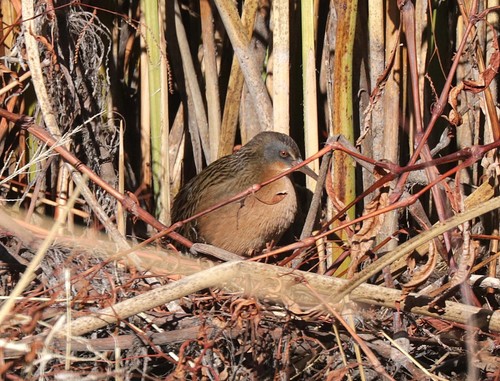
Virginia Rail
20-27 cm (8-11 in) long, wingspan 32-38 cm
Wattled Jacana
17-23 cm (7-9 in) long