
Least Bittern Identification Guide
North America's smallest heron, an elusive marsh bird with buffy wing patches and a habit of freezing motionless among cattails rather than flying away.
Read the full Least Bittern encyclopedia entry →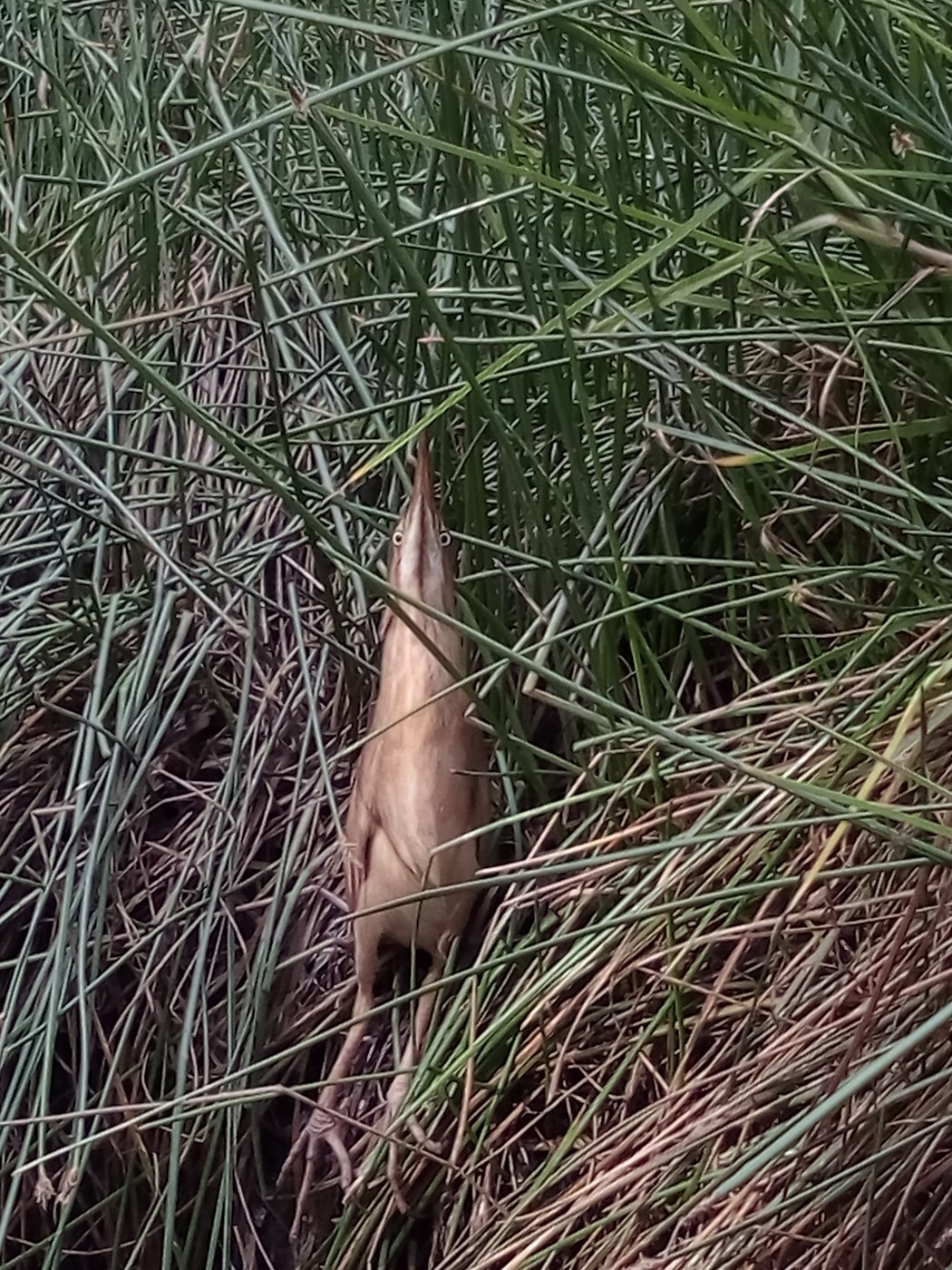
Key Field Marks
- Size & shape: Tiny for a heron, only about 28–36 cm (11–14 in) long, with a thin body, long thin neck, short legs, and a short pointed bill — built to slip between dense marsh stems.
- Male plumage: Glossy blackish-green crown, back, and tail contrast with warm buffy-orange neck sides and large pale buffy wing patches that flash conspicuously in flight; underparts buffy with some streaking.
- Female plumage: Similar pattern but duller, with the crown and back more chestnut-brown rather than glossy black-green, and slightly more streaking below.
- Behavior: Extremely secretive, climbing and clinging to vertical marsh reeds with long toes rather than walking; when alarmed, freezes in an upright "bittern stance" with bill pointed skyward and body compressed to blend with reeds, sometimes swaying slightly with the wind like the surrounding vegetation.
- Flight: When flushed, flies low and weakly for a short distance on rounded wings showing bold buffy wing patches before dropping back into cover.
Separating It From Similar Species
- American Bittern: Much larger and bulkier, streaky brown overall (not glossy black-green and buffy), lacking the bold pale wing patches of Least Bittern, and typically found in more open marsh edges.
- Green Heron: Larger, stockier, with a shorter neck relative to body and lacking the buffy wing patches; usually seen perched at water's edge rather than clinging within dense reeds.
- Juvenile night-herons: Larger and stockier still, heavily streaked brown overall without the compact, buffy-and-dark two-tone pattern of Least Bittern.
Where & When to See It
- Range: Breeds across much of the eastern and central United States, southern Canada, and locally in the West and Caribbean; winters in the southern U.S., Mexico, Central America, and parts of South America.
- Habitat: Dense freshwater and brackish marshes with tall emergent vegetation such as cattails and bulrushes interspersed with open water — rarely leaves cover.
- Season: Present on breeding marshes from late spring through summer (roughly May–September in the north); most populations migrate, with birds arriving on wintering grounds by fall.
Voice & Song Cues
- Song is a low, soft, cooing "coo-coo-coo," rather dove-like, given mainly at dawn and dusk by males, often the only clue to presence in dense marsh vegetation.
- Alarm/flush call is a sharp, cackling "ka-ka-ka-ka" given as the bird flies a short distance before dropping back into reeds.
Frequently asked questions
How do I tell a Least Bittern from an American Bittern?
Least Bittern is much smaller with a glossy black-green crown and back, warm buffy neck sides, and bold pale wing patches, while American Bittern is larger, streaky brown overall, and lacks contrasting wing patches.
Why is the Least Bittern so hard to spot?
It is highly secretive, clinging to vertical marsh stems within dense cattails and bulrushes, and when alarmed it freezes in an upright pose with its bill pointed skyward to blend in rather than flying away.
What does a Least Bittern sound like?
Its main song is a soft, low, dove-like cooing given mainly at dawn and dusk, and when flushed it gives a sharp cackling call as it flies a short distance to new cover.
What habitat should I search for Least Bitterns?
Look in dense freshwater or brackish marshes with tall stands of cattails or bulrushes mixed with open water channels, since it rarely strays from thick emergent cover.
How can I distinguish a female Least Bittern from a male?
Females show a more chestnut-brown crown and back rather than the glossy black-green of males, along with slightly more streaking on the underparts, though both sexes share the buffy wing patches and small size.