
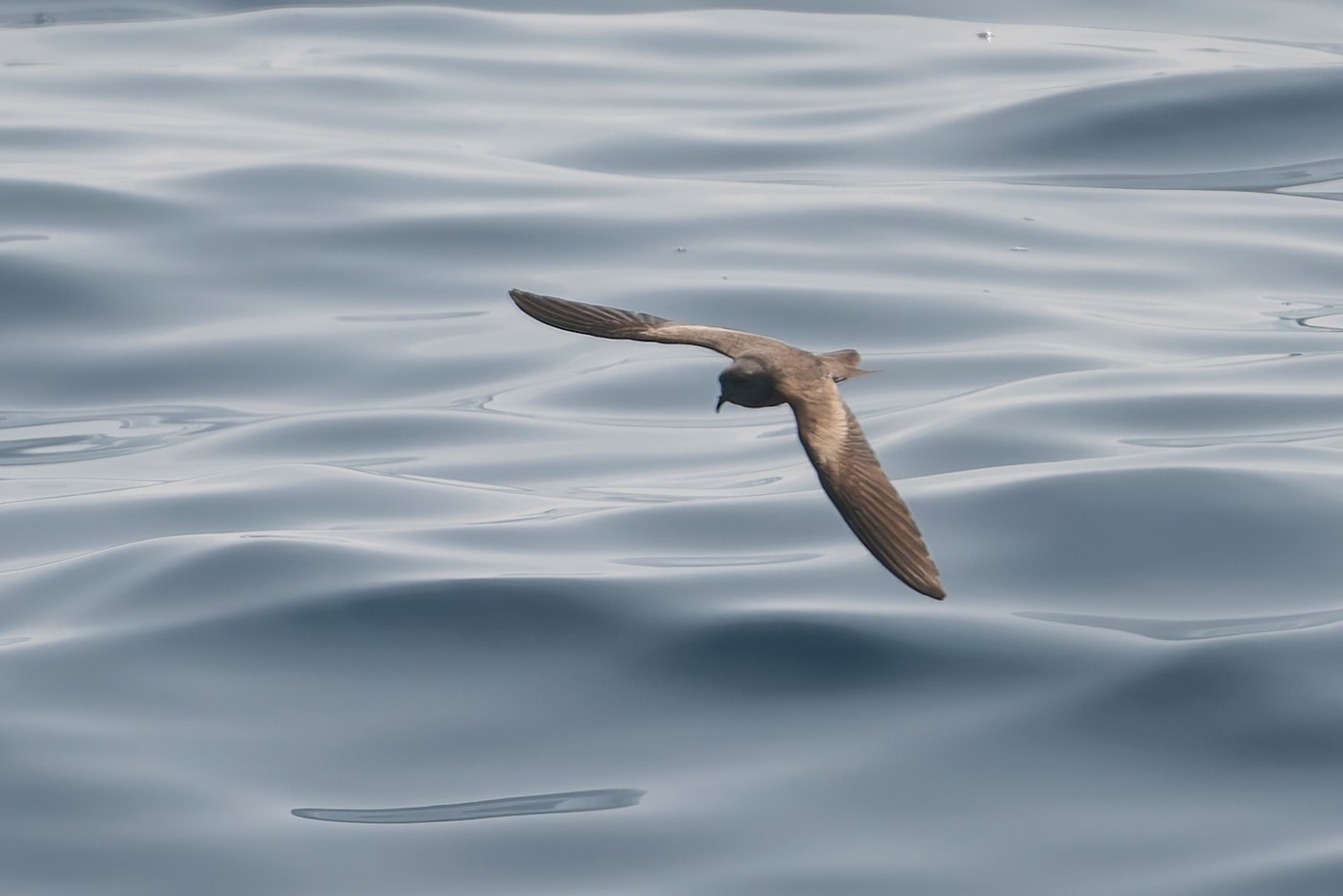
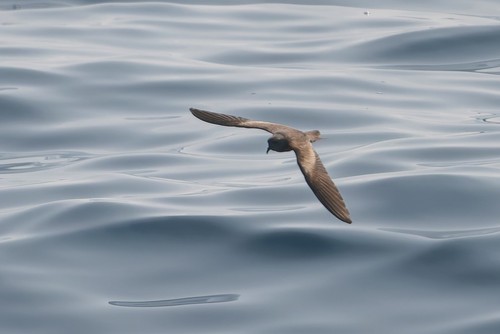
Leach's Storm-Petrel
Hydrobates leucorhous
A small, dark, forked-tailed storm-petrel with an erratic, bat-like flight, spending nearly its entire life far out at sea and visiting nesting burrows only at night.
- Size
- 19-22 cm (7.5-8.5 in) long, wingspan 45-48 cm (18-19 in)
- Habitat
- open North Atlantic and North Pacific waters, breeding on remote offshore islands
- Type
- seabird
Spotted a bird like this?
Identify any bird from a photo, free.
Overview
Leach's Storm-Petrel is a small, sooty-brown seabird with a distinctly forked tail and a white rump patch that is often divided by a faint dark line down the center, a useful feature separating it from several similar species.
This species is almost entirely pelagic, spending nearly all of its life far from land over open ocean waters, coming ashore only to breed, and even then only under cover of complete darkness to avoid predatory gulls and owls that would otherwise easily catch such a small bird.
In flight, Leach's Storm-Petrel has an erratic, bounding, almost bat-like or nighthawk-like pattern, veering unpredictably from side to side, quite different from the more direct fluttering flight of some related storm-petrel species.
How to identify it
Key field marks
- Forked tail, unlike the squared tail of Wilson's Storm-Petrel
- White rump patch, often divided by a thin dark central line
- Erratic, bounding, bat-like flight pattern
Similar species
- Wilson's Storm-Petrel has a squared tail and steadier, more direct flight, along with conspicuous yellow feet webbing not typically visible on Leach's.
- Band-rumped Storm-Petrel has a broader, undivided white rump band and a more direct flight style compared to Leach's erratic movements.
Habitat & range
Leach's Storm-Petrel breeds on remote offshore islands across the North Atlantic and North Pacific, including islands off eastern Canada, Iceland, and the Aleutian Islands, nesting in burrows dug into soft soil. Colonies are typically located on islands free of ground predators.
Outside the breeding season, the species disperses widely across open ocean waters, wintering at sea in tropical and subtropical latitudes far from any coastline.
Behavior & voice
Voice
At night around breeding burrows, Leach's Storm-Petrels give an eerie, chattering purr-like call along with a distinctive rhythmic "chuk-chuk" song, both used in pair communication and burrow defense.
Feeding
They feed on small crustaceans, fish, and squid picked from the ocean surface, often locating food by scent, using an acute sense of smell unusual among birds.
Nesting and breeding
Pairs nest in burrows dug into soft island soil, exchanging incubation duties in shifts that can last several days at a time while the off-duty parent forages far out at sea. Adults visit the colony strictly at night, and a single egg is laid per breeding attempt.
Frequently asked questions
How can you identify Leach's Storm-Petrel in flight?
Look for its forked tail, white rump patch often divided by a dark line, and an erratic, bounding, bat-like flight pattern.
Why does Leach's Storm-Petrel visit its colony only at night?
Nighttime visits protect this small, defenseless bird from predatory gulls and owls that could easily catch it in daylight.
Where does Leach's Storm-Petrel breed?
It nests in burrows on remote, predator-free offshore islands across the North Atlantic and North Pacific.
Why is Leach's Storm-Petrel considered Vulnerable?
Populations have declined at several major colonies due to introduced predators and other pressures, leading to its Vulnerable status.
What does Leach's Storm-Petrel eat?
It eats small crustaceans, fish, and squid picked from the ocean surface, often locating food using its sense of smell.
Leach's Storm-Petrel guides
In-depth guides for identifying, finding, and understanding Leach's Storm-Petrel.
Other birds you may enjoy
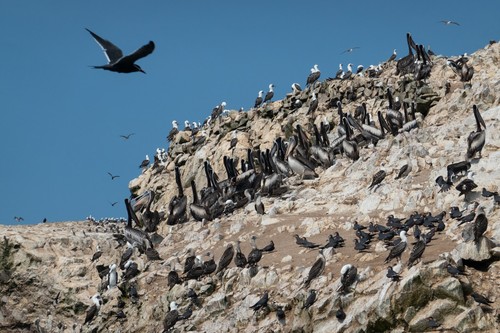
Peruvian Pelican
137-152 cm (54-60 in) long, up to 228 cm wingspan
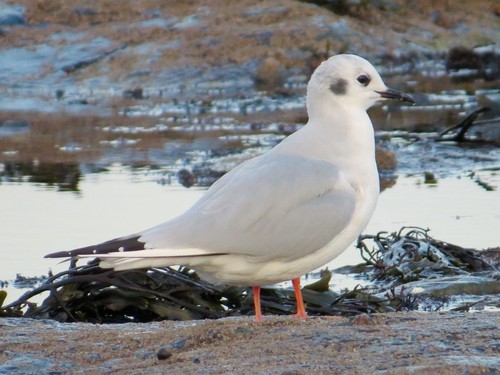
Bonaparte's Gull
28-33 cm (11-13 in) long, 76-84 cm wingspan
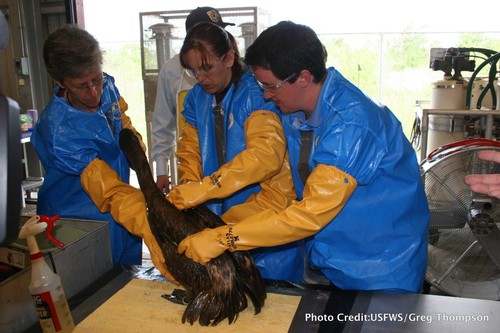
Brown Pelican
106-137 cm (42-54 in) long, 200-230 cm wingspan
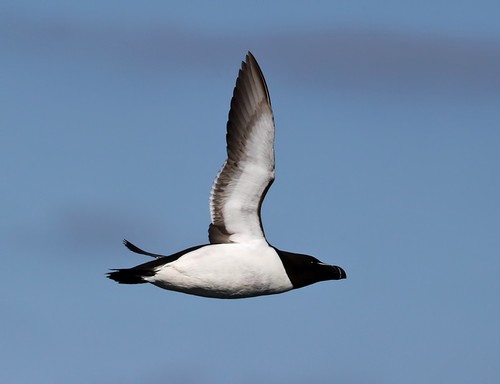
Razorbill
37-39 cm (15-15.5 in) long, 63-68 cm wingspan
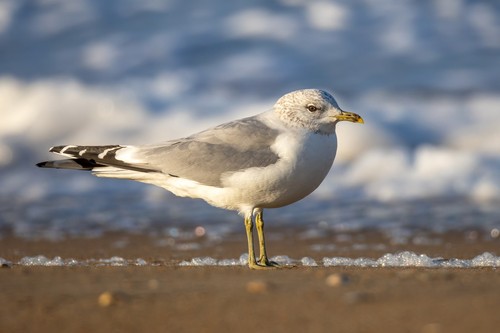
Common Gull
40-46 cm (16-18 in) long, 110-130 cm wingspan
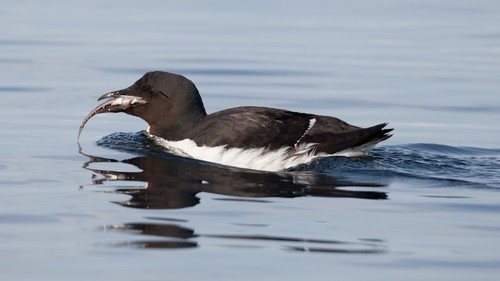
Thick-billed Murre
40-48 cm (16-19 in) long, 65-75 cm wingspan
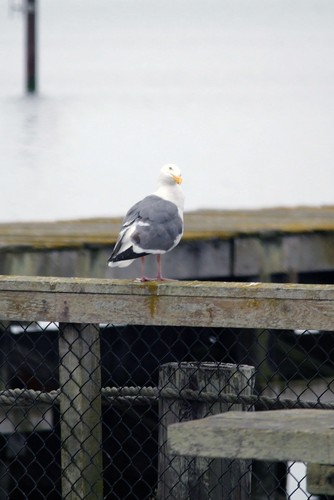
Western Gull
55-68 cm (22-27 in) long, 130-144 cm wingspan
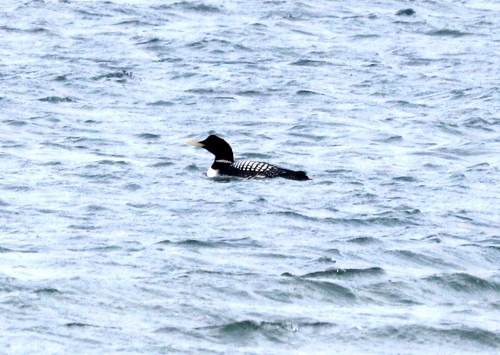
Yellow-billed Loon
76-97 cm (30-38 in) long, 135-152 cm wingspan
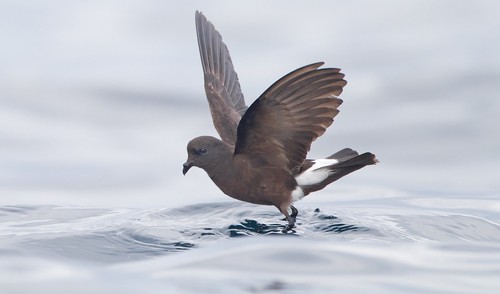
Wilson's Storm-Petrel
15-19 cm (6-7.5 in) long, wingspan 38-42 cm (15-16.5 in)
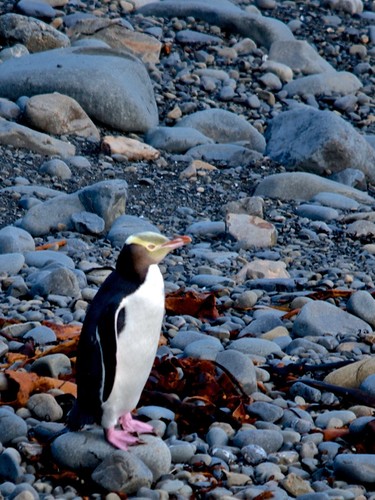
Yellow-eyed Penguin
62-79 cm (24-31 in) tall, 3-8.5 kg (6.6-18.7 lb)
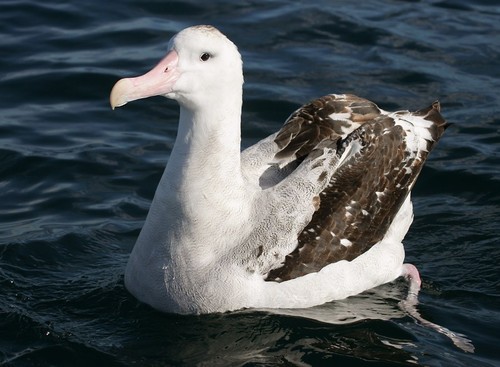
Wandering Albatross
107-135 cm (42-53 in) long, wingspan up to 3.5 m (11.5 ft)
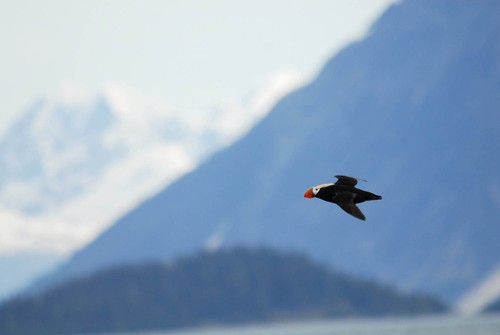
Tufted Puffin
35-41 cm (14-16 in) long, about 63-70 cm wingspan