
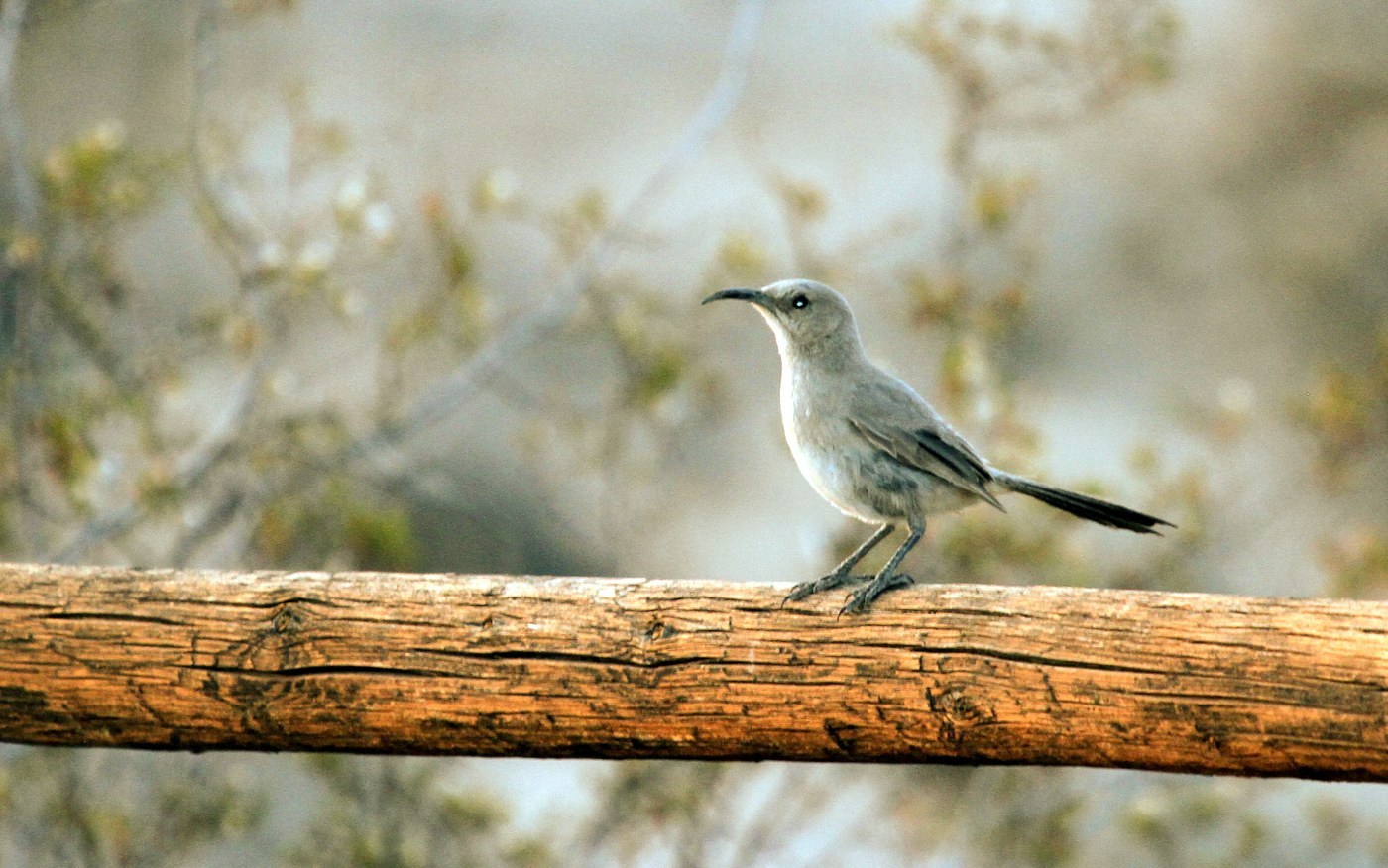
Le Conte's Thrasher
Toxostoma lecontei
The palest of the thrashers, a shy, sandy-colored bird of the open Mojave and Sonoran Desert flats that prefers running to flying.
- Size
- 25-28 cm (10-11 in) long
- Habitat
- sparse desert scrub and open sandy desert flats
- Type
- songbird
Spotted a bird like this?
Identify any bird from a photo, free.
Overview
Le Conte's Thrasher is the palest and among the shyest members of its family, a ghost-colored bird of the starkest, most open desert habitat in North America. Its sandy grayish-buff plumage blends remarkably well with the pale desert soil it inhabits, making it a genuine challenge to spot even when present.
The species has a long, strongly downcurved black bill and dark eyes, with blackish undertail coverts, and a long tail that it often holds cocked upward as it runs, roadrunner-like, between patches of sparse desert scrub.
How to identify it
Key field marks
- Overall pale, sandy grayish-buff plumage, the palest of the thrashers
- Long, strongly downcurved black bill
- Dark eyes
- Blackish undertail coverts
- Long tail, often cocked; runs rather than flies when disturbed
Similar species
Crissal Thrasher and California Thrasher are both notably darker overall and occur in denser vegetation, while Le Conte's Thrasher is restricted to the sparsest, most open desert habitat and stands out for its pale, almost bleached coloration.
Habitat & range
Habitat
Le Conte's Thrashers require very sparse, open desert scrub on sandy or gravelly flats, often with widely scattered creosote bush or saltbush and little other vegetation, avoiding denser scrub used by other thrashers.
Range
The species occurs in the Mojave and Sonoran Deserts of the southwestern United States, including parts of southeastern California, southern Nevada, Arizona, and extends into northwestern Mexico.
Migration
Le Conte's Thrashers are non-migratory residents, remaining within their desert territories year-round.
Behavior & voice
Behavior
Le Conte's Thrashers are notably shy and tend to run swiftly across open ground with the tail cocked rather than fly when disturbed, foraging by digging in soil for insects, other invertebrates, and occasionally small reptiles.
Voice
The song is a varied, musical series of phrases, often given from a low shrub or the ground, generally softer and less frequently heard than the songs of some other thrashers; the call includes a sharp, whistled note.
Nesting
Nests are built low in the densest available shrub, such as cholla or saltbush, constructed as a bulky cup, an important choice given the open, exposed nature of the surrounding habitat. Females lay 2-4 pale blue-green eggs.
Frequently asked questions
Why is Le Conte's Thrasher hard to find?
It is extremely shy, blends closely with pale desert soil due to its sandy coloration, and often runs rather than flies away when approached, making it difficult to spot in its sparse, open desert habitat.
How do you identify a Le Conte's Thrasher?
Look for the palest of the thrashers, a sandy grayish-buff bird with a long downcurved black bill, dark eyes, and blackish undertail coverts, typically running across open desert flats.
Where does Le Conte's Thrasher live?
It lives in very sparse, open desert scrub on sandy or gravelly flats in the Mojave and Sonoran Deserts of the southwestern US and northwestern Mexico.
What does Le Conte's Thrasher eat?
It eats insects and other invertebrates dug from the soil, and occasionally small reptiles.
Le Conte's Thrasher guides
In-depth guides for identifying, finding, and understanding Le Conte's Thrasher.
Other birds you may enjoy
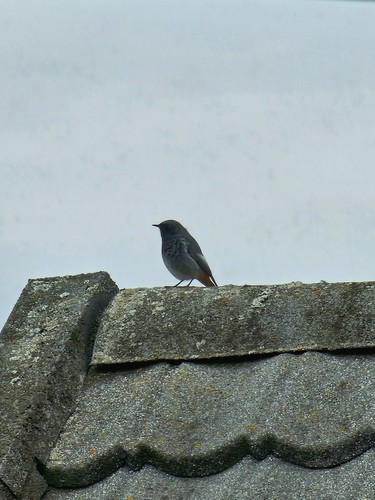
Black Redstart
13-14.5 cm (5.1-5.7 in) long, 23-26 cm wingspan
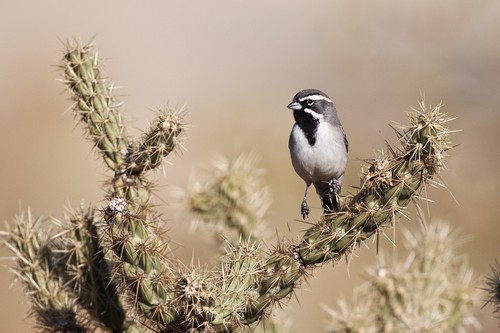
Black-throated Sparrow
12-14 cm (4.7-5.5 in) long, about 19-20 cm (7.5-8 in) wingspan
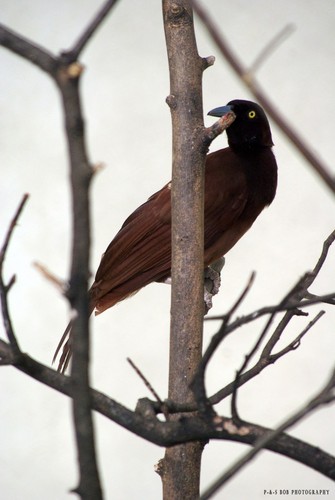
Greater Bird-of-paradise
Body about 43 cm; males with additional flank plumes up to 50 cm and long tail wires
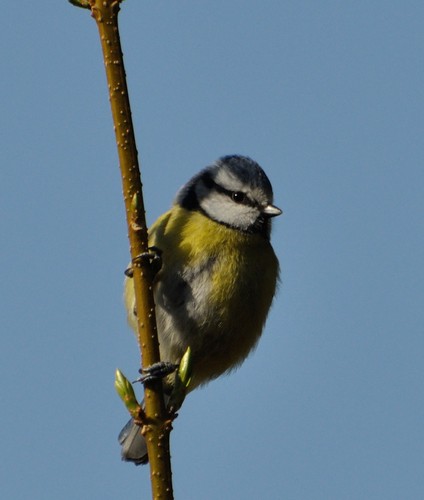
Blue Tit
11-12 cm (4.3-4.7 in) long, 17-20 cm wingspan
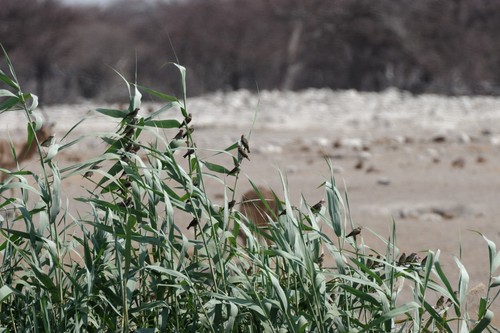
Red-billed Quelea
11.5–13 cm long, wingspan about 20–22 cm
White-plumed Antbird
13-14 cm (5-5.5 in) long
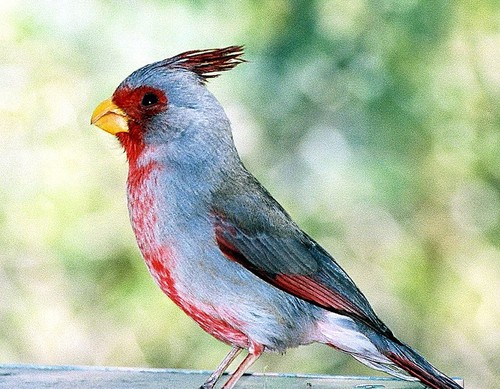
Pyrrhuloxia
19-22 cm (7.5-8.7 in) long, 30 cm wingspan
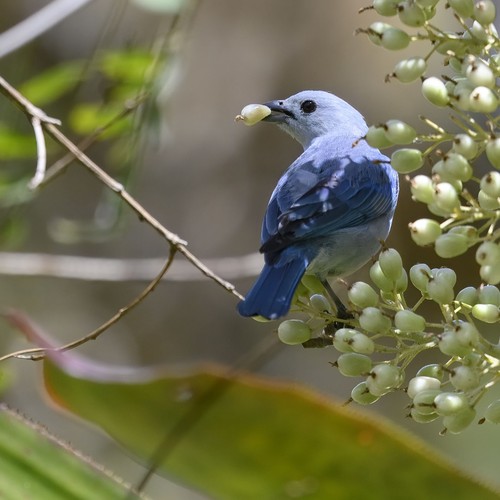
Blue-gray Tanager
16-18 cm (6-7 in) long
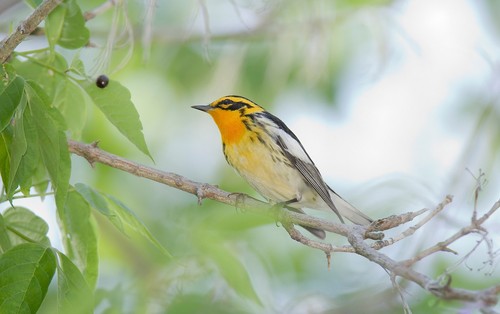
Blackburnian Warbler
11-13 cm (4.3-5.1 in) long, 20-22 cm wingspan
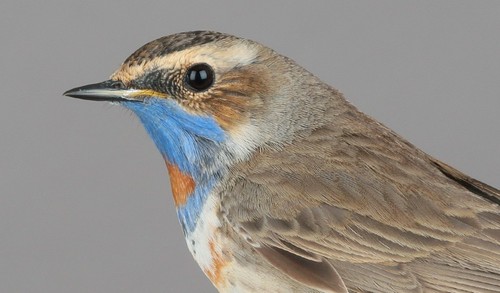
Bluethroat
13-14 cm (5.1-5.5 in) long, 20-22 cm wingspan
Eurasian Nuthatch
12-14.5 cm (4.7-5.7 in) long, 22.5-27 cm wingspan
Wood Thrush
19-21 cm (7.5-8.3 in) long, about 33 cm (13 in) wingspan