
Le Conte's Thrasher Identification Guide
A pale, ghostly thrasher of the driest North American deserts, long-tailed and long-billed, more often heard running through sparse desert scrub than seen in flight.
Read the full Le Conte's Thrasher encyclopedia entry →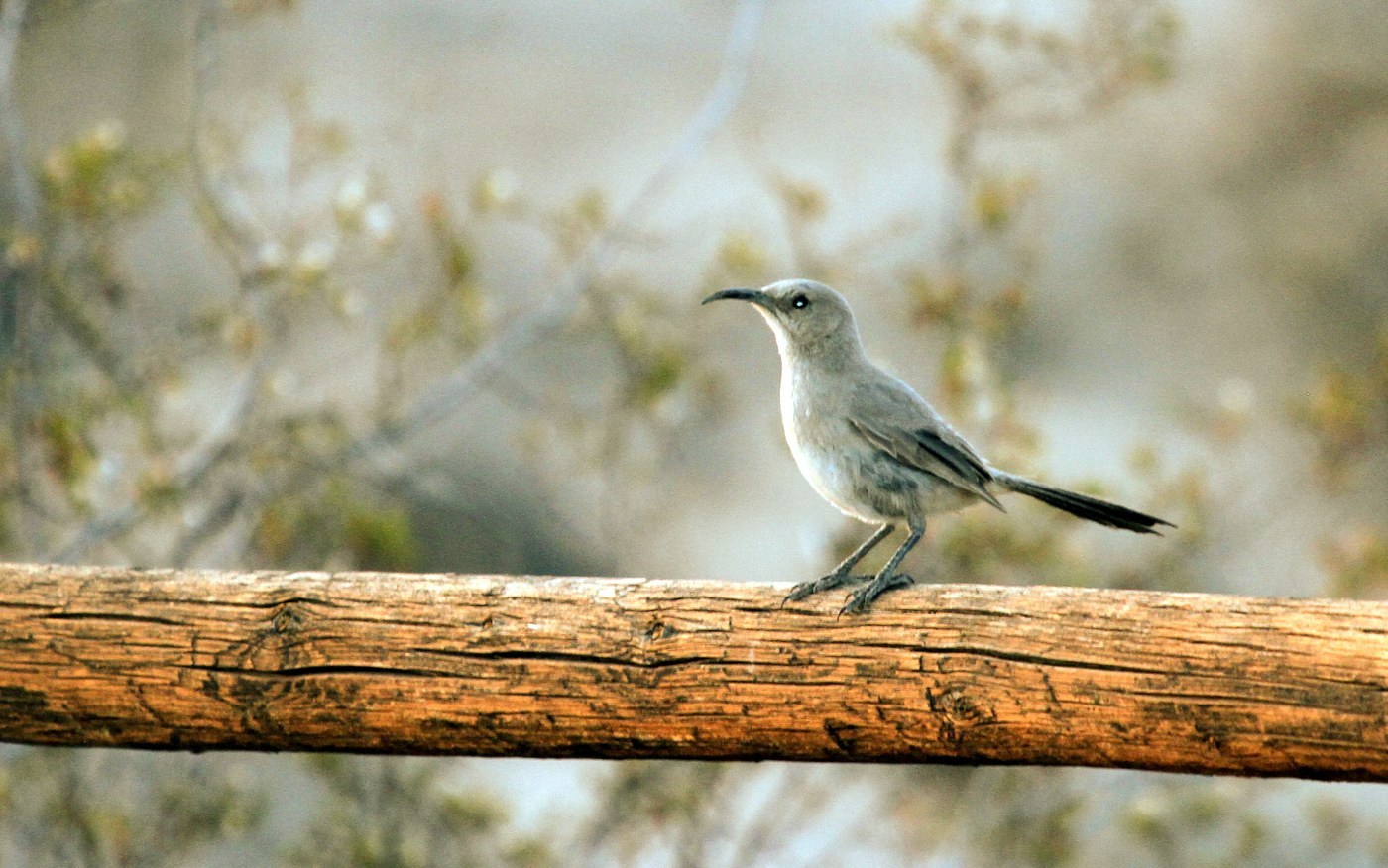
Key Field Marks
- Size & shape: A slender thrasher about 25–28 cm (10–11 in) long, with a long, strongly downcurved bill, a long tail often held cocked or trailing, and long legs suited to running.
- Plumage: Overall pale sandy-gray to grayish-buff plumage, among the palest of all thrashers, with little to no streaking below (unlike many other thrashers); the tail is dark blackish-brown, contrasting notably with the pale body, especially visible when the bird runs or flies low.
- Bill: Long, thin, strongly decurved blackish bill, proportionally one of the longest and most curved among thrashers.
- Eyes: Dark eye without a pale iris, set in a plain pale face lacking bold markings.
- Behavior: Runs rapidly across open desert ground with tail cocked, rather like a small roadrunner, often preferring to sprint away from disturbance instead of flying; digs and probes in soil and leaf litter for insects.
Separating It From Similar Species
- Crissal Thrasher: Darker overall gray-brown with a rusty (chestnut) undertail-covert patch, a more restricted range in denser desert wash vegetation, and a call that differs from Le Conte's.
- Bendire's Thrasher: Shorter, straighter, less strongly decurved bill, and shows faint spotting on the breast, unlike the unmarked underparts typical of Le Conte's Thrasher.
- California Thrasher and other larger thrashers: Darker brown overall and found in chaparral rather than open, sparse desert flats.
Where & When to See It
- Range: Resident in the Mojave, Sonoran, and Colorado deserts of the southwestern United States (California, Arizona, Nevada) and adjacent northwestern Mexico.
- Habitat: Very sparse, open desert scrub on flat or gently sloping terrain, often with scattered saltbush, creosote bush, or cholla — avoids denser desert wash vegetation favored by Crissal Thrasher.
- Season: Non-migratory resident year-round; pairs hold permanent territories in suitable open desert habitat.
Voice & Song Cues
- Song is a rich, varied series of warbled and repeated phrases, somewhat similar to other thrasher songs but typically delivered from a low perch or the ground rather than a high, exposed one.
- Call is a sharp "chek" or "tsee-up," and birds are frequently detected first by rustling movement or a running silhouette across open ground rather than by voice.
Frequently asked questions
What is the best way to identify Le Conte's Thrasher?
Look for a pale sandy-gray thrasher with unmarked underparts, a long strongly downcurved bill, and a dark tail that contrasts with the pale body, often seen running across open desert ground with its tail cocked.
How do I tell Le Conte's Thrasher from Crissal Thrasher?
Le Conte's is paler overall and lacks the rusty undertail-covert patch that Crissal Thrasher shows, and it favors more open, sparse desert flats rather than the denser wash vegetation Crissal prefers.
Why is Le Conte's Thrasher so difficult to see?
It is a shy, ground-dwelling bird that usually runs rapidly away through sparse scrub rather than flying, and its pale plumage blends well with sandy desert soil, making it easy to overlook.
What habitat should I search for Le Conte's Thrasher?
Search very open, sparsely vegetated desert flats with scattered low shrubs like saltbush or creosote bush in the Mojave, Sonoran, or Colorado deserts.
Is Le Conte's Thrasher migratory?
No, it is a non-migratory resident that holds the same desert territory year-round.