
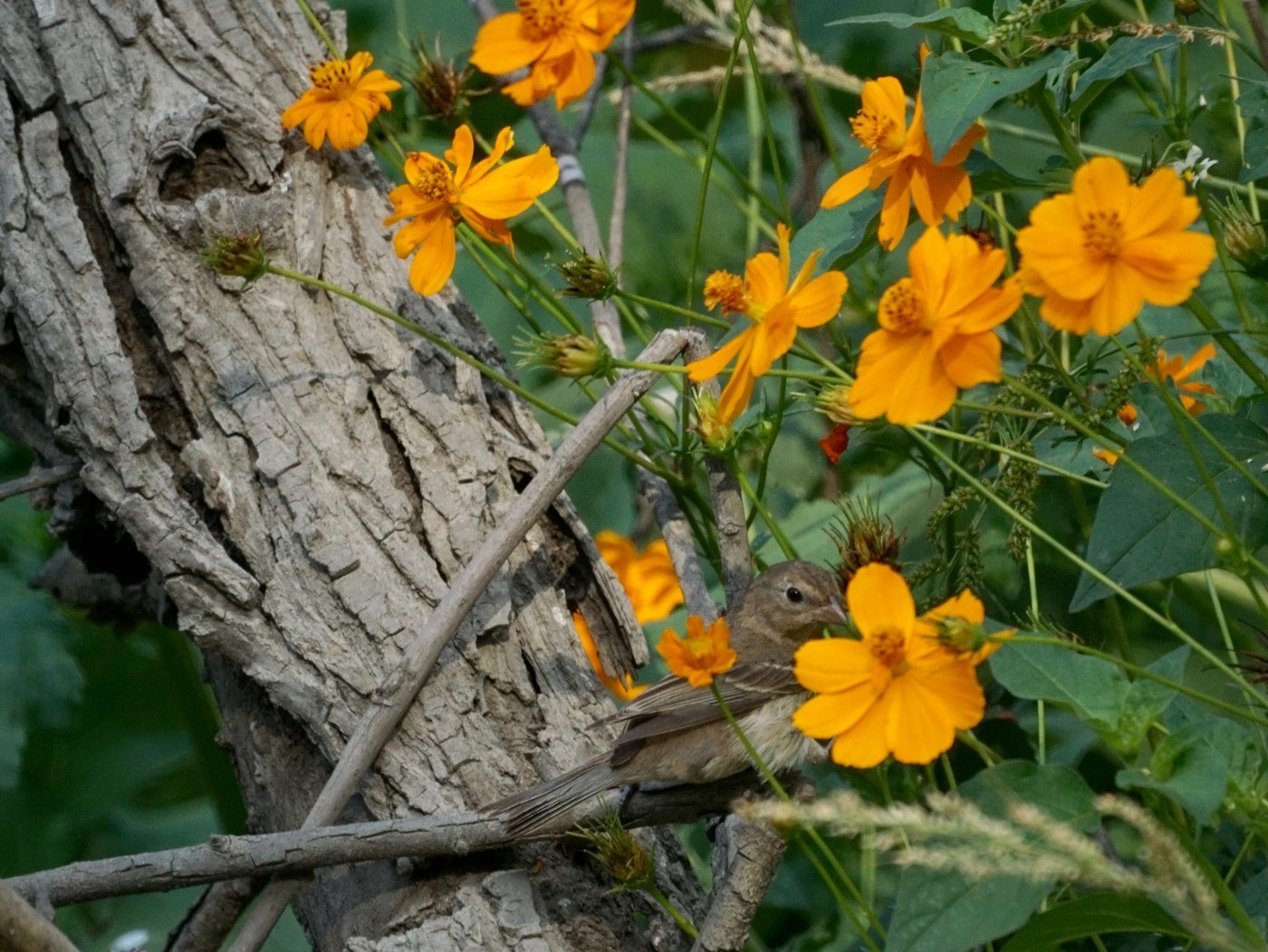
Lazuli Bunting
Passerina amoena
The western counterpart of the Indigo Bunting, with males showing a sky-blue head and back, a warm orange breast band, and a white belly.
- Size
- 13-15 cm (5-5.9 in) long, 21-22 cm wingspan
- Habitat
- brushy hillsides, riparian thickets, chaparral, and open woodland edges in the west
- Type
- songbird
Spotted a bird like this?
Identify any bird from a photo, free.
Overview
The Lazuli Bunting is a small, brightly patterned songbird of the American West, named for its brilliant turquoise-blue coloring reminiscent of the gemstone lapis lazuli. Adult males have a bright sky-blue head, back, and rump, a warm cinnamon-orange breast band, a white belly, and two white wingbars. Females and immature birds are soft grayish-brown above with a buffy breast, whitish belly, and a subtle blue tinge sometimes visible on the wings, rump, or tail.
Where the Lazuli Bunting's range meets that of the closely related Indigo Bunting on the Great Plains, the two species hybridize, and their songs, which are learned from neighboring males rather than being fully innate, sometimes converge in these contact zones.
How to identify it
Key Field Marks
- Adult male: sky-blue head, back, and rump; cinnamon-orange breast band; white belly; two white wingbars
- Female/immature: grayish-brown above, buffy breast, whitish belly, faint wingbars
- Small, compact size with a short, conical bill
Similar Species
- Indigo Bunting males are uniformly blue overall without the orange breast band or white wingbars; the two species hybridize where ranges overlap.
- Western Bluebird males also show blue-and-orange but are much larger with a thin bill and upright thrush posture, not a stocky finch-like bunting shape.
Habitat & range
Habitat
Favors brushy hillsides, riparian thickets, chaparral, and shrubby forest edges, often near water, across the western United States.
Range
Breeds from southern Canada through the western United States, east to the western Great Plains where it overlaps and hybridizes with the Indigo Bunting. Winters mainly in Mexico.
Migration
A medium- to long-distance migrant, moving to Mexico for winter.
Behavior & voice
Behavior
Males sing from exposed perches on shrubs or small trees to defend territory, and young males learn their songs by imitating neighboring territorial males, sometimes leading to local song "dialects."
Voice
The song is a bright, varied, warbling series of paired notes, similar in structure and quality to the Indigo Bunting's song. The call is a sharp, dry "chip."
Feeding
Feeds on seeds and insects, foraging low in shrubs and on the ground; visits feeders offering small seeds during migration.
Nesting & Breeding
The female builds a compact cup nest low in a shrub or dense grass. She incubates 3-5 eggs alone, and pairs may raise more than one brood per season.
Frequently asked questions
How is the Lazuli Bunting different from the Indigo Bunting?
Lazuli Bunting males have a blue head and back with an orange breast band and white belly, while Indigo Bunting males are uniformly blue overall; the two species hybridize where their ranges meet in the Great Plains.
Why is it called the Lazuli Bunting?
It is named for its brilliant blue coloring, reminiscent of the blue gemstone lapis lazuli.
Do Lazuli Buntings learn their songs?
Yes, young males learn their songs by imitating neighboring territorial males rather than singing an entirely innate song, which can produce local song dialects.
What does a female Lazuli Bunting look like?
Females are soft grayish-brown above with a buffy breast and whitish belly, much plainer than the vividly colored male.
Lazuli Bunting guides
In-depth guides for identifying, finding, and understanding Lazuli Bunting.
Other birds you may enjoy
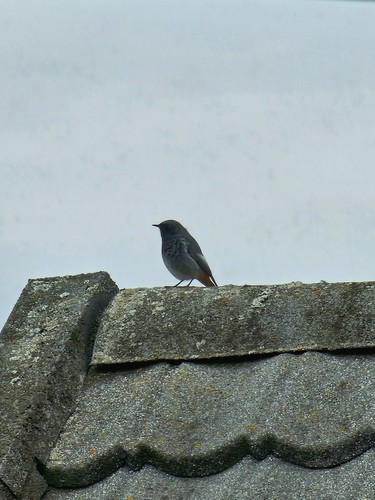
Black Redstart
13-14.5 cm (5.1-5.7 in) long, 23-26 cm wingspan
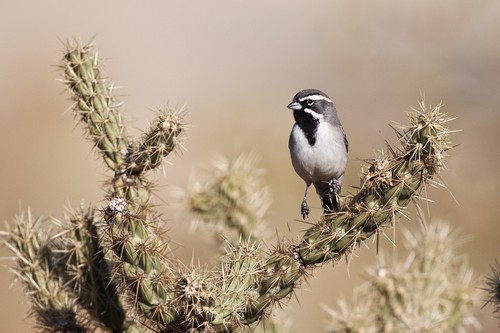
Black-throated Sparrow
12-14 cm (4.7-5.5 in) long, about 19-20 cm (7.5-8 in) wingspan
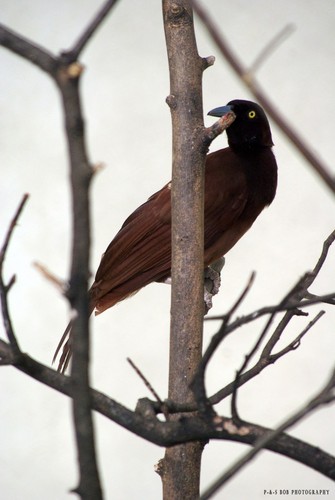
Greater Bird-of-paradise
Body about 43 cm; males with additional flank plumes up to 50 cm and long tail wires
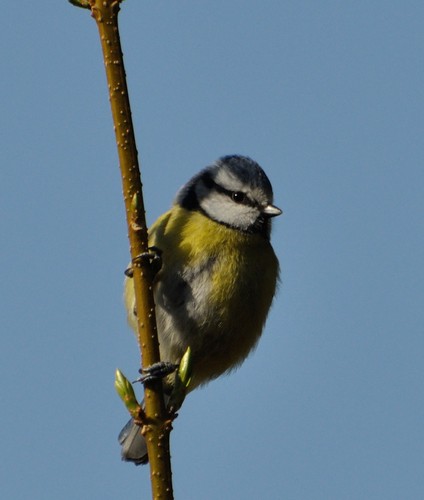
Blue Tit
11-12 cm (4.3-4.7 in) long, 17-20 cm wingspan

Red-billed Quelea
11.5–13 cm long, wingspan about 20–22 cm
White-plumed Antbird
13-14 cm (5-5.5 in) long
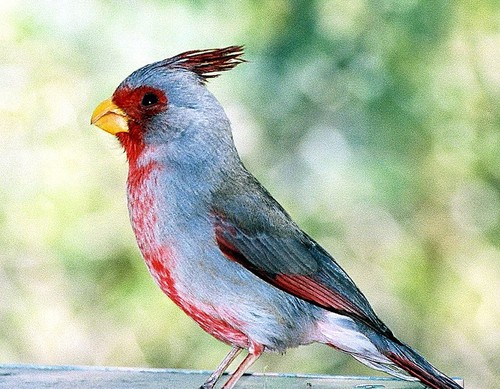
Pyrrhuloxia
19-22 cm (7.5-8.7 in) long, 30 cm wingspan
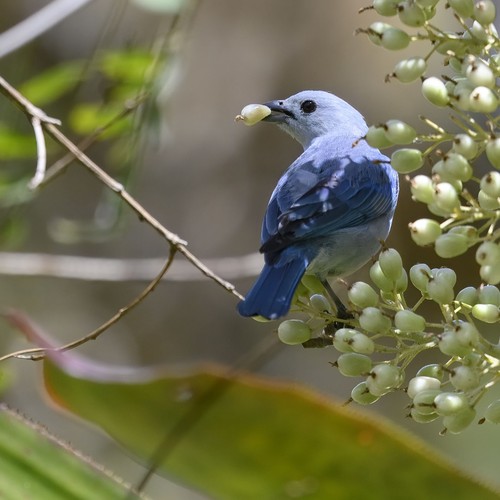
Blue-gray Tanager
16-18 cm (6-7 in) long
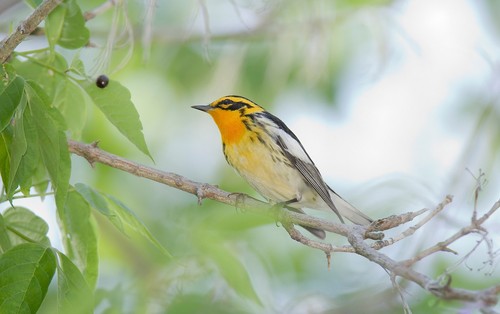
Blackburnian Warbler
11-13 cm (4.3-5.1 in) long, 20-22 cm wingspan
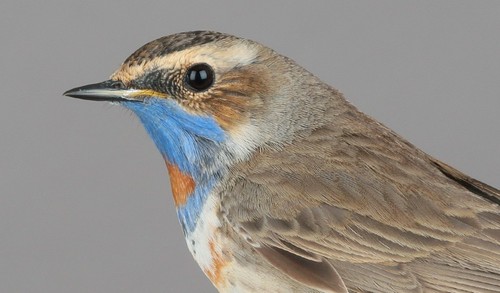
Bluethroat
13-14 cm (5.1-5.5 in) long, 20-22 cm wingspan
Eurasian Nuthatch
12-14.5 cm (4.7-5.7 in) long, 22.5-27 cm wingspan
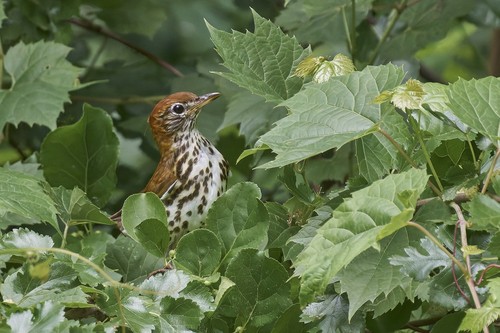
Wood Thrush
19-21 cm (7.5-8.3 in) long, about 33 cm (13 in) wingspan