
Lazuli Bunting Identification Guide
A small western songbird whose breeding males show a brilliant sky-blue head and back set off by a rusty-orange breast band and white belly.
Read the full Lazuli Bunting encyclopedia entry →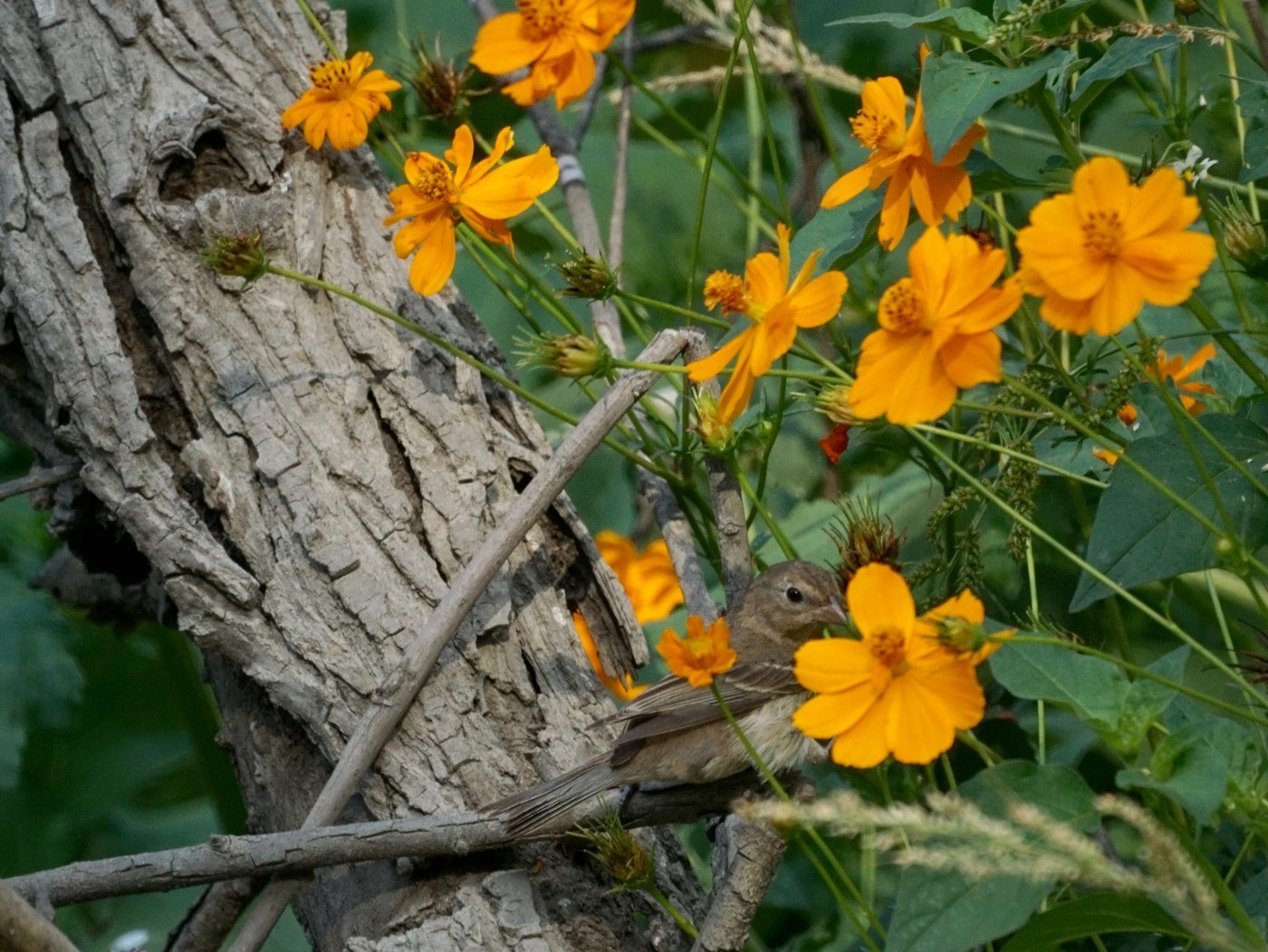
Key Field Marks
- Size & shape: A small, compact bunting about 13–14 cm (5–5.5 in) long, with a short, conical seed-eating bill and a fairly short tail, similar in build to Indigo Bunting.
- Breeding male: Vivid turquoise-blue head, throat, and back; a warm cinnamon-orange band across the breast; white belly and two crisp white wing bars — one of the most colorful small songbirds in North America.
- Female: Soft grayish-brown above with a plain grayish-buff breast washed faintly blue on the rump and shoulder in some individuals, pale wing bars, and an unstreaked, warm-toned underside — much duller than the male but distinguishable from most sparrows by its plain face and wing bars.
- Winter/non-breeding male: Muted blue feathering mixed with brown edging, giving a scaled or mottled look before molting into full breeding color.
- Behavior: Forages in low shrubs, brushy edges, and on the ground for seeds and insects; often sings from an exposed perch atop a shrub or small tree.
Separating It From Similar Species
- Indigo Bunting: Breeding male Indigo Bunting is entirely deep blue with no orange breast band or white wing bars; where ranges overlap in the Great Plains, hybrids can show intermediate traits, but pure Lazuli always shows the orange chest band and white wing bars.
- Western Bluebird: Larger, with a thrush-like upright posture, a proportionally longer body, rusty color extending onto the back and flanks, and a thin bill rather than a stubby conical one.
- Female/immature buntings vs. sparrows: Female Lazuli Bunting lacks streaking on the underparts (unlike most sparrows) and shows crisp pale wing bars, a helpful combination for separating it from streaky female sparrows.
Where & When to See It
- Range: Breeds across the western United States and southwestern Canada, from the Pacific coast east to the western Great Plains; winters mainly in Mexico.
- Habitat: Brushy hillsides, streamside thickets, chaparral, open woodland edges, and shrubby regrowth after fire — favors semi-open shrub habitat over dense forest or bare grassland.
- Season: Arrives on breeding grounds in spring (April–May), breeds through summer, and departs for wintering grounds by September–October.
Voice & Song Cues
- Song is a bright, varied series of high, sweet paired or tripled phrases, often described as jumbled and warbling, delivered rapidly from an exposed perch — similar in structure to Indigo Bunting's song but typically faster and more varied.
- Call is a sharp, dry "tsip" or buzzy "zzt" given in flight or when disturbed.
Frequently asked questions
How do I tell a male Lazuli Bunting from a male Indigo Bunting?
Male Lazuli Bunting has a bright blue head and back with a distinct orange-cinnamon breast band, a white belly, and white wing bars, while male Indigo Bunting is entirely deep blue with no orange breast band and only faint wing bars.
What does a female Lazuli Bunting look like?
Females are plain grayish-brown above with an unstreaked buffy breast, sometimes a faint blue wash on the rump or shoulders, and pale wing bars, distinguishing them from streaky sparrows of similar size.
Do Lazuli and Indigo Buntings hybridize?
Yes, where their ranges overlap in the Great Plains, the two species interbreed and can produce hybrids showing a mix of blue coloration and partial orange breast bands.
What habitat should I search for Lazuli Buntings?
Look in brushy hillsides, streamside thickets, chaparral, and shrubby edges of open woodland across the western U.S., especially areas with a mix of shrubs and open song perches.
When do Lazuli Buntings arrive on their breeding grounds?
They typically arrive in April or May, breed through the summer months, and migrate south to Mexico by September or October.