
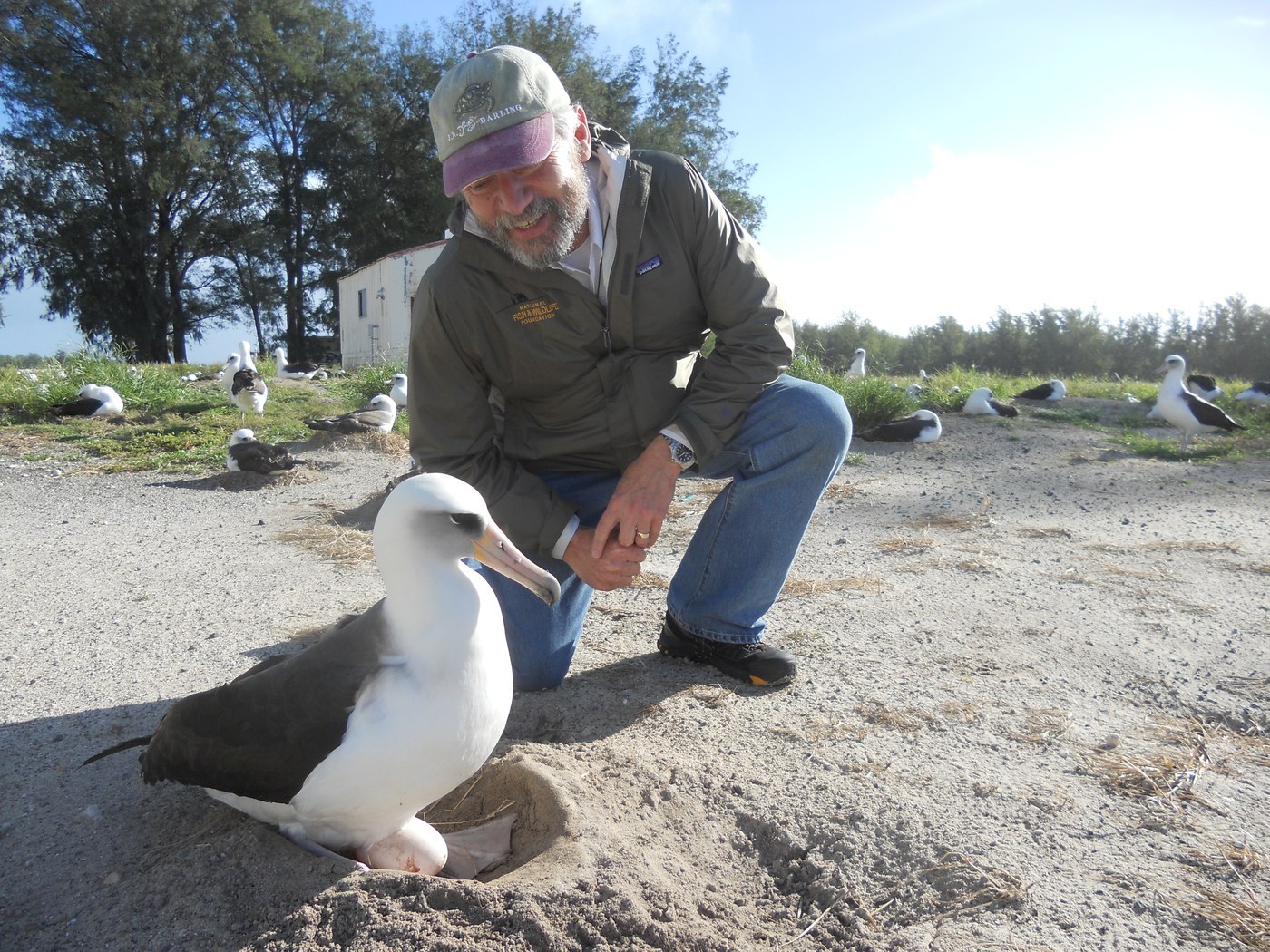
Laysan Albatross
Phoebastria immutabilis
A gull-like white albatross of the North Pacific, best known for its enormous breeding colonies on Midway Atoll and other low-lying Hawaiian islands.
- Size
- 79-81 cm (31-32 in) long, wingspan 195-203 cm (77-80 in)
- Habitat
- open North Pacific Ocean, breeding on low-lying Pacific islands
- Type
- seabird
Spotted a bird like this?
Identify any bird from a photo, free.
Overview
The Laysan Albatross is a medium-sized North Pacific albatross with a mostly white head, neck, and underparts, dark grey-brown upperwings, and a dusky smudge of feathers around the eye that gives it a slightly world-weary expression. Its bill is pale pinkish with a dark tip.
The species forms some of the largest seabird colonies on Earth, with hundreds of thousands of pairs nesting on low, sandy Pacific islands, most famously Midway Atoll, where elaborate courtship dances involving head-bobbing, bill-clacking, and synchronized movements are a well-known spectacle.
Laysan Albatrosses are exceptional long-distance fliers, capable of covering thousands of kilometers across the open North Pacific on a single foraging trip while raising a chick.
How to identify it
Key field marks
- White head and underparts with a dark smudge around the eye
- Dark grey-brown upperwings and back
- Pale pink bill with a dark tip
- Blackish legs and feet
Similar species
- Black-footed Albatross is almost entirely dark brown all over, lacking the white head and underparts of the Laysan Albatross, and often nests alongside it on the same islands.
- Short-tailed Albatross is larger with a bright yellow-tinged head and a large pink bill, and is far less numerous.
Habitat & range
Laysan Albatrosses breed primarily on low, sandy islands and atolls in the Northwestern Hawaiian Islands, especially Midway Atoll and Laysan Island, with smaller colonies elsewhere in the Pacific. Nests are simple scrapes on open, sandy or vegetated ground.
Outside the breeding season, adults range widely across the North Pacific, foraging over vast stretches of open ocean from the subtropics to the subarctic before returning to their natal islands to breed.
Behavior & voice
Voice
Courting Laysan Albatrosses perform an elaborate, ritualized dance involving bill-clacking, sky-pointing, and moaning or whistling calls, one of the most complex displays among seabirds.
Feeding
They feed mainly on squid and fish eggs taken near the ocean surface at night, and will also scavenge floating debris and offal, a habit that unfortunately also leads to ingestion of floating plastic.
Nesting and breeding
Pairs return to the same nest site each year, laying a single egg in a shallow scrape. Both parents share incubation and feeding duties over several months, with chicks fledging after roughly five to six months.
Frequently asked questions
Where do Laysan Albatrosses breed?
The largest colonies are on low, sandy Pacific islands such as Midway Atoll and Laysan Island in the Northwestern Hawaiian Islands.
How can you identify a Laysan Albatross?
Look for its white head and body, dark grey-brown upperwings, and a dark smudge of feathers around the eye.
What is special about Laysan Albatross courtship?
Pairs perform an elaborate, synchronized courtship dance with head-bobbing, bill-clacking, and calling that can take years for young birds to perfect.
How is the Laysan Albatross different from the Black-footed Albatross?
The Laysan Albatross has a white head and underparts, while the Black-footed Albatross is almost entirely dark brown.
What do Laysan Albatrosses eat?
They mainly eat squid and fish eggs taken from the ocean surface, and also scavenge floating material.
Laysan Albatross guides
In-depth guides for identifying, finding, and understanding Laysan Albatross.
Other birds you may enjoy
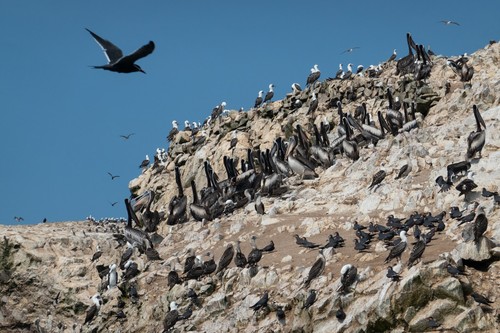
Peruvian Pelican
137-152 cm (54-60 in) long, up to 228 cm wingspan
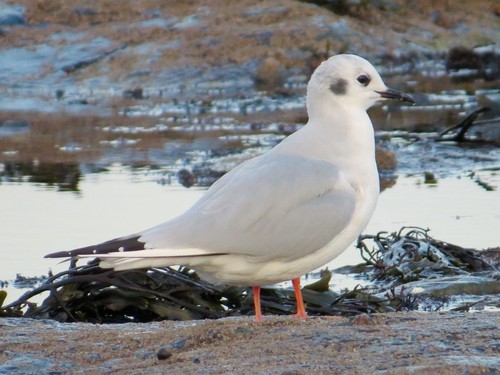
Bonaparte's Gull
28-33 cm (11-13 in) long, 76-84 cm wingspan
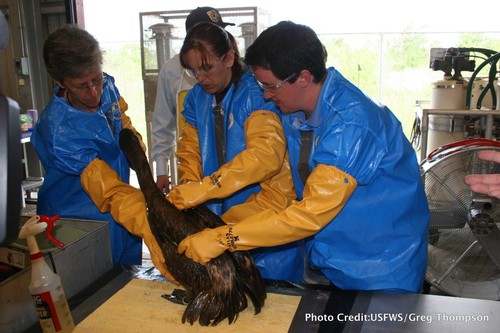
Brown Pelican
106-137 cm (42-54 in) long, 200-230 cm wingspan
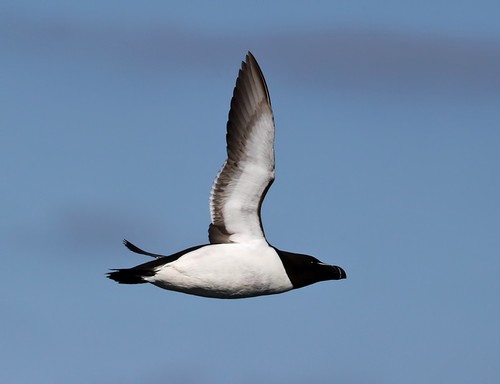
Razorbill
37-39 cm (15-15.5 in) long, 63-68 cm wingspan
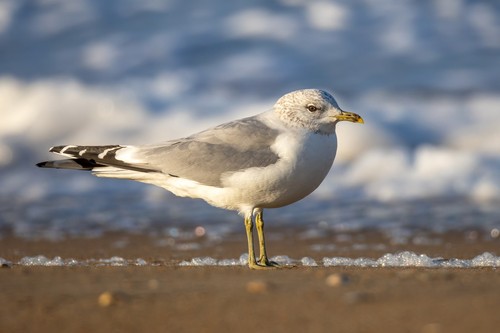
Common Gull
40-46 cm (16-18 in) long, 110-130 cm wingspan
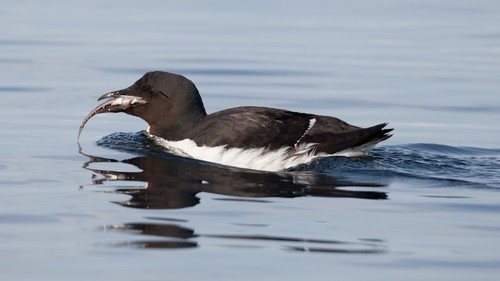
Thick-billed Murre
40-48 cm (16-19 in) long, 65-75 cm wingspan
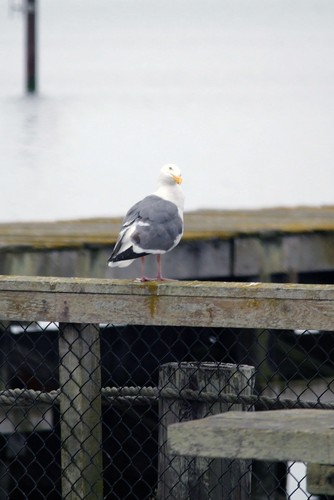
Western Gull
55-68 cm (22-27 in) long, 130-144 cm wingspan
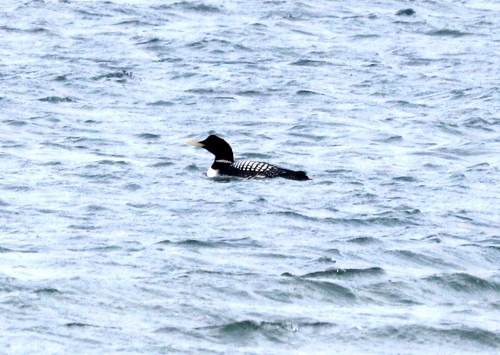
Yellow-billed Loon
76-97 cm (30-38 in) long, 135-152 cm wingspan
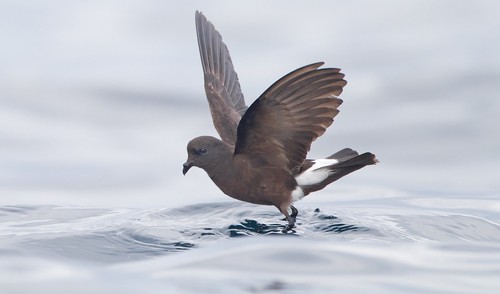
Wilson's Storm-Petrel
15-19 cm (6-7.5 in) long, wingspan 38-42 cm (15-16.5 in)
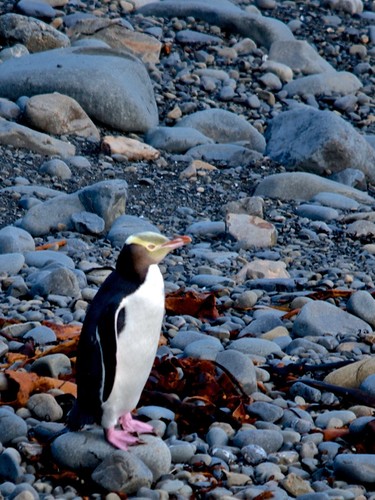
Yellow-eyed Penguin
62-79 cm (24-31 in) tall, 3-8.5 kg (6.6-18.7 lb)
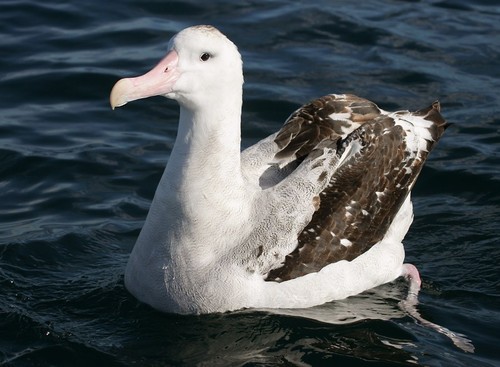
Wandering Albatross
107-135 cm (42-53 in) long, wingspan up to 3.5 m (11.5 ft)
Tufted Puffin
35-41 cm (14-16 in) long, about 63-70 cm wingspan