
Laysan Albatross Identification Guide
A large, black-and-white North Pacific albatross known for its dark eye smudge, effortless oceanic gliding, and enormous breeding colonies on remote islands.
Read the full Laysan Albatross encyclopedia entry →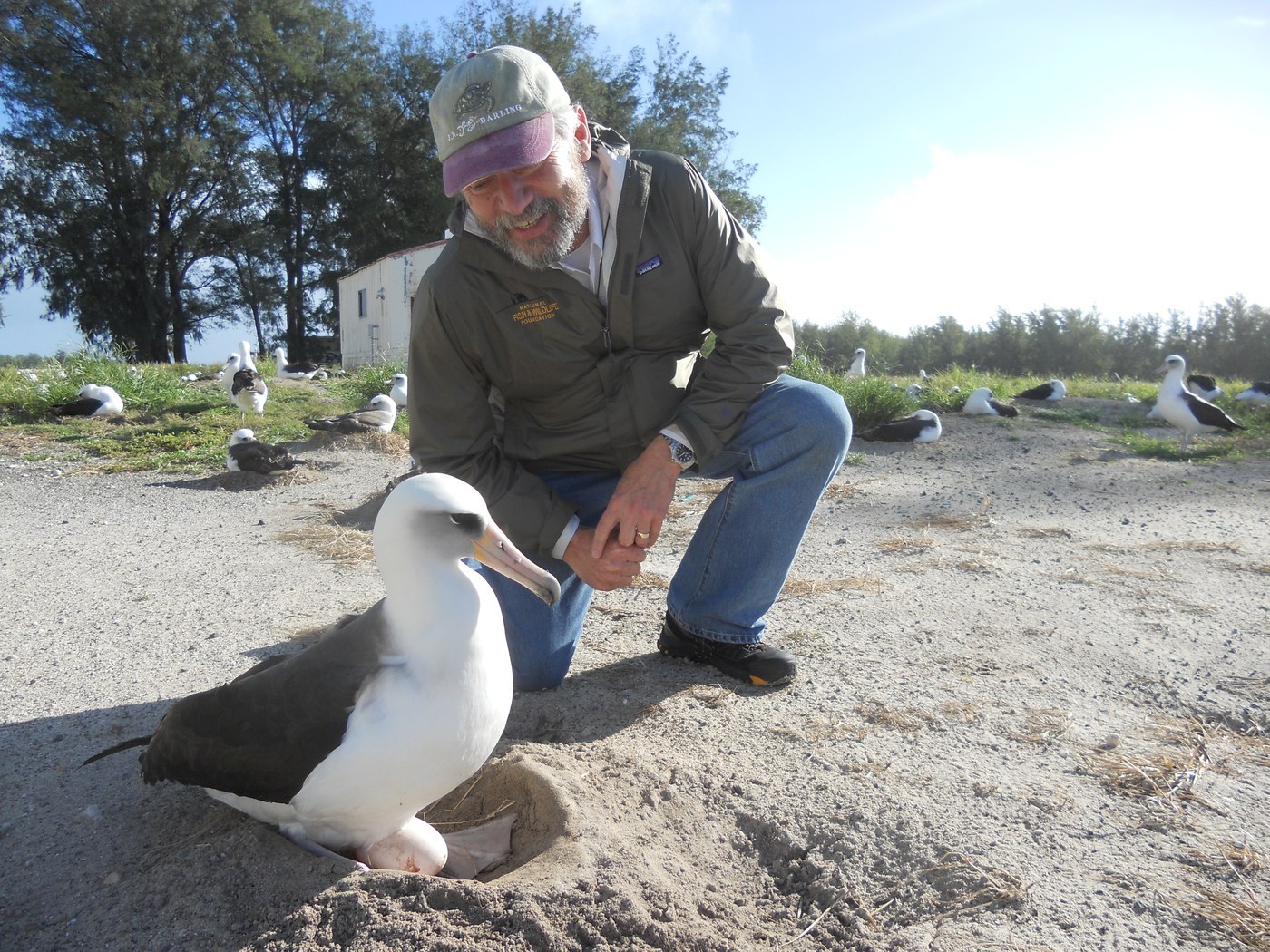
Key Field Marks
- Size & shape: A large seabird with a wingspan of about 195–203 cm (77–80 in); long, narrow, stiff wings held flat or slightly bowed in flight, a stout hooked bill, and a relatively short tail.
- Plumage: White head, neck, and underparts contrast with blackish-gray upperwings and back; a distinctive dark smudge surrounds the eye, giving a "mascara" look. Underwings are mostly white with an irregular black border and some black markings toward the base.
- Bill: Pale pinkish-gray to yellowish bill with a dark tip, noticeably slimmer than that of the Black-footed Albatross.
- Legs & feet: Pale pinkish-gray feet, visible when the bird is on the water or ground, unlike the all-dark feet of Black-footed Albatross.
- Behavior: Master of dynamic soaring, gliding for long stretches low over the waves with minimal flapping; on breeding grounds performs elaborate mutual courtship dances involving bill-clacking, head-bobbing, and sky-pointing.
Separating It From Similar Species
- Black-footed Albatross: Overall dark sooty-brown plumage (not white-bodied), all-dark feet, and a dark bill — easily separated from the white-bodied Laysan Albatross even at a distance.
- Short-tailed Albatross: Much larger, with a massive pink bill and, in adults, golden-yellow wash on the head and white patches in the wings; immatures are all dark brown, unlike the pied Laysan pattern.
- Immature/first-year gulls or other white-and-gray seabirds: Far smaller with proportionally shorter, more flexible wings and quicker wingbeats, lacking the effortless, long-winged glide of an albatross.
Where & When to See It
- Range: Breeds mainly in the Hawaiian Islands (especially Midway Atoll and Laysan Island), with smaller colonies on other Pacific islands including some off Mexico; ranges widely across the North Pacific outside the breeding season, reaching the West Coast of North America and waters off Japan.
- Habitat: Open ocean for most of the year; comes ashore only to breed, nesting on sandy or grassy flats and low dunes on remote oceanic islands.
- Season: Present at colonies from November through July for courtship, egg-laying, and chick-rearing; adults and juveniles disperse widely over the open North Pacific from summer through fall.
Voice & Song Cues
- Largely silent at sea; on breeding grounds gives a variety of grunts, whinnies, and bill-clacking sounds during elaborate courtship dances, along with a nasal moaning or braying note.
Frequently asked questions
How do I tell a Laysan Albatross from a Black-footed Albatross?
Laysan Albatross has a white body and head with dark upperwings, a pale pinkish bill, and pale feet, while Black-footed Albatross is uniformly dark sooty-brown with an all-dark bill and dark feet.
What does the dark patch around a Laysan Albatross's eye look like?
It appears as a smudgy dark gray-black mark surrounding the eye against the otherwise white head, giving a mascara-like appearance that is a useful close-range field mark.
Where can I see a Laysan Albatross?
The largest colonies are on Midway Atoll and Laysan Island in the Hawaiian archipelago; outside the breeding season birds range widely over the open North Pacific and can occasionally be seen from boats off the West Coast of North America.
How can I recognize a Laysan Albatross in flight from a distance?
Look for a large, long, narrow-winged seabird gliding low over waves with almost no flapping; the contrast between the white body and dark upperwings, combined with the sheer wingspan, separates it from gulls and shearwaters.
When is the best time to see Laysan Albatross at breeding colonies?
They are present at colonies from around November through July, with courtship dancing especially active in the early part of the season before eggs are laid.