
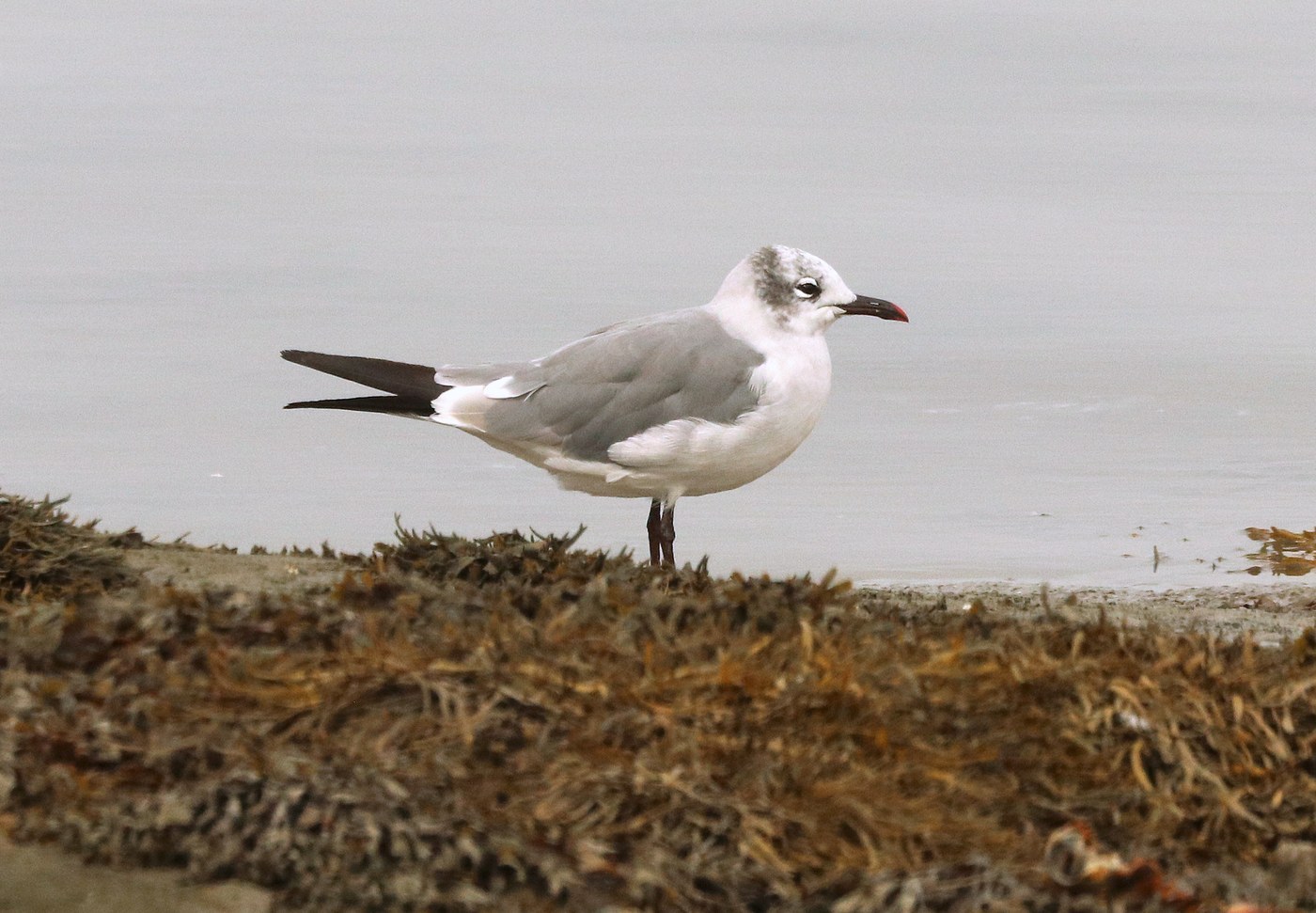
Laughing Gull
Leucophaeus atricilla
A common, noisy coastal gull of the eastern and Gulf coasts, named for its raucous, laugh-like call.
- Size
- 36-43 cm (14-17 in) long, 98-110 cm wingspan
- Habitat
- coastal beaches, salt marshes, estuaries, and harbors
- Type
- seabird
Spotted a bird like this?
Identify any bird from a photo, free.
Overview
The Laughing Gull is a familiar, medium-sized gull of warm-water coastlines, instantly recognizable in summer by its jet-black hood, drooping blood-red bill, and sooty gray wings. Slimmer and more buoyant in flight than the larger white-headed gulls, it has a graceful, almost tern-like silhouette with long, pointed wings and a slightly hunched posture on the ground.
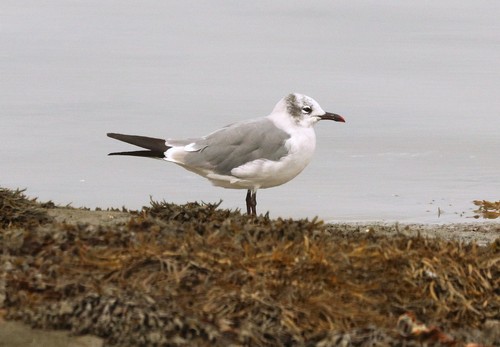
In breeding plumage the head is fully black, contrasting with a dark gray mantle, white underparts, and black legs; the bill is deep red and slightly drooped at the tip. In non-breeding plumage the black hood is lost, leaving a white head with a smudgy dusky wash behind the eye, and the bill dulls to blackish. Juveniles are brown and streaky, gradually acquiring adult plumage over about three years.
Highly social and opportunistic, Laughing Gulls are a constant presence around fishing piers, beaches, and boardwalks, often bold enough to snatch food directly from picnickers.
How to identify it
Key field marks
- Full black hood in breeding plumage with white eye crescents above and below the eye
- Long, drooping, deep red bill (blackish in winter)
- Dark slate-gray mantle and wings with black wingtips lacking large white spots
- Black legs
- Slim, long-winged, buoyant flight silhouette
Similar species
- Franklin's Gull: smaller and stockier, with thicker white eye crescents, a white band separating the black wingtip from the gray of the wing, and often a pink blush to the breast; mainly an interior/prairie species, scarcer on the coast.
- Black-headed Gull: chocolate-brown (not black) hood, paler gray mantle, and a bold white wedge on the leading edge of the outer wing.
- Bonaparte's Gull: much smaller, black bill, orange-red legs, and a white wedge in the outer wing.
Habitat & range
Habitat
Laughing Gulls favor warm coastal habitats: sandy beaches, salt marshes, tidal flats, harbors, and piers, rarely venturing far inland except locally around large lakes or landfills.
Range and migration
They breed colonially along the Atlantic and Gulf coasts of the United States, the Caribbean, and parts of Mexico and northern South America. Northern populations withdraw southward in winter, with birds wintering from the Gulf Coast south through Central America and into northern South America, while populations in the Caribbean and Gulf tend to be resident year-round.
Behavior & voice
Behavior
Gregarious and opportunistic, Laughing Gulls often follow fishing boats, forage in mixed flocks with terns and pelicans, and readily scavenge human food. They frequently pirate fish from Brown Pelicans as the pelicans surface after a plunge-dive.
Voice
The species is named for its loud, cackling call, often rendered as "ha-ha-ha-ha-ha," delivered with the head thrown back, a sound that carries widely across beaches and marshes.
Feeding
Highly opportunistic, feeding on small fish, marine invertebrates, insects, and readily taking scraps and refuse near people.
Nesting and breeding
Laughing Gulls nest in dense colonies on marsh islands, dunes, and barrier beaches, building a simple scrape or platform nest of grasses. Clutches typically contain two to four eggs, incubated by both parents for around three weeks; chicks are mobile soon after hatching but remain near the nest and are fed by the parents.
Frequently asked questions
Why is it called the Laughing Gull?
It gets its name from its loud, cackling call that sounds like human laughter, often given repeatedly with the head tilted back.
How can I tell a Laughing Gull from a Franklin's Gull?
Laughing Gulls are larger and longer-billed with less white in the wingtip, while Franklin's Gulls are smaller, stockier, and show a clean white band separating the black wingtip from the gray wing.
Where do Laughing Gulls live?
They are common along the Atlantic and Gulf coasts of North America, the Caribbean, and northern South America, favoring beaches, marshes, and piers.
What do Laughing Gulls eat?
They eat fish, crustaceans, insects, and readily scavenge food scraps and refuse near people.
Do Laughing Gulls migrate?
Northern breeding populations migrate south for winter, while many southern and Caribbean populations are largely resident year-round.
Laughing Gull guides
In-depth guides for identifying, finding, and understanding Laughing Gull.
Other birds you may enjoy
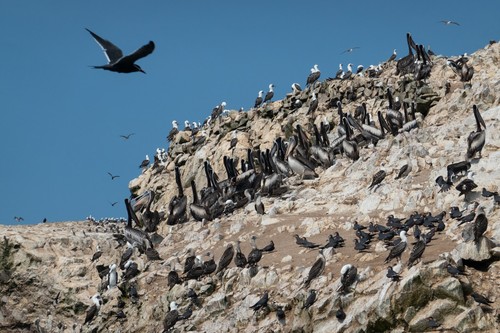
Peruvian Pelican
137-152 cm (54-60 in) long, up to 228 cm wingspan
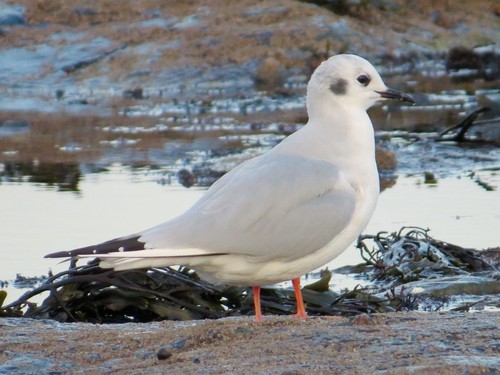
Bonaparte's Gull
28-33 cm (11-13 in) long, 76-84 cm wingspan
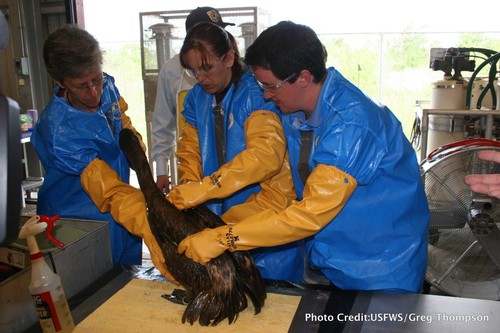
Brown Pelican
106-137 cm (42-54 in) long, 200-230 cm wingspan
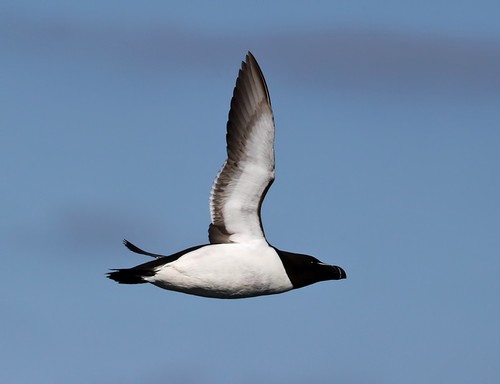
Razorbill
37-39 cm (15-15.5 in) long, 63-68 cm wingspan
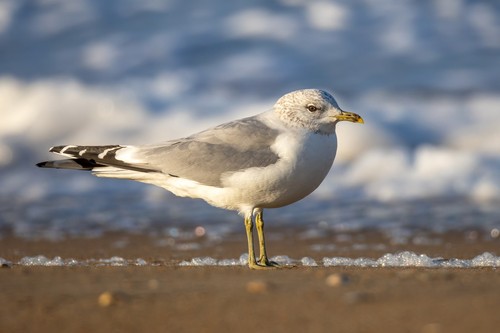
Common Gull
40-46 cm (16-18 in) long, 110-130 cm wingspan
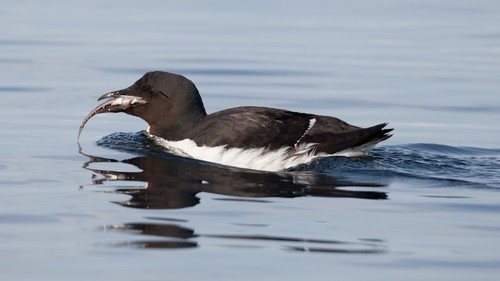
Thick-billed Murre
40-48 cm (16-19 in) long, 65-75 cm wingspan
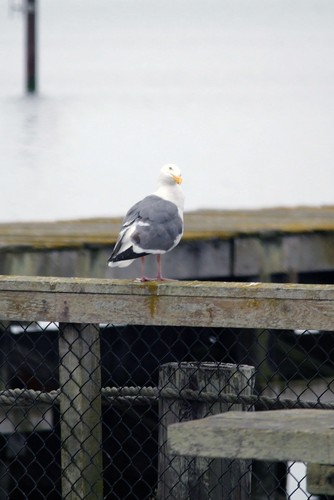
Western Gull
55-68 cm (22-27 in) long, 130-144 cm wingspan
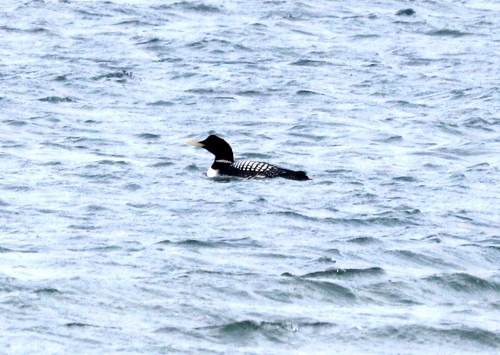
Yellow-billed Loon
76-97 cm (30-38 in) long, 135-152 cm wingspan
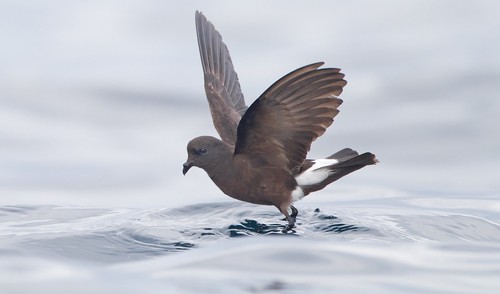
Wilson's Storm-Petrel
15-19 cm (6-7.5 in) long, wingspan 38-42 cm (15-16.5 in)
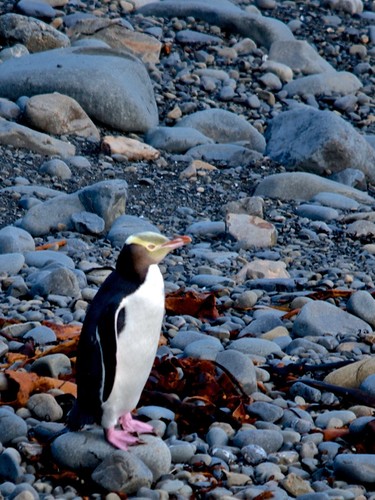
Yellow-eyed Penguin
62-79 cm (24-31 in) tall, 3-8.5 kg (6.6-18.7 lb)
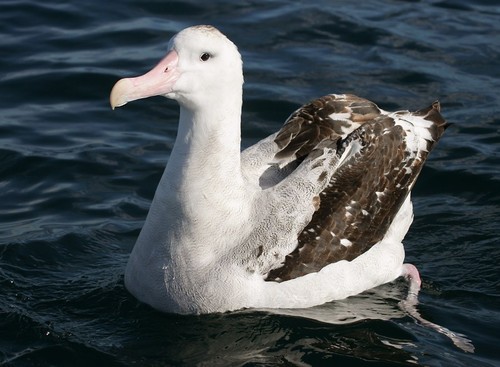
Wandering Albatross
107-135 cm (42-53 in) long, wingspan up to 3.5 m (11.5 ft)
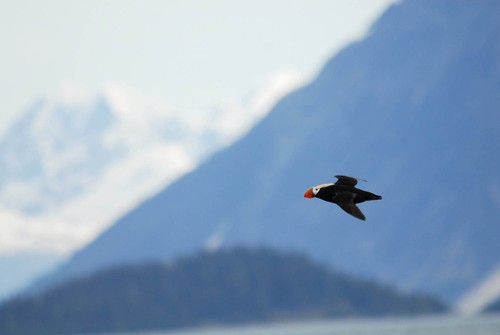
Tufted Puffin
35-41 cm (14-16 in) long, about 63-70 cm wingspan