
Laughing Gull Identification Guide
A medium-sized, slender coastal gull of the Americas, breeding-season adults easily told by their jet-black hood, dark red bill, and nasal, laughing call.
Read the full Laughing Gull encyclopedia entry →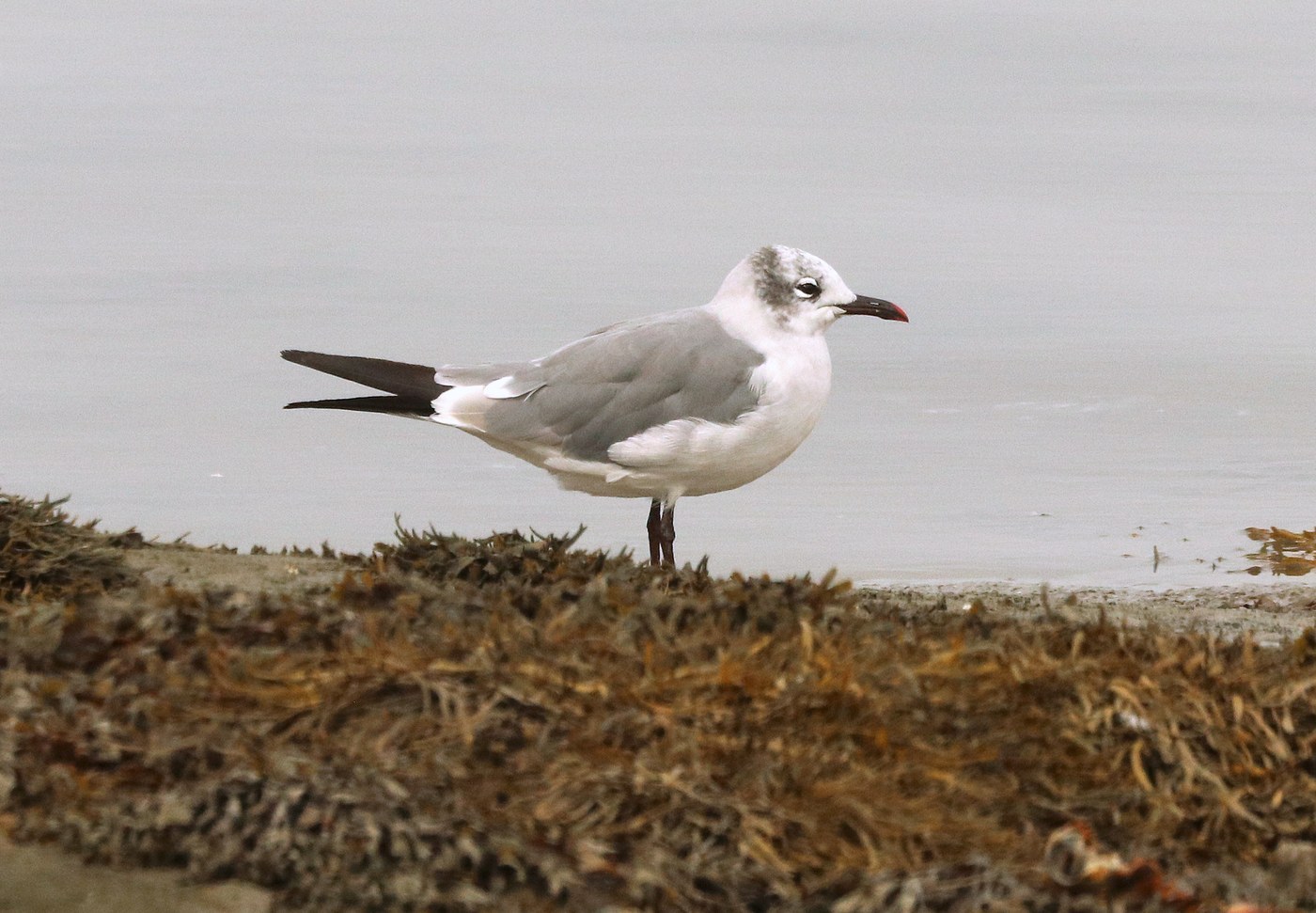
Key Field Marks
- Size & shape: A medium-sized gull, about 38–43 cm (15–17 in), with a slim build, long, drooping-tipped bill, long wings, and slightly sloped forehead — a more delicate, buoyant look than larger white-headed gulls.
- Breeding adult: Full black hood, white eye crescents (broken white arcs above and below the eye), dark red bill, medium-gray back and wings with black wingtips lacking large white spots (mirrors), and blackish legs.
- Non-breeding adult: Loses the black hood, showing a white head with dusky gray smudging around the eye and nape; bill and legs darken to blackish.
- Immatures: First-winter birds are brownish-gray overall with a dark tail band and dark bill; second-winter birds resemble washed-out non-breeding adults with more gray in the wings.
- Flight: Long, pointed, uniformly dark-tipped wings with no white mirrors; buoyant, tern-like flight action.
Separating It From Similar Species
- Franklin's Gull: Smaller and daintier, with a thicker white eye-ring (not just crescents), a white band separating the black wingtip from the gray, and white primary tips even in breeding plumage — Laughing Gull's wingtips are solidly blackish to the edge.
- Ring-billed Gull and Herring Gull: Both are larger, bulkier, pale-eyed (Ring-billed) or larger-billed, and never show a full black hood; non-breeding Laughing Gulls can suggest these but are smaller and slimmer with a drooped bill tip.
- Bonaparte's Gull: Much smaller and daintier still, with white leading-edge wedge on the upperwing and a red-orange (not black) bill in breeding plumage, plus black hood not extending as far down the nape.
Where & When to See It
- Range: Breeds along the Atlantic and Gulf coasts of North America, the Caribbean, and locally on the Pacific coast of Mexico; winters from the southern U.S. coast through Central America and northern South America.
- Habitat: Coastal beaches, salt marshes, harbors, piers, and parking lots near the shore; frequently scavenges around fishing docks, boardwalks, and beachgoers.
- Season: Common spring through fall in breeding colonies on barrier islands and marsh islands; many withdraw southward in winter, though some linger along the southern U.S. coast year-round.
Voice & Song Cues
- The classic call is a loud, nasal, laughing "ha-ha-ha-ha-haah" or "ka-ha-ha-ha," rising then falling, often given in flight or from breeding colonies — the source of both its common and scientific (Leucophaeus atricilla) associations with laughter.
Frequently asked questions
How do I tell a Laughing Gull from a Franklin's Gull?
Franklin's Gull is smaller with a bold white eye-ring, a white band between the black wingtip and gray wing, and white spots at the very tips of the primaries; Laughing Gull's wingtips are solid blackish with no white band or mirrors.
What does a non-breeding Laughing Gull look like?
It loses its black hood in fall and winter, showing a white head with dusky gray shading around the eye and nape, along with a darker bill and legs than in breeding plumage.
Where is the best place to see Laughing Gulls?
They are abundant along the Atlantic and Gulf coasts of the U.S. in summer, especially around beaches, piers, and salt marsh breeding colonies, and are common year-round in Florida and the Caribbean.
Why is it called the Laughing Gull?
Its call is a loud, nasal series of notes that rises and falls like human laughter, a sound frequently heard around coastal breeding colonies and boardwalks.
How can I distinguish an immature Laughing Gull from other young gulls?
First-winter Laughing Gulls are uniformly brownish-gray with a dark tail band, a dark bill, and the same slim, drooped-bill shape as adults, which helps separate them from bulkier young Ring-billed or Herring Gulls.