
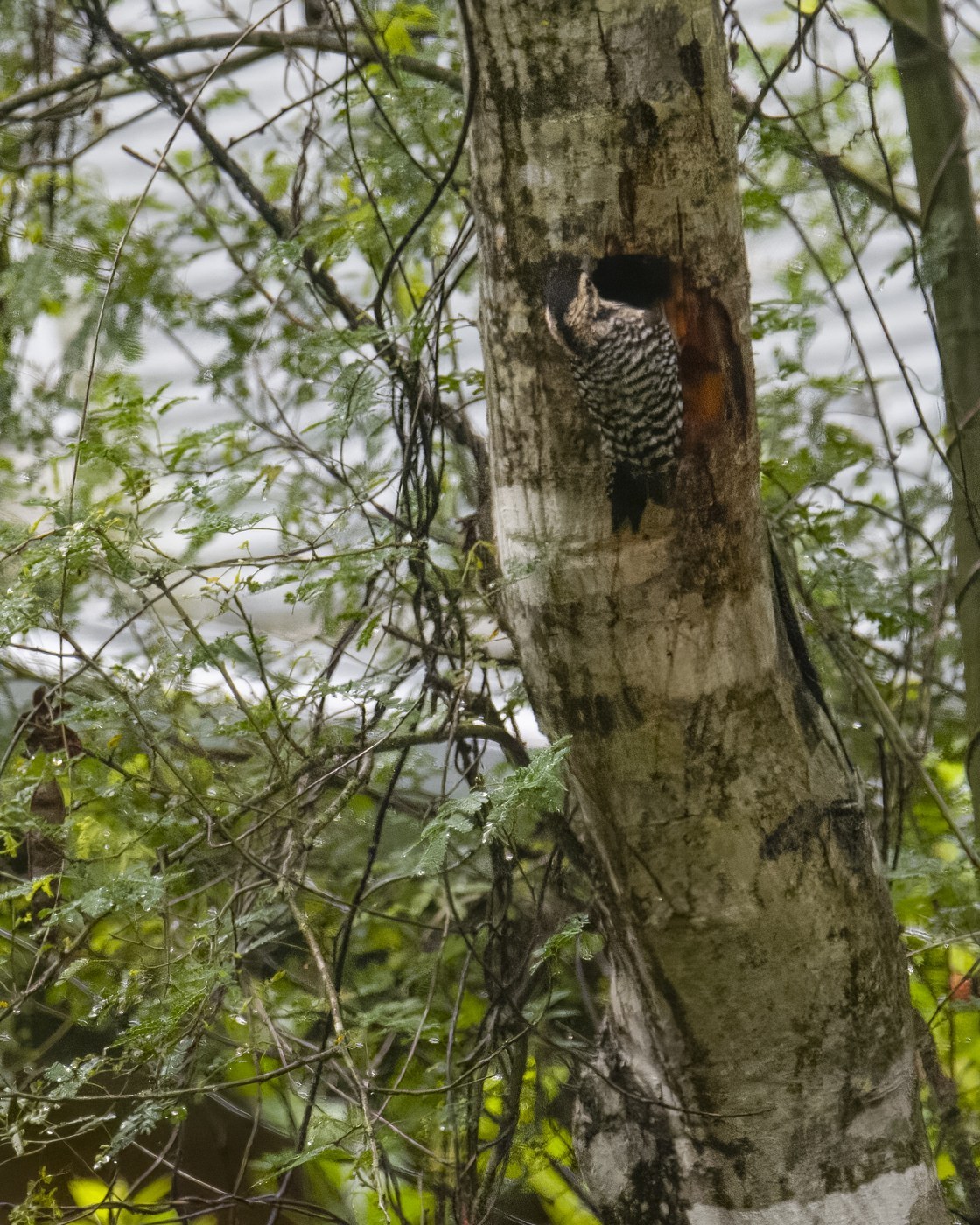
Ladder-backed Woodpecker
Dryobates scalaris
A small desert woodpecker with a finely barred black-and-white 'ladder' back pattern, well adapted to arid scrub, mesquite, and cactus habitat.
- Size
- 16-19 cm (6.3-7.5 in) long, 33 cm wingspan
- Habitat
- arid desert scrub, mesquite thickets, and cactus country of the southwestern US and Mexico
- Type
- woodpecker
Spotted a bird like this?
Identify any bird from a photo, free.
Overview
The Ladder-backed Woodpecker is a small woodpecker of arid and semi-arid country in the southwestern United States and Mexico, named for the neat, evenly spaced black-and-white horizontal barring across its back that resembles the rungs of a ladder. It has a black-and-white streaked face, spotted white underparts, and a black-and-white barred back and wings.
Males show a red crown, while females have an all-black crown without red. This small, well-camouflaged woodpecker is closely adapted to desert scrub, thriving in habitats with mesquite, cactus, and thorn scrub that support few other woodpecker species.
Its range overlaps narrowly with the very similar Nuttall's Woodpecker in parts of California, where the two species occasionally hybridize.
How to identify it
Key Field Marks
- Fine, even black-and-white barring across the entire back (the "ladder" pattern)
- Black-and-white streaked face with a black stripe through the eye
- Spotted, buffy-white underparts
- Males show a red crown; females an all-black crown
Similar Species
- Nuttall's Woodpecker is very similar but has a more solidly black back with less extensive white barring and a whiter face pattern; ranges overlap only in a narrow zone in California where hybrids occur.
- Downy Woodpecker has a mostly solid white back stripe rather than the fine horizontal barring of the Ladder-backed.
Habitat & range
Ladder-backed Woodpeckers inhabit arid and semi-arid scrub, desert washes, mesquite thickets, and cactus country across the southwestern United States (from California and Nevada east through Texas) and south through much of Mexico. They are well adapted to habitats too dry for most other woodpeckers.
This species is non-migratory, remaining resident within its desert and scrub territory throughout the year.
Behavior & voice
Behavior
Ladder-backed Woodpeckers forage low in desert scrub and cactus, often working small branches, cactus limbs, and even yucca stalks rather than large tree trunks, reflecting their adaptation to sparse desert vegetation.
Voice
The call is a sharp "pik," similar to other small Dryobates woodpeckers, along with a descending whinny call given during interactions.
Feeding
Insects, particularly beetle and moth larvae extracted from desert shrubs, mesquite, and cactus, make up most of the diet, supplemented by cactus fruit and other plant material.
Nesting & Breeding
Both parents excavate a nest cavity in a cactus (such as saguaro or cholla), mesquite, or other desert tree or shrub, laying 3-5 eggs, with both sexes sharing incubation and feeding duties.
Frequently asked questions
Why is it called the Ladder-backed Woodpecker?
Its back is marked with fine, even black-and-white horizontal barring that resembles the rungs of a ladder, distinguishing it from woodpeckers with plain or blotchy backs.
How do you tell a Ladder-backed Woodpecker from a Nuttall's Woodpecker?
The Ladder-backed has more extensive white barring across the back and a browner-tinged face, while Nuttall's Woodpecker has a more solidly black back and cleaner black-and-white face pattern; their ranges overlap only narrowly in California.
Where does the Ladder-backed Woodpecker live?
It inhabits arid desert scrub, mesquite thickets, and cactus country across the southwestern United States and much of Mexico.
What does a Ladder-backed Woodpecker eat?
Mostly insects such as beetle and moth larvae found in desert shrubs and cactus, along with some cactus fruit.
Ladder-backed Woodpecker guides
In-depth guides for identifying, finding, and understanding Ladder-backed Woodpecker.
Other birds you may enjoy
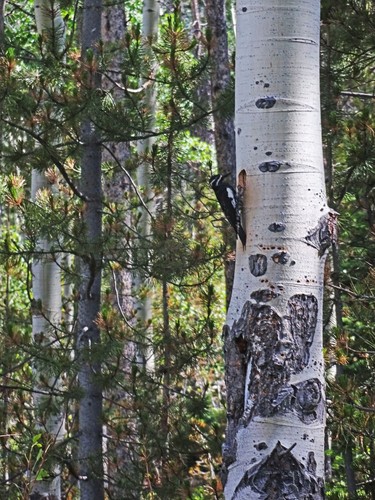
Williamson's Sapsucker
21-25 cm (8-10 in) long, 40-42 cm wingspan
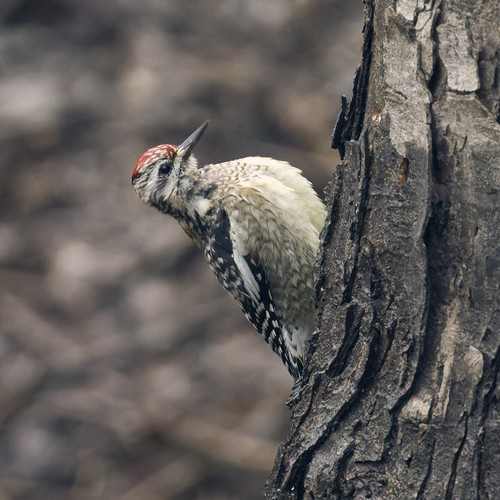
Yellow-bellied Sapsucker
18-21 cm (7-8.3 in) long, 34-40 cm wingspan
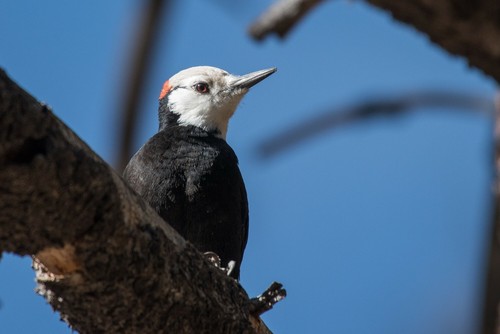
White-headed Woodpecker
20-23 cm (8-9 in) long, 38-41 cm wingspan
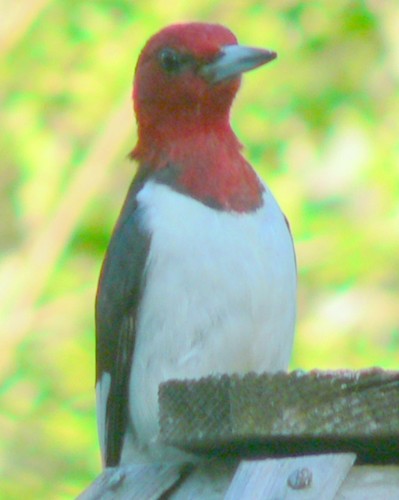
Red-headed Woodpecker
19-23 cm (7.5-9 in) long, 42-46 cm wingspan
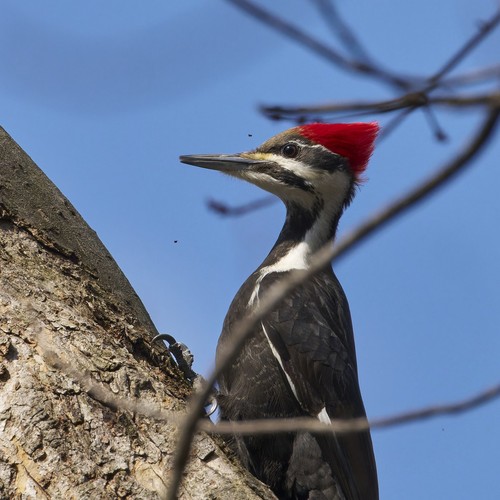
Pileated Woodpecker
40-49 cm (16-19 in) long, 66-75 cm wingspan
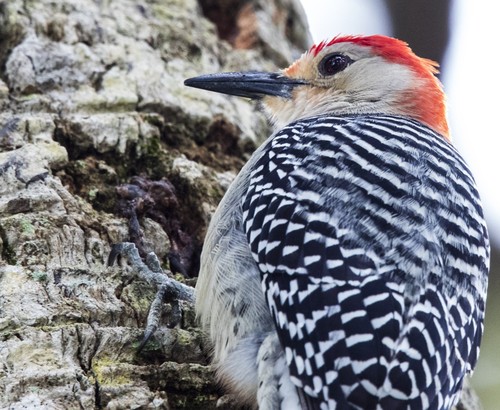
Red-bellied Woodpecker
22-27 cm (9-10.5 in) long, 38-46 cm wingspan
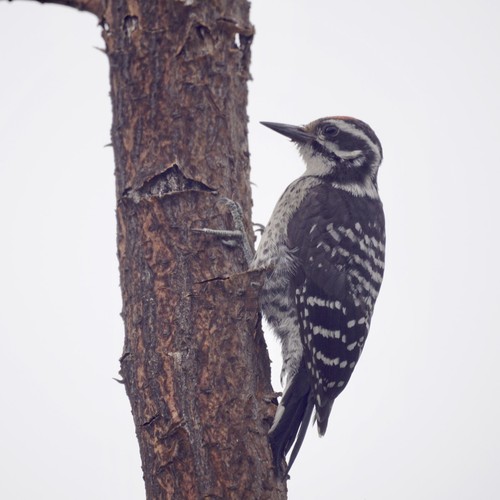
Nuttall's Woodpecker
18-20 cm (7-8 in) long, 34-38 cm wingspan
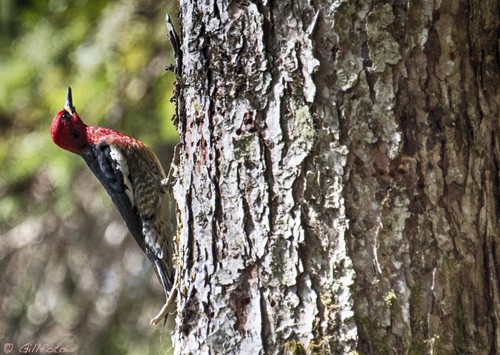
Red-breasted Sapsucker
20-23 cm (8-9 in) long, 34-40 cm wingspan
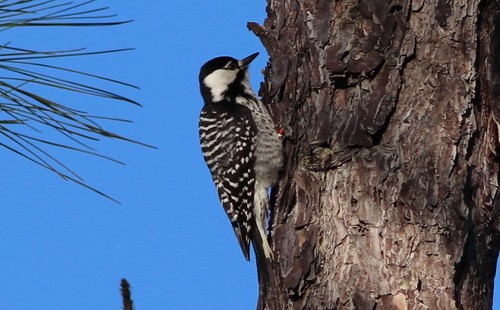
Red-cockaded Woodpecker
20-23 cm (8-9 in) long, 35-38 cm wingspan
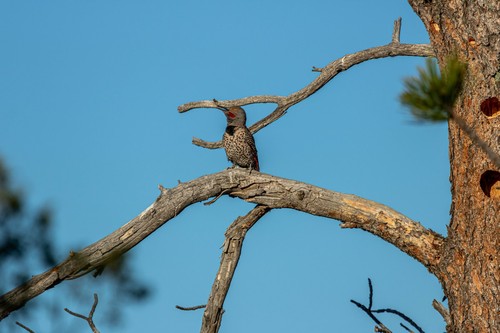
Northern Flicker
28-36 cm (11-14 in) long, 42-51 cm wingspan
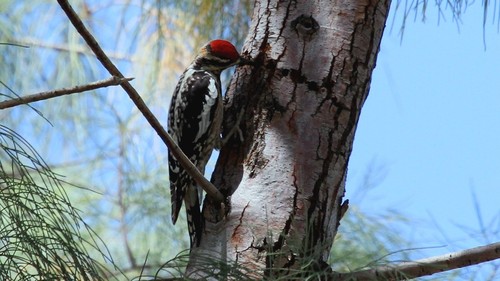
Red-naped Sapsucker
19-21 cm (7.5-8.3 in) long, 34-40 cm wingspan
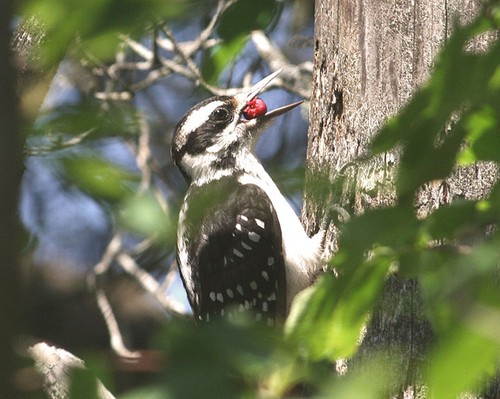
Hairy Woodpecker
23-26 cm (9-10 in) long, 33-41 cm wingspan