
Ladder-backed Woodpecker Identification Guide
This small desert woodpecker of the American Southwest is identified by the fine black-and-white barred "ladder" pattern across its back and a spotted, buffy face and underparts.
Read the full Ladder-backed Woodpecker encyclopedia entry →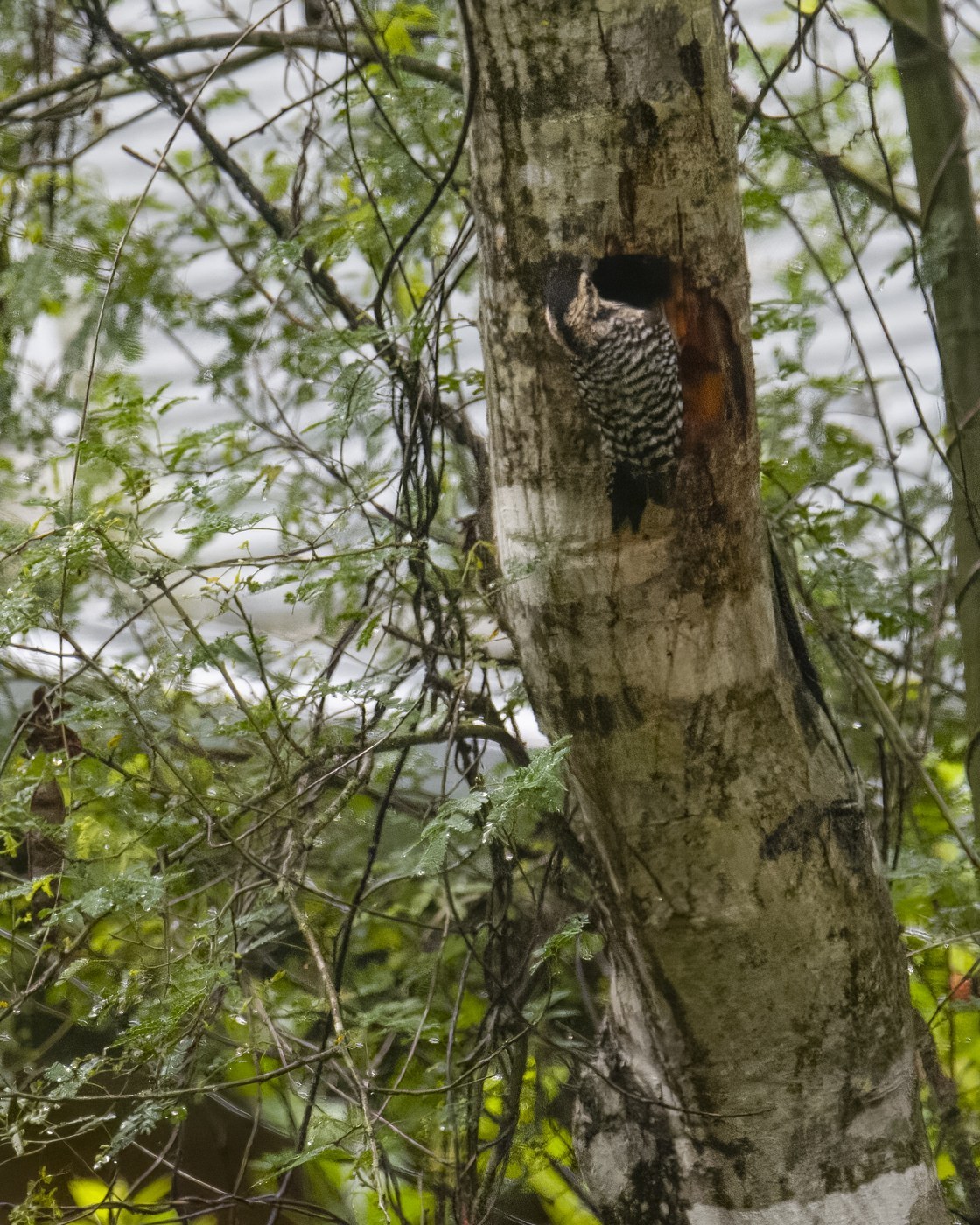
Key Field Marks
- Size & shape: A small woodpecker, about 16–19 cm long, with a compact body, straight chisel bill, and stiff tail typical of the genus.
- Plumage: The back and wings show a neat, evenly barred black-and-white "ladder" pattern (horizontal black-and-white stripes) that gives the species its name; underparts are buffy-white with fine black spotting and streaking on the flanks.
- Head: Black-and-white striped face pattern with a black malar (mustache) stripe; males have a red crown patch that females lack (females show plain black-and-white crown).
- Behavior: Forages actively on trunks, branches, and even on cactus and low desert shrubs, gleaning and drilling for insects; often forages lower and on smaller vegetation than many other woodpeckers.
Separating Ladder-backed Woodpecker from Similar Species
- Nuttall's Woodpecker: Very similar and closely related, but ranges are mostly separate (Nuttall's is largely confined to California west of the Sierra Nevada/desert regions, Ladder-backed to the arid Southwest and Texas); Nuttall's shows a slightly less barred, more solid-looking back and different face pattern details — location is often the best clue where ranges approach.
- Downy Woodpecker: Downy has a plain, unbarred white back stripe (not laddered) and a shorter, more delicate bill; Ladder-backed shows the full barred back and heavier bill.
- Hairy Woodpecker: Larger, with a plain white back and a much longer, more robust bill, easily separated from the smaller, barred-backed Ladder-backed.
- The evenly barred back combined with the spotted buffy underparts is the most reliable mark separating this species from all similar North American woodpeckers.
Where & When to See
- Habitat: Arid and semi-arid scrub, desert washes, mesquite thickets, cactus stands (including saguaro and cholla), and riparian woodland edges in dry country; generally avoids dense, humid forest.
- Range: Resident from the southwestern United States (California, Arizona, New Mexico, Texas) south through Mexico into parts of Central America.
- Season: Non-migratory and present year-round throughout its range.
- Best viewing: Check desert washes and mesquite/cactus habitat, listening for tapping and calls; often perches low on cactus arms or thin branches rather than high in large trees.
Voice & Sound Cues
- A sharp, single "pik" or "pitik" call note, similar to other small woodpeckers but slightly drier/harder in tone.
- Also gives a descending rattle or whinny call used in territorial interactions.
- Drumming is a fairly fast, even roll on dead wood or agave/cactus stalks, used for territory advertisement, especially in the breeding season (spring).
Frequently asked questions
What is the single best mark to identify a Ladder-backed Woodpecker?
The evenly barred black-and-white 'ladder' pattern across the entire back, combined with spotted (not plain white) underparts, distinguishes it from Downy and Hairy Woodpeckers.
How do I separate Ladder-backed from Nuttall's Woodpecker?
Range is the most useful clue since the two rarely overlap; Nuttall's occupies California west of the deserts while Ladder-backed is found through the arid Southwest, Texas, and Mexico.
Do males and females look different?
Yes, males show a red patch on the crown while females have an all black-and-white crown with no red.
What habitat should I look in for this species?
Desert scrub, mesquite, and cactus-dominated habitats in the Southwest are the most reliable places, including saguaro stands and desert washes.
Is this woodpecker migratory?
No, it is a year-round resident throughout its range and does not undertake seasonal migration.