
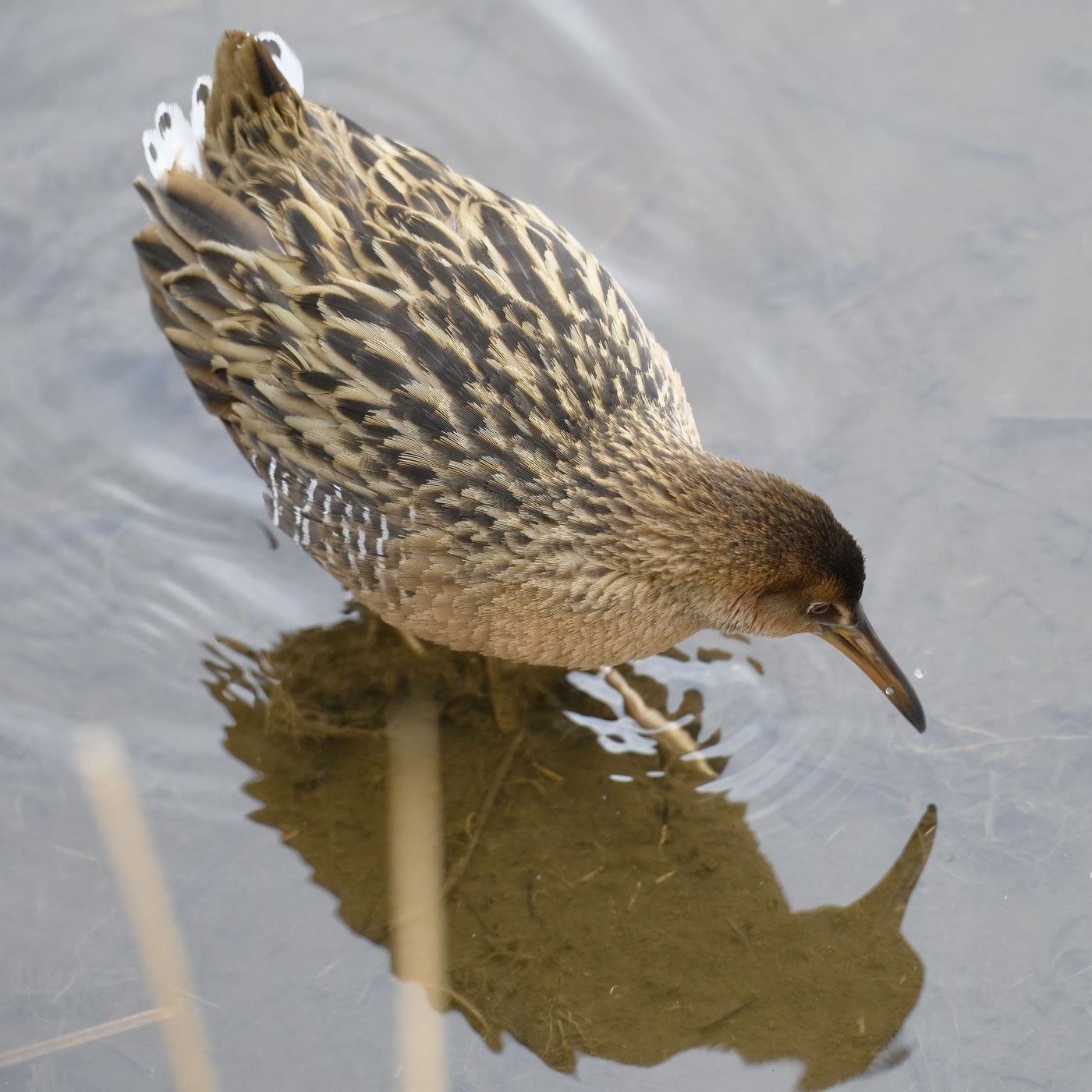
King Rail
Rallus elegans
The largest North American rail, richly colored with a rufous breast and boldly barred flanks in freshwater marshes.
- Size
- 38-48 cm (15-19 in) long, wingspan 50-58 cm
- Habitat
- freshwater and brackish marshes across the eastern and central United States
- Type
- wading-bird
Spotted a bird like this?
Identify any bird from a photo, free.
Overview
The King Rail is the largest rail species in North America, essentially a bigger, more richly colored version of the smaller Virginia Rail. It has warm cinnamon-rufous underparts and breast, brown upperparts streaked with black, gray cheeks, and bold black-and-white barring along the flanks.
Once more widespread, it has declined substantially with the loss of freshwater marsh habitat across much of its range and is now a conservation priority in many states.
How to identify it
Key field marks
- Large size, clearly bigger than other North American rails
- Long, slightly downcurved bill
- Rich cinnamon-rufous breast
- Gray face
- Bold black-and-white barred flanks
Similar species
The Clapper Rail is very similar but duller and grayer, inhabiting coastal salt marsh rather than freshwater habitat; the two species hybridize in brackish zones where ranges overlap. The Virginia Rail is much smaller.
Habitat & range
Habitat
Freshwater and brackish marshes, wet meadows, and rice fields.
Range and migration
Found across the eastern and central United States, with a small resident presence in Cuba and Mexico. Northern populations migrate south for winter, while southern populations are largely resident.
Behavior & voice
Behavior
Secretive, usually staying hidden within dense marsh vegetation.
Voice
A loud, far-carrying 'kek-kek-kek' call, similar to the Clapper Rail's but slightly slower and lower-pitched.
Feeding
Probes mud and shallow water for crayfish and other aquatic invertebrates.
Nesting and breeding
Builds a well-hidden nest of woven marsh plants, sometimes with a domed canopy, low over water.
Frequently asked questions
What makes the King Rail the 'king' of rails?
It's the largest rail species in North America, notably bigger than the closely related Clapper Rail and Virginia Rail.
How do you tell a King Rail from a Clapper Rail?
King Rails are more brightly rufous and favor freshwater marshes, while Clapper Rails are duller and live in coastal salt marsh; the two can hybridize in brackish zones.
Is the King Rail endangered?
It's considered Near Threatened due to significant loss of freshwater marsh habitat across its range.
What do King Rails eat?
Crayfish, aquatic insects, crabs, snails, and small fish.
Where do King Rails live?
Freshwater and brackish marshes of the eastern and central United States.
King Rail guides
In-depth guides for identifying, finding, and understanding King Rail.
Other birds you may enjoy
Demoiselle Crane
85-100 cm (33-39 in) long, 155-180 cm wingspan
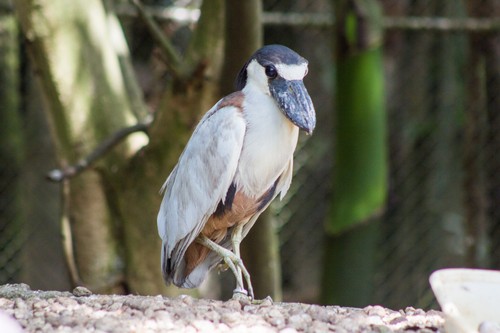
Boat-billed Heron
41-56 cm (16-22 in) long
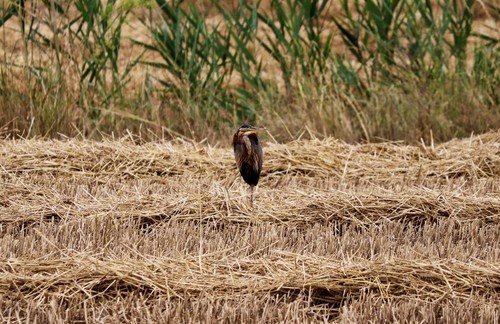
Purple Heron
78-90 cm (31-35 in) long, 120-152 cm wingspan
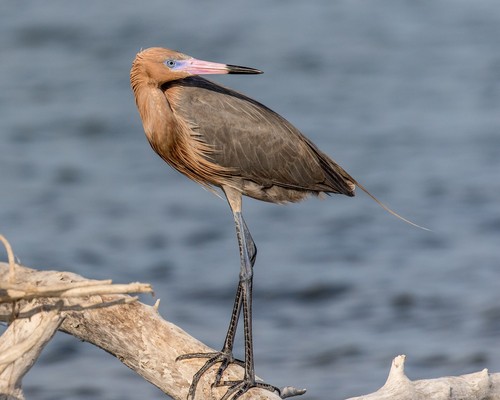
Reddish Egret
68-82 cm (27-32 in) long, 116-125 cm wingspan
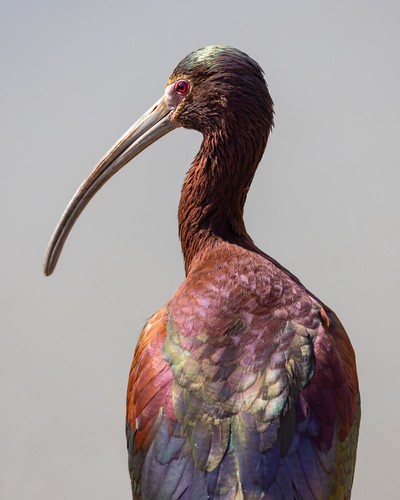
White-faced Ibis
46-56 cm (18-22 in) long, 88-93 cm wingspan
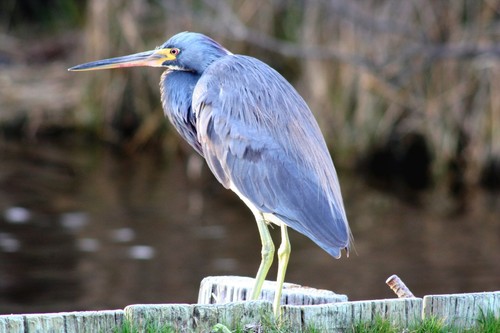
Tricolored Heron
61-76 cm (24-30 in) long, about 96 cm wingspan
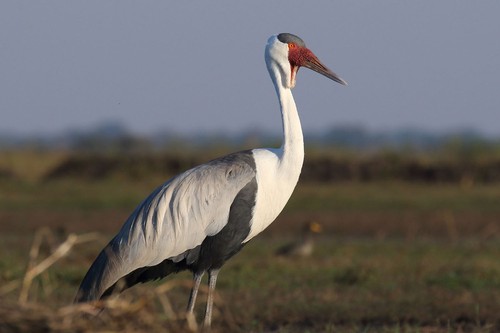
Wattled Crane
120-175 cm (47-69 in) tall, one of the tallest cranes, wingspan up to about 230 cm (7.5 ft)

White-naped Crane
112-125 cm (44-49 in) long, 195-210 cm wingspan
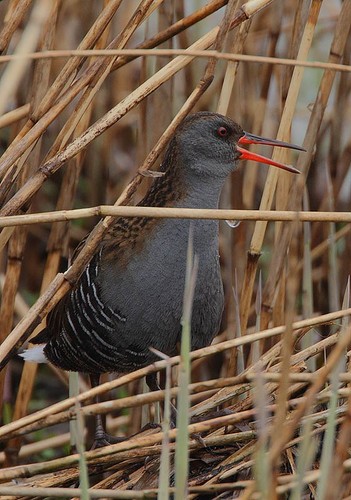
Water Rail
23-28 cm (9-11 in) long, wingspan 38-45 cm
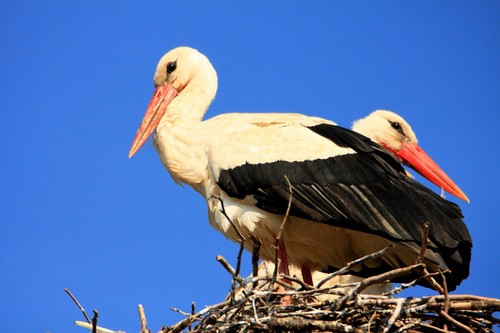
White Stork
100-125 cm (39-49 in) long, 155-215 cm wingspan
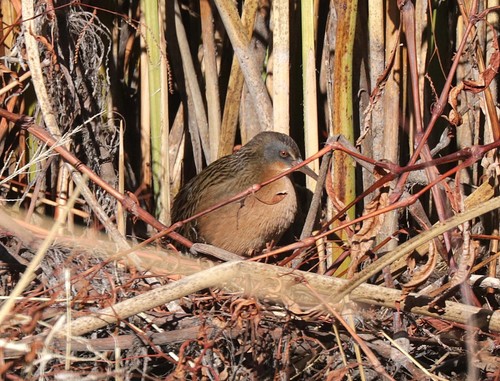
Virginia Rail
20-27 cm (8-11 in) long, wingspan 32-38 cm

Wattled Jacana
17-23 cm (7-9 in) long