
King Rail Identification Guide
A large, secretive freshwater marsh bird of the eastern United States, identified by its rich cinnamon breast, brown streaked back, and long slightly downcurved bill.
Read the full King Rail encyclopedia entry →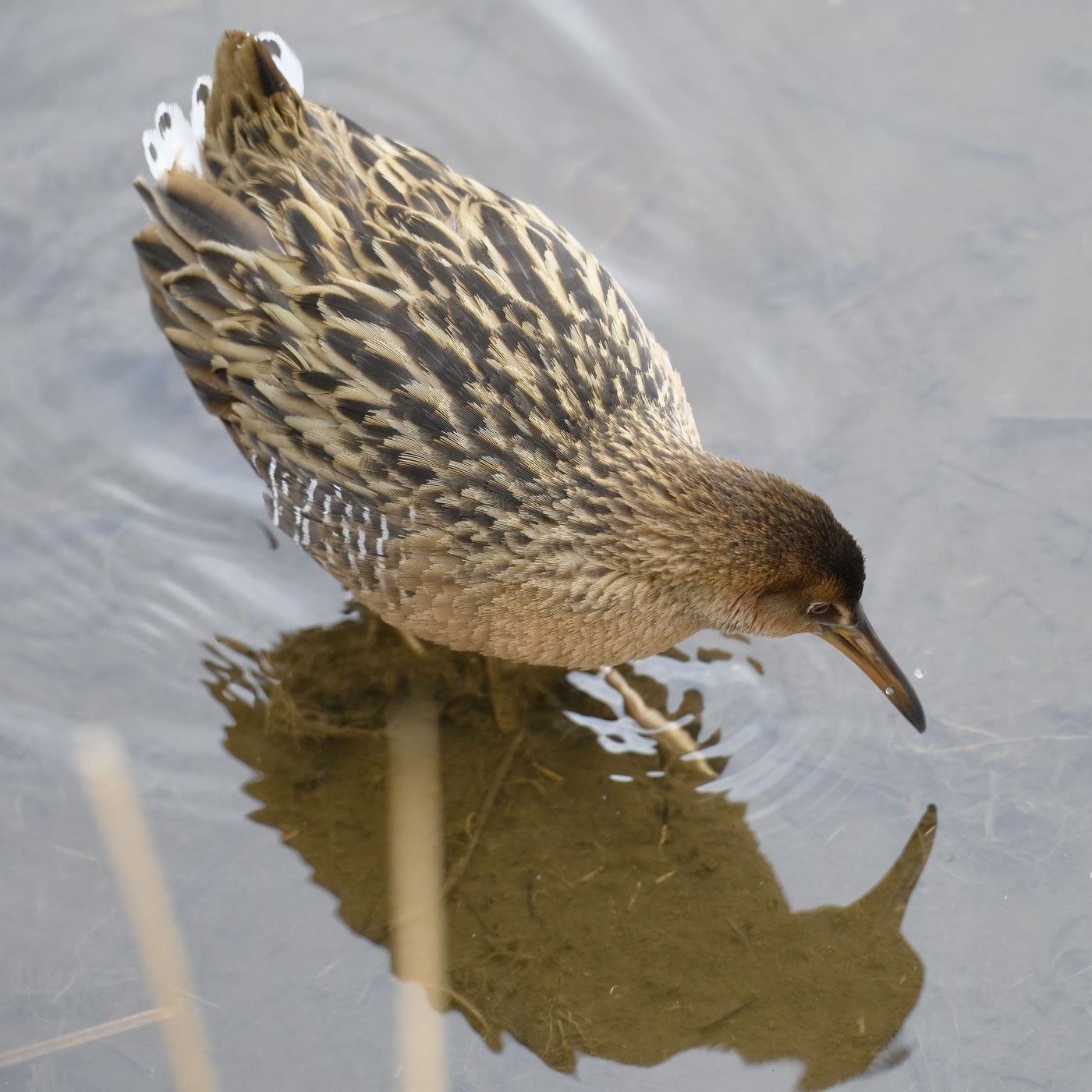
Key Field Marks
- Size & shape: The largest North American rail, roughly chicken-sized at 38-48 cm (15-19 in), with a laterally compressed body adapted for moving through dense marsh vegetation, and a long neck and legs.
- Plumage: Rich cinnamon to rufous-orange breast and neck, contrasting with a brown back boldly streaked with black and buff. Flanks are barred black and white, and the face shows gray cheeks setting off the warmer breast tones.
- Bill: Long, slightly downcurved, orange-based bill with a darker culmen, well suited to probing mud and vegetation for prey.
- Legs: Long, sturdy, dull yellowish-brown to olive legs and toes for wading through emergent marsh vegetation.
- Behavior: Extremely secretive, usually staying hidden within dense marsh vegetation and more often heard than seen; occasionally forages along muddy edges at dawn/dusk or after being flushed. Feeds on crayfish, aquatic insects, and small vertebrates.
Separating It From Similar Species
King Rail is very similar to Clapper Rail, and the two were long treated as a single species; the key distinctions are habitat and plumage saturation — King Rail favors freshwater and brackish marshes and shows brighter, more richly cinnamon underparts and a more contrastingly streaked (not grayish) back, while Clapper Rail is a coastal saltmarsh specialist with duller, grayer-brown plumage overall. Virginia Rail is much smaller with similar coloring but roughly half the size, useful when direct comparison or scale is available. Hybridization between King and Clapper Rail can occur where fresh and salt marsh habitats meet, complicating identification of intermediate-looking birds.
Where & When to See One
Breeds in freshwater and brackish marshes across the eastern and central United States, favoring cattail marshes, wet meadows, and marshy edges of lakes and rivers. Northern populations migrate south for winter to the Gulf Coast and southeastern coastal states, while southern populations, especially along the Gulf Coast, can be resident year-round. Best detected at dawn or dusk during the breeding season (spring through summer) by voice, since the species is difficult to see in dense cover.
Voice & Sound Cues
Gives a loud, harsh, evenly-spaced series of "kek-kek-kek-kek" or "chack" notes, deeper and more resonant than the similar call of Clapper Rail, along with a distinctive "grunt" duet given by paired birds. Calls are most frequently heard at dawn, dusk, and after dark during the breeding season.
Frequently asked questions
How do I tell a King Rail from a Clapper Rail?
King Rail has brighter cinnamon underparts and a more strongly streaked back, and prefers freshwater or brackish marsh, while Clapper Rail is duller and grayer and is restricted mainly to coastal saltmarsh habitat.
Is the King Rail easy to see in the field?
No, it is highly secretive and usually stays hidden in dense marsh vegetation, so it is most often detected by its distinctive calls rather than by sight.
What habitat does the King Rail prefer?
Freshwater and brackish marshes, including cattail marshes and wet meadows, distinguishing it from the saltmarsh-loving Clapper Rail.
What does a King Rail sound like?
A loud, deep, evenly-spaced 'kek-kek-kek-kek' call, along with grunting duet calls between paired birds, most often heard at dawn and dusk.
Do King Rails and Clapper Rails ever hybridize?
Yes, where freshwater and saltmarsh habitats meet, King and Clapper Rails can hybridize, sometimes producing birds with intermediate plumage that are difficult to identify definitively.