
King Penguin
Aptenodytes patagonicus
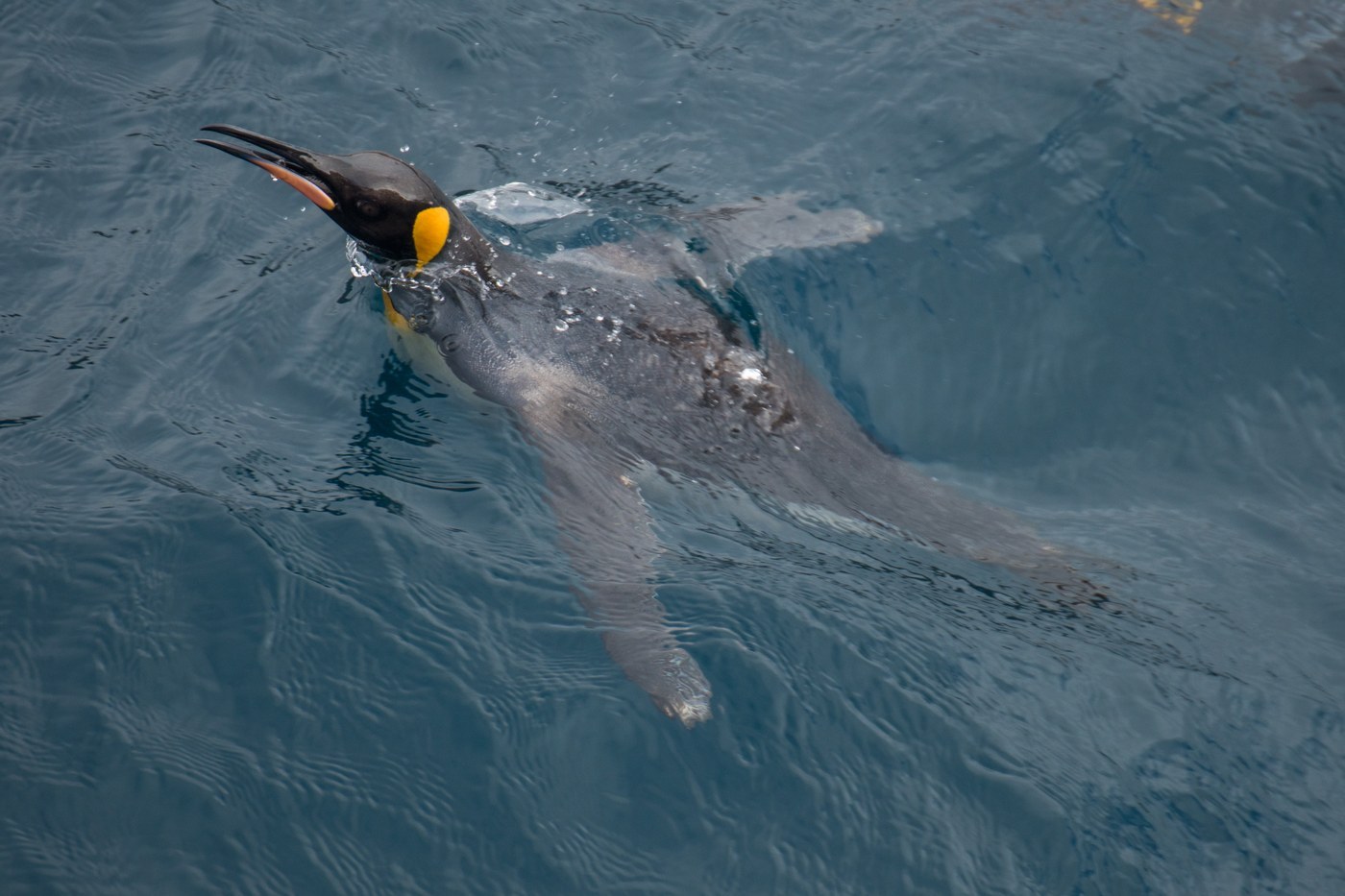
The second-largest penguin species, sporting bold, sharply defined orange ear patches and a slender, elegant build.
- Size
- 85-95 cm (33-37 in) tall, up to about 16 kg (35 lb)
- Habitat
- sub-Antarctic islands and surrounding cold ocean waters
- Type
- seabird
Spotted a bird like this?
Identify any bird from a photo, free.
Overview
The King Penguin is a large, elegant penguin second in size only to the Emperor Penguin, distinguished by vivid, sharply defined orange-yellow patches on the ears that curve down to a matching patch on the upper chest, set against a black head and silvery-grey back. Its long, slender bill has a distinctive orange-pink stripe along the lower mandible. Chicks are covered in thick brown down and were once mistaken for a separate species, nicknamed "woolly penguins," due to their very different appearance from adults.
King Penguins breed in dense, spectacular colonies on sub-Antarctic islands, with an unusually long breeding cycle that means chicks may still be raised the following season.
How to identify it
Key field marks
- Large size, second only to the Emperor Penguin
- Bold, sharply demarcated orange-yellow ear and chest patches against a black head
- Long, slender bill with an orange-pink stripe along the lower mandible
Similar species
- Emperor Penguin is larger and bulkier with more muted, blended chest coloring rather than sharply defined orange patches.
- No other penguin combines the King's slim build with such vivid, crisp ear patches.
Habitat & range
Habitat
Breeds on ice-free sub-Antarctic islands with open beaches and tussock grass; forages in cold, productive waters of the Southern Ocean.
Range
Breeds on sub-Antarctic islands including South Georgia, the Falklands, Crozet, Kerguelen, and Macquarie Island.
Migration
Does not undertake long-distance migration but makes extended foraging trips at sea, sometimes hundreds of kilometers from the colony.
Behavior & voice
Behavior
Breeds in extremely dense, noisy colonies that can number in the hundreds of thousands, with an unusually long breeding cycle spanning over a year, meaning colonies often contain chicks and eggs at different stages simultaneously.
Voice
Gives loud, trumpeting calls used for mate and chick recognition within crowded colonies.
Feeding
Dives to considerable depths to catch fish, particularly lanternfish, and squid.
Nesting
Lays a single egg incubated on top of the feet beneath a brood pouch, with no true nest, alternating incubation duties between both parents over an extended breeding season.
Frequently asked questions
How big are King Penguins compared to Emperor Penguins?
King Penguins are the second-largest penguin species, notably smaller and slimmer than Emperor Penguins but sharing a similar overall body plan.
Why were King Penguin chicks once called woolly penguins?
Chicks are covered in thick brown down so different from the sleek adult plumage that early observers sometimes mistook them for a separate species.
How long does King Penguin breeding take?
Their breeding cycle is unusually long, taking over a year to raise a single chick, which can result in colonies containing eggs and chicks of different ages at the same time.
Where do King Penguins live?
They breed on sub-Antarctic islands such as South Georgia, the Falklands, and Crozet, foraging in the surrounding cold Southern Ocean waters.
King Penguin guides
In-depth guides for identifying, finding, and understanding King Penguin.
Other birds you may enjoy
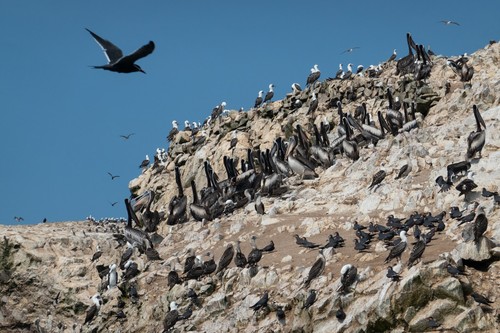
Peruvian Pelican
137-152 cm (54-60 in) long, up to 228 cm wingspan
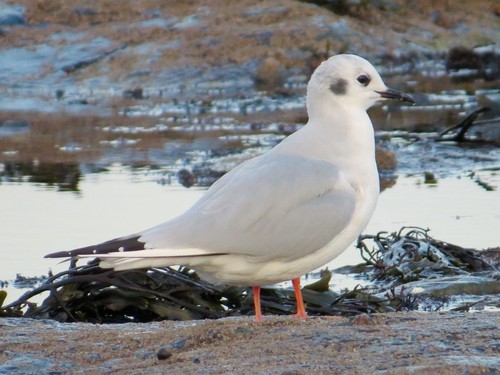
Bonaparte's Gull
28-33 cm (11-13 in) long, 76-84 cm wingspan
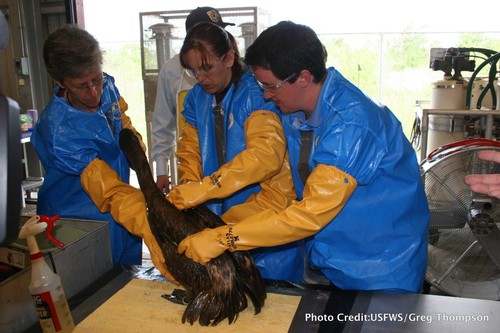
Brown Pelican
106-137 cm (42-54 in) long, 200-230 cm wingspan
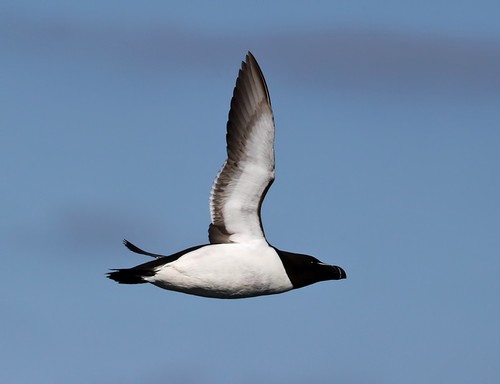
Razorbill
37-39 cm (15-15.5 in) long, 63-68 cm wingspan
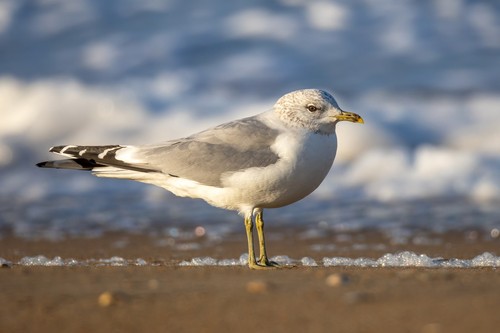
Common Gull
40-46 cm (16-18 in) long, 110-130 cm wingspan
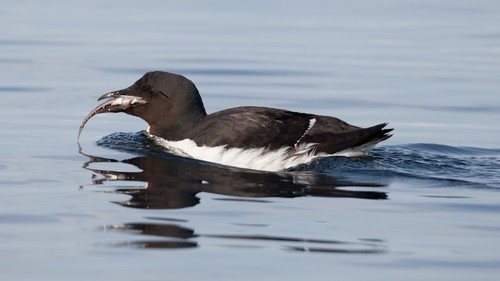
Thick-billed Murre
40-48 cm (16-19 in) long, 65-75 cm wingspan
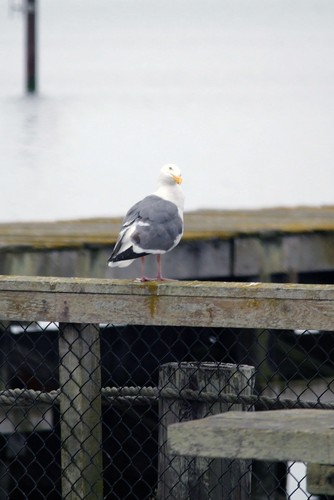
Western Gull
55-68 cm (22-27 in) long, 130-144 cm wingspan
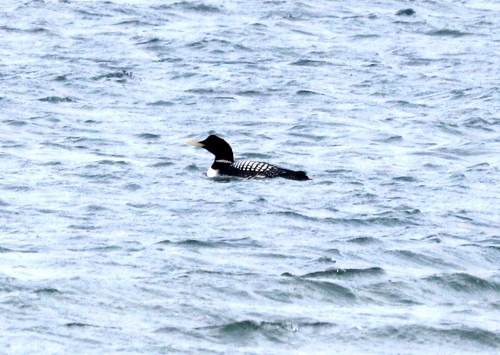
Yellow-billed Loon
76-97 cm (30-38 in) long, 135-152 cm wingspan
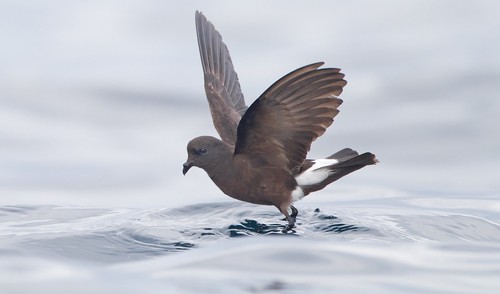
Wilson's Storm-Petrel
15-19 cm (6-7.5 in) long, wingspan 38-42 cm (15-16.5 in)
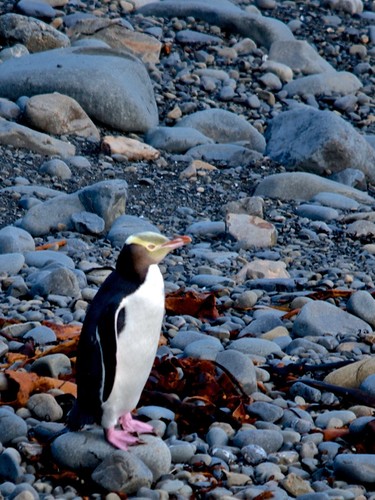
Yellow-eyed Penguin
62-79 cm (24-31 in) tall, 3-8.5 kg (6.6-18.7 lb)
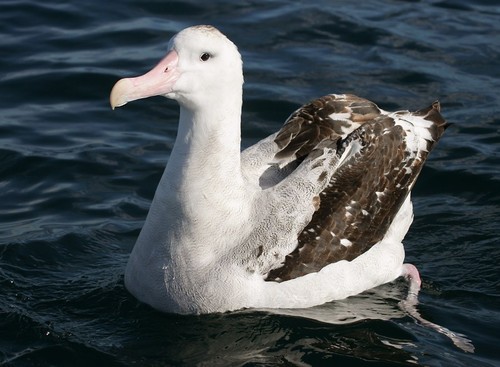
Wandering Albatross
107-135 cm (42-53 in) long, wingspan up to 3.5 m (11.5 ft)
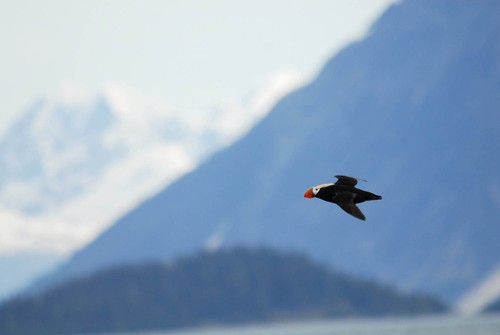
Tufted Puffin
35-41 cm (14-16 in) long, about 63-70 cm wingspan