
King Penguin Identification Guide
The second-largest penguin species, identified by its tall upright stature, silvery-grey back, black head, and bold orange ear patches and upper-breast wash, found on sub-Antarctic islands.
Read the full King Penguin encyclopedia entry →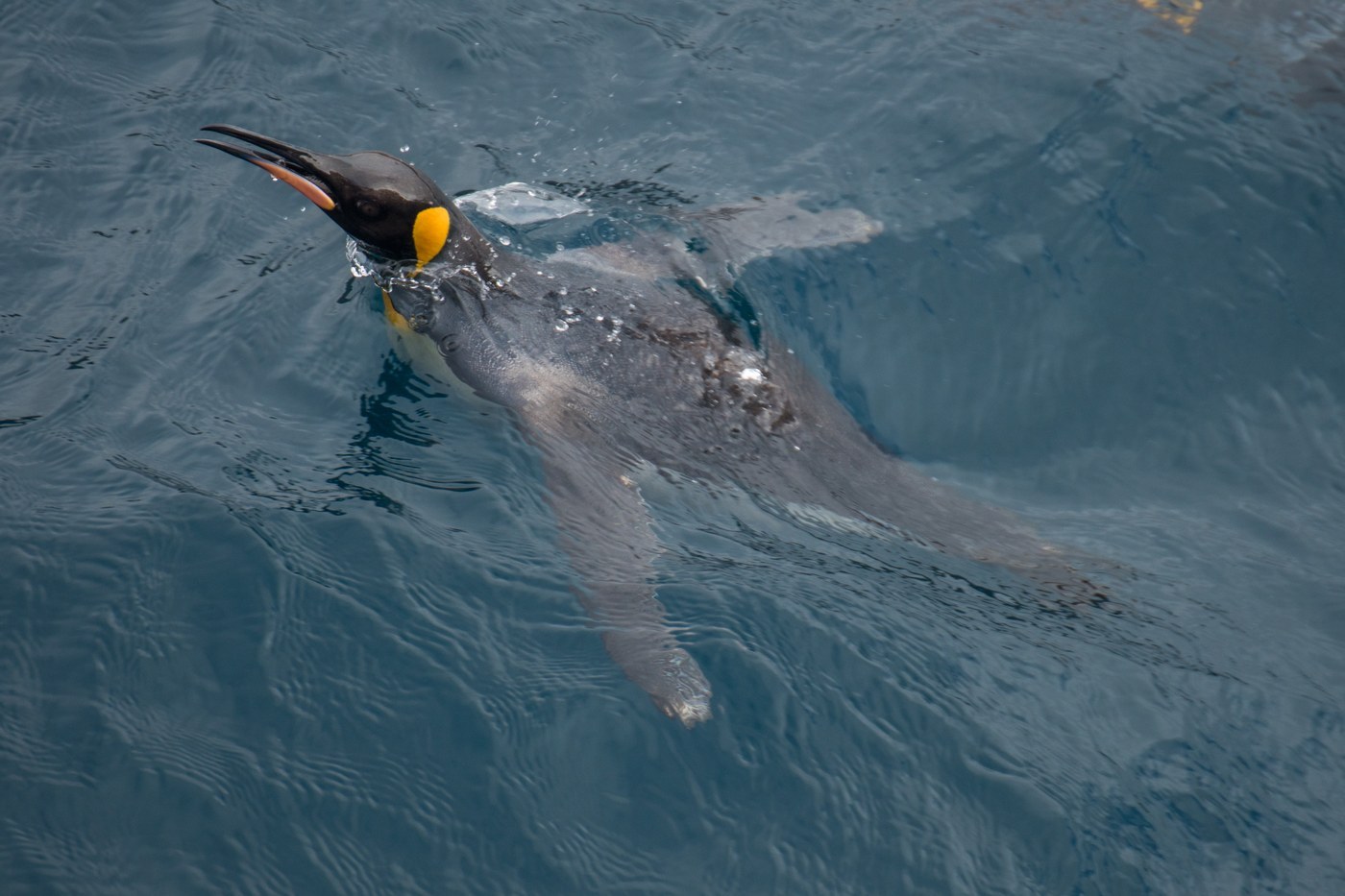
Key Field Marks
- Size & shape: Large, tall penguin, standing about 85-95 cm (33-37 in), second in size only to the Emperor Penguin, with a slender, elongated build and long, thin bill compared to most other penguins.
- Plumage: Silvery-grey back and flippers, black head and chin, and clean white underparts. The standout features are the bright orange to golden-yellow teardrop-shaped ear patches on each side of the head, which blend down into an orange wash across the upper breast and throat before fading to white on the lower breast and belly.
- Bill: Long, thin, and slightly downcurved, mostly black with a distinctive orange to pink stripe (mandibular plate) along the lower mandible, another feature useful for separating it from Emperor Penguin.
- Legs: Short black legs set far back on the body, giving the characteristic upright waddling stance shared by all penguins.
- Behavior: Highly social, forming enormous breeding colonies. Unlike most penguins, King Penguins have an unusual breeding cycle that takes more than a year to complete, so colonies contain birds and chicks at many different stages simultaneously, including large brown, downy "oakum boy" chicks that look markedly different from adults.
Separating It From Similar Species
The Emperor Penguin is the closest look-alike and only larger species, but Emperor Penguins are noticeably bigger and bulkier, have pale yellow (rather than bright orange) ear patches that blend more subtly into the neck, and breed on Antarctic sea ice rather than sub-Antarctic islands — the two species' ranges barely overlap. No other penguin combines the King's slender build, bright orange ear patches, and long thin downcurved bill with an orange mandibular stripe.
Where & When to See One
Breeds on sub-Antarctic islands with a maritime, ice-free climate, including South Georgia, the Falkland Islands, Crozet, Kerguelen, Prince Edward, Marion, Macquarie, and Heard Islands. Colonies are present and active year-round due to the extended breeding cycle, so visitors can see breeding activity, downy chicks, and adults in various plumage stages at almost any time of year, though peak visitor season for sub-Antarctic cruises is during the austral summer (November-March).
Voice & Sound Cues
Gives loud, trumpeting calls used for individual recognition among mates and chicks within crowded, noisy colonies — a series of brassy, bugling notes that help pairs and chicks locate one another amid thousands of similar-looking birds.
Frequently asked questions
How do I tell a King Penguin from an Emperor Penguin?
King Penguins are smaller and slimmer with bright orange, sharply defined ear patches and an orange stripe on the bill, while Emperor Penguins are larger and bulkier with paler yellow ear patches that blend more gradually into the neck.
Where do King Penguins live?
On sub-Antarctic islands with mild maritime climates, such as South Georgia, the Falkland Islands, Crozet, and Kerguelen, rather than on Antarctic ice.
Why do King Penguin colonies have chicks year-round?
Their breeding cycle takes more than a year to complete, so colonies contain eggs, small chicks, and large downy 'oakum boy' chicks simultaneously across different pairs.
What color are a King Penguin's ear patches?
Bright orange to golden-yellow, teardrop-shaped, and blending into an orange wash on the upper breast — a key distinguishing feature from other large penguins.
Do King Penguins live on Antarctica itself?
No, they breed on sub-Antarctic islands north of the pack ice, not on the Antarctic continent, which is where Emperor Penguins breed.