
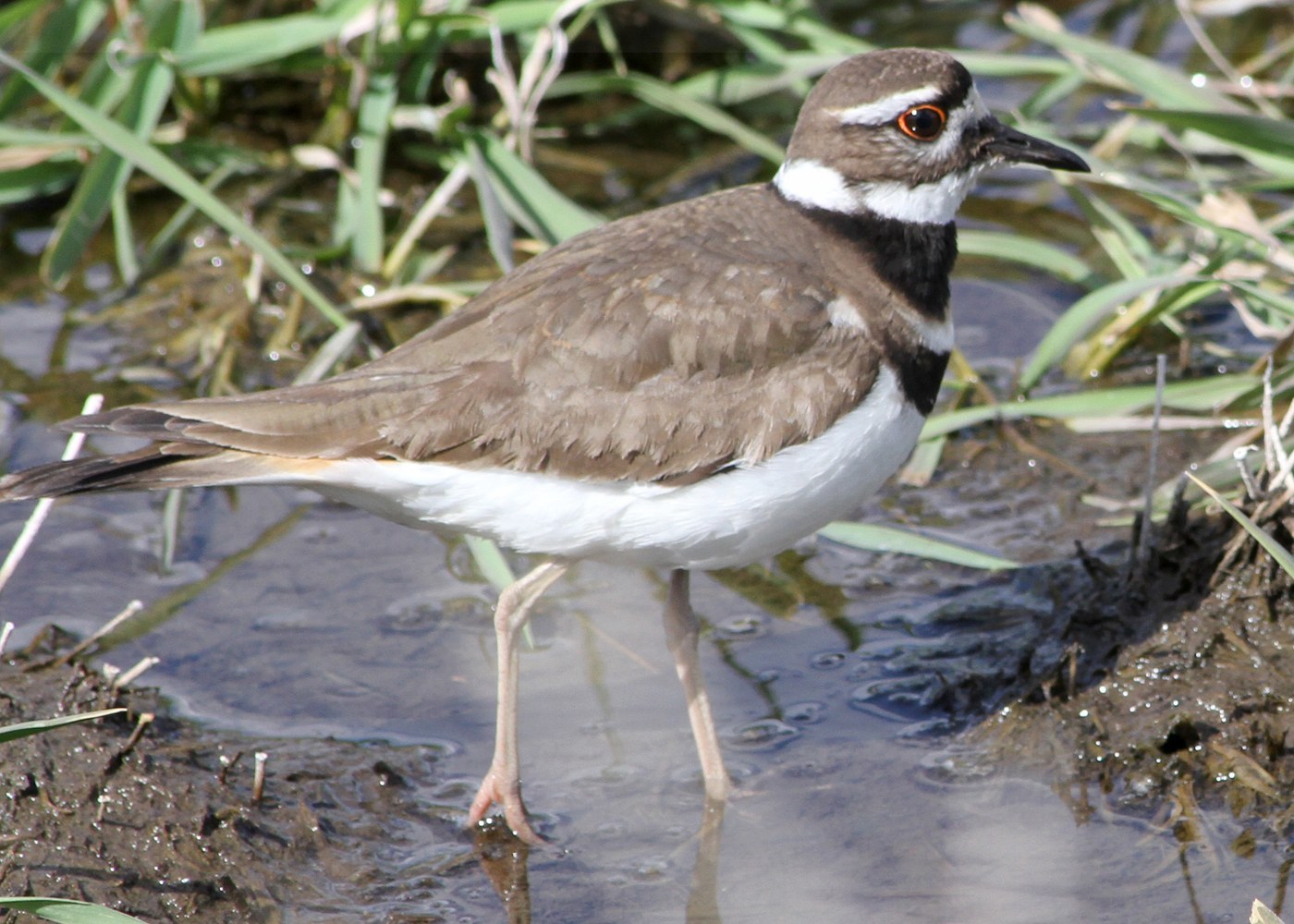
Killdeer
Charadrius vociferus
A widespread shorebird recognized by its double black breast bands and its dramatic 'broken-wing' display to lure predators from the nest.
- Size
- 20-28 cm (8-11 in) long, wingspan 46-48 cm
- Habitat
- open ground including fields, lawns, gravel lots, and shorelines across North America
- Type
- shorebird
Spotted a bird like this?
Identify any bird from a photo, free.
Overview
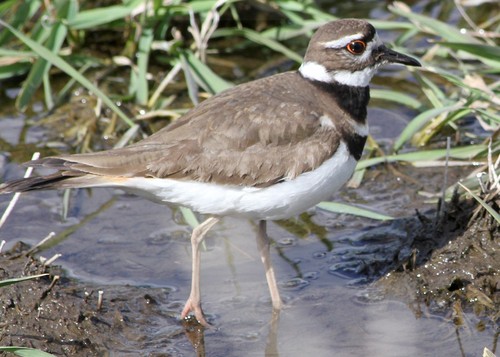
The Killdeer is a familiar, medium-sized plover with brown upperparts, white underparts, and two bold black bands crossing the white breast, a feature that sets it apart from most other plovers, which show only a single band. In flight it reveals a bright orange-red rump, and a red eye-ring adds to its distinctive look.
Highly adaptable, the Killdeer is one of the most widespread and familiar shorebirds in North America, often found far from water in open, disturbed habitats.
How to identify it
Key field marks
- Two black bands across a white breast
- Brown back, white face with black facial markings
- Bright orange rump and uppertail, visible in flight
- Loud, piercing calls
Similar species
The Semipalmated Plover and other small plovers show only a single breast band and lack the orange rump; the Killdeer is also noticeably larger and longer-tailed than most other Charadrius plovers.
Habitat & range
Habitat
Highly adaptable, found on open ground far from water including plowed fields, lawns, golf courses, gravel rooftops, parking lots, and athletic fields, as well as traditional shorelines and mudflats.
Range and migration
Found across nearly all of North America. Northern populations migrate south to the southern United States, Mexico, and Central America for winter, while southern populations are resident.
Behavior & voice
Behavior
Best known for its dramatic 'broken-wing' distraction display, feigning injury to lure predators away from its nest or chicks.
Voice
A loud, insistent 'kill-deer, kill-deer' call, the source of its name, along with various other sharp notes.
Feeding
Insects, earthworms, and other small invertebrates picked from open ground.
Nesting and breeding
Lays camouflaged eggs in a simple scrape on open bare ground, sometimes in surprisingly urban locations; precocial chicks leave the nest and feed themselves within hours of hatching.
Frequently asked questions
Why is it called a Killdeer?
The name imitates its loud, distinctive 'kill-deer' call, repeated persistently, especially when alarmed.
What is the Killdeer's broken-wing display?
A distraction technique where the adult feigns a broken wing, dragging it while calling to lure predators away from its nest or chicks, then flies off once the threat is drawn far enough away.
Where do Killdeer nest?
In a simple scrape on open bare ground, often in surprising places like gravel driveways, rooftops, or parking lots, far from water.
Do Killdeer need to live near water?
No, unlike most shorebirds, Killdeer are commonly found on dry open ground such as fields, lawns, and gravel lots.
How can you identify a Killdeer?
Look for a brown-backed, white-bellied plover with two black breast bands and a bright orange rump visible in flight.
Killdeer guides
In-depth guides for identifying, finding, and understanding Killdeer.
Other birds you may enjoy
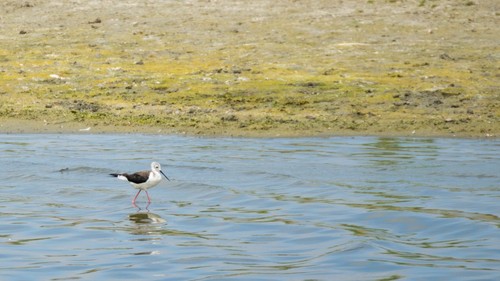
Black-winged Stilt
33-36 cm (13-14 in) long, wingspan 67-83 cm
Willet
33-41 cm (13-16 in) long, 65-70 cm wingspan
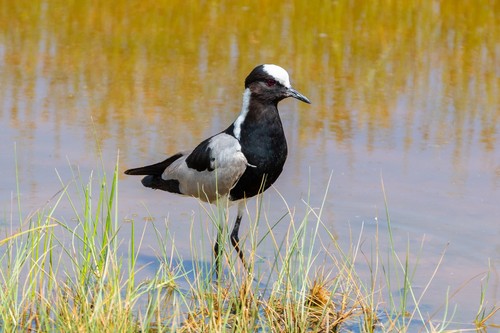
Blacksmith Lapwing
Body length about 30 cm; wingspan 55-65 cm
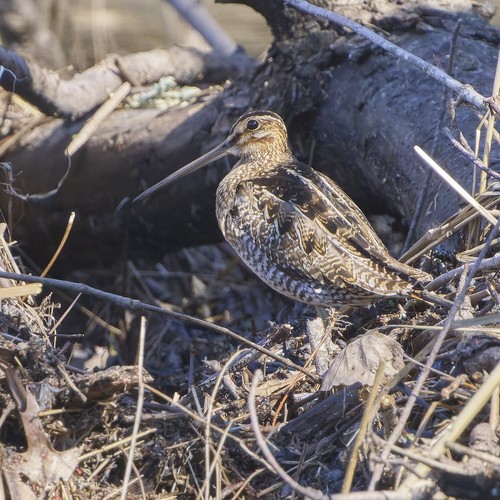
Wilson's Snipe
25-30 cm (10-12 in) long, 39-45 cm wingspan
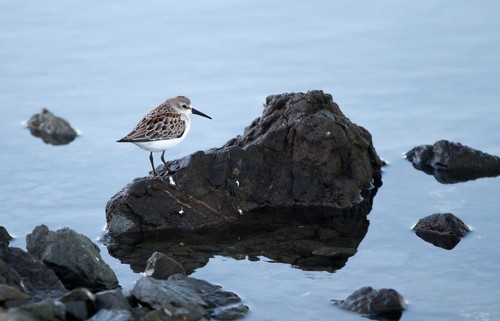
Western Sandpiper
14-17 cm (5.5-6.7 in) long, 28-37 cm wingspan
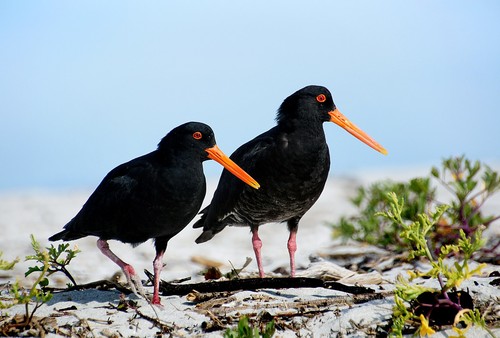
Variable Oystercatcher
46-49 cm (18-19 in) long
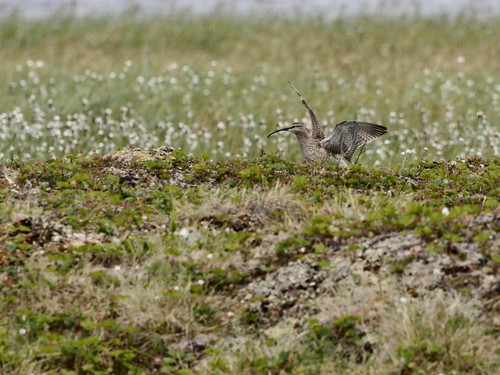
Whimbrel
40-46 cm (16-18 in) long, 76-89 cm wingspan
Wilson's Phalarope
22-24 cm (8.5-9.5 in) long, 37-43 cm wingspan
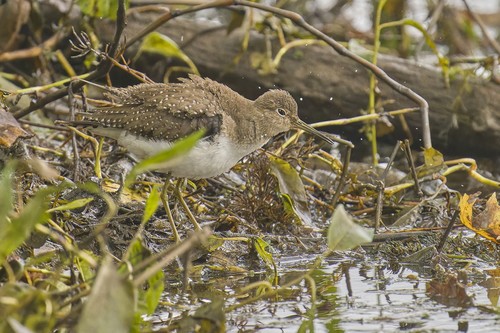
Solitary Sandpiper
19-23 cm (7.5-9 in) long, 50-56 cm wingspan
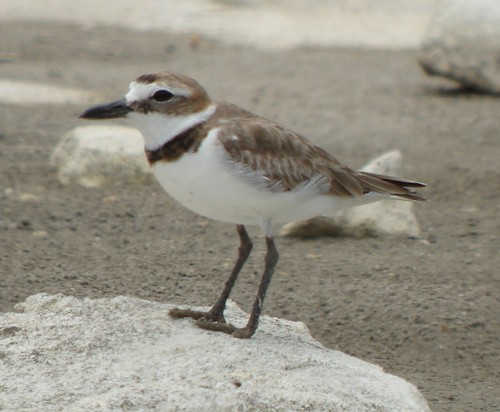
Wilson's Plover
17-19 cm (6.7-7.5 in) long, 45-50 cm wingspan
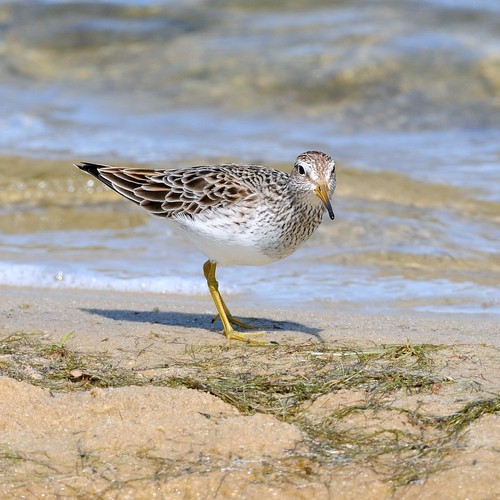
Pectoral Sandpiper
19-23 cm (7.5-9 in) long, 43-49 cm wingspan
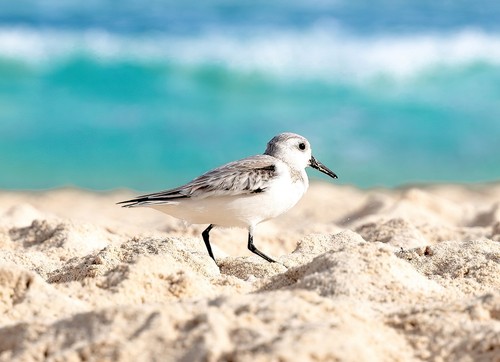
Sanderling
18-20 cm (7-8 in) long, 40-43 cm wingspan