
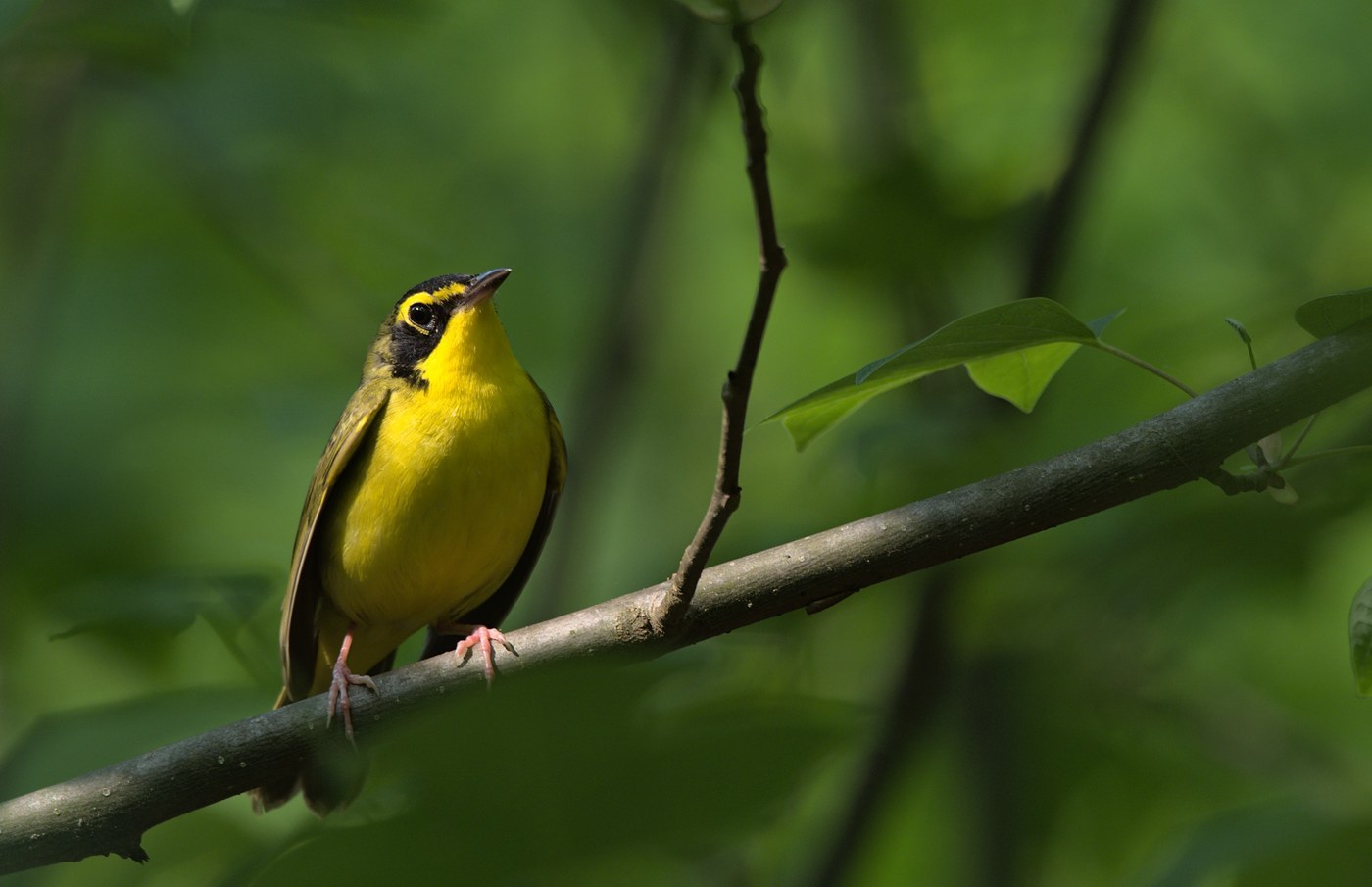
Kentucky Warbler
Geothlypis formosa
A ground-loving, skulking warbler of southeastern forests, olive above and bright yellow below, with bold black "sideburns" framing yellow spectacles.
- Size
- 13-14 cm (5-5.5 in) long, 21-22 cm wingspan
- Habitat
- moist deciduous forest with dense understory and thick leaf litter
- Type
- songbird
Spotted a bird like this?
Identify any bird from a photo, free.
Overview
The Kentucky Warbler is a plump, ground-dwelling warbler that spends much of its time hidden in dense understory and leaf litter, often more easily heard than seen. Its plumage is a rich combination of olive-green upperparts and bright yellow underparts, but its most distinctive feature is a bold black stripe running from the base of the bill down through the eye and along the side of the neck, forming a pair of dark "sideburns" that frame a yellow "spectacled" face.
Unlike many warblers, it lacks wingbars entirely and has a somewhat thrush-like, deliberate way of moving on the forest floor, hopping and walking through leaf litter as it forages.
How to identify it
Key field marks
- Olive-green upperparts, bright yellow underparts
- Bold black stripe from the bill through the eye and down the side of the neck ("sideburns")
- Yellow spectacles formed by a yellow eyering connecting to the yellow forehead
- No wingbars
- Pinkish legs, ground-foraging habits
Similar species
Common Yellowthroat males have a black mask but it is a full facial mask, not narrow sideburns, and yellowthroats lack the yellow spectacled effect. Mourning Warbler and Connecticut Warbler both lack the black facial sideburn pattern and yellow spectacles of Kentucky Warbler.
Habitat & range
Kentucky Warblers breed in moist, mature deciduous forests across the southeastern and lower midwestern United States, favoring stands with a well-developed shrub layer and thick leaf litter, often in ravines, bottomlands, or along wooded stream edges.
They winter from southern Mexico through Central America into northern South America, generally in the understory of humid lowland forest, and are also long-distance nocturnal migrants.
Behavior & voice
Behavior and voice
Kentucky Warblers are notoriously skulking, spending most of their time walking and hopping through dense understory and leaf litter on the forest floor, gleaning insects and spiders, and rarely venturing into the open canopy.
The song is a rolling, rhythmic "churry-churry-churry-churry," lower-pitched and more musical than the similar-sounding song of Carolina Wren, with which it is sometimes confused.
Nesting
The nest is built on or very near the ground, hidden among leaf litter, ferns, or the base of a shrub, and is a bulky cup of leaves and grass. Clutches typically contain 3-5 eggs.
Frequently asked questions
Why is the Kentucky Warbler hard to see?
It is a skulking species that spends most of its time low in dense understory and leaf litter on the forest floor, making it much easier to hear than to see.
What does a Kentucky Warbler's song sound like?
A rolling, repeated "churry-churry-churry-churry," which can be confused with the louder song of a Carolina Wren but is generally lower and more even in pitch.
What is the black facial marking on a Kentucky Warbler?
Bold black stripes run from the bill through the eye and down the side of the neck, forming "sideburns" that frame a yellow spectacled face, distinguishing it from the full facial mask of a Common Yellowthroat.
Where does the Kentucky Warbler breed?
In moist, mature deciduous forest with dense understory across the southeastern and lower midwestern United States.
What does a Kentucky Warbler eat?
Mostly insects and spiders, gleaned while walking and hopping through leaf litter and low vegetation on the forest floor.
Kentucky Warbler guides
In-depth guides for identifying, finding, and understanding Kentucky Warbler.
Other birds you may enjoy
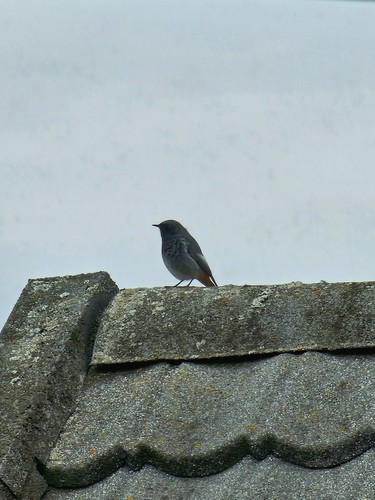
Black Redstart
13-14.5 cm (5.1-5.7 in) long, 23-26 cm wingspan
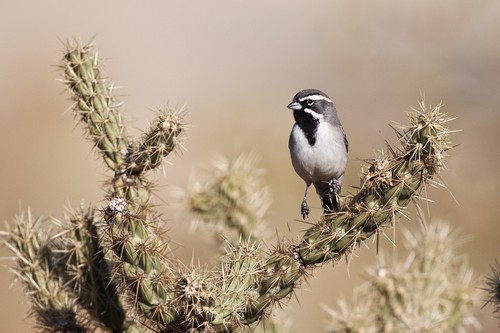
Black-throated Sparrow
12-14 cm (4.7-5.5 in) long, about 19-20 cm (7.5-8 in) wingspan
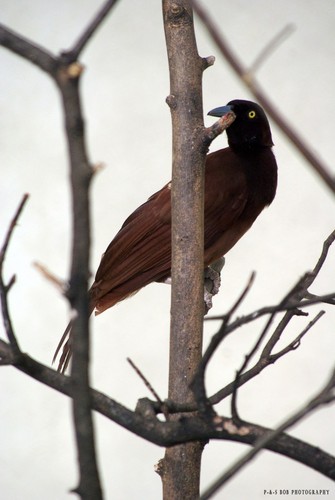
Greater Bird-of-paradise
Body about 43 cm; males with additional flank plumes up to 50 cm and long tail wires
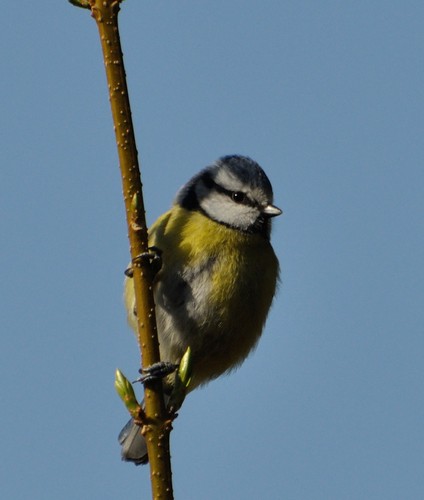
Blue Tit
11-12 cm (4.3-4.7 in) long, 17-20 cm wingspan
Red-billed Quelea
11.5–13 cm long, wingspan about 20–22 cm
White-plumed Antbird
13-14 cm (5-5.5 in) long
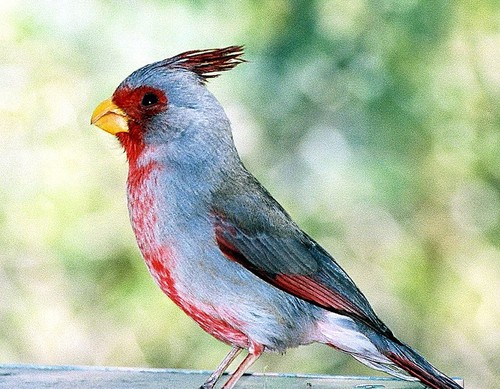
Pyrrhuloxia
19-22 cm (7.5-8.7 in) long, 30 cm wingspan
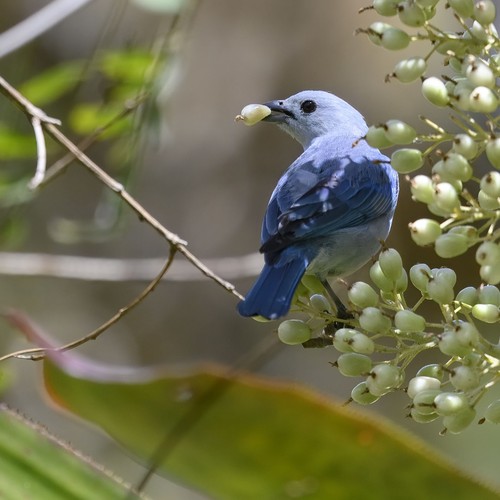
Blue-gray Tanager
16-18 cm (6-7 in) long
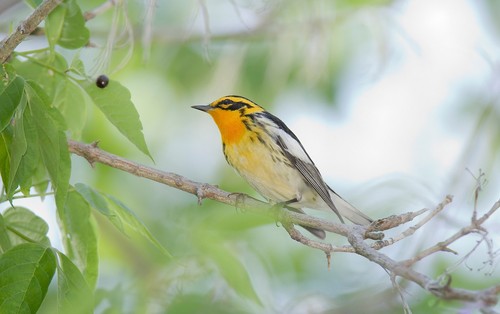
Blackburnian Warbler
11-13 cm (4.3-5.1 in) long, 20-22 cm wingspan
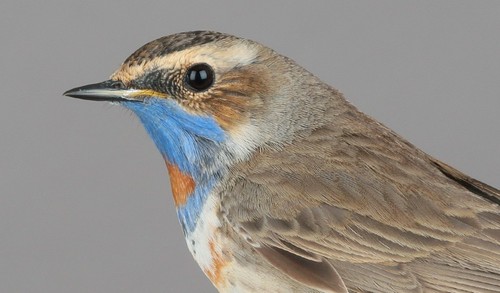
Bluethroat
13-14 cm (5.1-5.5 in) long, 20-22 cm wingspan
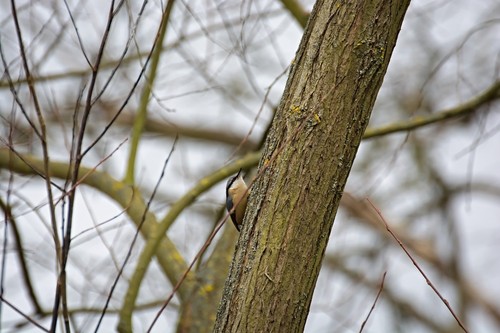
Eurasian Nuthatch
12-14.5 cm (4.7-5.7 in) long, 22.5-27 cm wingspan
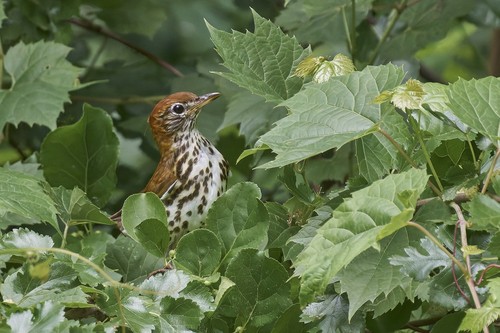
Wood Thrush
19-21 cm (7.5-8.3 in) long, about 33 cm (13 in) wingspan