
Jabiru
Jabiru mycteria
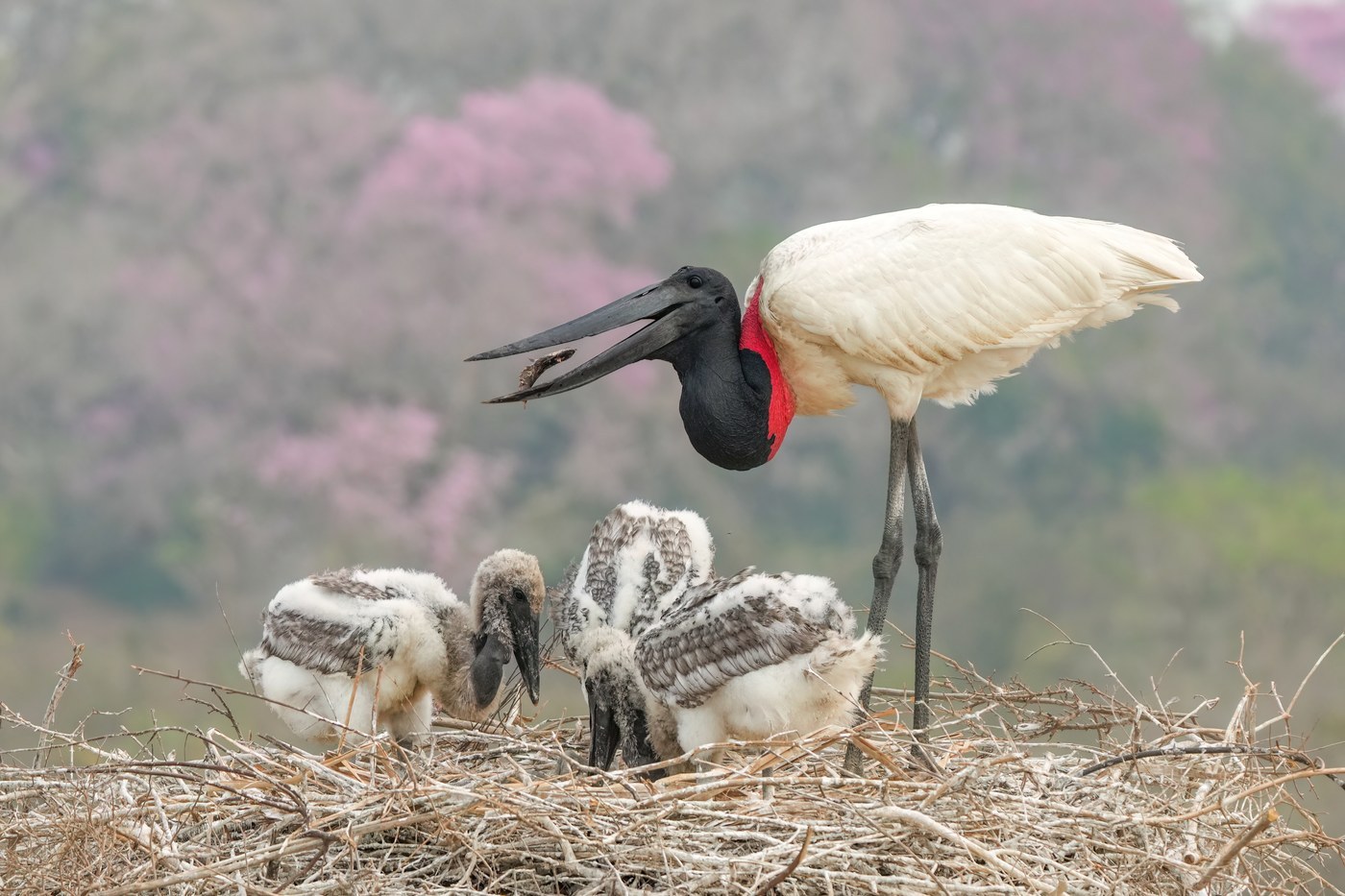
The largest flying bird of the Americas, a towering white stork with a bald black head and a striking red band at the base of the neck.
- Size
- 122-140 cm (48-55 in) long, 230-280 cm wingspan
- Habitat
- freshwater wetlands, savanna floodplains, and marshes
- Type
- wading-bird
Spotted a bird like this?
Identify any bird from a photo, free.
Overview
The Jabiru is the tallest and largest flying bird found in the Americas, standing well over a meter tall with a massive, slightly upturned black bill. Its plumage is entirely white, contrasting sharply with a bald, black-skinned head and upper neck.
At the base of the neck is a distinctive band of bare red or pink skin that can inflate and change color with the bird's mood, particularly during courtship displays. This dramatic combination of size, coloration, and bare skin makes the Jabiru unmistakable throughout its range.
How to identify it
Key field marks
- Enormous size with entirely white body plumage
- Bald black head and neck
- Bright red or pink inflatable band at the base of the neck
- Massive, thick, slightly upturned black bill
- Long black legs
Similar species
The Wood Stork is much smaller with a grey, scaly (not fully black) bald head and lacks the red neck band. The American White Pelican has a feathered head and a flat orange bill and pouch rather than a bald head and thick black bill. No other American stork approaches the Jabiru's size.
Habitat & range
Jabirus inhabit extensive freshwater wetlands, including seasonally flooded savannas, marshes, riverbanks, and lake margins, from southern Mexico through Central America to Argentina, with a stronghold in the wetlands of the Pantanal in Brazil.
The species is largely resident, though it may make local movements in response to seasonal flooding and drying of wetlands. It nests in the tallest available trees, often standing prominently above the surrounding canopy.
Behavior & voice
Jabirus forage by wading through shallow water, using their large bill to grab or grope for fish, amphibians, reptiles, and occasionally carrion or small mammals. They may forage alone, in pairs, or in loose aggregations at productive wetlands during the dry season when prey becomes concentrated.
Largely silent, they communicate mainly through loud bill-clattering displays, especially at the nest. Jabirus build enormous stick nests, often more than a meter across, high in isolated trees, and pairs frequently reuse and enlarge the same nest over multiple years. Both parents share incubation of typically 2-4 eggs and the feeding of chicks, which take several months to fledge.
Frequently asked questions
How big is a Jabiru?
It is the largest flying bird in the Americas, standing up to about 1.4 meters tall with a wingspan that can exceed 2.5 meters.
What is the red patch on a Jabiru's neck?
It is a band of bare, inflatable skin at the base of the neck that can change color and size, used in courtship and social displays.
Where do Jabirus live?
They range from southern Mexico through Central America to Argentina, with especially large populations in the wetlands of Brazil's Pantanal.
What does a Jabiru eat?
It eats mainly fish and amphibians, along with reptiles and occasionally carrion, caught while wading in shallow wetland water.
Is the Jabiru the same as the Black-necked Stork sometimes called 'Jabiru' in Australia?
No, the true Jabiru (Jabiru mycteria) is found only in the Americas; the Australian bird sometimes locally nicknamed 'Jabiru' is actually the Black-necked Stork, a different species.
Jabiru guides
In-depth guides for identifying, finding, and understanding Jabiru.
Other birds you may enjoy
Demoiselle Crane
85-100 cm (33-39 in) long, 155-180 cm wingspan
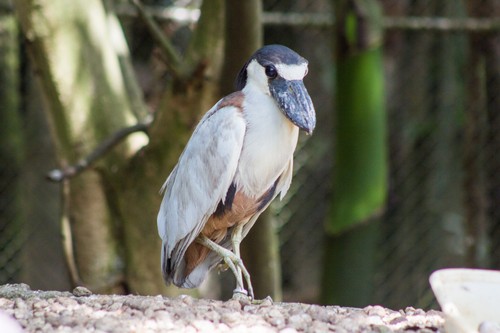
Boat-billed Heron
41-56 cm (16-22 in) long
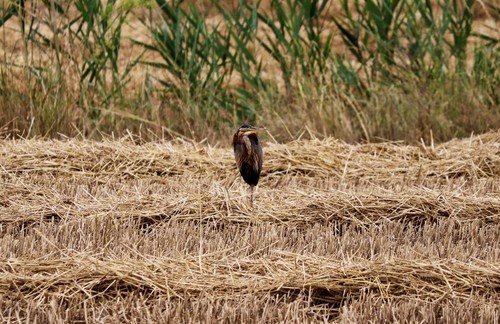
Purple Heron
78-90 cm (31-35 in) long, 120-152 cm wingspan
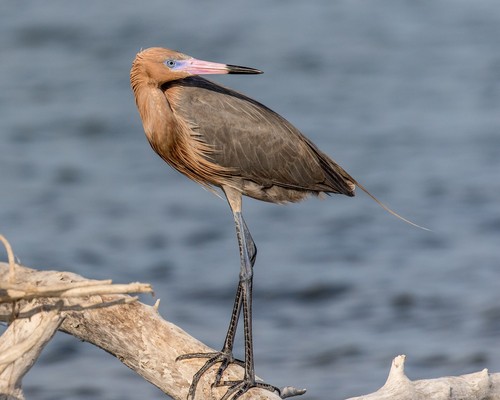
Reddish Egret
68-82 cm (27-32 in) long, 116-125 cm wingspan
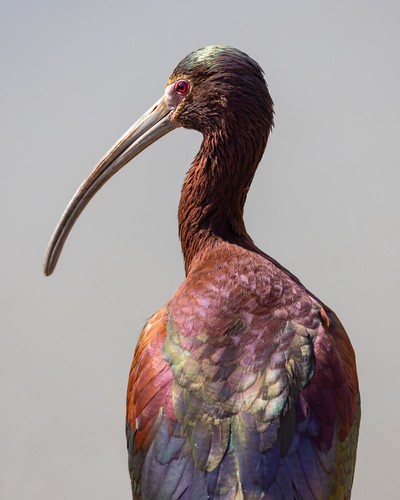
White-faced Ibis
46-56 cm (18-22 in) long, 88-93 cm wingspan
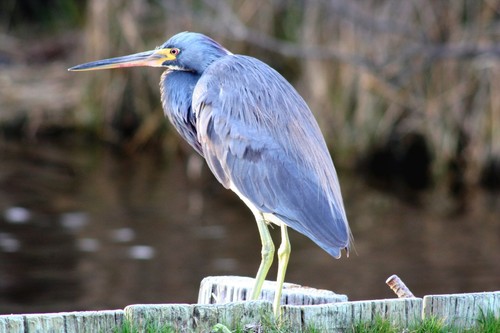
Tricolored Heron
61-76 cm (24-30 in) long, about 96 cm wingspan
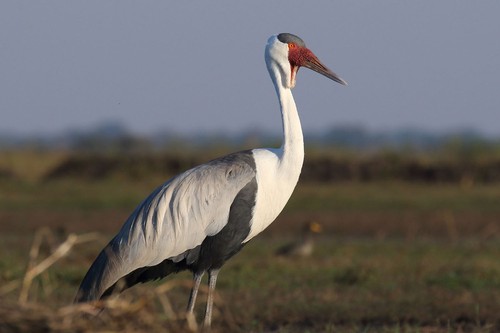
Wattled Crane
120-175 cm (47-69 in) tall, one of the tallest cranes, wingspan up to about 230 cm (7.5 ft)
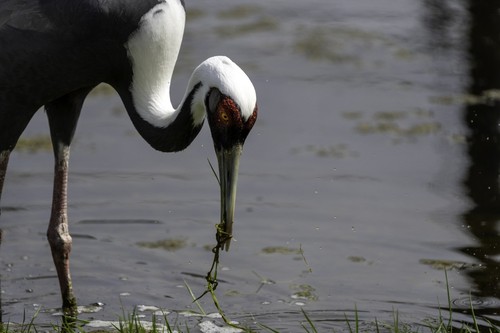
White-naped Crane
112-125 cm (44-49 in) long, 195-210 cm wingspan
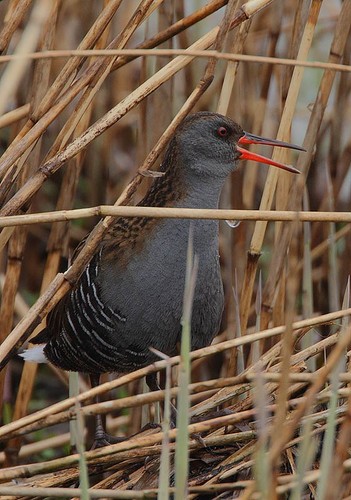
Water Rail
23-28 cm (9-11 in) long, wingspan 38-45 cm
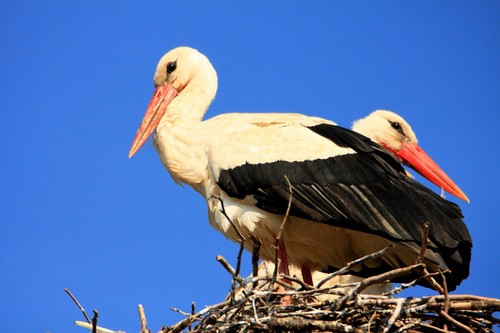
White Stork
100-125 cm (39-49 in) long, 155-215 cm wingspan
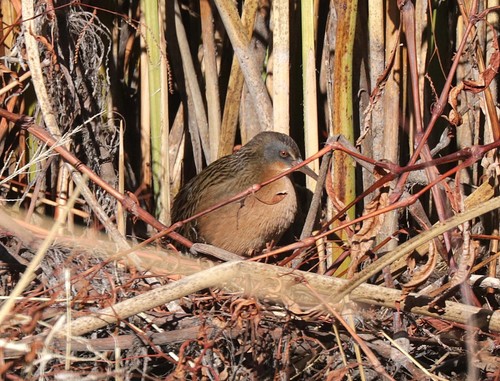
Virginia Rail
20-27 cm (8-11 in) long, wingspan 32-38 cm
Wattled Jacana
17-23 cm (7-9 in) long