
Jabiru Identification Guide
The largest flying bird in the Americas, an enormous white stork with a bare black head and neck and a distinctive red band of skin at the throat's base.
Read the full Jabiru encyclopedia entry →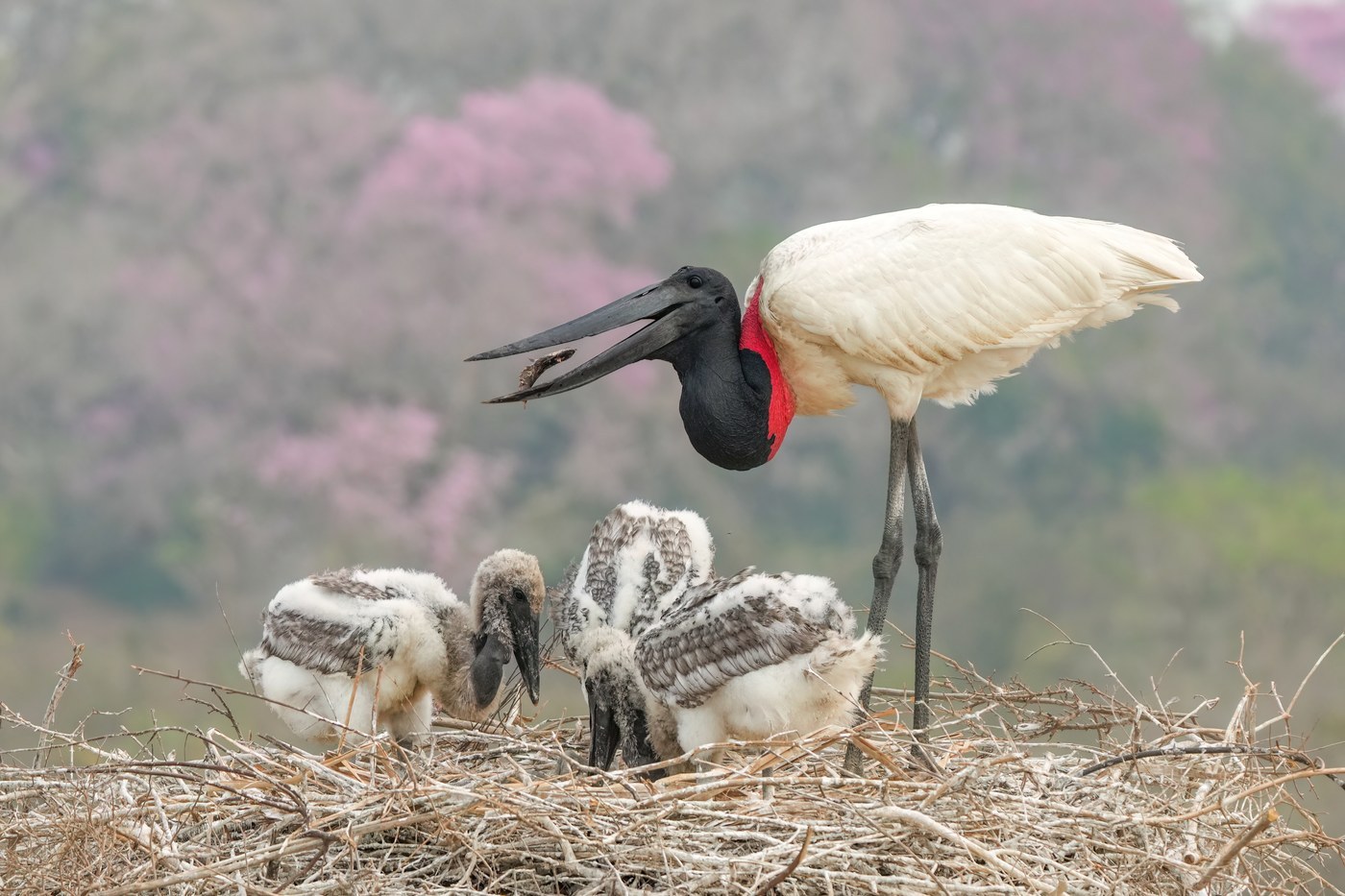
Key Field Marks
- Size & shape: Massive — standing up to 4.5–5 feet (1.4–1.5 m) tall with a wingspan reaching 8.5 feet (2.6 m) or more, making it the tallest flying bird and one of the largest-winged birds in the Western Hemisphere; heavy-bodied with long legs and a thick neck.
- Plumage: Entirely white body plumage in adults, contrasting dramatically with the bare, unfeathered black head and upper neck.
- Bare skin: The base of the neck shows a distinctive band of bare red-to-orange skin (the "jabiru collar"), which can inflate/expand and often appears as a loose pouch-like ruff — a key diagnostic feature not shared by similar large white waterbirds.
- Bill: Enormous, thick, black, and slightly upturned — one of the largest bills of any bird, used to probe mud and shallow water for prey.
- Legs: Long, blackish legs trailing well beyond the tail in flight, typical of storks.
- Flight: Soars on flat, broad wings with neck and legs fully extended, often in flocks riding thermals at great height.
Separating It From Similar Species
- Wood Stork: Smaller, with a grayish (not black) bare head and a down-curved rather than upturned bill; lacks the red throat patch of the Jabiru.
- American White Pelican / Great White Egret (general white-bird confusion at distance): Both lack the massive bare black head, huge upturned bill, and red throat pouch that instantly distinguish Jabiru; pelicans also have a pouched bill used for scooping fish rather than probing.
- Maguari Stork: Also large and white-bodied but has a feathered (not bare) head and neck and a straight, not upturned, bill — the Jabiru's naked black head/neck and red collar are unmistakable by comparison.
Where & When to See It
- Habitat: Large wetlands, marshes, seasonally flooded savannas, riverbanks, and lagoons; the Pantanal of Brazil, Bolivia, and Paraguay holds some of the world's densest breeding populations.
- Range: Found from southern Mexico through Central America and into much of South America east of the Andes, with strongholds in the Pantanal and Llanos wetlands; largely resident, though some populations disperse seasonally in response to water levels.
- Season: Visible year-round in core range; nesting typically coincides with the dry season when wetland prey becomes concentrated and more accessible.
- Behavior: Forages by wading through shallow water, using its huge bill to probe for fish, amphibians, reptiles, and invertebrates; builds enormous stick nests high in trees, often reused and added to over many years, sometimes visible from great distances across open wetland.
Voice
- Largely silent away from the nest; produces loud bill-clattering displays at the nest, a common stork communication method in lieu of vocal calls.
Frequently asked questions
What is the easiest way to identify a Jabiru?
Look for an enormous all-white stork with a bare black head and neck and a band of red-orange skin at the base of the throat — the combination of huge size, naked black head, and red collar is unique among Western Hemisphere birds.
How is Jabiru different from Wood Stork?
Jabiru is larger, with an all-black bare head and neck, an upturned bill, and a red throat patch, while Wood Stork is smaller with a grayish bare head and a down-curved bill and lacks any red collar.
How big is a Jabiru compared to other flying birds?
It is considered the tallest flying bird in the Americas, standing up to about 5 feet tall with a wingspan that can exceed 8.5 feet.
Where is the best place to see Jabirus?
The Pantanal wetlands of Brazil, Bolivia, and Paraguay hold some of the highest densities, though the species ranges from southern Mexico through much of South America wherever large wetlands occur.
What does the red patch on a Jabiru's neck do?
The bare red-orange skin band at the base of the neck can inflate and is thought to play a role in display and possibly thermoregulation, similar to bare-skin structures in other large storks.