
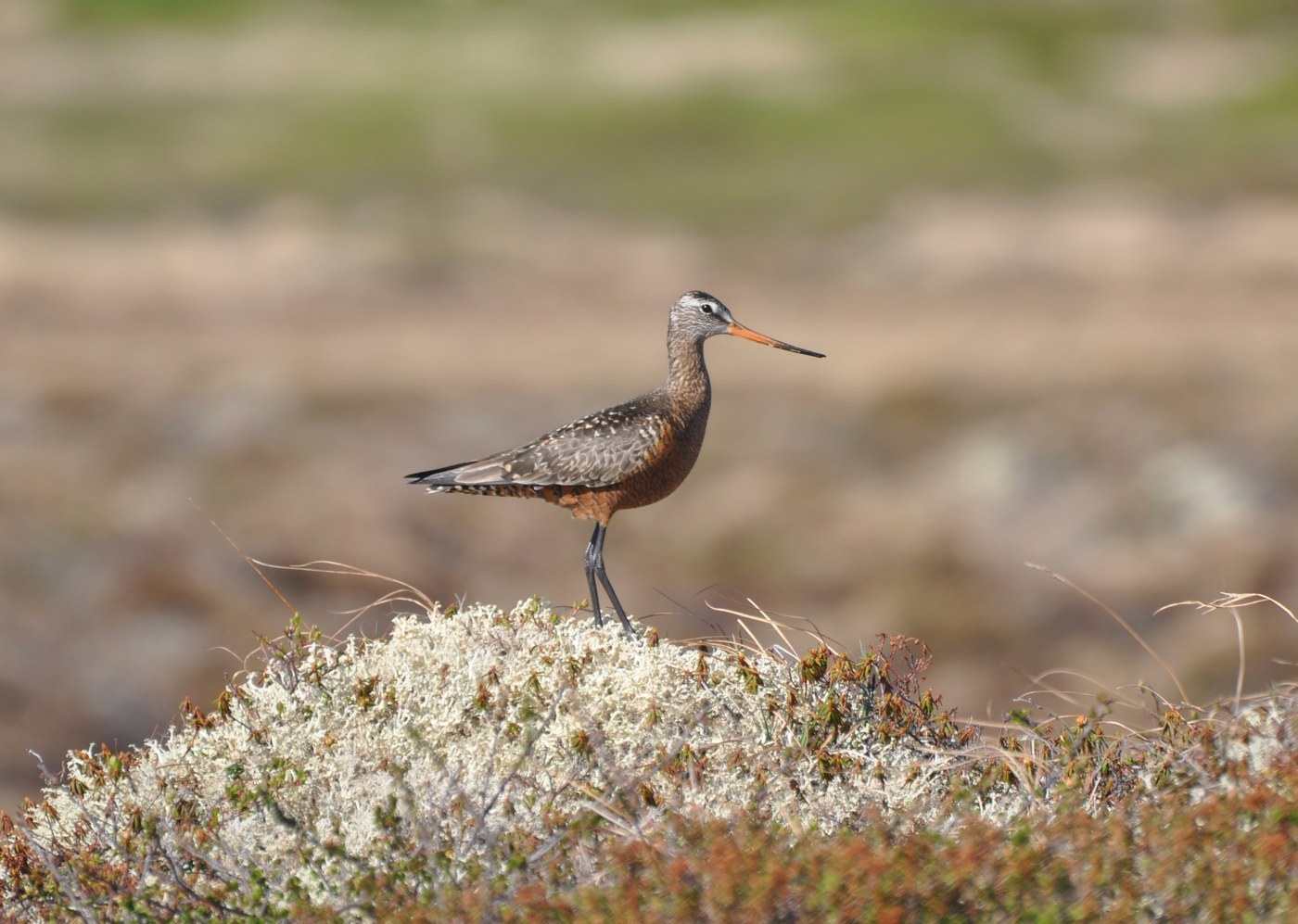
Hudsonian Godwit
Limosa haemastica
A dark, elegant godwit famed for one of the longest nonstop migratory flights of any bird, connecting subarctic breeding grounds with wintering areas in southern South America.
- Size
- 37-42 cm (14.5-16.5 in) long, 70-75 cm wingspan
- Habitat
- subarctic wetlands and tundra (breeding); coastal and inland wetlands (non-breeding)
- Type
- shorebird
Spotted a bird like this?
Identify any bird from a photo, free.
Overview
The Hudsonian Godwit is a medium-large shorebird with a long, slightly upturned bicolored bill (pink at the base, dark at the tip). Breeding adults are richly colored, with chestnut-and-black barred underparts and dark, mottled upperparts; in flight they show a distinctive dark tail with a contrasting white uppertail band, a narrow white wing stripe, and dark, almost black underwing coverts.
Non-breeding birds are much plainer gray-brown above and pale below, but retain the same distinctive dark underwing and tail pattern.
The species is celebrated among ornithologists for its extraordinary migration: some individuals fly nonstop for thousands of kilometers over open ocean between staging areas and their wintering grounds in southern South America.
How to identify it
Key field marks
- Long, slightly upturned bicolored bill
- Breeding: chestnut, black-barred underparts
- Dark tail with narrow white band at the base, visible in flight
- Black (not cinnamon) underwing coverts—key difference from Marbled Godwit
- Narrow white wing stripe in flight
Similar species
- Marbled Godwit is larger, warmer cinnamon-buff overall, and shows cinnamon (not black) underwings.
- Black-tailed Godwit has a broader white wing stripe and different tail pattern.
- Bar-tailed Godwit shows a barred tail rather than a solid dark tail with white base.
Habitat & range
Hudsonian Godwits breed in scattered, disjunct locations across subarctic wetlands and tundra of Alaska and Canada, particularly around Hudson Bay. They undertake extremely long migrations, staging in large numbers at key coastal and interior wetlands before making prolonged nonstop flights to wintering grounds in southern South America, especially the coasts and wetlands of Argentina and Chile.
Behavior & voice
Voice
A sharp, repeated ta-it or god-wit-like call, along with various chattering notes given on the breeding grounds and during migration.
Feeding
Probes mud and shallow water with its long bill for insects, mollusks, and other invertebrates; on breeding grounds it also takes insect larvae from wet tundra and marsh habitats.
Nesting
Nests on the ground in wet subarctic meadows or tundra, well concealed among low vegetation. Both parents incubate and defend the nest, and the species is notably wary and elusive on its breeding grounds, contributing to its historically poorly known biology.
Frequently asked questions
What is remarkable about the Hudsonian Godwit's migration?
It undertakes one of the longest nonstop migratory flights known among birds, flying thousands of kilometers over open ocean between North American staging areas and wintering grounds in southern South America.
How do you tell it from the Marbled Godwit?
The Hudsonian Godwit is smaller and darker with black underwing coverts, while the Marbled Godwit is larger, warmer cinnamon-buff, and shows cinnamon underwings.
Where does the Hudsonian Godwit breed?
In scattered subarctic wetland and tundra sites in Alaska and Canada, including areas around Hudson Bay.
Where does it spend the winter?
Mainly in coastal wetlands of southern South America, particularly Argentina and Chile.
Hudsonian Godwit guides
In-depth guides for identifying, finding, and understanding Hudsonian Godwit.
Other birds you may enjoy
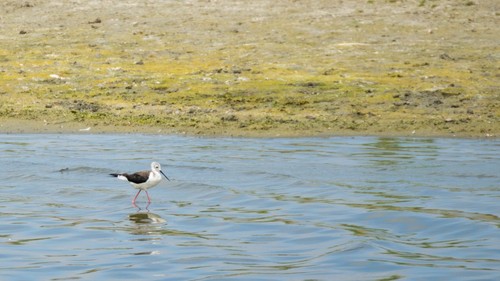
Black-winged Stilt
33-36 cm (13-14 in) long, wingspan 67-83 cm
Willet
33-41 cm (13-16 in) long, 65-70 cm wingspan
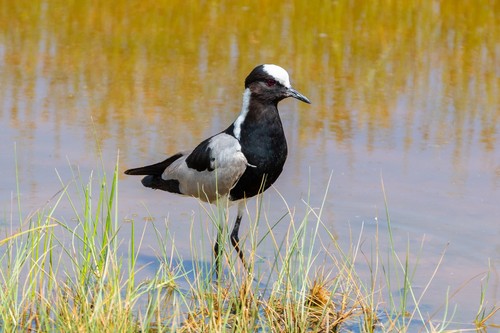
Blacksmith Lapwing
Body length about 30 cm; wingspan 55-65 cm
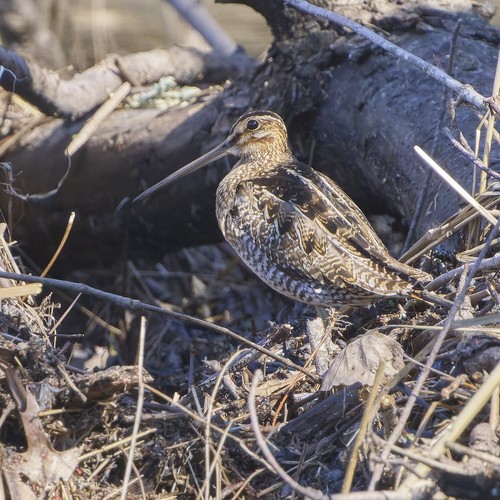
Wilson's Snipe
25-30 cm (10-12 in) long, 39-45 cm wingspan
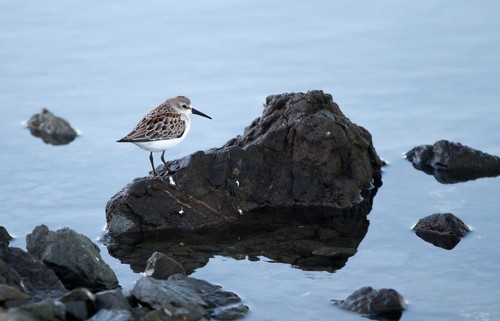
Western Sandpiper
14-17 cm (5.5-6.7 in) long, 28-37 cm wingspan
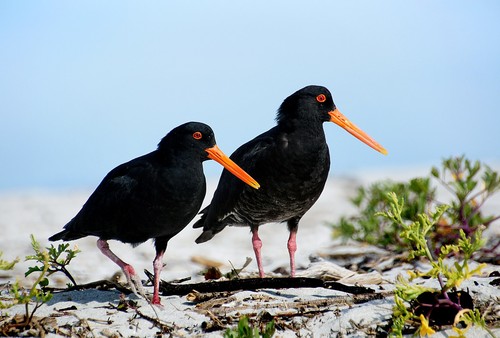
Variable Oystercatcher
46-49 cm (18-19 in) long
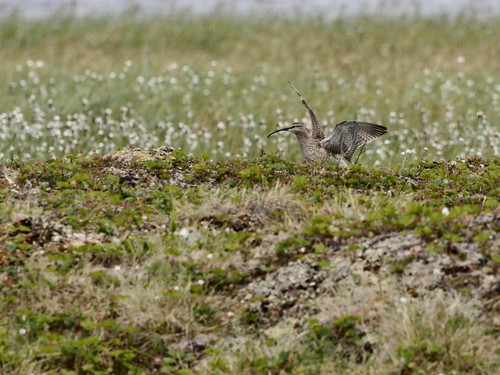
Whimbrel
40-46 cm (16-18 in) long, 76-89 cm wingspan
Wilson's Phalarope
22-24 cm (8.5-9.5 in) long, 37-43 cm wingspan
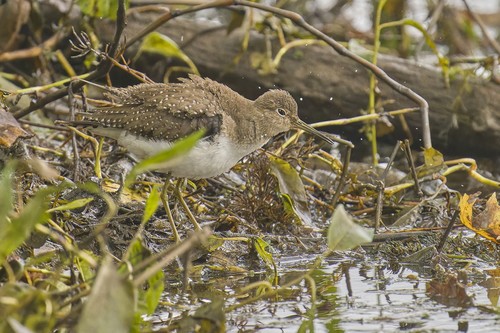
Solitary Sandpiper
19-23 cm (7.5-9 in) long, 50-56 cm wingspan
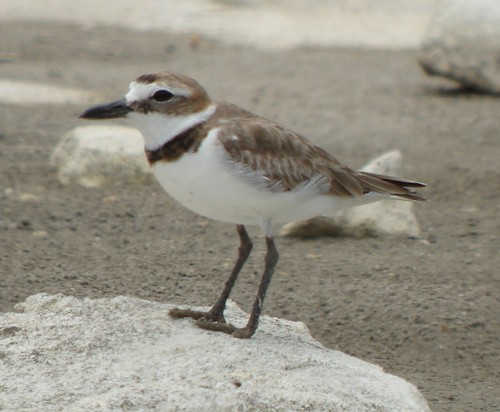
Wilson's Plover
17-19 cm (6.7-7.5 in) long, 45-50 cm wingspan
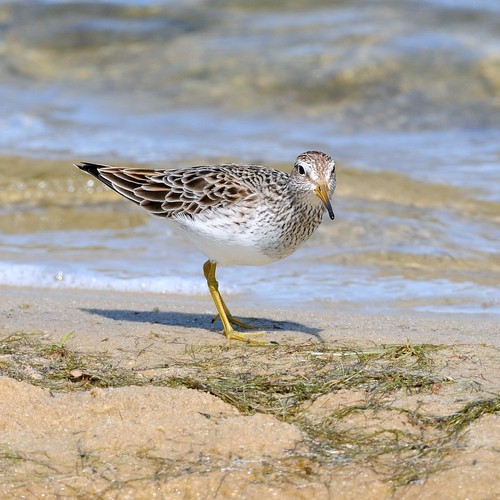
Pectoral Sandpiper
19-23 cm (7.5-9 in) long, 43-49 cm wingspan
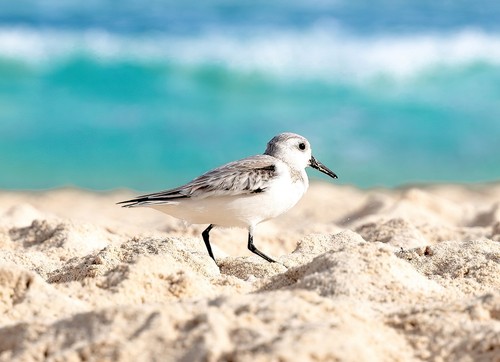
Sanderling
18-20 cm (7-8 in) long, 40-43 cm wingspan