
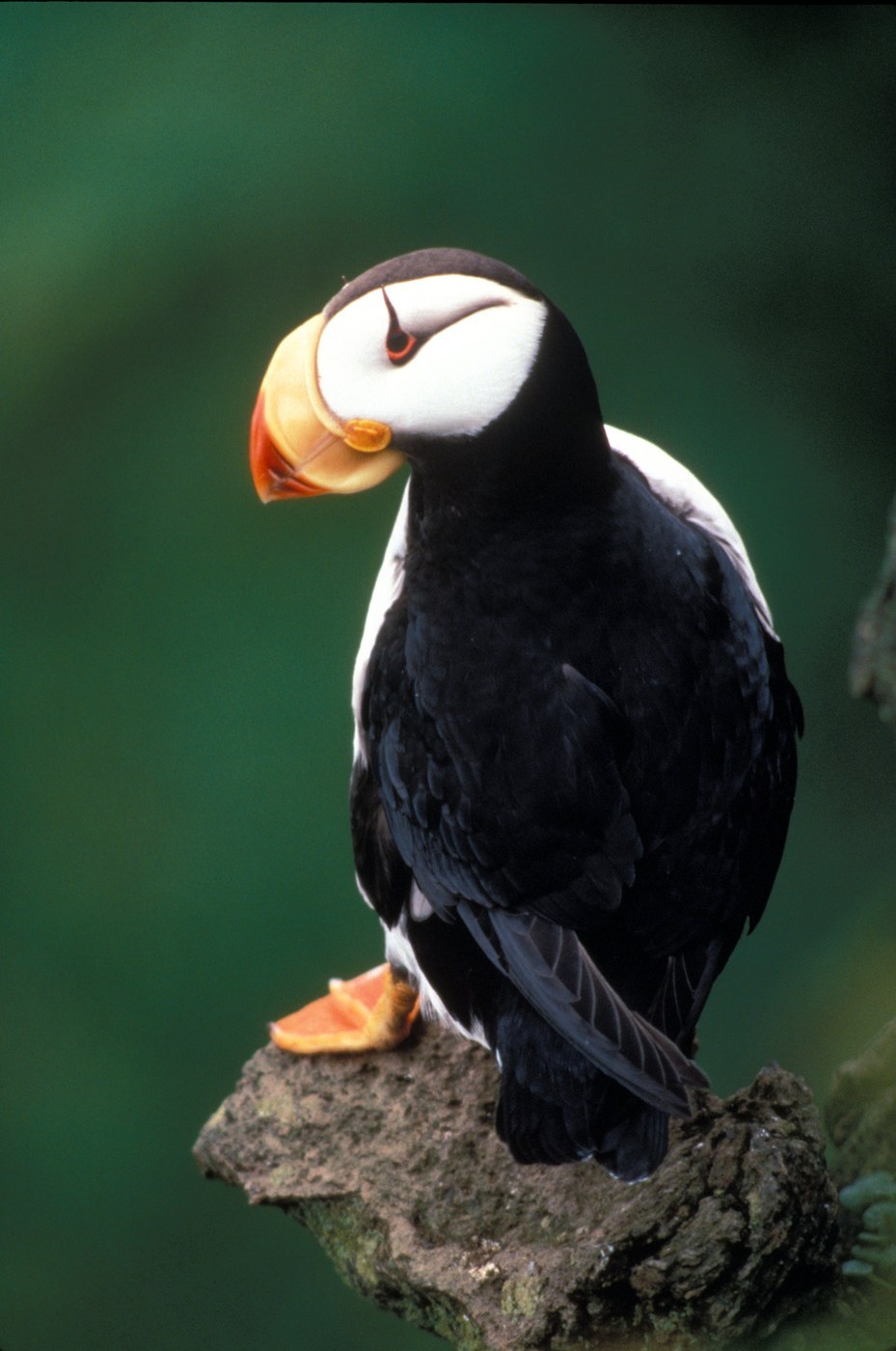
Horned Puffin
Fratercula corniculata
A black-and-white North Pacific puffin with a bright orange-and-yellow bill and a small dark 'horn' of skin above each eye.
- Size
- 35-38 cm (14-15 in) long, about 55-60 cm wingspan
- Habitat
- North Pacific and Bering Sea coastal cliffs and islands
- Type
- seabird
Spotted a bird like this?
Identify any bird from a photo, free.
Overview
The Horned Puffin is a striking North Pacific seabird closely resembling the Atlantic Puffin in its black-and-white pattern, but distinguished by a fleshy, dark "horn" of skin projecting above each eye during the breeding season, from which it gets its name. The bill is broad, flattened, and vividly colored in shades of orange and yellow, and the clean white face and underparts contrast sharply with glossy black upperparts.
A classic seabird of Alaska's rugged coastline and the Bering Sea, the Horned Puffin nests in rocky crevices rather than the burrows favored by some other puffins, often sharing cliffs with murres and kittiwakes.
How to identify it
Key field marks
- Black upperparts and white underparts, similar to Atlantic Puffin
- Small, fleshy dark "horn" of skin above each eye in breeding adults
- Large, laterally flattened bill in orange and yellow tones
- Yellow-orange legs and feet
Similar species
- Tufted Puffin shares its range but is entirely dark-bodied with long golden tufts rather than a white belly.
- Atlantic Puffin is very similar in pattern but does not overlap in range and lacks the distinctive eye "horn."
- Non-breeding birds lose the ornamental horn and have duller, smaller bills, appearing plainer overall.
Habitat & range
Horned Puffins breed on rocky cliffs and boulder-strewn slopes around the North Pacific and Bering Sea, including coastal Alaska, the Aleutian Islands, and the Russian Far East, nesting in natural rock crevices rather than excavated burrows. They favor rugged, cliff-lined coastlines and offshore islands close to productive cold-water feeding grounds.
Outside the breeding season, Horned Puffins disperse widely over the open North Pacific, wintering far from land, and return to traditional colonies each spring to breed.
Behavior & voice
Behavior
Horned Puffins are skilled underwater swimmers, using their wings for propulsion as they chase small fish, often diving in cold, nutrient-rich coastal waters near their breeding cliffs.
Voice
A low, growling call is given at nest crevices; the species is otherwise mostly silent away from the colony.
Feeding
Small schooling fish such as capelin and sand lance, along with various invertebrates, are captured underwater and carried back to chicks crosswise in the bill.
Nesting and breeding
Pairs nest in rock crevices or under boulders on cliffs, laying a single egg; both parents share incubation and feeding duties, and the chick eventually fledges and makes its own way to sea.
Frequently asked questions
What is the 'horn' on a Horned Puffin?
It is a small, fleshy, dark projection of skin above each eye that develops during the breeding season and gives the species its name.
Where does the Horned Puffin nest?
In rock crevices and among boulders on cliffs around the North Pacific and Bering Sea, particularly in Alaska and the Russian Far East.
How do Horned and Tufted Puffins differ?
Horned Puffins have white underparts and a distinctive eye 'horn,' while Tufted Puffins are almost entirely black-bodied with long golden head tufts.
What does the Horned Puffin eat?
Small schooling fish like capelin and sand lance, along with marine invertebrates, caught by diving underwater.
Does the Horned Puffin dig a burrow like the Atlantic Puffin?
No, it typically nests in natural rock crevices and under boulders rather than excavating burrows in soil.
Horned Puffin guides
In-depth guides for identifying, finding, and understanding Horned Puffin.
Other birds you may enjoy
Peruvian Pelican
137-152 cm (54-60 in) long, up to 228 cm wingspan
Bonaparte's Gull
28-33 cm (11-13 in) long, 76-84 cm wingspan
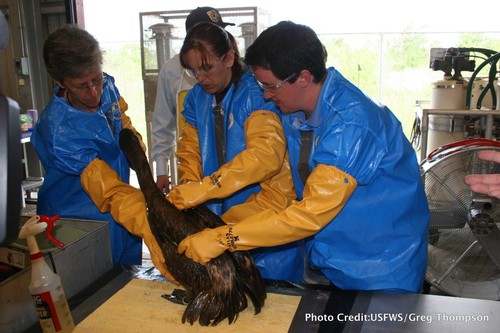
Brown Pelican
106-137 cm (42-54 in) long, 200-230 cm wingspan
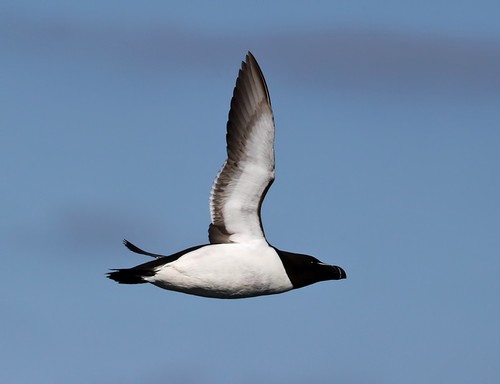
Razorbill
37-39 cm (15-15.5 in) long, 63-68 cm wingspan
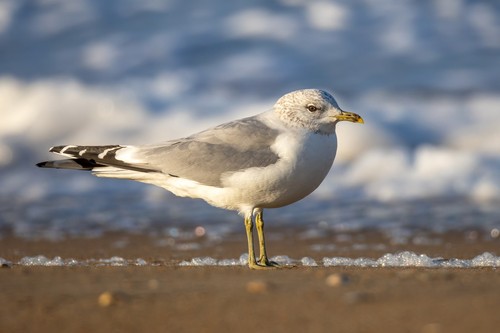
Common Gull
40-46 cm (16-18 in) long, 110-130 cm wingspan
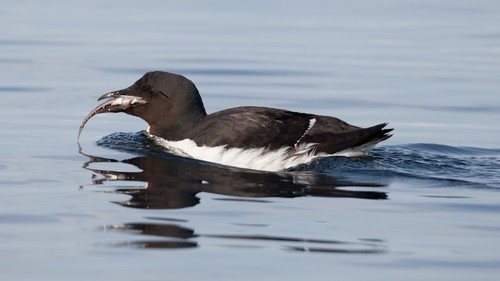
Thick-billed Murre
40-48 cm (16-19 in) long, 65-75 cm wingspan
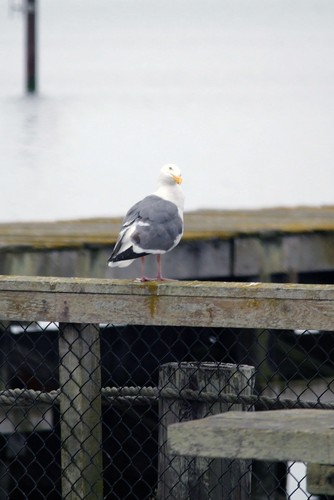
Western Gull
55-68 cm (22-27 in) long, 130-144 cm wingspan
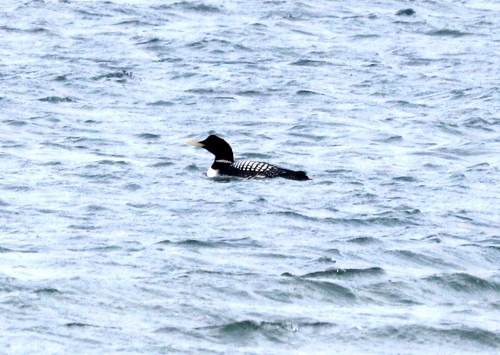
Yellow-billed Loon
76-97 cm (30-38 in) long, 135-152 cm wingspan
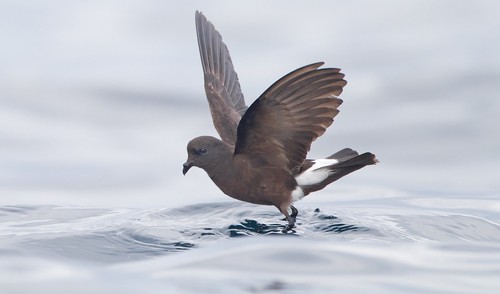
Wilson's Storm-Petrel
15-19 cm (6-7.5 in) long, wingspan 38-42 cm (15-16.5 in)
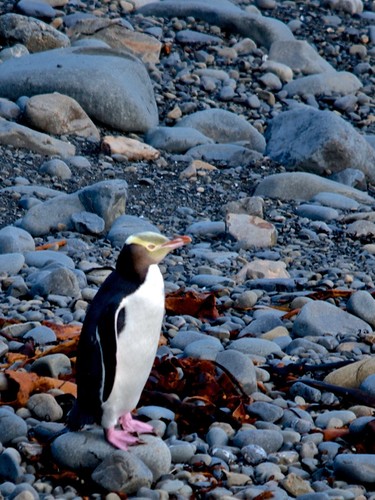
Yellow-eyed Penguin
62-79 cm (24-31 in) tall, 3-8.5 kg (6.6-18.7 lb)
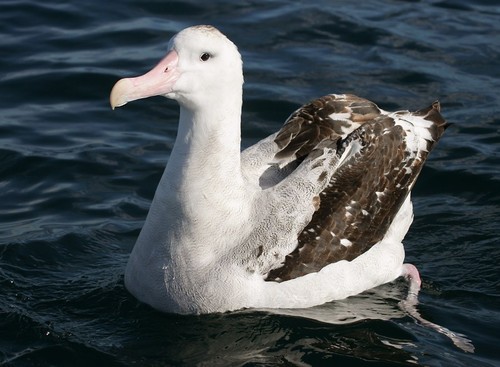
Wandering Albatross
107-135 cm (42-53 in) long, wingspan up to 3.5 m (11.5 ft)
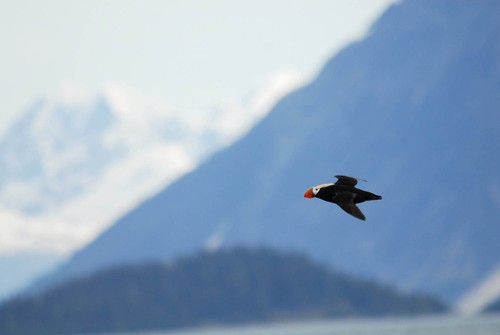
Tufted Puffin
35-41 cm (14-16 in) long, about 63-70 cm wingspan